




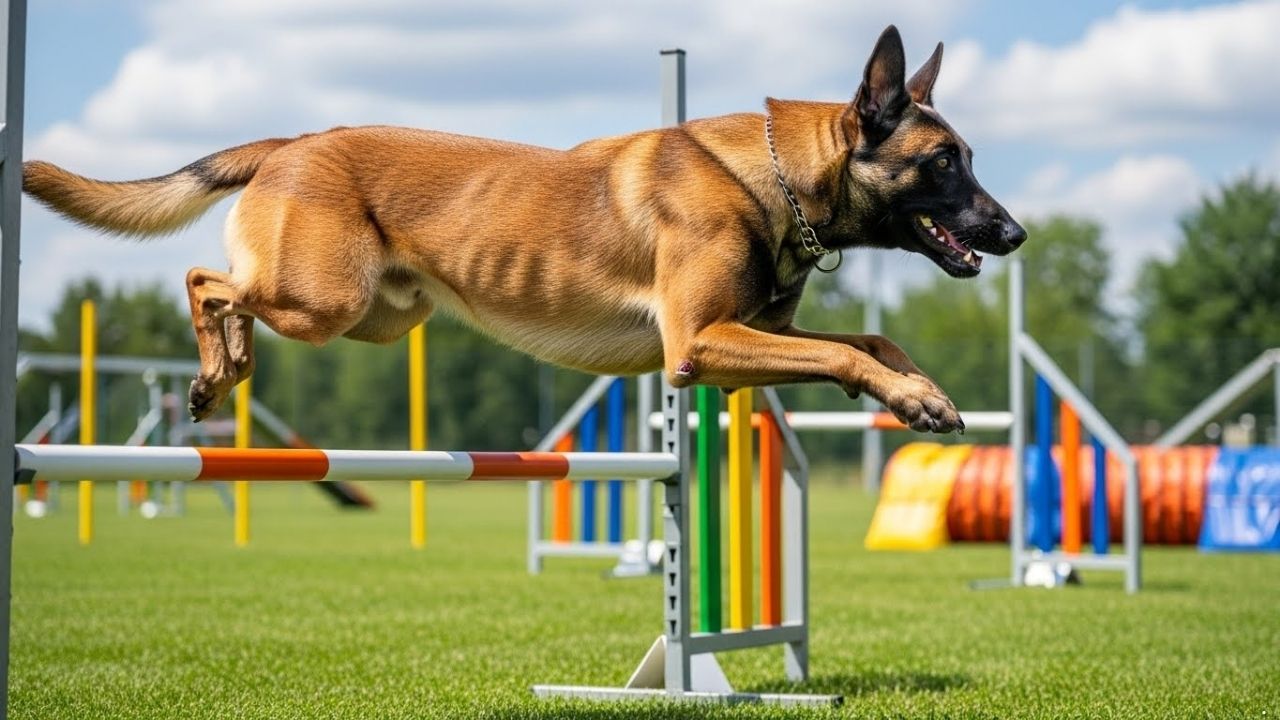
Some dogs don’t just run — they launch. They soar over jumps, slice through tunnels, and move with the confidence of athletes who know the course is their playground.
What makes a dog a natural agility star? It’s a powerful mix of speed, razor-sharp focus, flexibility, and that unstoppable inner drive to chase the next challenge with tail-wagging enthusiasm.
But here’s the big question: is agility all about endless energy, lightning intelligence, seamless teamwork — or the magic that happens when all three collide?
In this guide, each breed profile reveals what fuels their athletic spark, how they learn, and where they shine most when the stopwatch starts ticking.
You’ll also discover how agility strengths differ between large, medium, and small dogs — and why being “perfect for agility” doesn’t always mean perfect for every lifestyle, handler, or home.
Dog Breeds Perfect for Agility and Dog Sports
1. Border Collie
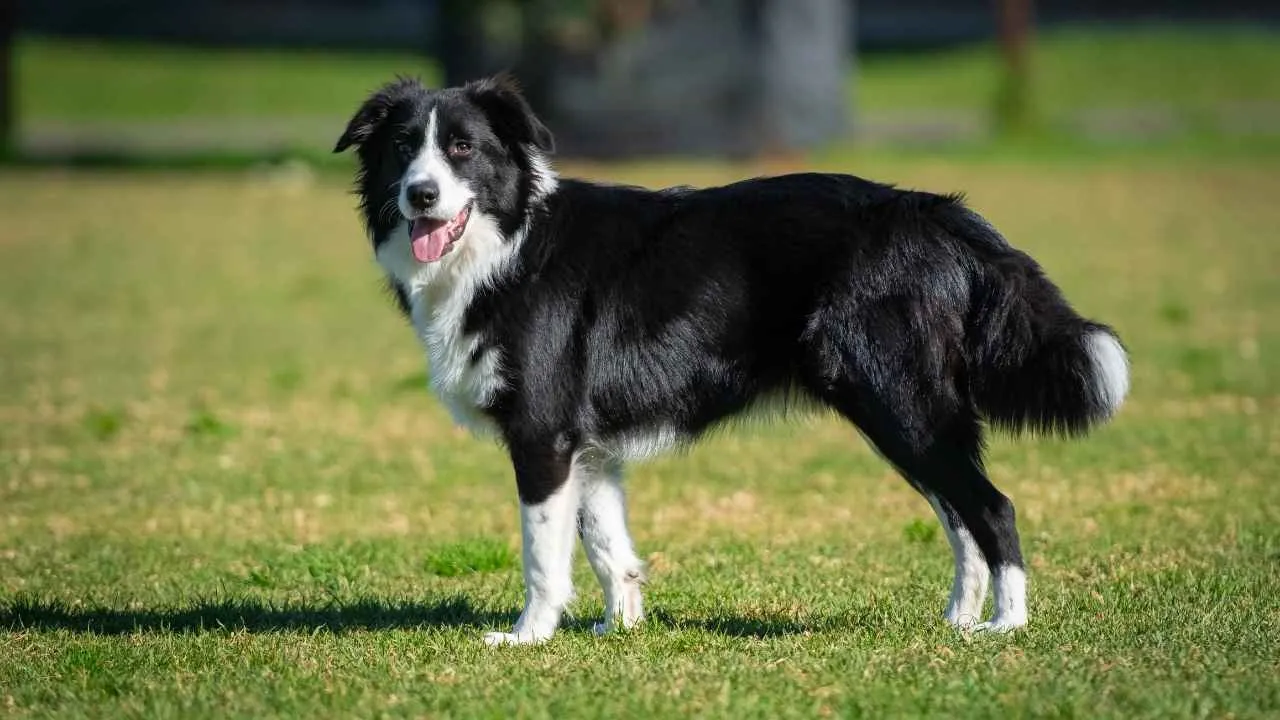
Border Collies move like elite track athletes with a chess player’s brain. Bred for herding, this dog thrives on motion, problem-solving, and purpose, making agility feel less like training and more like instinct. Their alert eyes and spring-loaded bodies signal readiness long before the first jump.
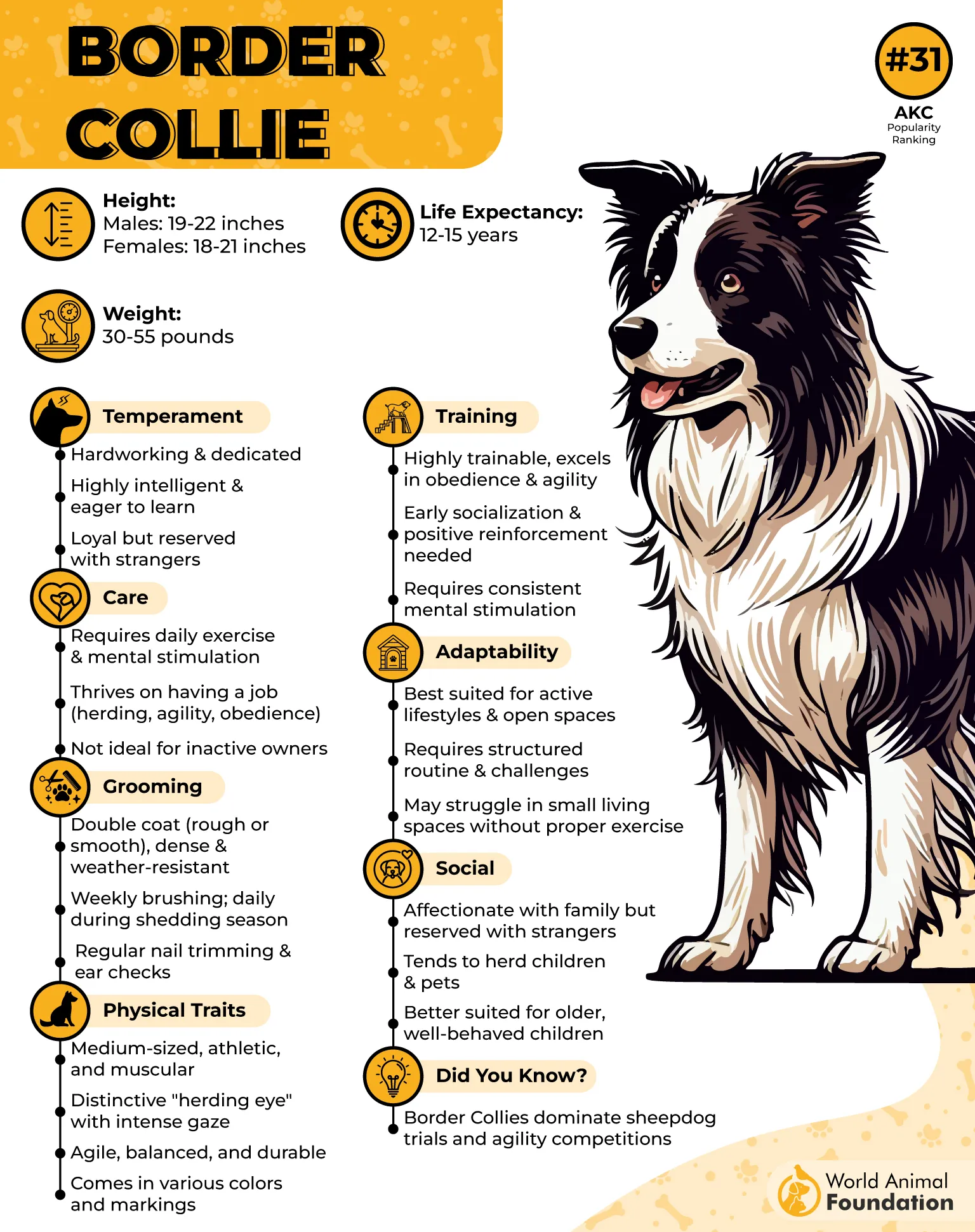
On the agility field, Border Collies are all about precision and pace. AKC explains that tight turns, complex weave poles, and rapid direction changes are where they truly shine, often reading courses faster than their handlers. Their balance and acceleration make them a favorite in competitive agility and advanced dog sports.
Training Style & Learning Curve
Learns commands rapidly and thrives on advanced challenges
Responds best to mental games mixed with physical drills
Can outthink repetitive or unengaging training
Energy Levels & Daily Exercise Needs
High-intensity exercise is required every day
Mental stimulation is just as critical as physical movement
Agility, herding games, and puzzle work keep them fulfilled
The handler-dog connection with a Border Collie feels almost telepathic. They lock onto cues, body language, and subtle changes with impressive focus, creating seamless teamwork during high-speed runs.
Potential challenges include overworking and mental burnout if expectations are unrealistic. This breed suits dedicated agility enthusiasts who enjoy consistent training, strategic thinking, and an active lifestyle that keeps both mind and body engaged.
2. Australian Shepherd
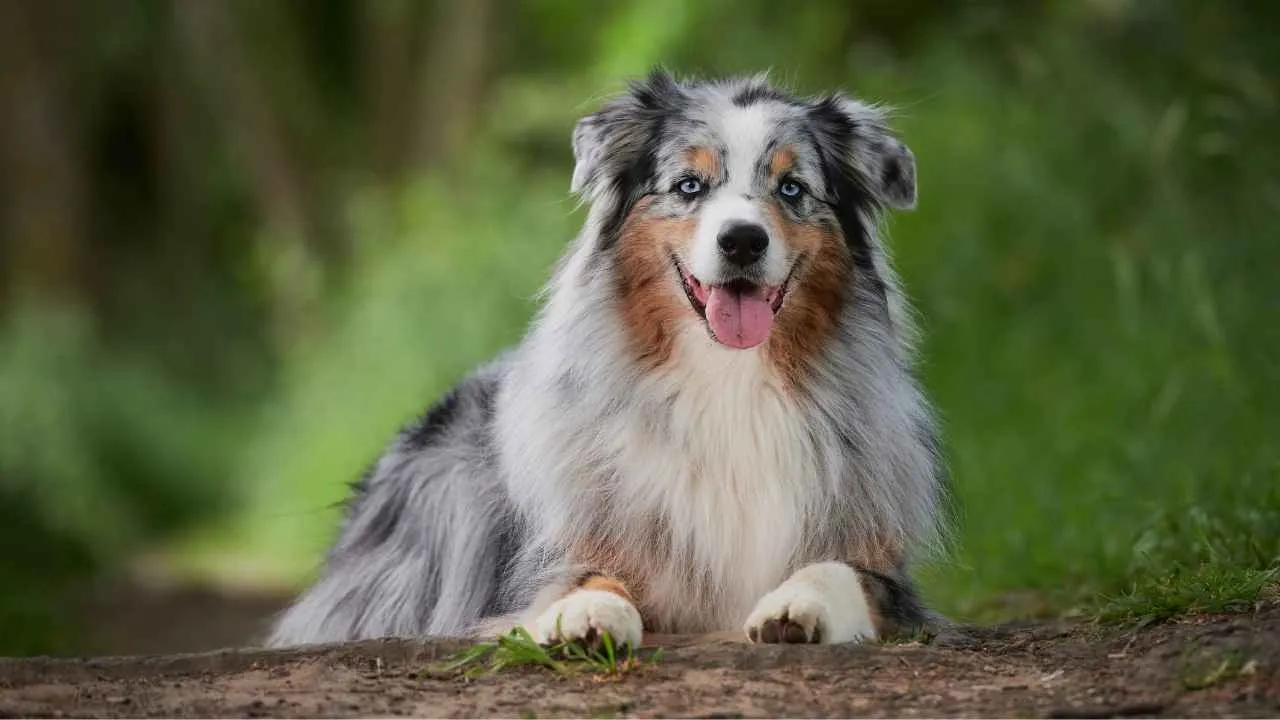
Australian Shepherds bring enthusiasm, athleticism, and personality to every agility course. Originally developed for ranch work, they combine stamina with sharp awareness, making them lively competitors who love staying busy. Their expressive nature adds a spark of fun to training sessions.
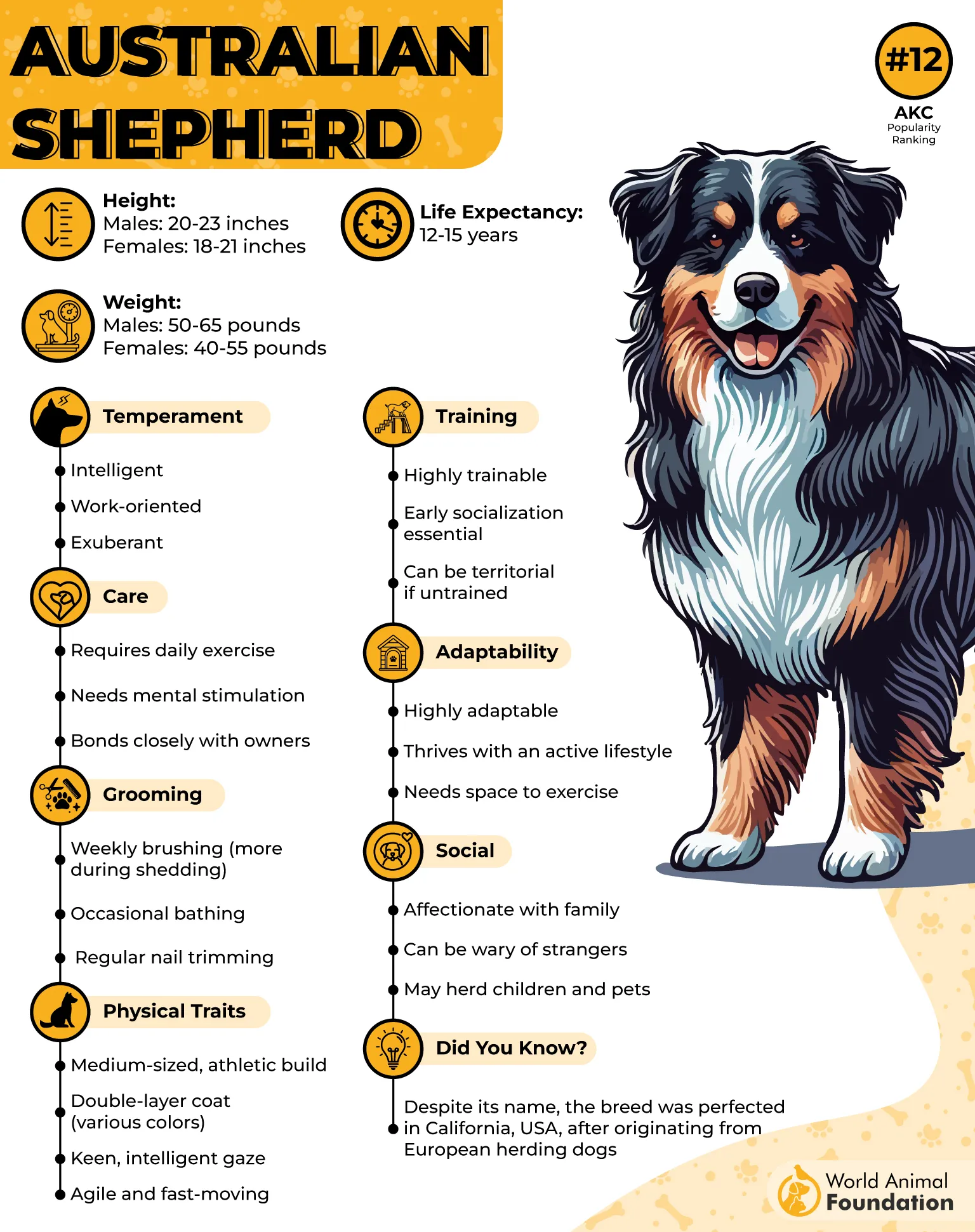
In agility and dog sports, Australian Shepherds excel at courses requiring speed blended with control. Their strong hindquarters power explosive jumps, while their coordination supports quick transitions between obstacles. They thrive in sports that reward versatility and responsiveness.
Training Style & Learning Curve
Highly trainable with positive, varied routines
Enjoys tasks that mix obedience with movement
Engagement drops if sessions lack variety
Energy Levels & Daily Exercise Needs
Needs structured physical activity every day
Mental challenges prevent restlessness
Agility training pairs well with hiking or fetch
Teamwork is where Australian Shepherds truly glow. They bond deeply with handlers and enjoy working as a team, often feeding off encouragement and praise during competition.
Britannica warns that challenges include managing excess energy and strong herding instincts. This breed fits agility lovers who enjoy hands-on training, outdoor activity, and an interactive partnership built on trust and consistency.
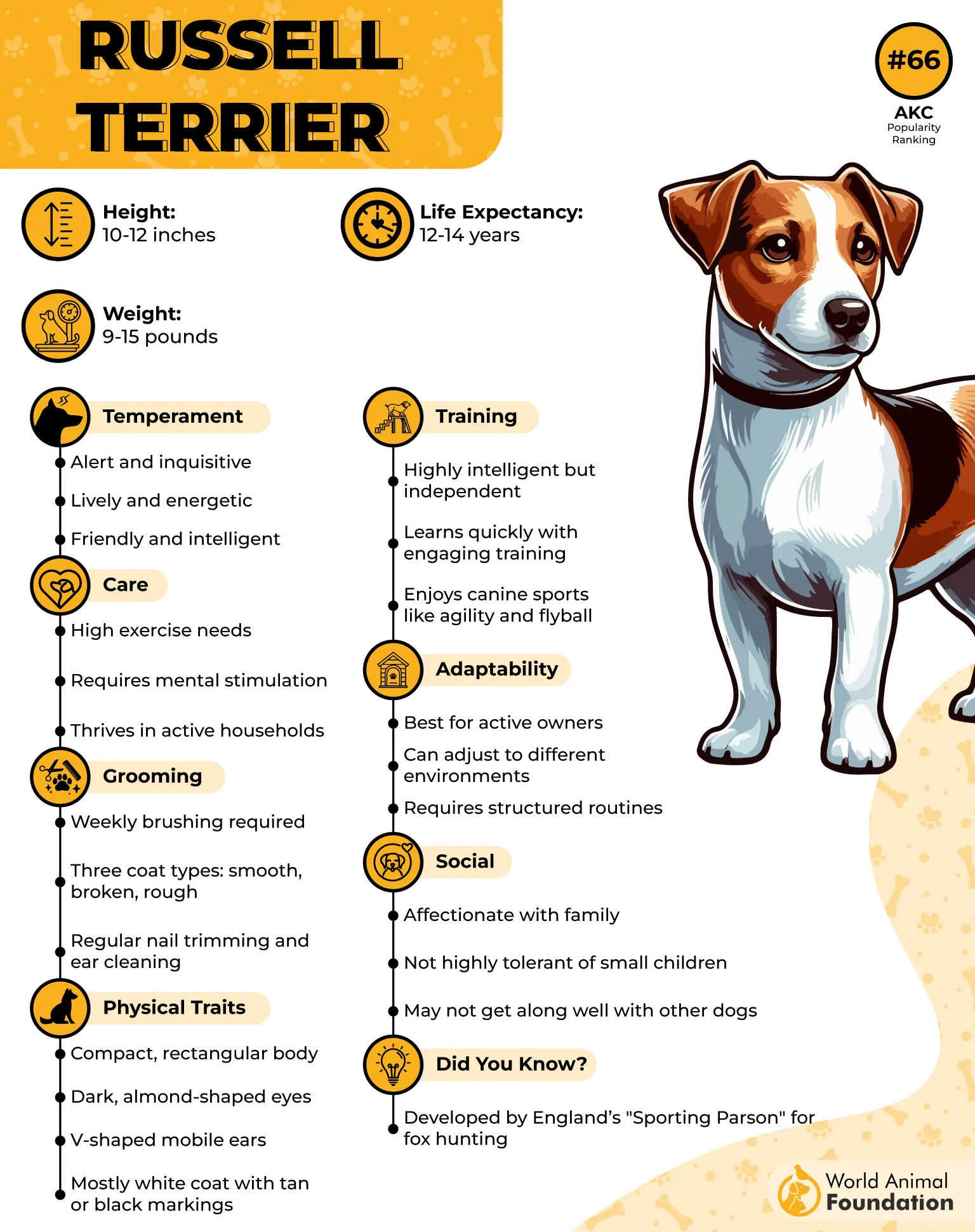
3. Jack Russell Terrier
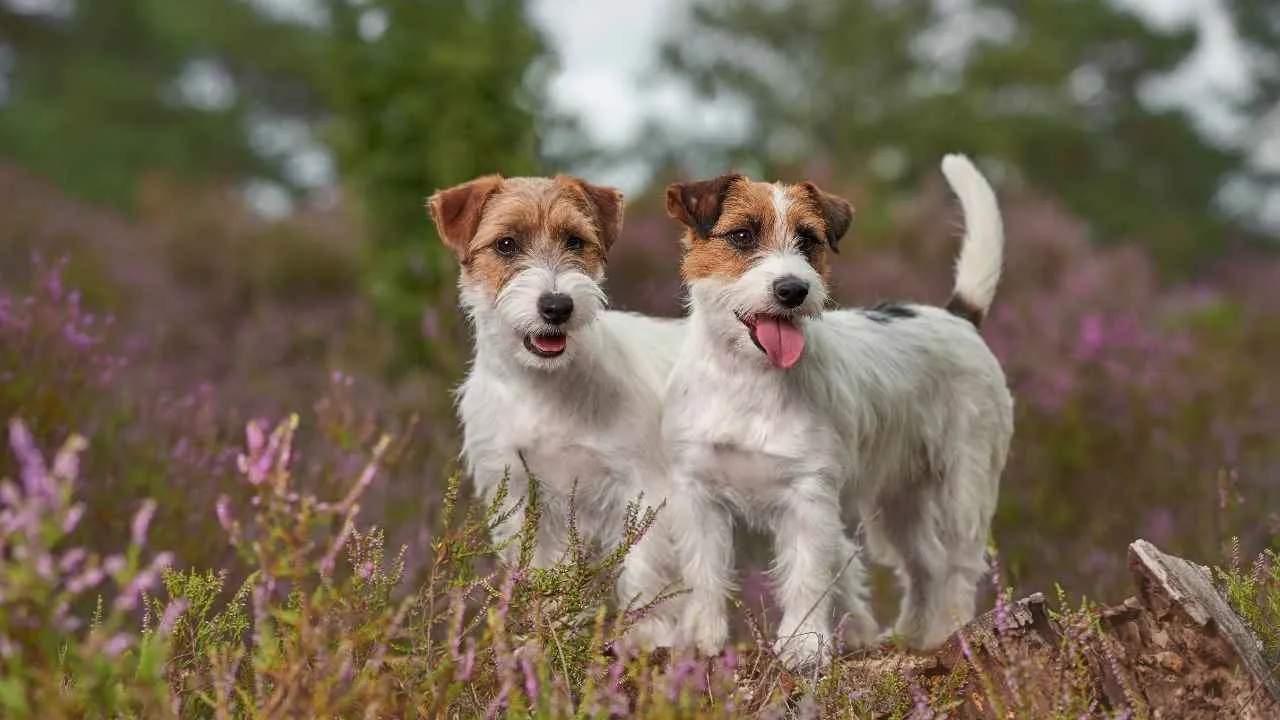
Jack Russell Terriers pack explosive energy into a compact frame.PDSA notes that originally bred for fox hunting, they are bold, fast, and endlessly curious, bringing fierce determination to agility sports. Their confidence often surprises newcomers to dog athletics.
Agility courses highlight the Jack Russell’s speed and sharp reflexes. Low center of gravity and quick footwork allow them to dominate tunnels, jumps, and weave poles with fearless intensity. Their competitive drive keeps them charging forward at full throttle.
Training Style & Learning Curve
Quick learner with a strong independent streak
Responds well to short, high-energy sessions
Motivation improves with games and rewards
Energy Levels & Daily Exercise Needs
Very high daily activity requirement
Thrives on running, agility drills, and play
Idle time can lead to mischief
A handler connection with a Jack Russell feels dynamic and spirited. They enjoy interactive training and respond best to confident, upbeat guidance that matches their pace.
Challenges include stubborn moments and overexcitement on the course. This breed suits experienced agility enthusiasts who enjoy fast sessions, bold personalities, and keeping training exciting and structured.
4. Belgian Malinois
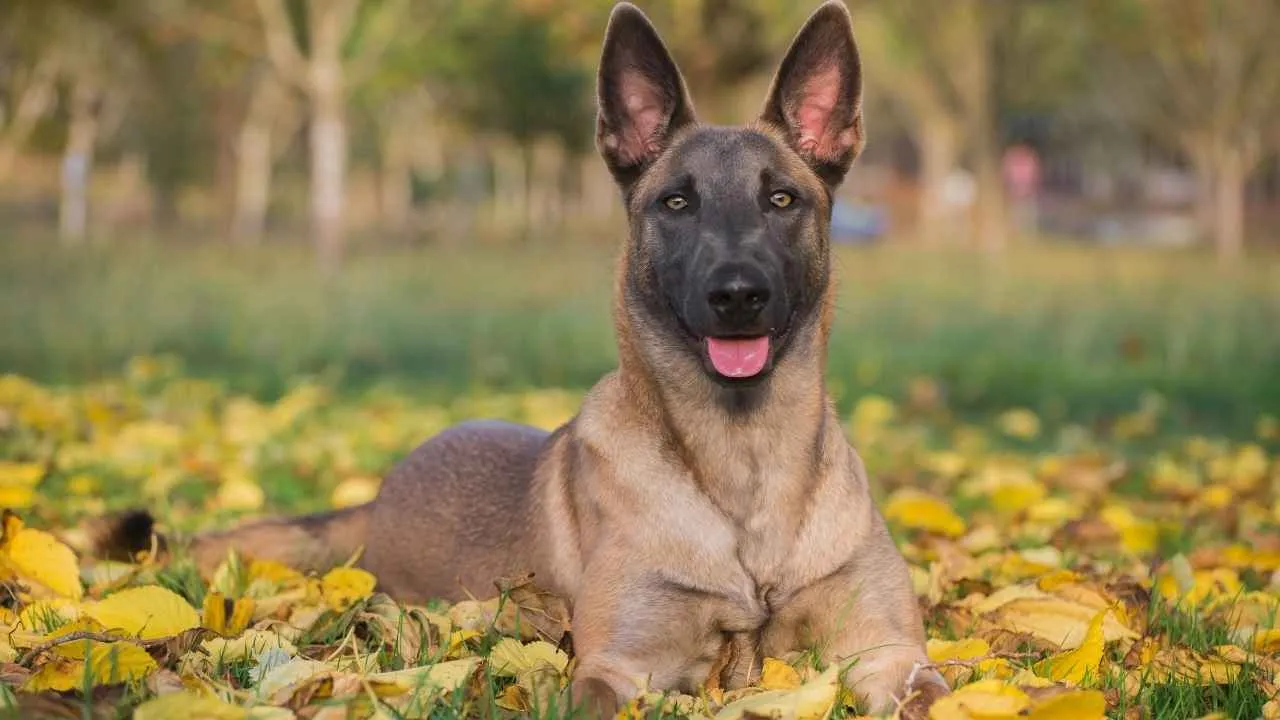
Belgian Malinois operate with laser focus and athletic power. Developed for demanding working roles, they combine speed, endurance, and mental sharpness, making them elite performers in advanced dog sports. Their intensity is unmistakable from the first stride.
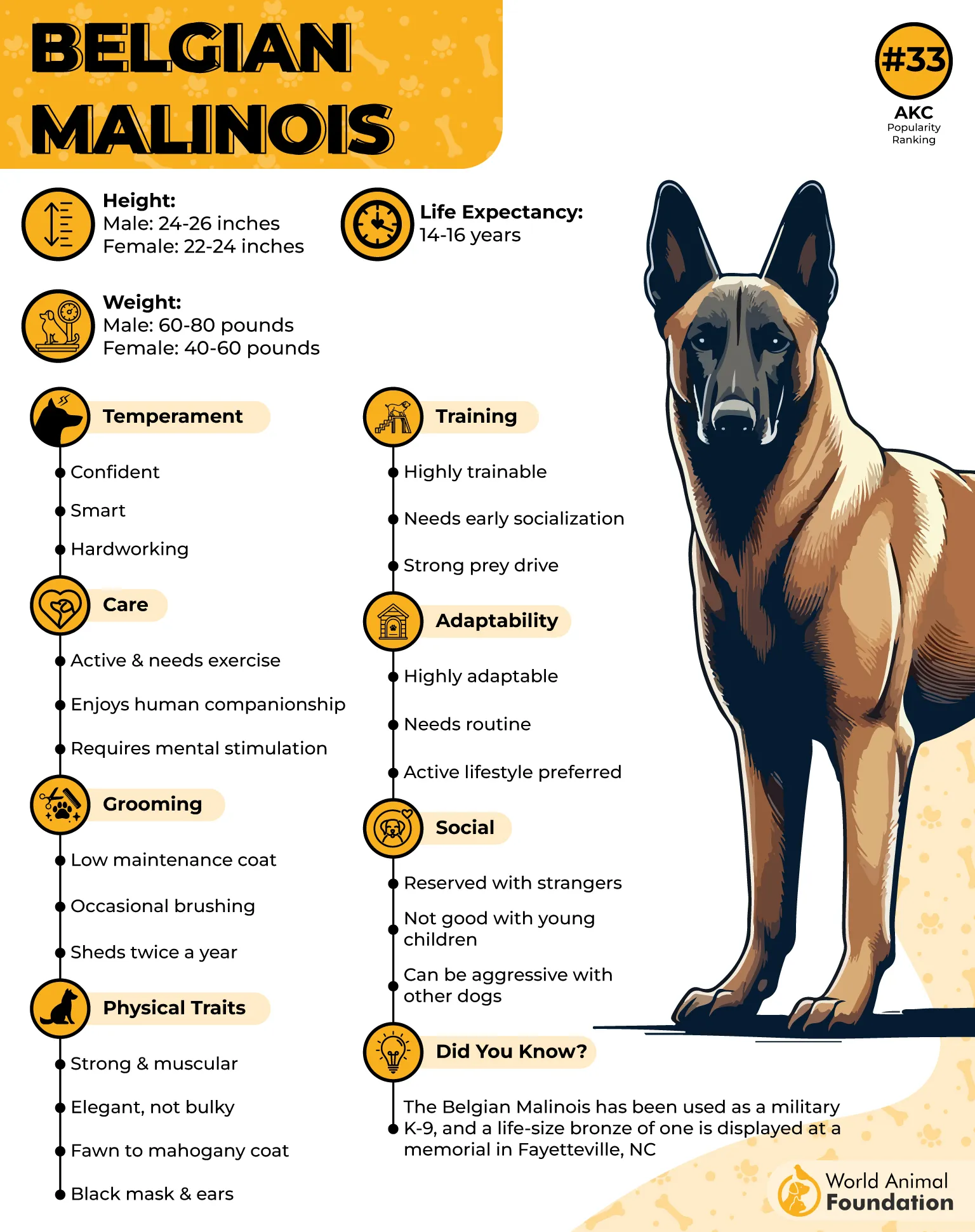
In agility, Belgian Malinois dominate courses requiring explosive speed and precision. Their long stride, powerful jumps, and unwavering focus allow them to handle complex sequences with confidence. They excel in high-level competition environments.
Training Style & Learning Curve
Extremely responsive to structured training
Excels with clear rules and progressive challenges
Thrives under experienced guidance
Energy Levels & Daily Exercise Needs
Needs extensive daily physical output
Mental tasks are essential for balance
Agility pairs well with obedience or protection sports
Teamwork with a Belgian Malinois is intense and rewarding. They work closely with handlers, maintaining focus even under pressure, which strengthens trust and performance.
Challenges include managing drive and preventing overtraining. This breed fits serious agility enthusiasts ready for commitment, structure, and an athletic partner built for high performance.
5. Shetland Sheepdog
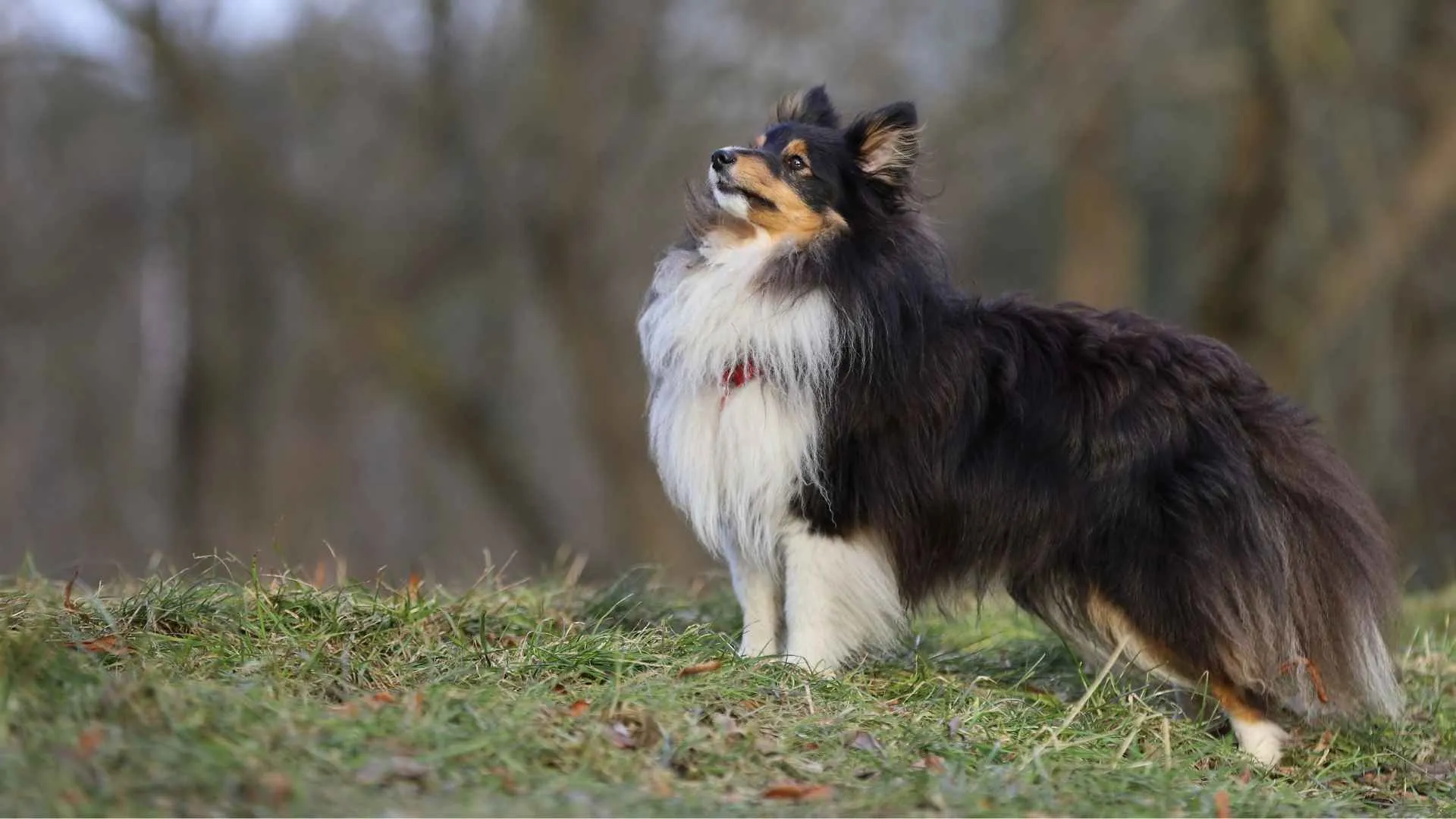
Shetland Sheepdogs bring elegance and enthusiasm to agility sports. Bred for herding in rugged environments, they combine agility, intelligence, and responsiveness in a lighter frame. Their alert expressions reflect constant readiness.
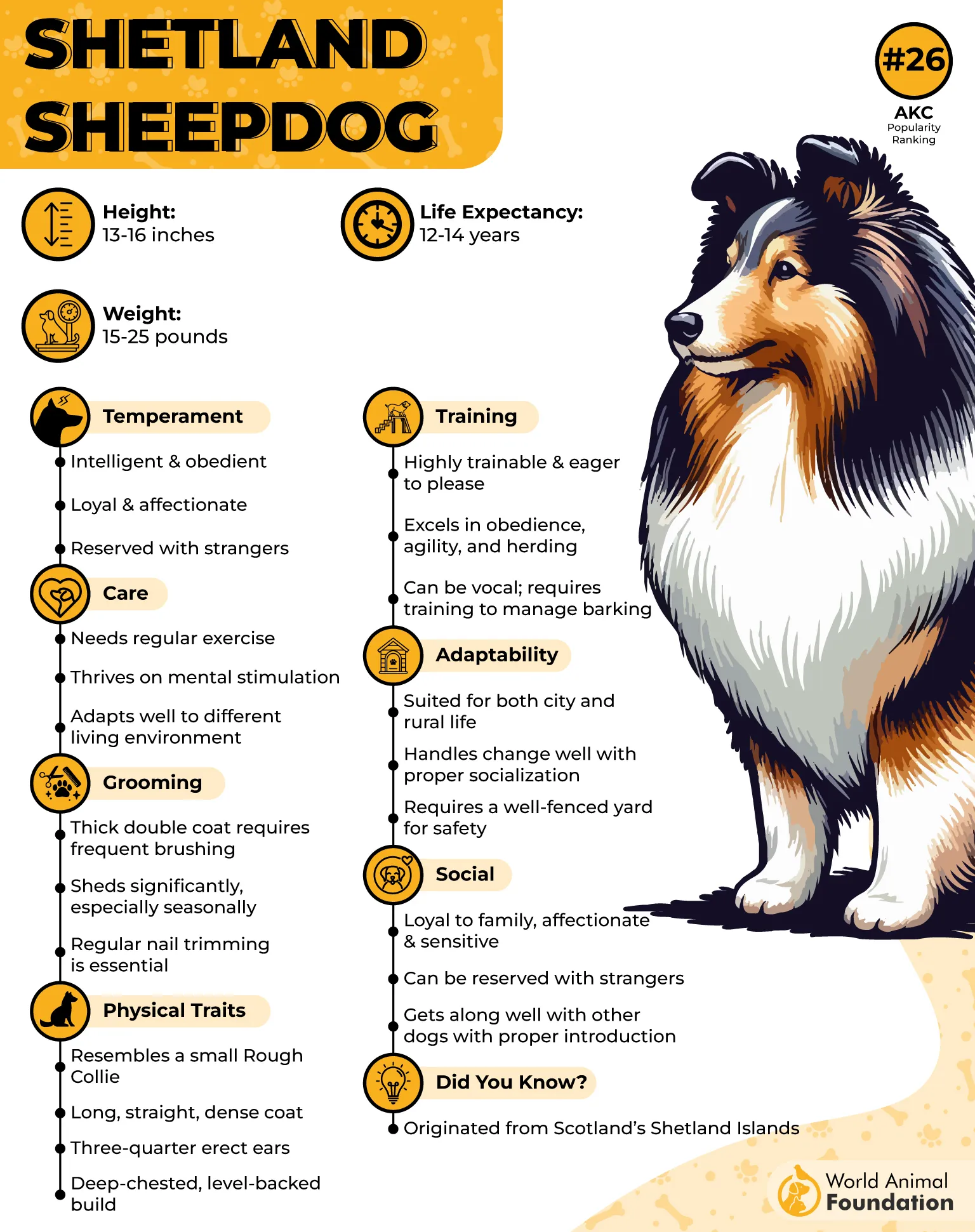
On agility courses, Shelties shine with accuracy and speed. Their quick turns and clean jumps make them consistent performers, especially in technical courses requiring finesse over raw power. They often excel in competitive obedience alongside agility.
Training Style & Learning Curve
Learns quickly with positive reinforcement
Sensitive to tone and handler cues
Enjoys structured routines
Energy Levels & Daily Exercise Needs
Moderate to high activity needs
Daily walks plus agility training work well
Mental stimulation prevents boredom
The handler’s connection with a Shetland Sheepdog is gentle yet focused. They respond attentively to cues and enjoy working in harmony with their person.
Challenges include sensitivity to stress and distractions. This breed suits agility enthusiasts who value precision, communication, and a thoughtful training approach.
6. Papillon
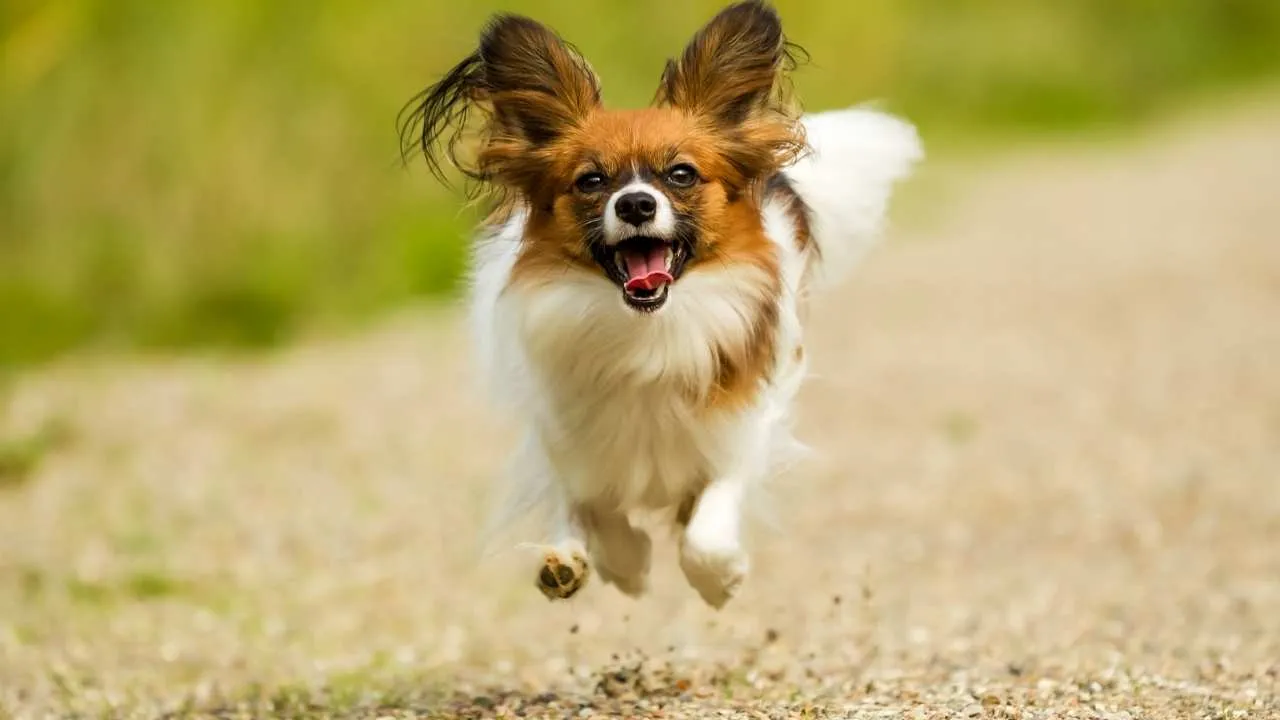
Papillons may be small, but their presence is mighty. Named for their butterfly-like ears, they combine elegance with speed and intelligence, making them standouts in small-dog agility competitions. Their confidence fuels their athletic spark.
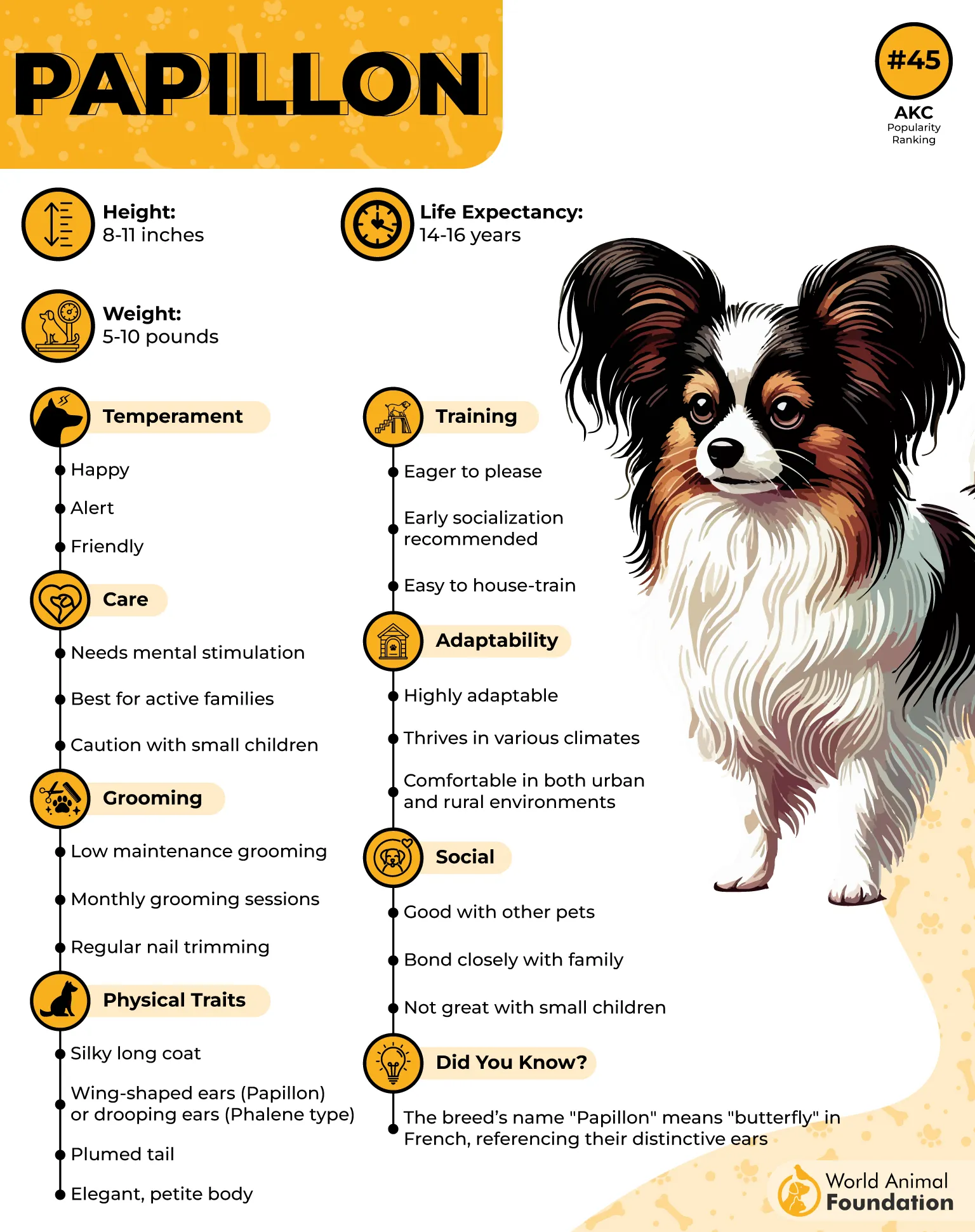
In agility, Papillons excel at fast-paced courses with tight obstacles. Their lightweight build allows rapid acceleration, while their sharp minds handle complex patterns with ease. They often outperform expectations in competitive settings.
Training Style & Learning Curve
Learns quickly and enjoys problem-solving
Responds well to upbeat, playful training
Consistency strengthens focus
Energy Levels & Daily Exercise Needs
Moderate energy with bursts of speed
Short agility sessions suit them well
Mental games keep them engaged
Teamwork with a Papillon feels joyful and interactive. They bond closely with handlers and thrive on attention and encouragement during runs.
Challenges include fragility awareness and managing confidence levels. This breed fits agility lovers seeking a small, spirited athlete with big performance potential.
7. Vizsla
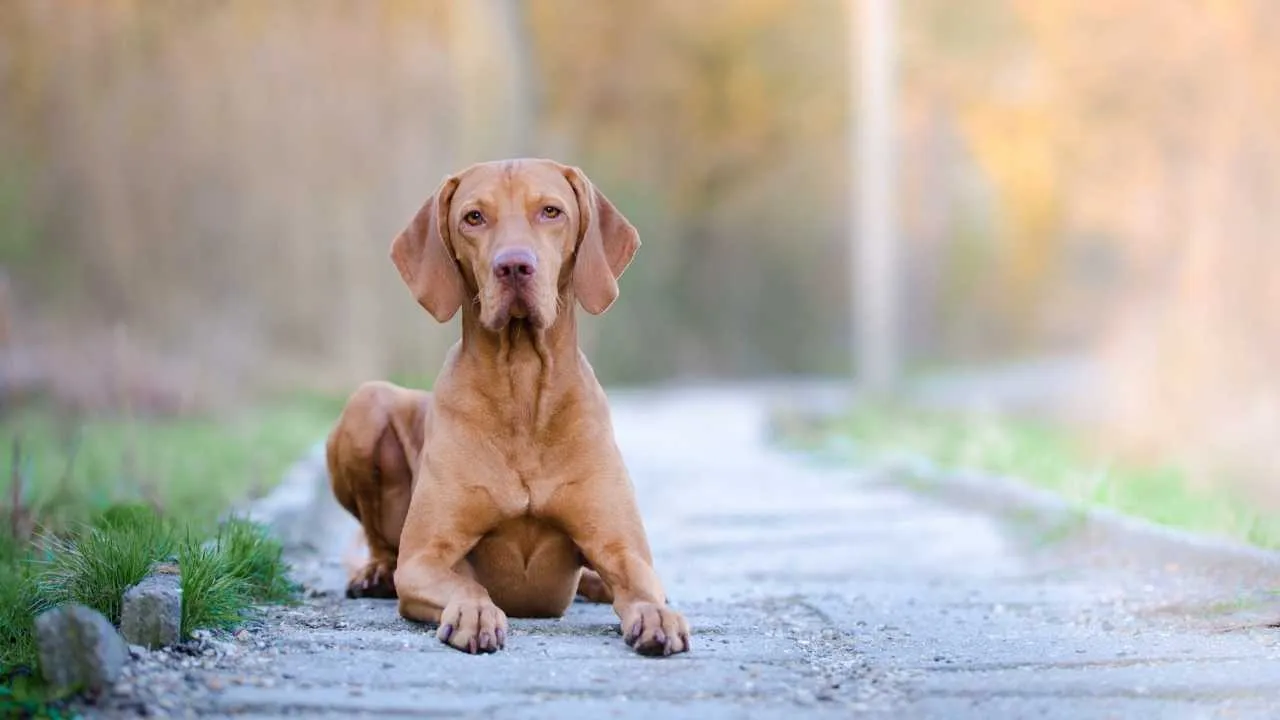
Vizslas are sleek, powerful athletes with boundless enthusiasm. Originally bred for hunting, they combine speed, endurance, and sensitivity, translating beautifully into agility and dog sports. Their graceful movement stands out on any course.
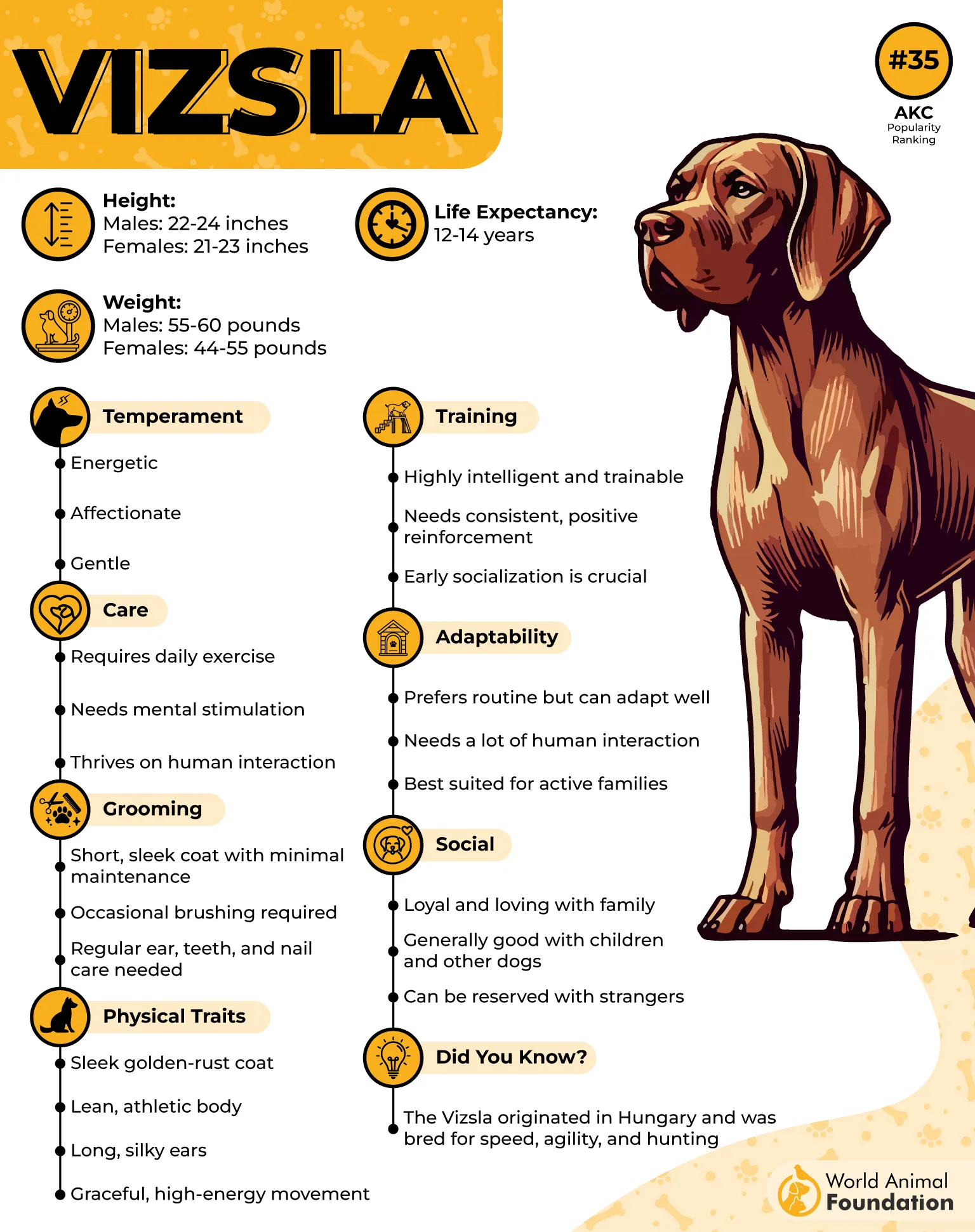
Agility highlights the Vizsla’s fluid motion and stamina. They excel in longer courses requiring sustained speed and clean jumps, thriving in sports that blend athleticism with obedience. Their versatility supports multi-sport participation.
Training Style & Learning Curve
Responds best to positive reinforcement
Enjoys variety and movement-based training
A strong bond enhances learning
Energy Levels & Daily Exercise Needs
High daily exercise requirement
Agility pairs well with running or hiking
Mental engagement supports balance
The handler’s connection with a Vizsla is deeply affectionate. They seek closeness and cooperation, making teamwork feel natural and rewarding.
Challenges include separation sensitivity and managing high energy. This breed suits active agility enthusiasts who value companionship, outdoor activity, and a graceful sporting partner.
Conclusion
The dog world offers many breeds for agility, and while certain breeds excel, others like Golden Retriever, Labrador Retriever, German Shepherd, Australian Cattle Dogs, Standard Poodles, Toy Poodles, Pembroke Welsh Corgis, Border Terriers, Parson Russell, French Bulldog, Siberian Huskies, and even Basset Hounds can surprise with quick thinking, natural drive, and food motivated focus.
For pet parents, the best breed is one whose temperament, stamina, and daily life needs align. Rescue dog or puppy, athletic breed or eager to please pet, agility brings joy, enriches a dog’s life, and turns every obstacle course into shared fun with your best friend.
