




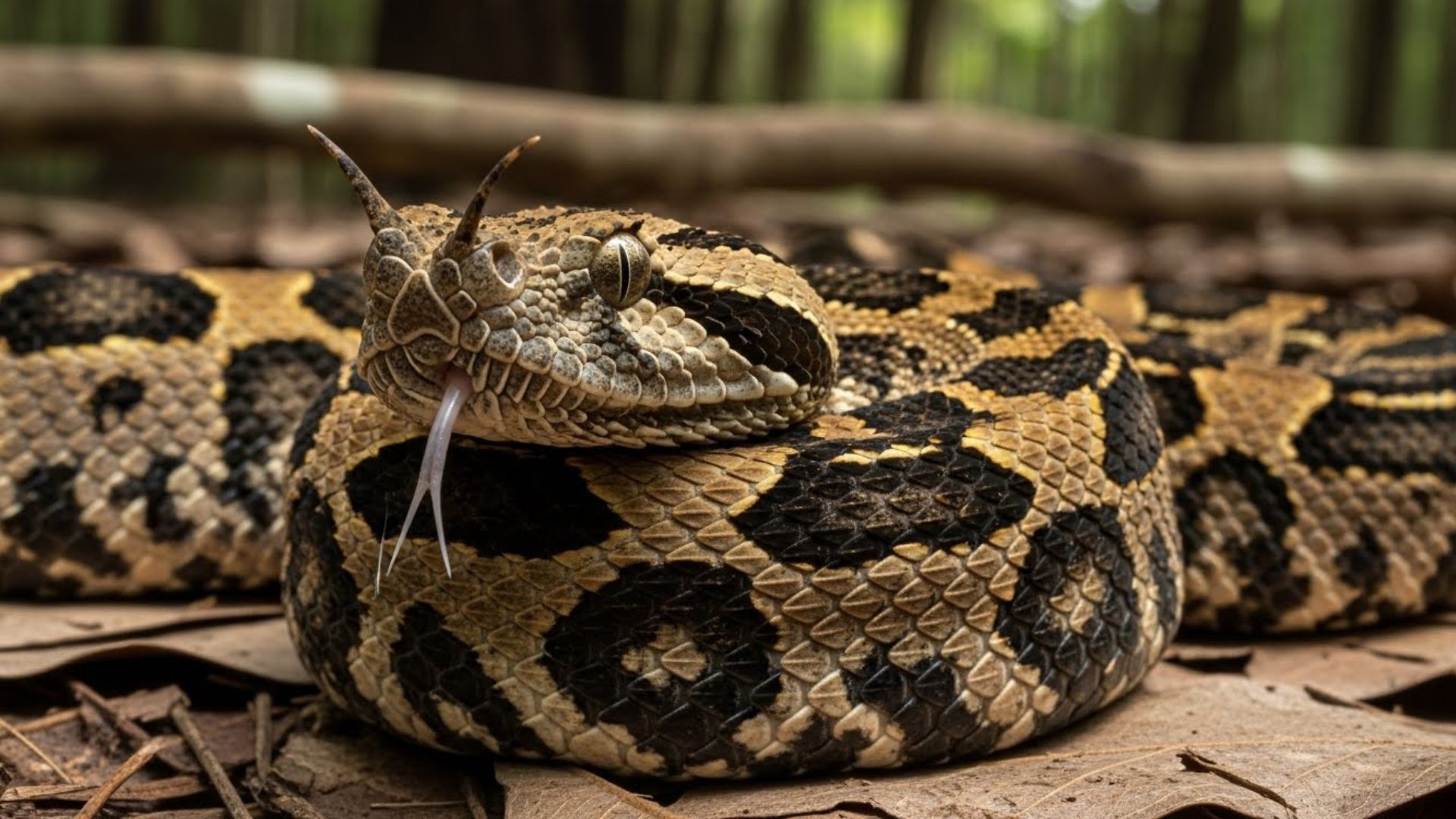
Venom alone doesn’t make a snake deadly—it’s how effectively that venom is delivered. Some species have evolved exceptionally advanced venom delivery systems, turning each strike into a highly efficient biological weapon.
From long, hinged fangs to precise muscle control, these snakes inject venom with remarkable accuracy and speed. The best venom delivery systems ensure venom reaches exactly where it’s needed, maximizing its impact while minimizing wasted effort.
Some snakes can control how much venom they inject, while others strike so quickly that prey barely has time to react. These systems are the result of millions of years of evolutionary refinement.
Today, we’ll explore snakes with the most effective venom delivery mechanisms, examining how fang structure, jaw movement, and venom control work together. These snakes showcase nature’s engineering at its most lethal—and most fascinating.
Fact: Some snakes possess fangs so long they fold back into the mouth when not in use. The Gaboon viper holds the record for the longest fangs of any snake, designed to inject venom deep into large prey.
7 Snakes That Have the Longest Teeth
1. Gaboon Viper
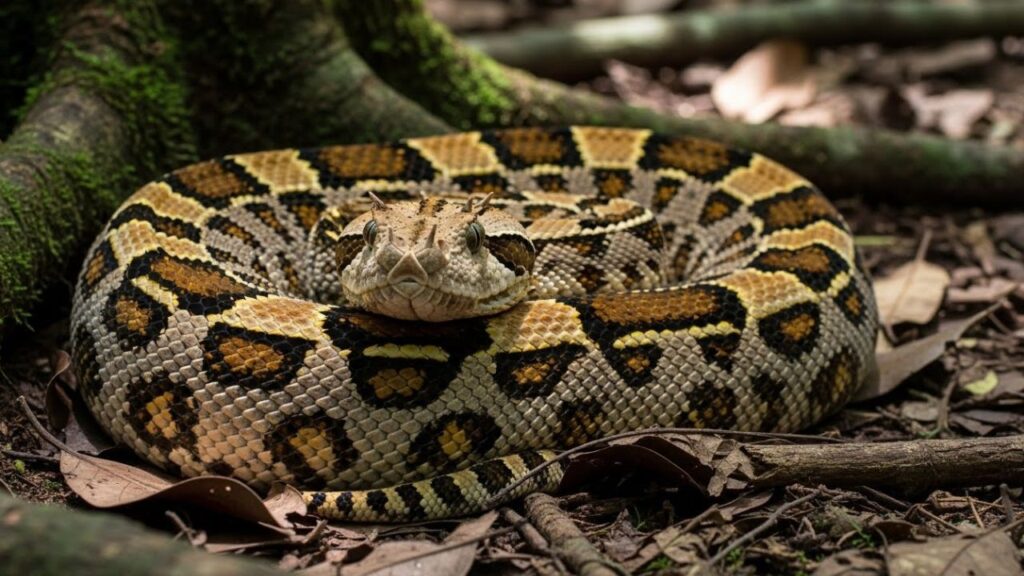
Native to the lush tropical forests of central and western Africa, the Gaboon viper (Bitis gabonica) is a master of stealth. It’s a large, thick-bodied, ground-dwelling snake that prefers to lie still and let the world come to it—basically the introvert of the snake world.
Despite being extremely venomous, it’s known for its calm, almost polite demeanor. Think less “angry villain” and more “dangerous but minding my own business.”
Now, let’s talk teeth—because wow. The Gaboon viper holds the record for the longest fangs of any snake on Earth. In one impressive specimen measuring about 1.83 meters (6 feet) long, the fangs clocked in at a jaw-dropping 2 inches.
But long fangs aren’t just for show. The Gaboon viper also produces more venom than any other venomous snake. A single adult can carry enough venom to deliver lethal doses to around 30 adult humans. Overkill? Maybe. Effective? Absolutely. And thanks to those extra-long fangs, the venom gets injected deep, ensuring its prey doesn’t get a second chance.
According to Britannica, when the Gaboon viper feels threatened, it hisses—just like most snakes do—though given its reputation, that hiss feels more like a very serious warning memo. Its favorite meals include rodents and ground-dwelling birds, which it strikes and holds onto until the venom does its job. No hit-and-run tactics here—this snake commits.
With the longest fangs in the snake kingdom and a venom supply that means business, this snake proves that sometimes the quiet ones are the most intense—especially when they’re carrying two-inch teeth.
2. Western Diamondback Rattlesnake
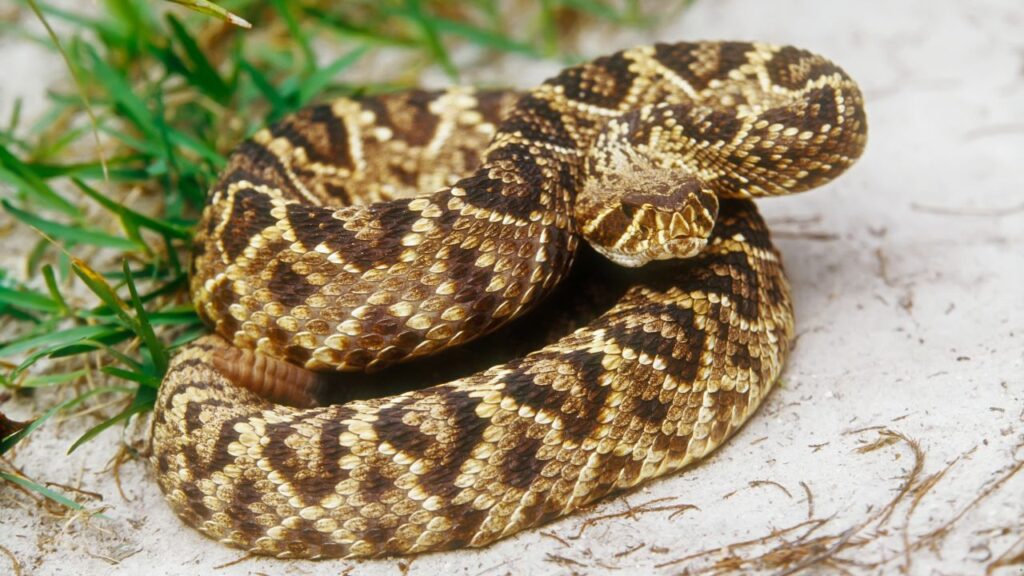
The Western diamondback rattlesnake (Crotalus atrox) typically grows to about 4 feet long, though it carries itself like something much bigger. And then there are the fangs—because yes, this snake absolutely belongs on the long-tooth list.
On average, its fangs measure around 0.75 inches, but some overachieving individuals have been recorded with fangs stretching up to a jaw-dropping 1.25 inches. That’s not a bite; that’s a full-on syringe situation.
Unlike some snakes that rely on surprise alone, the Western diamondback believes in good communication. When threatened, it performs its signature move: rattling loudly while coiling its body, basically saying, “Back away now, or you’re about to learn something the hard way.” It’s one of the most honest warning systems in the animal kingdom—no fine print required.
If that warning is ignored, the consequences are serious. An average bite delivers 250–350 milligrams of venom, and in extreme cases, that dose can climb to 800 milligrams. That’s a lot of venom in one strike, making this snake one of North America’s most medically significant species.
Despite its fearsome reputation, the Western diamondback isn’t out looking for trouble. Like many venomous snakes, it prefers avoidance over confrontation. The rattle exists so it doesn’t have to bite—because venom is precious, and frankly, paperwork (or antivenom) is expensive.
So while the Western diamondback rattlesnake may not have the longest fangs in the world, it definitely has some of the most memorable ones—along with a built-in sound system and a very clear message: admire from a distance, preferably with binoculars.
3. Puff Adder
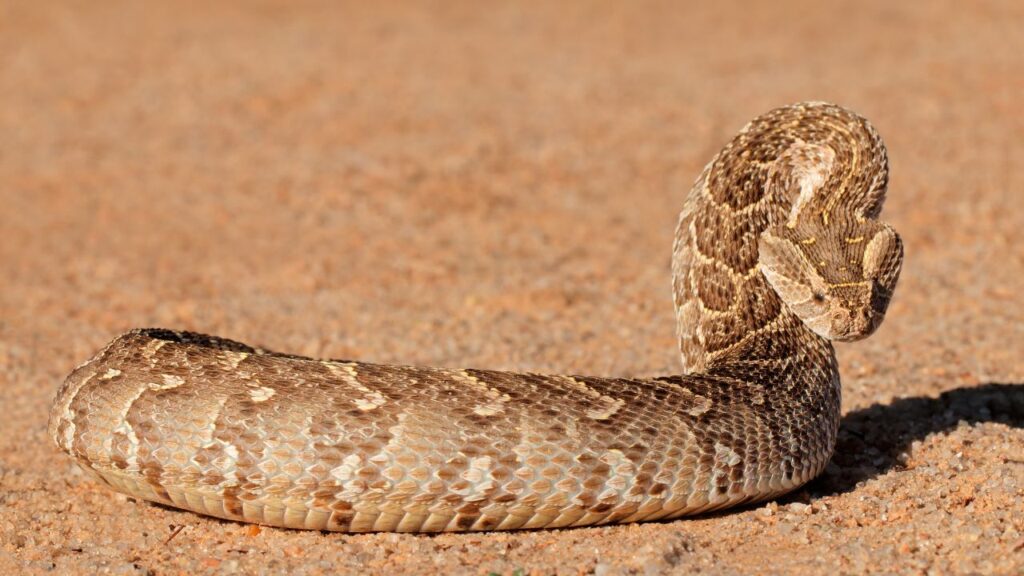
Don’t let the name fool you—the puff adder is anything but puffy and harmless. This snake may look like a loaf of bread taking a nap, but it’s actually one of Africa’s most dangerous and effective ambush predators. Calm? Yes. Cuddly? Absolutely not.
The puff adder (Bitis arietans) typically grows to about 3 feet long, making it a solid, thick-bodied snake with a “don’t mess with me” posture—even when it’s doing absolutely nothing. And that’s kind of its whole strategy.
Puff adders are masters of stillness, often lying motionless for days or even weeks, waiting patiently for dinner to wander by. Imagine a predator with the patience of a saint and the reaction time of lightning.
Now let’s talk fangs. Puff adders are equipped with fangs up to 0.79 inches long, which they use with terrifying efficiency. These fangs fold neatly away when not in use and then snap forward during a strike—like nature’s version of a switchblade.
In terms of danger, the puff adder is unfortunately famous. It’s responsible for more snake bites in Africa than any other species. Not because it’s aggressive, but because it blends in so well and often stays put instead of slithering away. Many encounters happen when someone accidentally steps too close—surprise for everyone involved.
Venom-wise, the puff adder does not hold back. A typical bite delivers 150–350 milligrams of venom, with extreme cases reaching 700–750 milligrams. That’s a hefty dose, designed to quickly incapacitate prey—and make humans regret ignoring their surroundings.
Speaking of prey, puff adders are not picky eaters. Their menu includes rodents, birds, lizards, small mammals, and toads. If it moves and fits in their mouth, it’s probably on the list.
Despite their fearsome reputation, puff adders aren’t out hunting humans. They rely on camouflage, patience, and a powerful strike—not chasing or intimidation.
Their signature defensive move is the loud, dramatic “puff” hiss, which sounds like an angry tire losing air. It’s basically the snake version of shouting, “I’m right here—please don’t step on me!”
4. Bushmaster
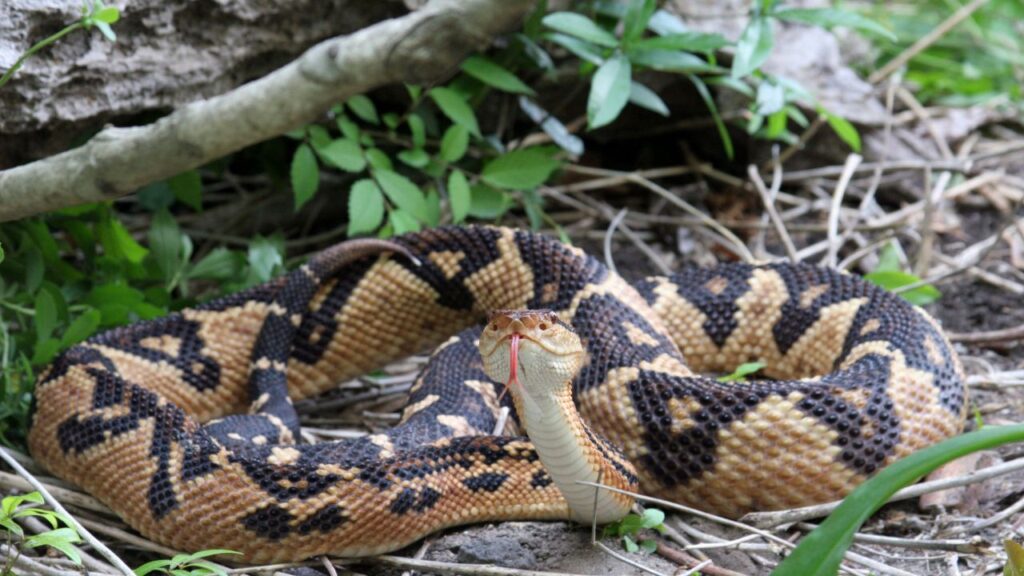
The bushmaster is the longest venomous snake in the Western Hemisphere, growing anywhere from 6 to 12 feet or more. That’s longer than most couches, and definitely longer than your comfort zone. Its body is decorated with dark blotches or rhomboid patterns over lighter, often beaded scales, giving it a look that’s both elegant and ominous.
Now let’s get to the teeth, because this list is all about fangs. The bushmaster comes armed with fangs that can reach up to an incredible two inches long. While its venom may not be the most potent among vipers, it compensates by delivering a very large volume of it.
And here’s where things get spicy: unlike many snakes that prefer to flee, the bushmaster has been known to rear up and even chase threats if sufficiently provoked. Yes—chase. This is not a creature that believes in conflict avoidance once it’s truly angry. At that point, the bushmaster chooses chaos.
According to A-Z Animals, bushmasters range across Central America, northern South America, and the island of Trinidad. They favor moist, warm, old-growth forests, especially areas close to fresh water.
Mostly ground-dwellers, they blend perfectly into leaf litter, which makes stumbling across one an experience you won’t soon forget—if you’re lucky enough to walk away from it.
Despite their fearsome reputation, bushmasters aren’t reckless killers. Like most venomous snakes, they rely on camouflage and prefer to avoid human encounters. But between their massive size, two-inch fangs, and willingness to stand their ground, they demand respect in a very serious way.
5. Eastern Diamondback Rattlesnake
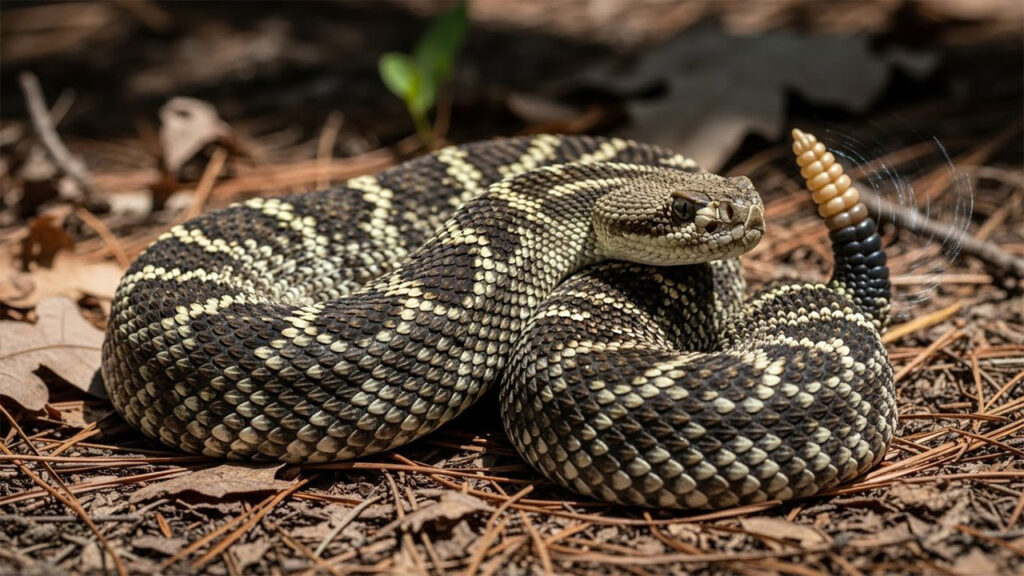
If the rattlesnake world had a heavyweight division, the Eastern diamondback rattlesnake would be wearing the championship belt—and rattling loudly while doing it. This is the largest rattlesnake species in the world, and it fully embraces its role as a top-tier fang owner.
The Eastern diamondback (Crotalus adamanteus) typically grows between 3 and 6 feet long, though some legendary individuals have been reported at nearly 7 feet. That’s a whole lot of snake, and it comes equipped with equally impressive hardware.
Its fangs measure about 1 inch long, folding neatly against the roof of the mouth until it’s time to strike—then snapping forward like venom-loaded switchblades.
And oh yes, the venom. The Eastern diamondback doesn’t do things halfway. An average bite delivers 400–450 milligrams of venom, with extreme cases reaching a jaw-dropping 858 to 1,000 milligrams. That’s one of the highest venom yields of any snake, making this species medically significant and deserving of serious respect.
Like its western cousin, the Eastern diamondback prefers clear communication over surprise attacks. When threatened, it coils up, lifts its head, and unleashes its iconic rattle, which sounds less like a warning and more like nature’s own “do not proceed” alarm. Ignore it, and the snake will happily demonstrate why that was a poor life choice.
Despite its intimidating size and firepower, the Eastern diamondback isn’t aggressive by nature. It would much rather be left alone to sun itself and hunt small mammals than waste venom on a creature it can’t eat. In other words, the rattle exists so it doesn’t have to bite.
6. Boomslang
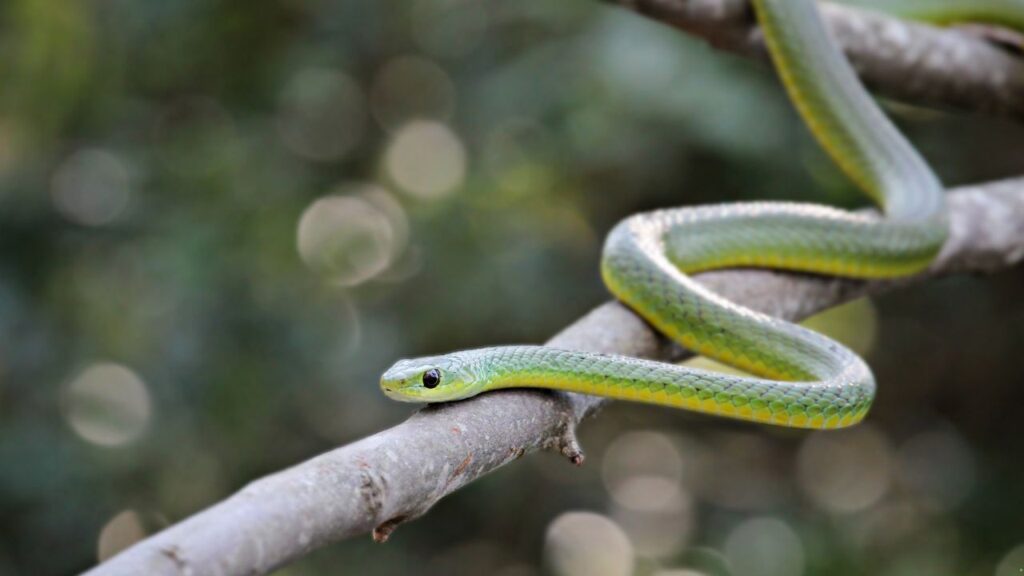
Don’t let the big eyes and elegant tree-snake vibe fool you—the boomslang is a certified “looks harmless, absolutely is not” situation. This snake proves that you don’t need huge muscles or a rattle to be terrifying. Sometimes all it takes is the right teeth in the right place.
The boomslang (Dispholidus typus) is a slender, arboreal snake found throughout sub-Saharan Africa, spending most of its life cruising through trees like it owns the canopy. Adults usually measure 4 to 6 feet long, with males often sporting bright green or patterned coloration, while females keep things more low-key in brown or gray.
Now, about those teeth. Boomslangs don’t have massive front fangs like vipers. Instead, they’re rear-fanged, meaning their venom-delivering teeth sit farther back in the mouth. But don’t be fooled—those fangs are surprisingly long and highly efficient, perfectly positioned to chew venom into their prey. It’s less “stab” and more “toxic bite with commitment.”
And the venom? That’s where the boomslang really earns its reputation. It produces a powerful hemotoxic venom that interferes with blood clotting, leading to internal and external bleeding. The scary part? Early symptoms can be mild, which historically caused people to underestimate bites—often with tragic results.
Fortunately, boomslangs are shy, calm, and reluctant to bite. They rely on excellent vision (those big eyes aren’t just for show) and will usually flee or freeze rather than strike. Bites typically occur only when the snake is handled or severely threatened—so maybe don’t pick up the pretty tree snake, yeah?
7. King Cobra
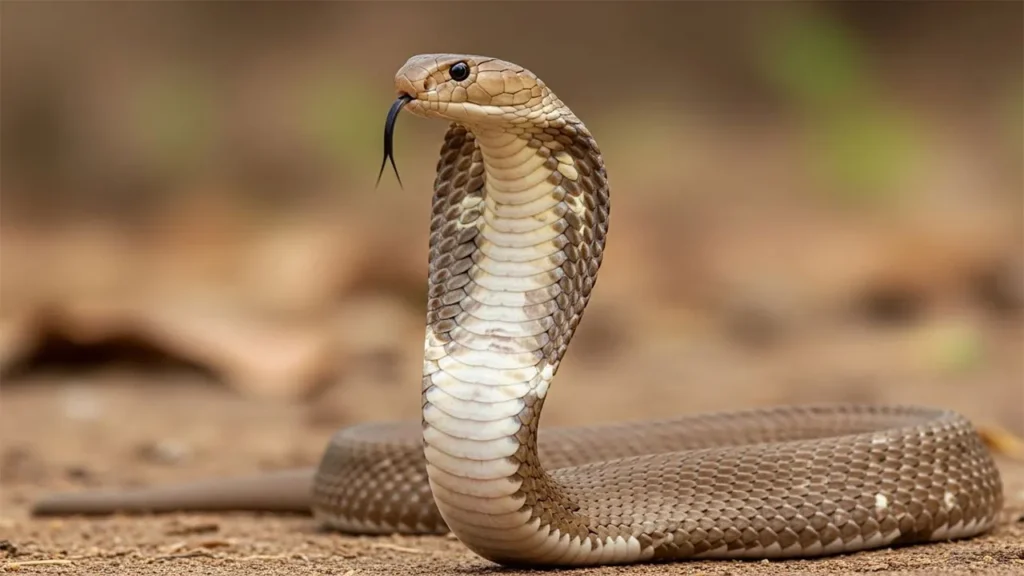
Enter the King Cobra—the world’s longest venomous snake and arguably the most dramatic when it comes to making an entrance. This is not a snake that startles quietly. When the king cobra reacts, it performs.
The king cobra (Ophiophagus hannah) is instantly recognizable by its size, intelligence, and iconic hood. Anatomically, it’s well-armed: it has two fixed fangs, 3–5 maxillary teeth in the upper jaw, and two rows of teeth in the lower jaw—a full dental setup designed for gripping, holding, and delivering venom with precision.
When alarmed, the king cobra doesn’t just slither away. According to Wikipedia, it raises the front third of its body, spreads its hood, bares its fangs, and hisses loudly—a display that says, “I am large, I am venomous, and I would prefer you leave immediately.”
In the wild, particularly in places like Singapore, king cobras are often described as calm and placid, but when cornered, they will rear up and strike in self-defense without hesitation.
Unlike many other venomous snakes, king cobras don’t rely on sheer fang length alone. Their power comes from control and delivery. They can inject large amounts of venom and, thanks to their size, strike higher than most snakes—yes, even toward your upper body, which is not something you want to think about for too long.
King cobras are found across South and Southeast Asia, usually in forests, bamboo thickets, mangroves, and areas near water. They’re mostly ground-dwellers but are excellent climbers and swimmers. Oh—and they eat other snakes. Hence the name Ophiophagus, meaning “snake eater.” Because being scary wasn’t enough already.
Despite their fearsome reputation, king cobras are intelligent, cautious, and generally avoid humans. Most confrontations happen when the snake feels trapped or when its nest is threatened. Still, between the hood, the height, the fangs, and that unmistakable hiss, the king cobra knows exactly how to command respect.
Conclusion
Snakes that have the longest teet include several snake species known for impressive viper fangs connected to powerful venom glands that inject venom deeply, almost like hypodermic needles. Species such as twig snakes, King Cobra, Gaboon Vipers and sea snakes are often cited for having some of the biggest fangs, with large fangs that are hollow and highly efficient compared to other fangs.
These snakes live across rainforests and other habitats, defending their territory and protecting their family when threatened. Educational platforms like A-Z Animals often refer to studies, videos, and snakes being milked to show how fang length can vary depending on species and behavior. While these traits can inspire fear, many snakes share similar adaptations, proving fang size is a remarkable but specialized survival sign in the wild.
