




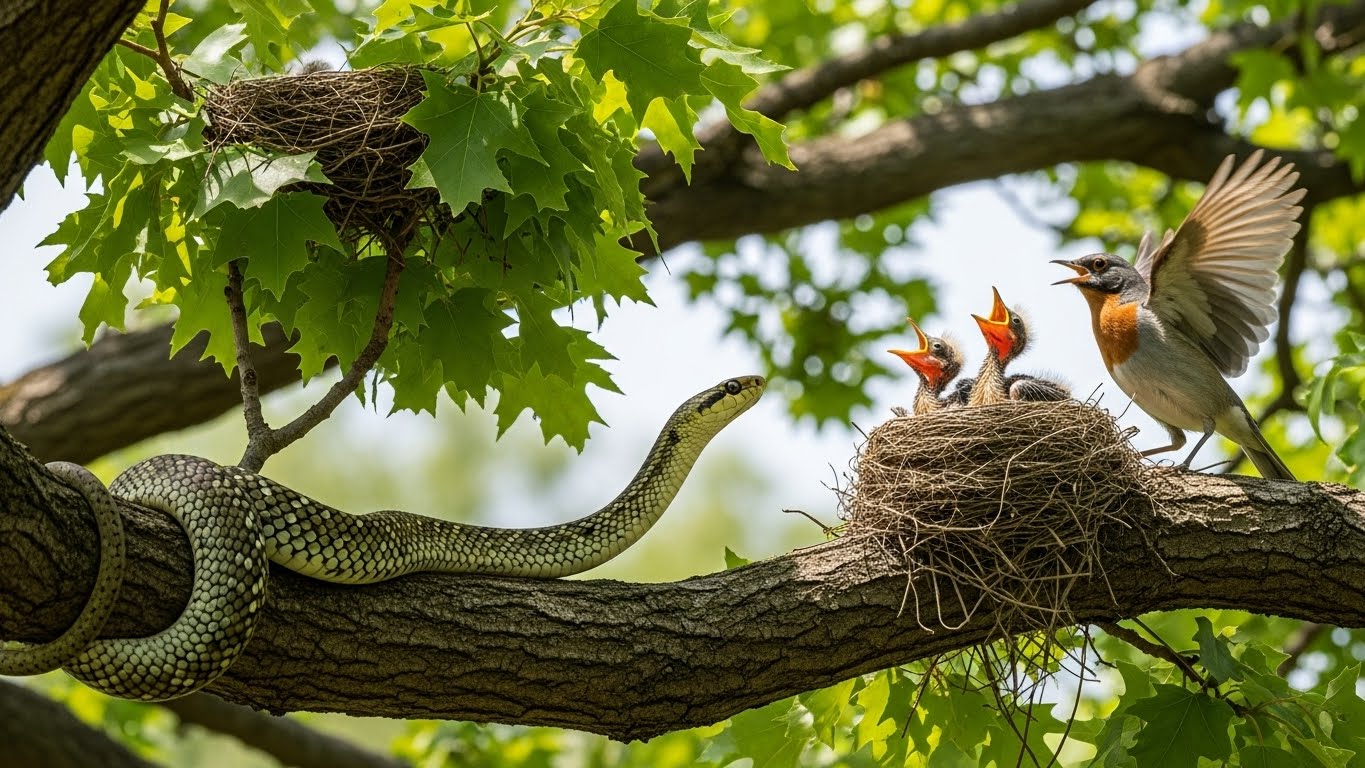
High in the trees, where feathers flutter and nests sway in the breeze, danger often comes without warning. While most predatory birds are masters of flight, and eat venomous snakes, but they are not always safe from predators lurking above the forest floor.
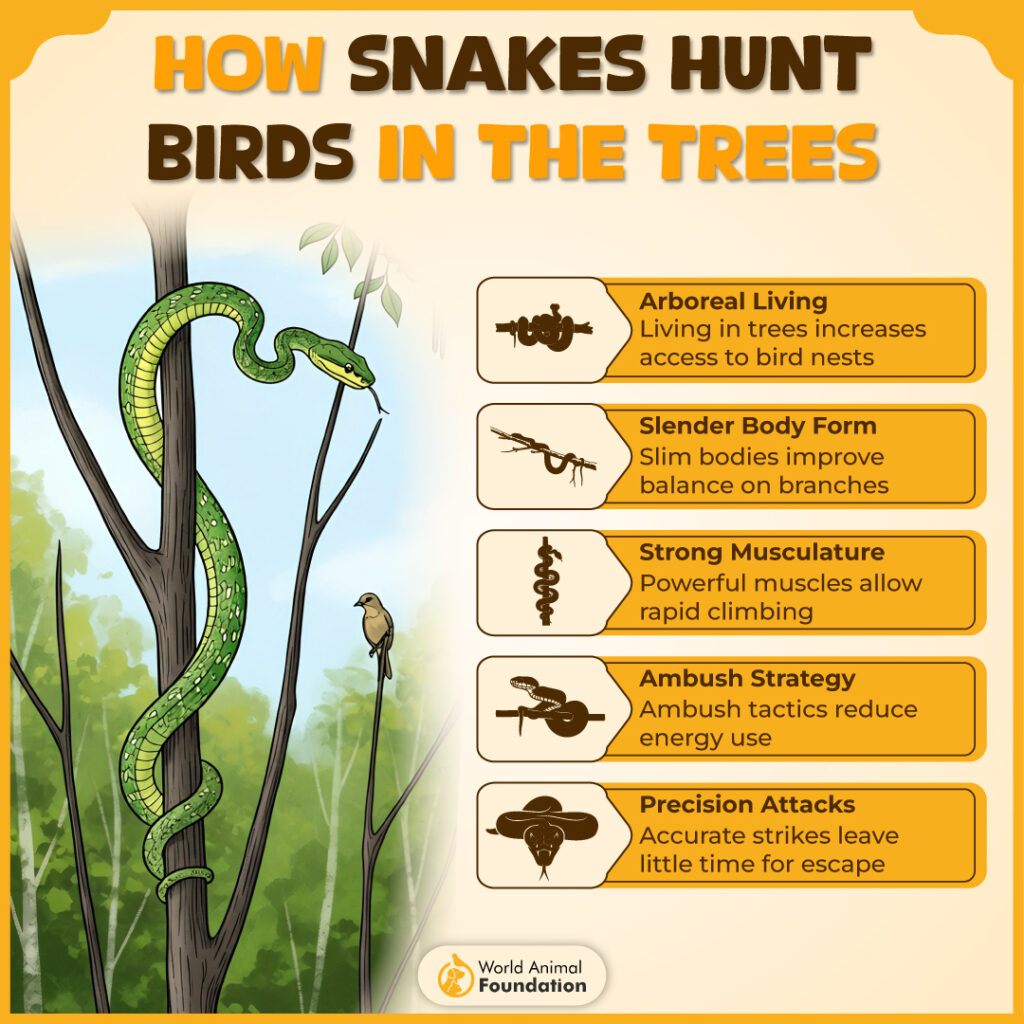
Some snakes have evolved extraordinary adaptations that allow them to hunt birds with stunning efficiency, turning branches, nests, and even midair moments into hunting grounds. These bird-hunting snakes are typically agile climbers, equipped with slender bodies, powerful muscles, and exceptional balance.
Many can navigate narrow branches with ease, reaching nests where eggs and chicks offer high-energy meals. Speed is crucial—quick strikes leave birds little time to react. Some species rely on camouflage to remain invisible among leaves and bark, while others use ambush tactics, striking the moment a bird lands nearby.
Hunting birds requires precision, patience, and remarkable physical control. It’s a high-risk, high-reward strategy that has shaped everything from a snake’s body structure to its behavior. We’ll uncover how these specialized snakes have adapted to target one of nature’s most elusive prey, proving that even the skies are not always out of reach for a determined predator.
Fact: Arboreal species like the green tree python and boomslang use slender bodies, strong climbing muscles, and excellent balance to ambush birds in nests or strike them mid-perch.
7 Snakes That Are Adapted for Hunting Birds
1. Green Tree Python
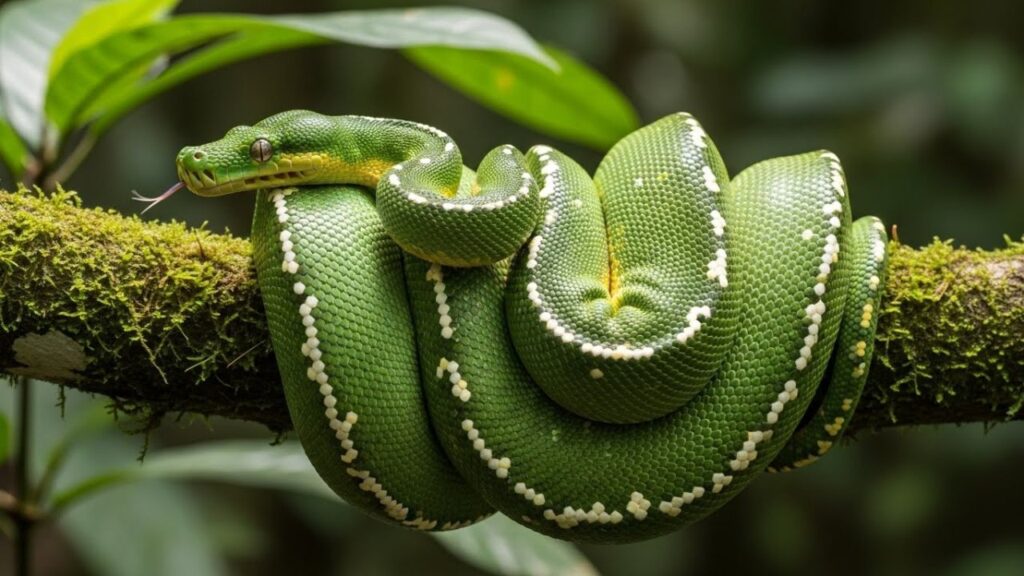
The Green Tree Python is a master of patience and precision, perfectly adapted for hunting birds high in the rainforest canopy.
It spends most of its life wrapped comfortably around branches, often forming a relaxed coil that makes it look more like part of the tree than a predator. Birds searching for a safe resting spot rarely suspect that the “branch” beneath them is very much alive—and already planning dinner.
Rather than actively pursuing prey, this python relies on stealth and timing. Its heat-sensing pits allow it to detect warm-blooded birds even in low light, and when the moment is right, it strikes with impressive speed and accuracy. The attack is quick, followed by powerful coils that leave little chance for escape. No chaos, no chase—just quiet efficiency.
✅ Its bright green coloration provides excellent camouflage among leaves and vines.
✅ A strong, prehensile tail helps it stay perfectly balanced while hunting in trees.
✅ Small birds that perch or nest in branches are its primary targets.
Interestingly, young Green Tree Pythons are born yellow or red and only turn green as they mature, as if they earn their stealthy rainforest disguise over time.
Elegant, calm, and deceptively dangerous, the Green Tree Python is a reminder that in the wild, the safest-looking branch might be the one you should avoid the most.
2. Boomslang
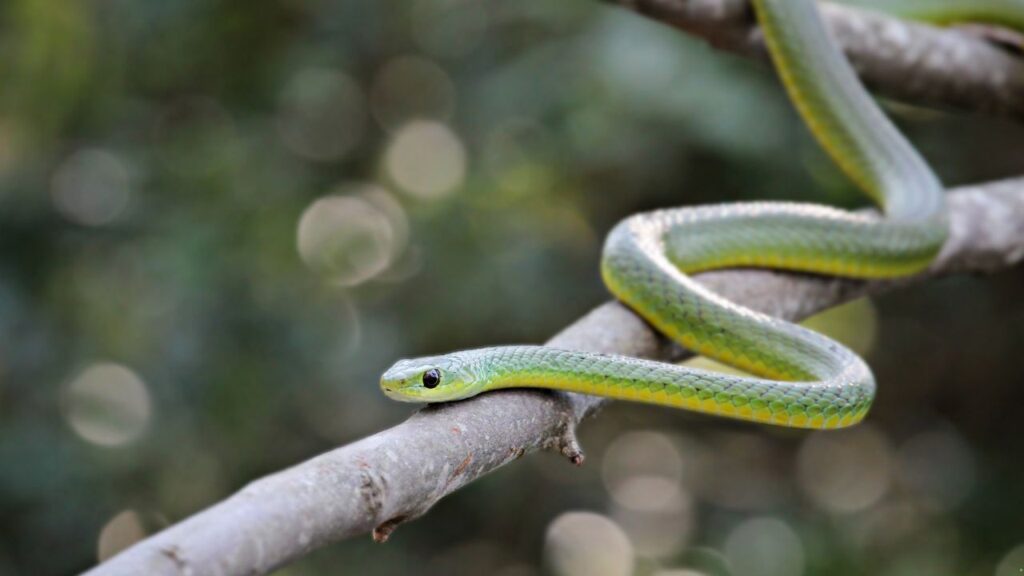
The Boomslang is one of those snakes that looks calm, curious, and almost polite—right up until you remember it’s highly venomous and very good at hunting birds.
Native to Sub-Saharan Africa, this snake spends much of its life in trees, gliding through branches with the confidence of an acrobat who never misses leg day. Forests, savannahs, shrubs, and grasslands all count as home, so the boomslang is nothing if not adaptable.
While it’s famous for its arboreal lifestyle, the boomslang isn’t a full-time tree hugger. It’s perfectly comfortable on the ground too, where it hunts, rests, or hides when the weather decides to be rude. This flexibility makes it an efficient hunter—whether birds are perched above or nesting closer to the ground, the boomslang is happy to adjust its strategy.
When it comes to food, the boomslang has a well-rounded menu. Wikipedia noted birds and their eggs are very much on it, along with chameleons, lizards, frogs, and the occasional small mammal.
✅ An excellent climber that moves easily through branches while hunting birds
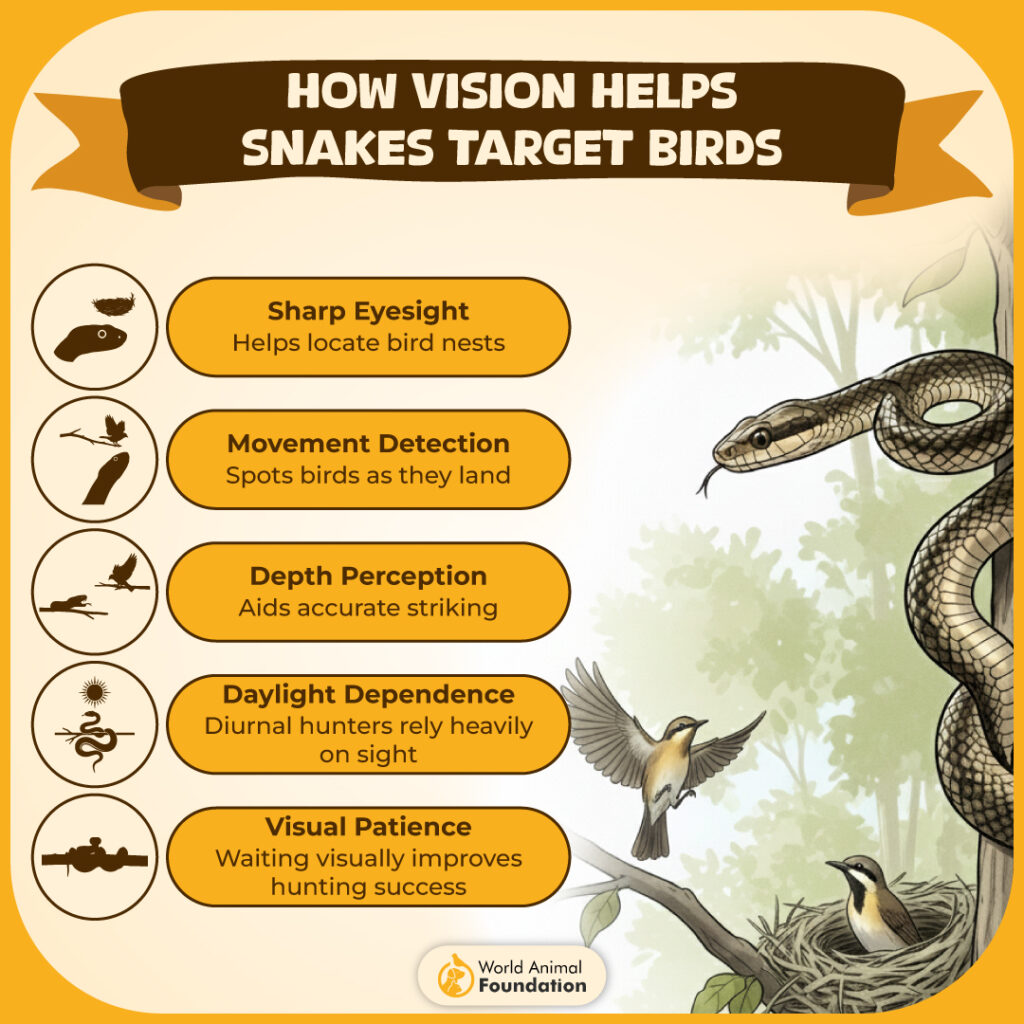
✅ Strong eyesight helps it locate nests, eggs, and resting prey
✅ Not limited to trees—can hunt and shelter on the ground when needed
Thanks to excellent eyesight, it can spot prey from a distance, giving it a serious advantage when sneaking up on nests or unsuspecting birds. Everything it catches is swallowed whole, no sharing, no leftovers.
Despite its deadly venom, the boomslang is generally shy and would rather avoid trouble than start it. Still, for birds nesting in African trees, it’s a quiet reminder that danger doesn’t always hiss loudly—sometimes it just watches patiently from the branches above.
3. Brown Tree Snake
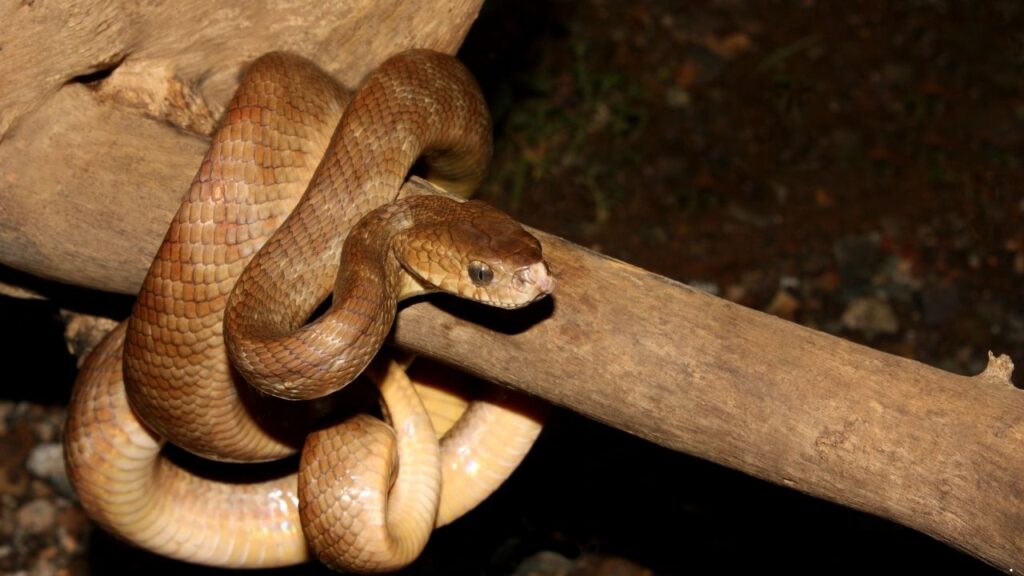
The Brown Tree Snake may not look particularly intimidating at first glance, but don’t be fooled—this snake has earned a serious reputation.
Known as one of the most aggressive invasive species, it’s a highly adaptable hunter with a strong preference for birds and small mammals. Juveniles start small, snacking on lizards, and graduate to bigger, feathered targets as they grow—think of it as a very problematic career path.
What makes the brown tree snake especially troublesome is its ability to thrive almost anywhere. Tropical forests, suburban areas, plantations, and grasslands all work just fine for this opportunistic predator. Once it settles in, it wastes no time exploring trees, rooftops, and nests, often hunting at night when birds are least prepared for surprise visitors.
✅ Feeds mainly on birds and small mammals; juveniles prefer lizards
✅ Excellent climber, making nests an easy target
✅ Highly adaptable across tropical and subtropical environments
According to A-Z Animals, its impact in Guam is a textbook example of how invasive species can disrupt an entire ecosystem. With no natural predators to keep its population in check, the brown tree snake has caused severe declines in native bird and lizard species.
Since many of those birds acted as pollinators, their disappearance has triggered a chain reaction—leading to a noticeable decline in native plant life as well. One snake, many problems.
Efficient, persistent, and unfortunately successful, the brown tree snake proves that sometimes the most dangerous predators aren’t the biggest or flashiest—they’re the ones that show up uninvited and refuse to leave.
4. Black Mamba
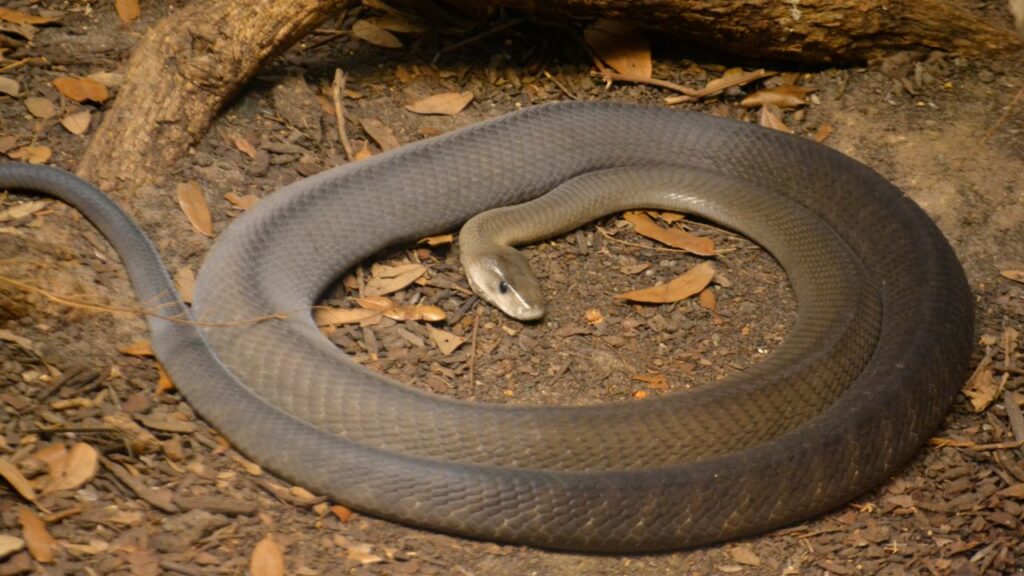
The Black Mamba is often described as fast, fierce, and fearless—and honestly, it lives up to the hype. While it’s best known as a ground-dwelling powerhouse, this venomous snake is just as comfortable in trees when the situation calls for it.
Found across savannahs, woodlands, rocky slopes, and even dense forests, the black mamba treats its environment like a well-mapped neighborhood. Unlike snakes that wander endlessly, the black mamba prefers structure.
It usually hunts from a permanent lair, returning to the same spot day after day unless disturbed. From there, it sets out during daylight hours to hunt, relying on speed, sharp awareness, and deadly efficiency. Birds are very much on the menu—especially nestlings and fledglings that haven’t quite mastered the art of escape.
✅ Hunts both on the ground and in trees, depending on prey availability
✅ Targets birds in nests as well as small mammals
✅ Uses a regular hunting territory centered around a permanent lair
When it strikes, it’s quick and precise. The black mamba delivers a powerful snake bite and then releases its prey, waiting calmly as the venom does the hard work.
Small mammals like rodents, squirrels, bats, and even bushbabies also fall victim to this highly effective hunter, making it one of the most versatile predators in its range.
Despite its fearsome reputation, the black mamba isn’t out looking for trouble—it’s out looking for food. Still, for birds growing up in its territory, the presence of this sleek, lightning-fast hunter is a reminder that danger can come from both the ground below and the branches above.s.
5. Emerald Tree Boa
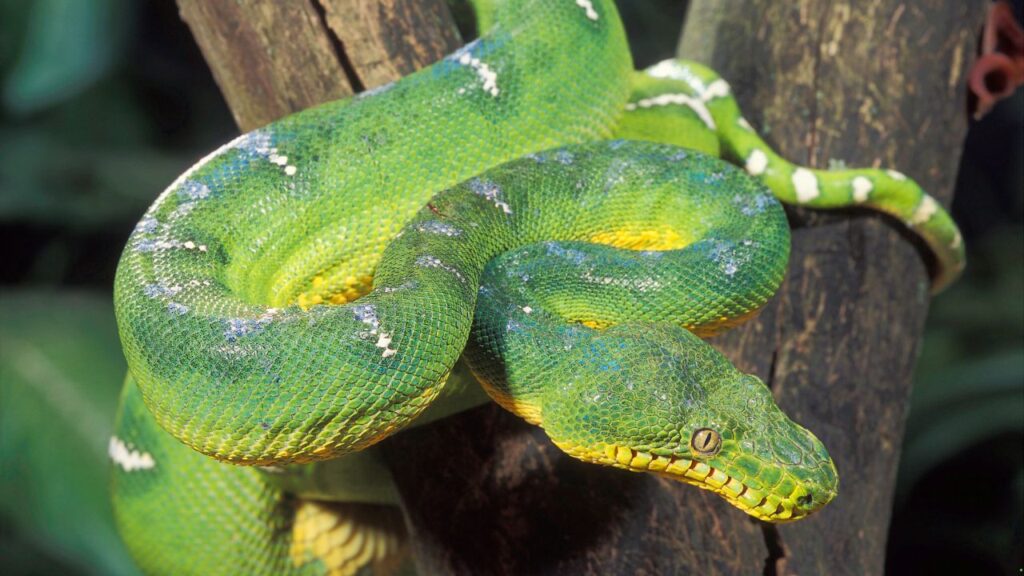
The Emerald Tree Boa is like the rainforest’s version of a luxury lounge—beautiful, calm, and deadly. Draped over branches in rich emerald green, it looks like a living piece of foliage, and that’s exactly the disguise it needs to hunt birds without being noticed.
Perched high in the canopy, this snake relies on patience, stealth, and precision rather than speed. Birds that land nearby are often too close for comfort before they even realize it.
Unlike some snakes that actively chase prey, the emerald tree boa is a true ambush predator. It coils silently on a branch, waiting for the perfect moment to strike.
Its prehensile tail helps it grip branches securely, allowing it to stay balanced while aiming for birds, nestlings, or occasionally small mammals. Once it strikes, its strong coils immobilize the prey quickly, leaving no room for escape.
✅ Bright green coloration with white markings provides perfect camouflage in leafy canopies
✅ Prehensile tail aids in balancing while hunting from branches
✅ Feeds mainly on birds, bird eggs, and small mammals, using an ambush strategy
Calm, elegant, and deceptively deadly, the Emerald Tree Boa proves that in the rainforest, patience can be just as powerful a weapon as speed. Birds may think a branch is safe, but in its world, every perch could be a potential trap.
6. Mangrove Snake
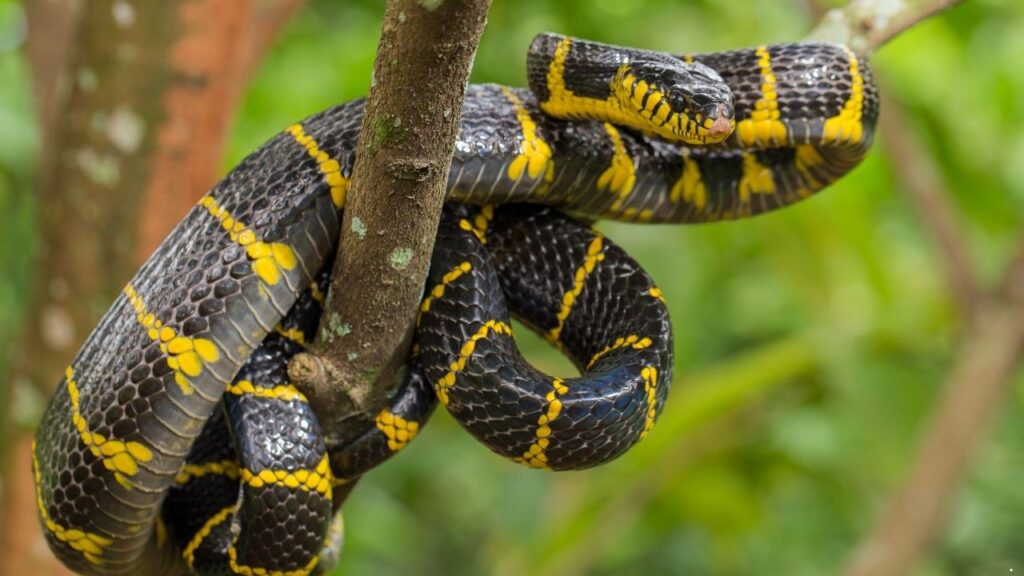
The Mangrove Snake is a striking example of adaptability and stealth in the snake world. Belonging to the genus Boiga and found across South Asia to Australia, this snake thrives in a variety of habitats—from dense mangrove swamps to forests and even on the forest floor.
Its long, slender body and broad, triangular head make it an efficient climber, allowing it to navigate branches with ease while stalking prey.
Primarily nocturnal, the mangrove snake has a particular knack for hunting birds under the cover of darkness. Its elliptical, sometimes green-hued eyes give it a “cat-eyed” appearance, reflecting its excellent night vision.
Britannica says this advantage allows it to detect and ambush birds perched in trees or resting in nests, often striking before the prey even realizes it’s being watched. Though it is only mildly venomous and rear-fanged, its hunting technique relies on patience, precision, and surprise rather than brute force.
✅ Equally comfortable on the ground or in trees, making it highly versatile in hunting
✅ Specializes in birds and small vertebrates, using stealth and ambush tactics
✅ Nocturnal with excellent night vision, giving it a clear edge over unsuspecting prey
Elegant, patient, and quietly deadly, the Mangrove Snake is a reminder that sometimes the deadliest predators are those that blend seamlessly into their surroundings and strike when least expected. Birds may roost safely during the day, but at night, this snake rules the canopy.
7. Golden Tree Snake
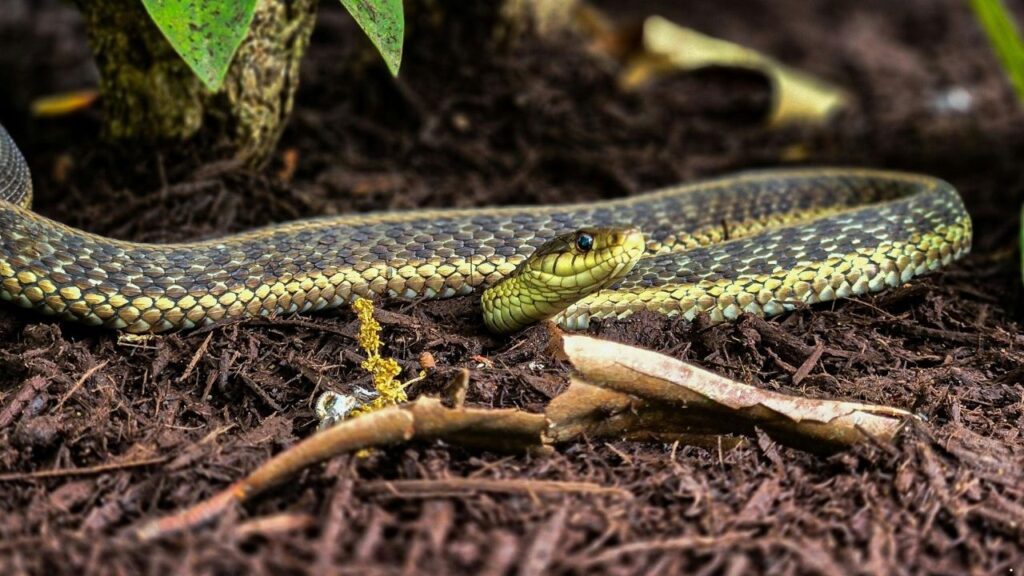
The Golden Tree Snake is a dazzling predator of the treetops, combining beauty, agility, and precision into one sleek package. Found across Southeast Asia, this snake is a true arboreal specialist, spending most of its life gliding through branches and hunting birds that stray too close.
Its slender, golden-hued body blends effortlessly with sunlight-dappled leaves, making it almost invisible to unsuspecting prey.
Like other tree-dwelling hunters, the golden tree snake relies on patience and stealth rather than brute force. Birds and their eggs are prime targets, and the snake strikes quickly, using its agility to coil around prey before it has a chance to escape.
Its diet may also include small mammals and lizards, but birds remain a favorite, especially young or roosting ones that don’t see the danger until it’s too late.
✅ Highly arboreal, perfectly adapted for hunting in trees and shrubs
✅ Slender, fast, and agile, striking with precision at birds and small vertebrates
✅ Camouflage in golden and green hues helps it remain unseen in sunlit canopies
Elegant, patient, and deadly, the Golden Tree Snake is a reminder that in the forest canopy, beauty can be a disguise—and sometimes, the most radiant hunter is also the most efficient.
Birds resting in the treetops might look safe, but with this golden predator lurking nearby, no branch is truly harmless.
Conclusion
Certain snake species have evolved to be formidable hunters of birds, including both small snakes and larger snakes. These venomous snakes, such as vipers, puff adders, black mambas, and venomous cobras, rely on potent venom and stealth to eat snakes and other prey. In forested areas of central and South America and beyond, these snakes are part of complex food webs involving birds of prey like red-tailed hawks, and specialized snake eaters such as the brown snake eagle and secretary bird (Sagittarius serpentarius). Their sharp talons, strong feet, and long neck of some predators complement the snakes’ hunting adaptations, making these reptiles highly efficient at capturing avian prey and surviving in diverse ecosystems.
Bird Hunting Snakes: Can You Score 5/5? 🐍🐦
What physical trait helps many bird-hunting snakes move in trees?
Which snake uses heat-sensing pits to detect birds?
Which snake is considered a highly destructive invasive species?
Which bird-hunting snake often hunts during the daytime?
Which snake relies heavily on ambush while coiled on branches?
