





When we choose a pet, we want to find a companion who can accompany us for the longest time possible. We become so attached to them, and they become such an integral part of our lives that we naturally wish they stay with us forever.
But unfortunately, that is not the case for many dog breeds that have a shorter lifespan. The strong and loving bonds that we form with our dogs often make it harder to let go of them.
And that is the precise reason why we need to consider the lifespan of the breed that we are going to choose for ourselves. Being informed helps in setting realistic expectations and preparing us emotionally for the journey.
With that in mind, let’s discuss some dog breeds that may have shorter lifespans but are nonetheless extraordinary and full of charm.
Dog Breeds with Reduced Lifespans and What to Expect
1. Leonberger
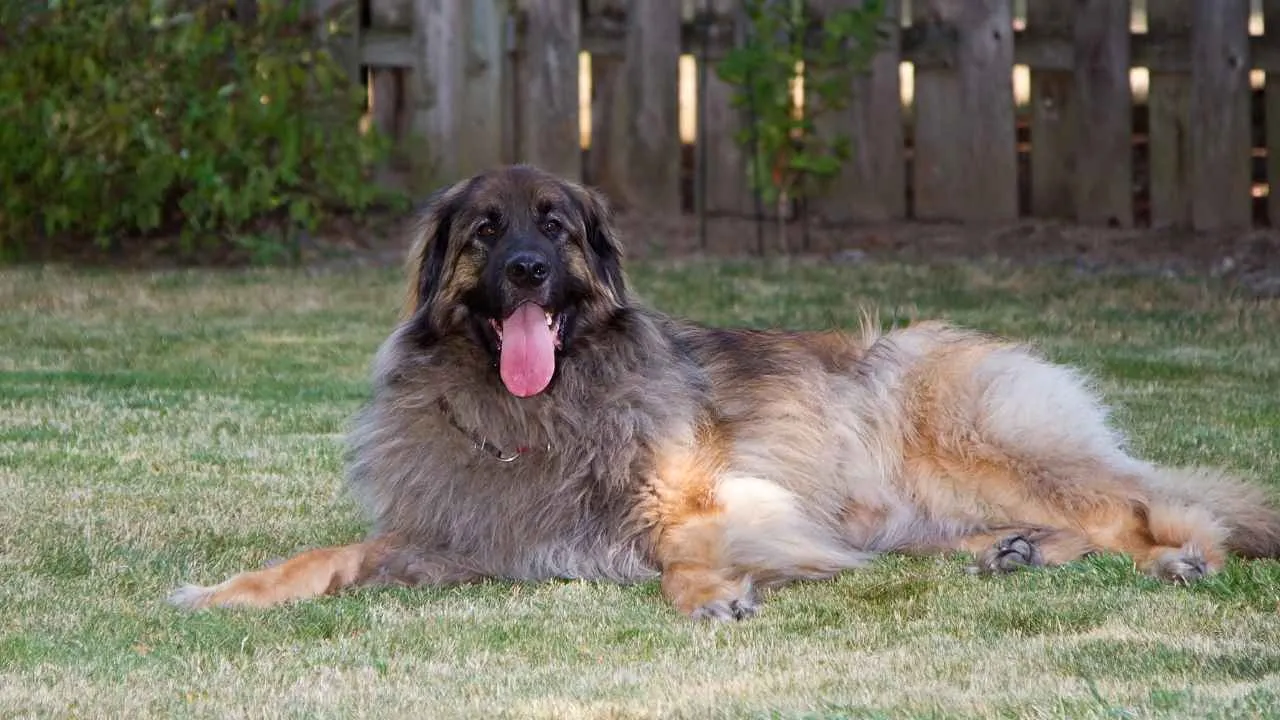
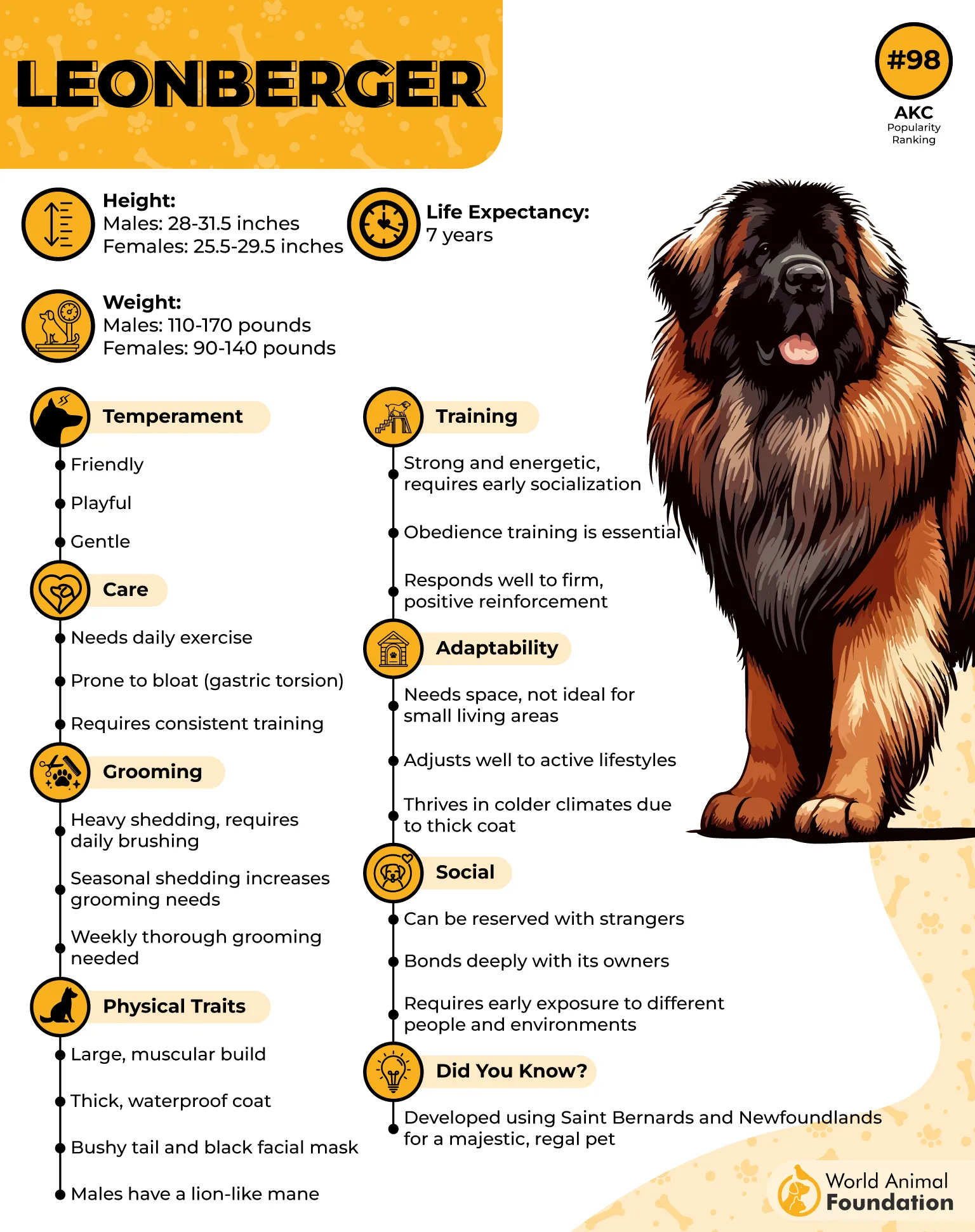
The Leonberger is a giant working dog breed that originates from Germany. They are strong and muscular and can be easy-going and gentle if trained properly.
It is an exceptional breed for dog owners who love the challenge of training a powerful and intelligent breed. But these gentle giants only live for up to seven years. So we need to be mindful of that when bringing them home.
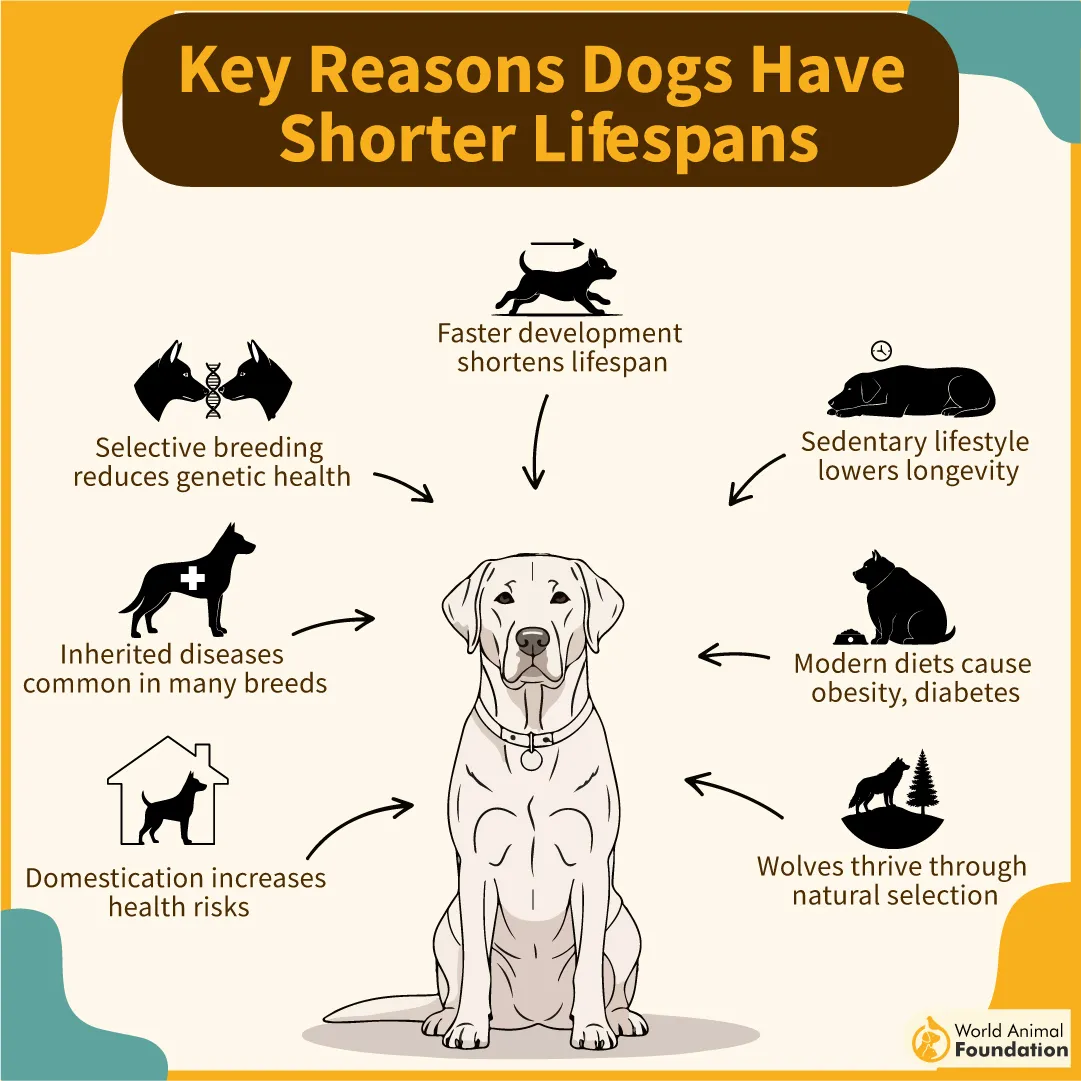
Leonbergers need special living conditions and plenty of space, so they are not ideal for apartment living. With proper training and regular exercise, they can be calm at home, but without these, they may become destructive.
As stated by PetMD, Leonbergers can develop some health issues that are commonly seen in giant dog breeds, and it is recommended to get pet insurance for them.
Health Issues That May Affect This Breed
Gastric Dilatation and Volvulus (GDV): A severe form of bloating.
Joint Problems: Abnormal development of joints.
Cataracts: The eye lens becomes cloudy.
2. Newfoundland
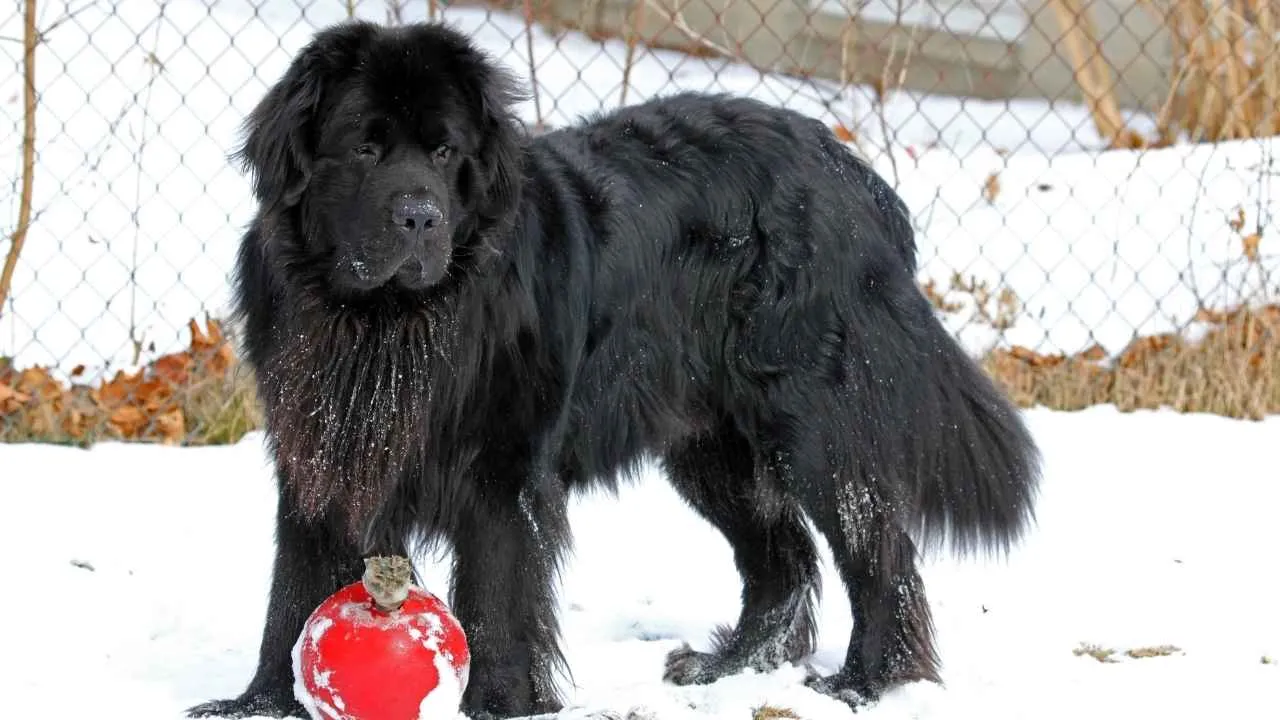
The Newfoundland is a giant, heavy boned dog. They were originally bred as a large working breed to help fishermen with heavy hauling and water rescues.
Having an average life expectancy of about 9 to 10 years, Newfoundlands require high-quality dog food, either commercial or prepared at home with their vet’s approval.
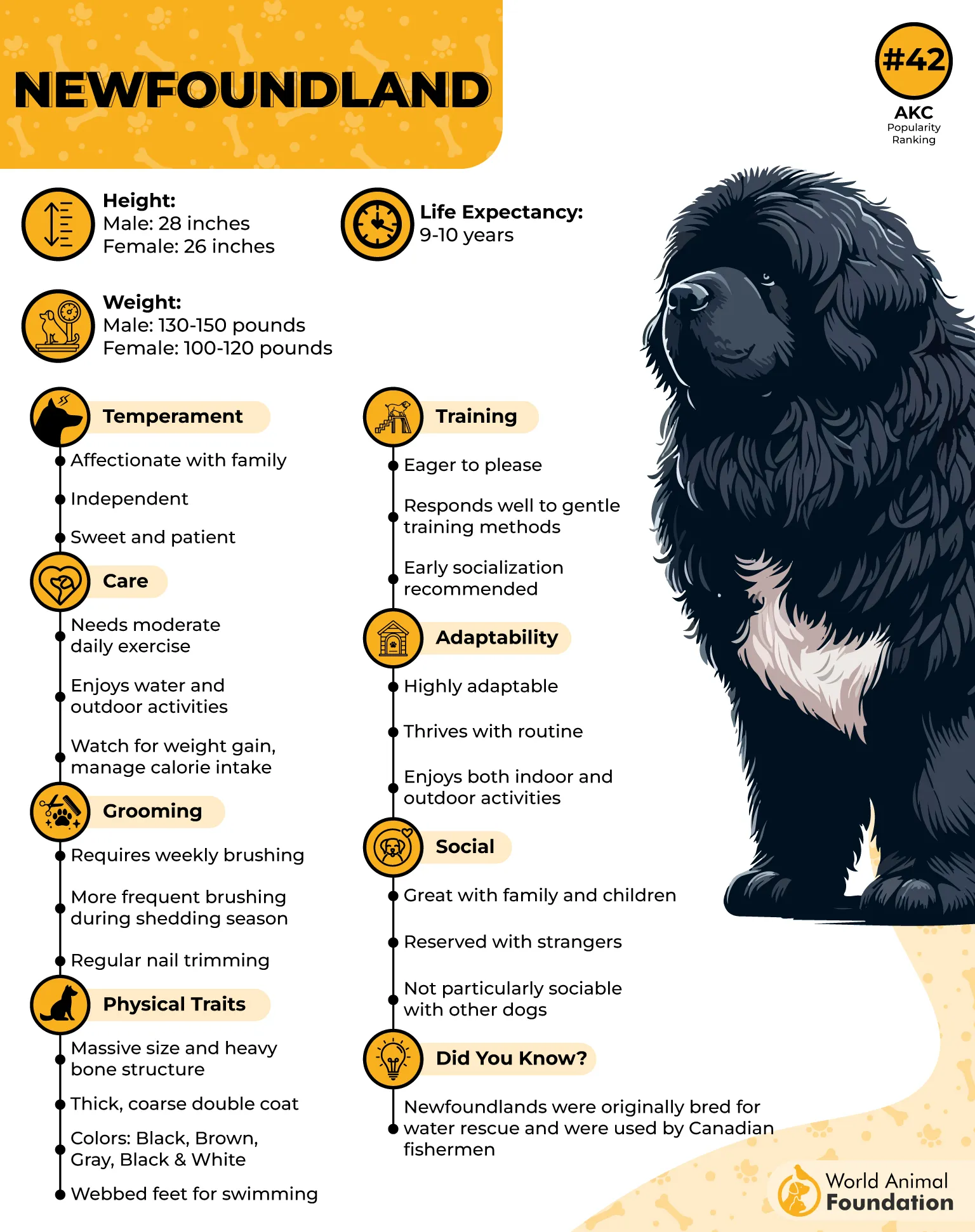
The Newfoundland is an ideal companion for individuals or families, but its large size should be considered. Although an adult Newfoundland does not need much exercise, it can easily become a couch potato.
They have an imposing size but are also known as one of the most docile and friendly dogs. They love sticking close to their families and are gentle with children, earning them the name ‘Nanny Dogs’. All these qualities make them truly adored.
Health Issues That May Affect This Breed
Bone Cancer: A tumor in the bone.
Hip Dysplasia: A condition in which the hip joints do not develop properly.
Elbow Dysplasia: A condition in which the elbow joints develop abnormally.
3. Rottweiler

The Rottweiler is a tough, powerful breed with an intimidating presence. Although they seem independent and aloof around strangers, with their family, they are loyal, protective, and devoted.
An active lifestyle is essential for their well-being. They enjoy long walks and swimming, which helps maintain their health and longevity. With proper care, they typically live between 9 and 10 years.
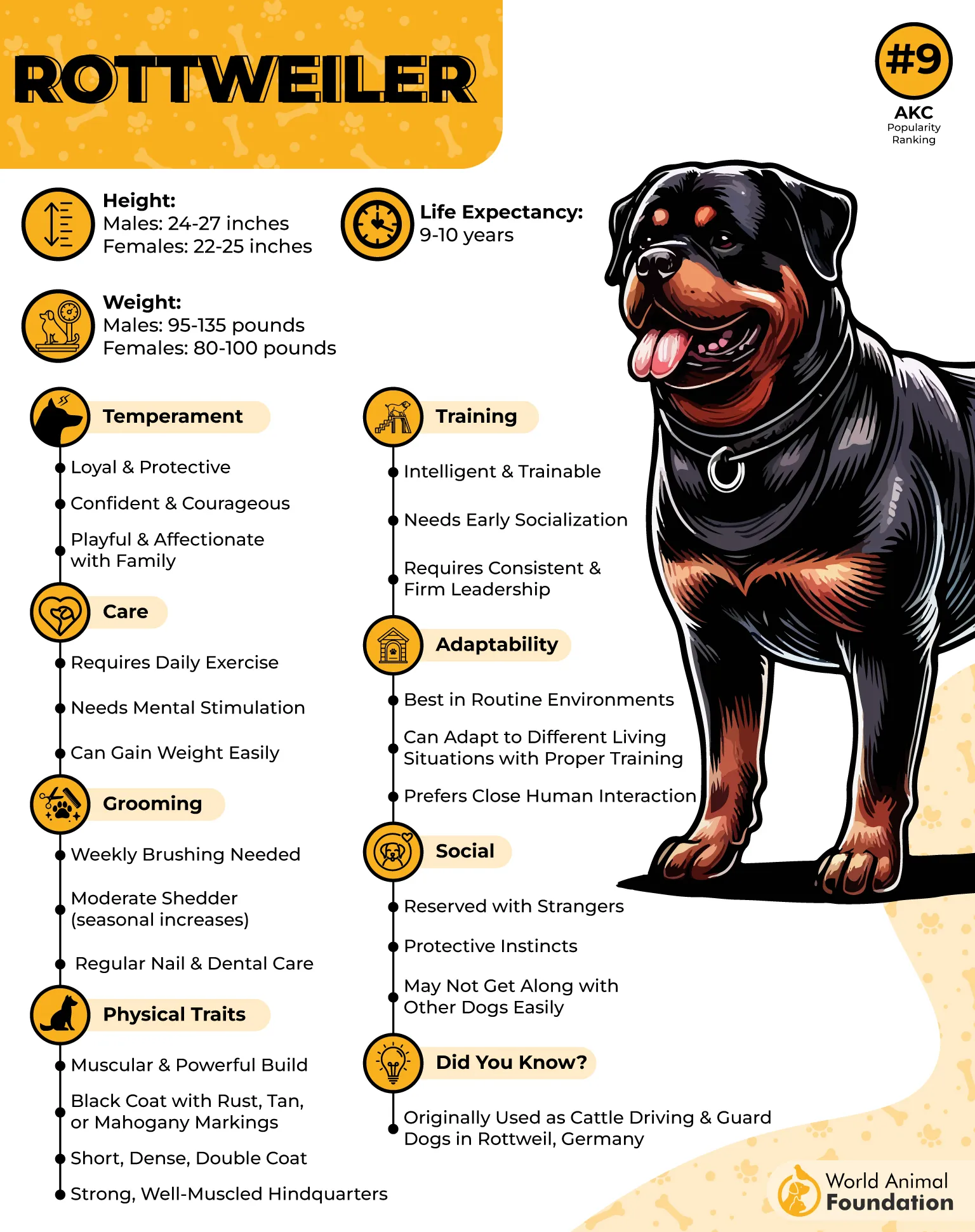
Active and intelligent, these dogs are confident enough to act independently and therefore need guidance from an early age. If left without direction, Rottweilers can become nuisance barkers or diggers, and due to their size, they are capable of causing significant damage.
Rottweilers are best suited for experienced owners who can commit to proper training and socialization so that they grow into calm, playful, and reliable companions.
Health Issues That May Affect This Breed
Obesity: Excessive weight gain can cause obesity.
Osteosarcoma: A painful and aggressive bone cancer.
Entropion: An eyelid condition in which eyelids curl inward.
4. Broholmer
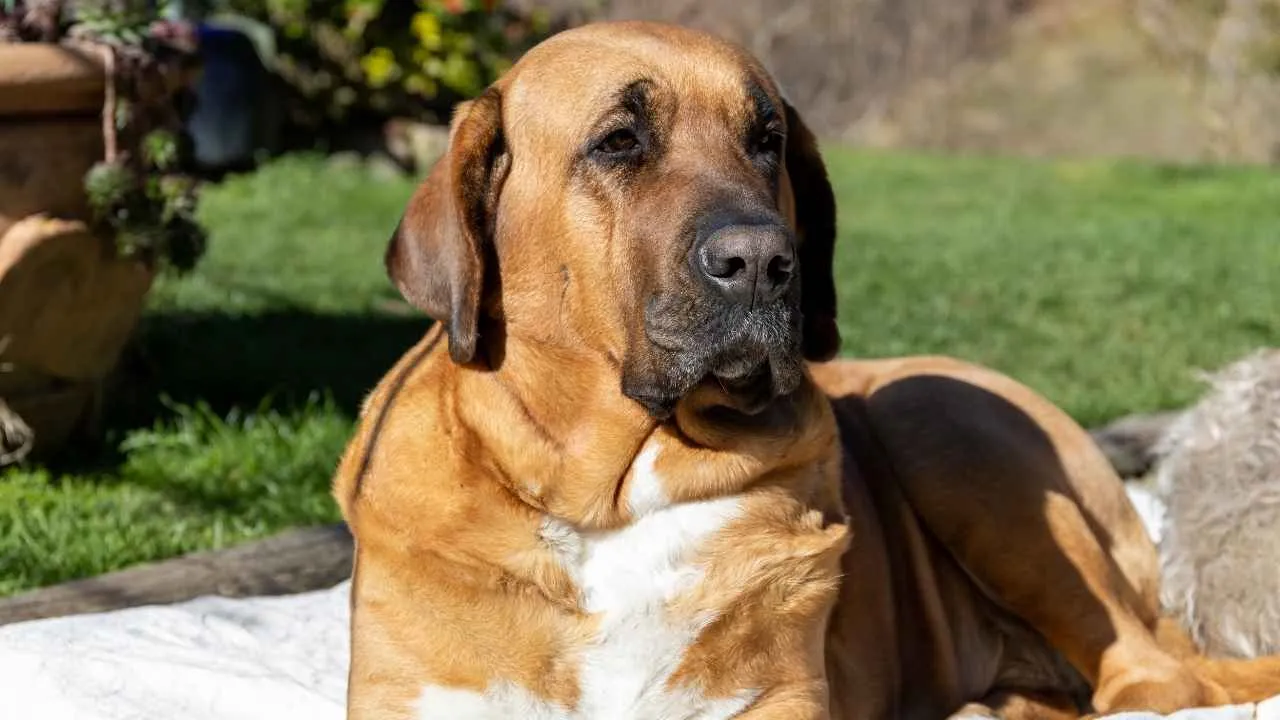
Broholmer is a large Mastiff dog breed that originates from Denmark. They have been employed as guard dogs for a long time and have strong protective instincts.
The giant size of this breed serves as a major advantage in its guarding roles. However, it is unfortunate that the large size of a dog can often mean a shorter lifespan, as smaller dogs tend to live longer. The life expectancy of this remarkable breed is about 8 to 10 years.

To ensure a healthy life for this breed, make sure to monitor their calorie consumption as they are prone to getting obese, which is harmful to their health. Proper daily exercise and a healthy diet can add years to their life.
A charming trait about this breed worth mentioning is that, even though they are large in size, they often act like lap dogs and love to cuddle up in their owner’s lap.
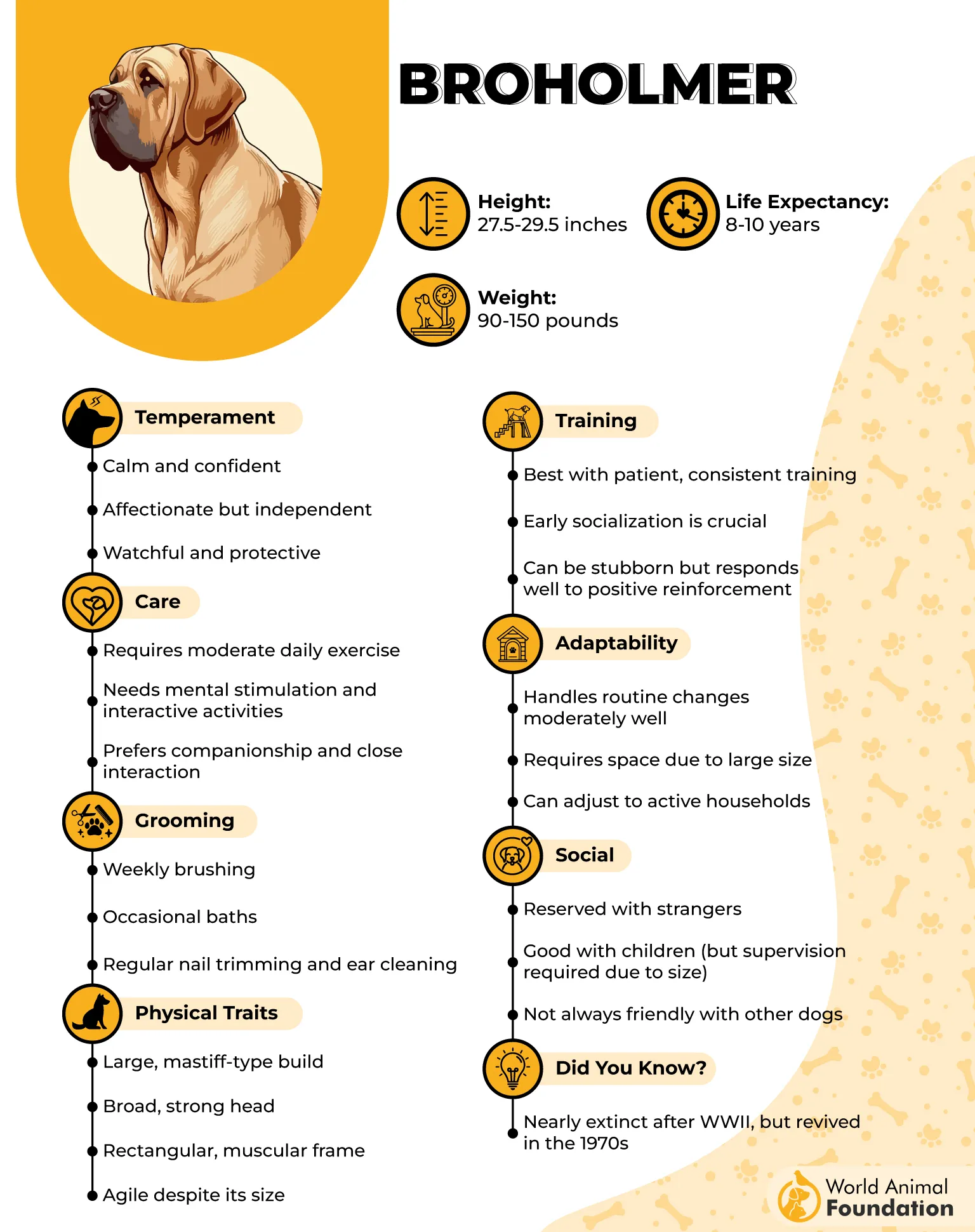
Health Issues That May Affect This Breed
Degenerative Myelopathy (DM): A condition that affects the spinal cord and leads to loss of coordination in the hind limbs.
Dilated Cardiomyopathy: A heart condition that weakens the heart muscles.
5. Bulldog
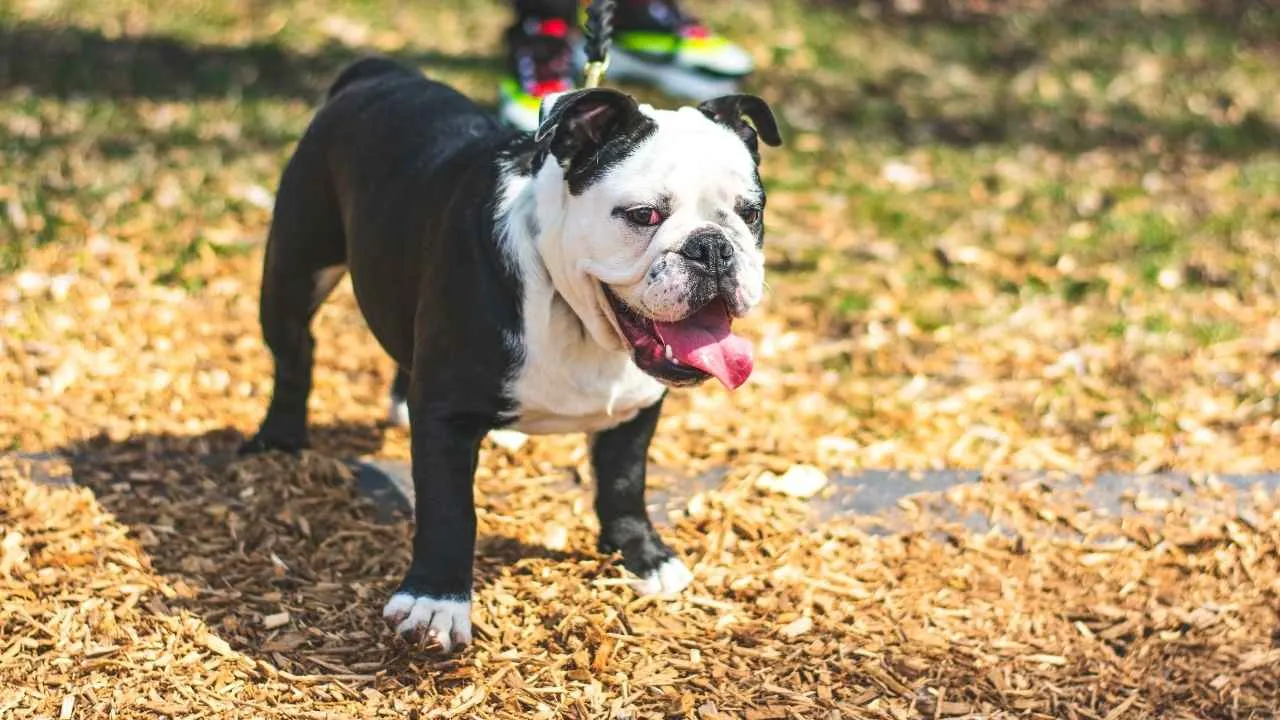
The beloved Bulldog is a short, wide-faced breed with a muscular build. Originally bred in England centuries ago for bull-baiting, they do best with consistent training.
As stated by Britannica, Bulldogs are a result of many generations of selective breeding; such breeding practices resulted in a well-mannered, gentle, playful dog that still retains the bravery and stubbornness of its past.
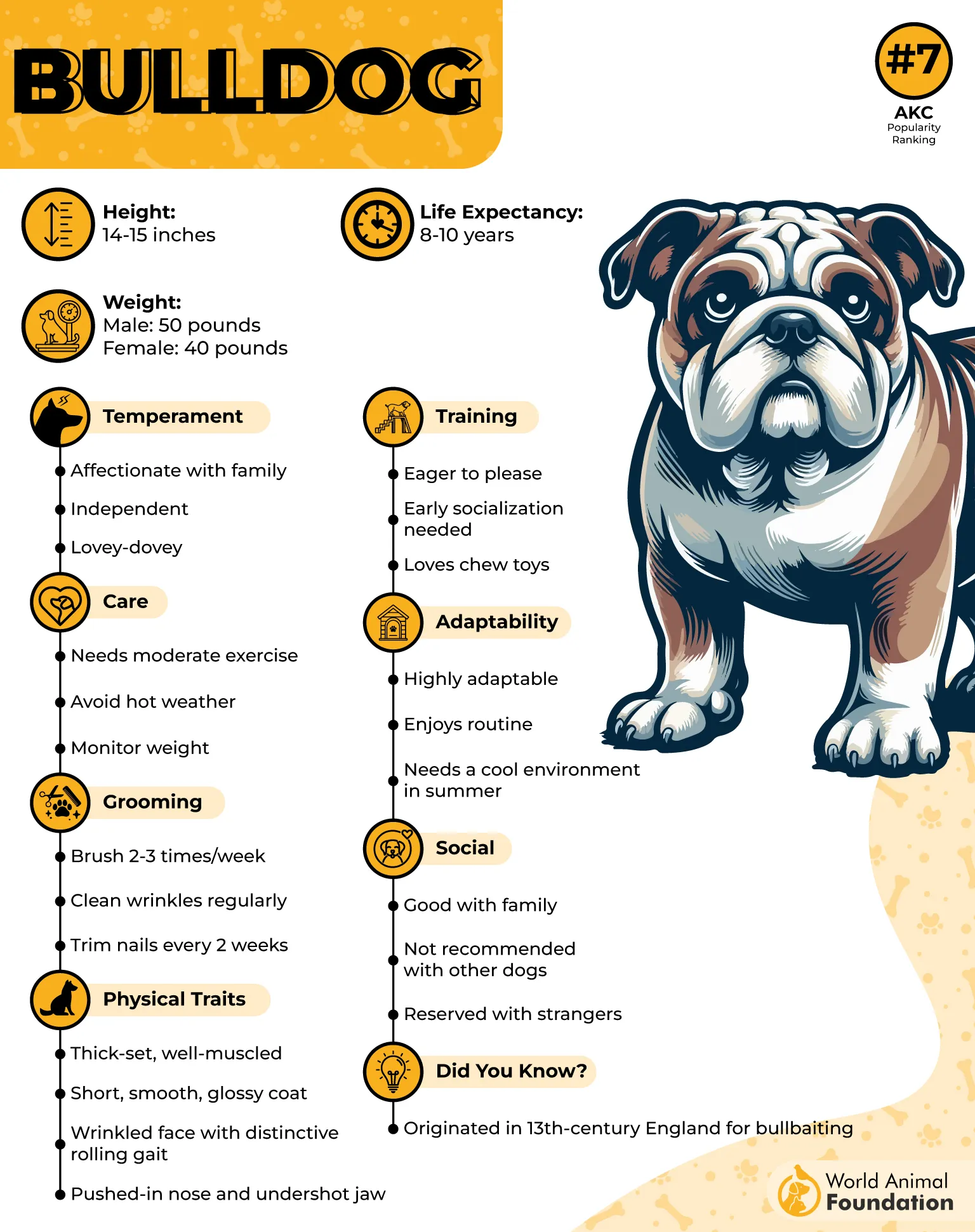
Affectionately known for their gentle nature, these highly loyal dogs thrive on being close to their humans. Their calm, easy-going temperament makes them well-suited to family life, especially since they enjoy the company of children.
Bulldogs have an average life span of 8 to 10 years. Their flat face, sensitivity to extreme temperatures, and loose skin can all lead to health problems. Some of those problems may need lifelong treatment or surgical treatment.
Health Issues That May Affect This Breed
Brachycephalic Obstructive Airway Syndrome (BOAS): A breathing problem that can occur due to the breed’s short face and narrow nose openings.
Skin Fold Pyoderma and Allergies: A skin condition due to excessive moisture in skin folds.
6. Saint Bernard
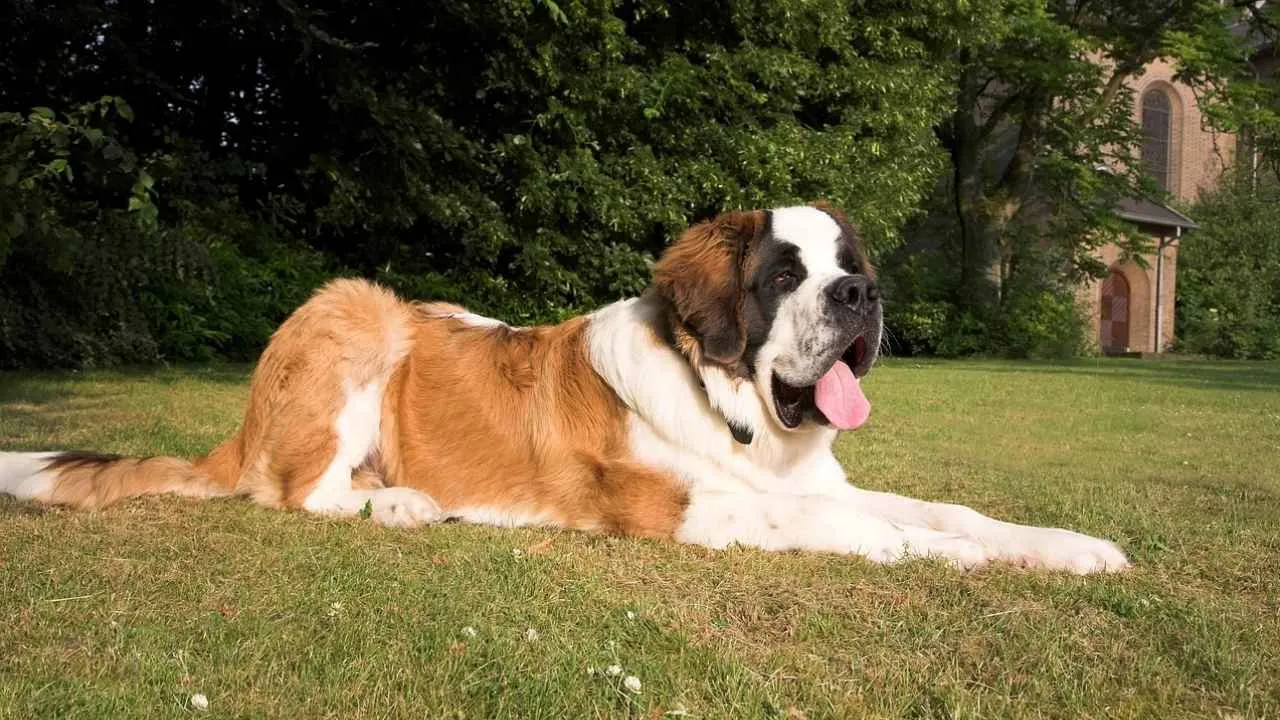
The Saint Bernard is a gentle giant known for its massive build and kind heart. They were originally bred by monks in the Swiss Alps to rescue people from the snow.
They have an average lifespan of 8 to 10 years. As mentioned by AKC, they can usually handle hot weather, but it should be kept in mind that they should have a cool place to rest. However, suddenly going from air conditioning to high heat can cause serious distress.
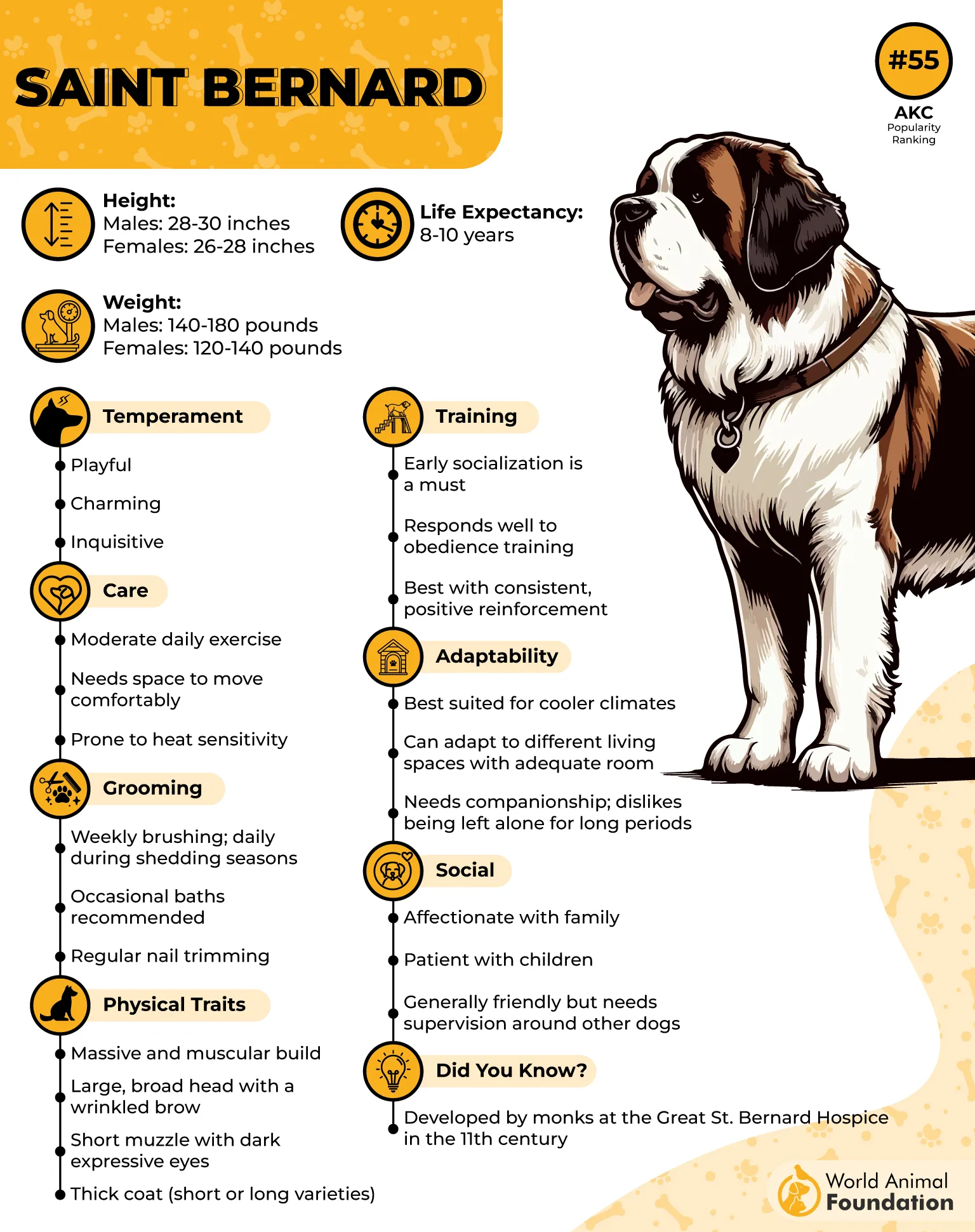
Because of their friendly and calm nature, Saint Bernards typically do well around young children and make wonderful family dogs.
Such large dogs usually require a moderate amount of exercise daily. A long walk or a half-hour playing session is enough exercise to keep this breed happy and healthy.
Health Issues That May Affect This Breed
Canine Hip Dysplasia: A condition in which the femur does not fit properly in the hip joint.
Lymphoma: A type of cancer that originates in lymph nodes and spreads to other organs.
7. Great Dane
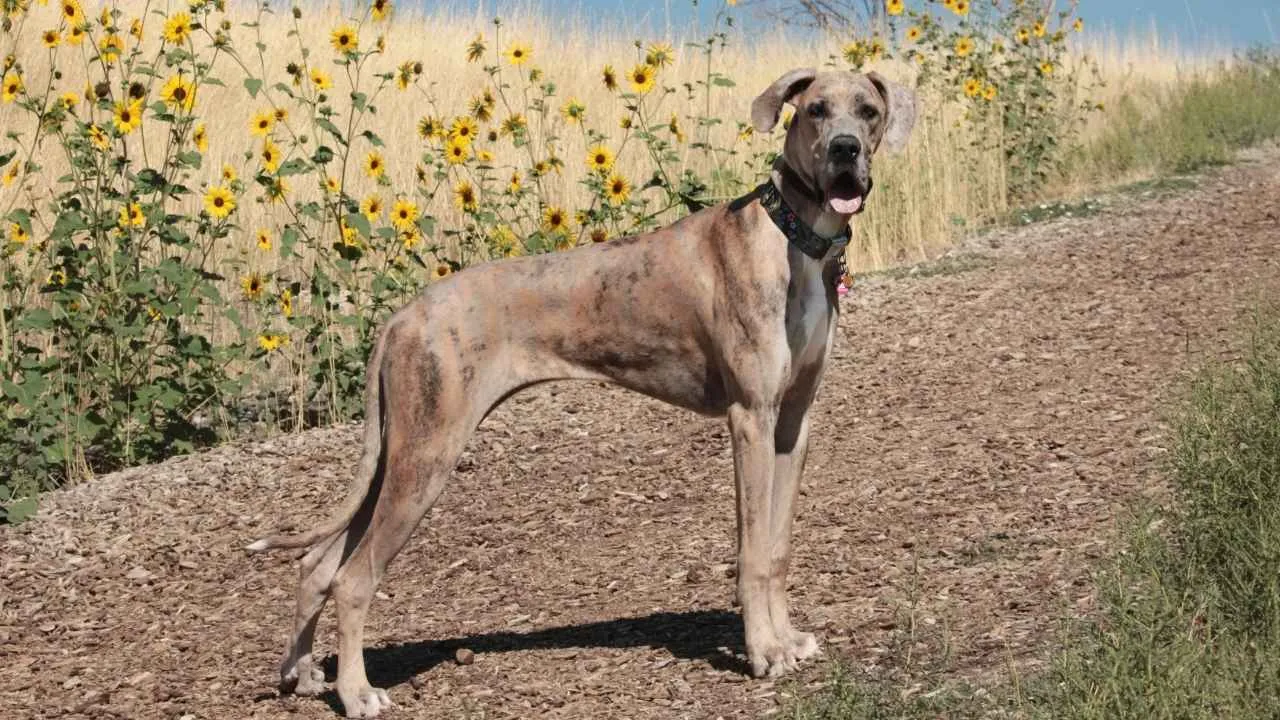
Great Danes are towering yet graceful dogs that instantly command attention. Despite their massive size, they are known for their gentle hearts and calm nature. Living with a Great Dane feels less like owning a dog and more like sharing a space with a friendly giant, as they adore their owners.
Sadly, they have a limited lifespan of only 7 to 10 years. They require sufficient space and proper training to help them understand and manage their size.
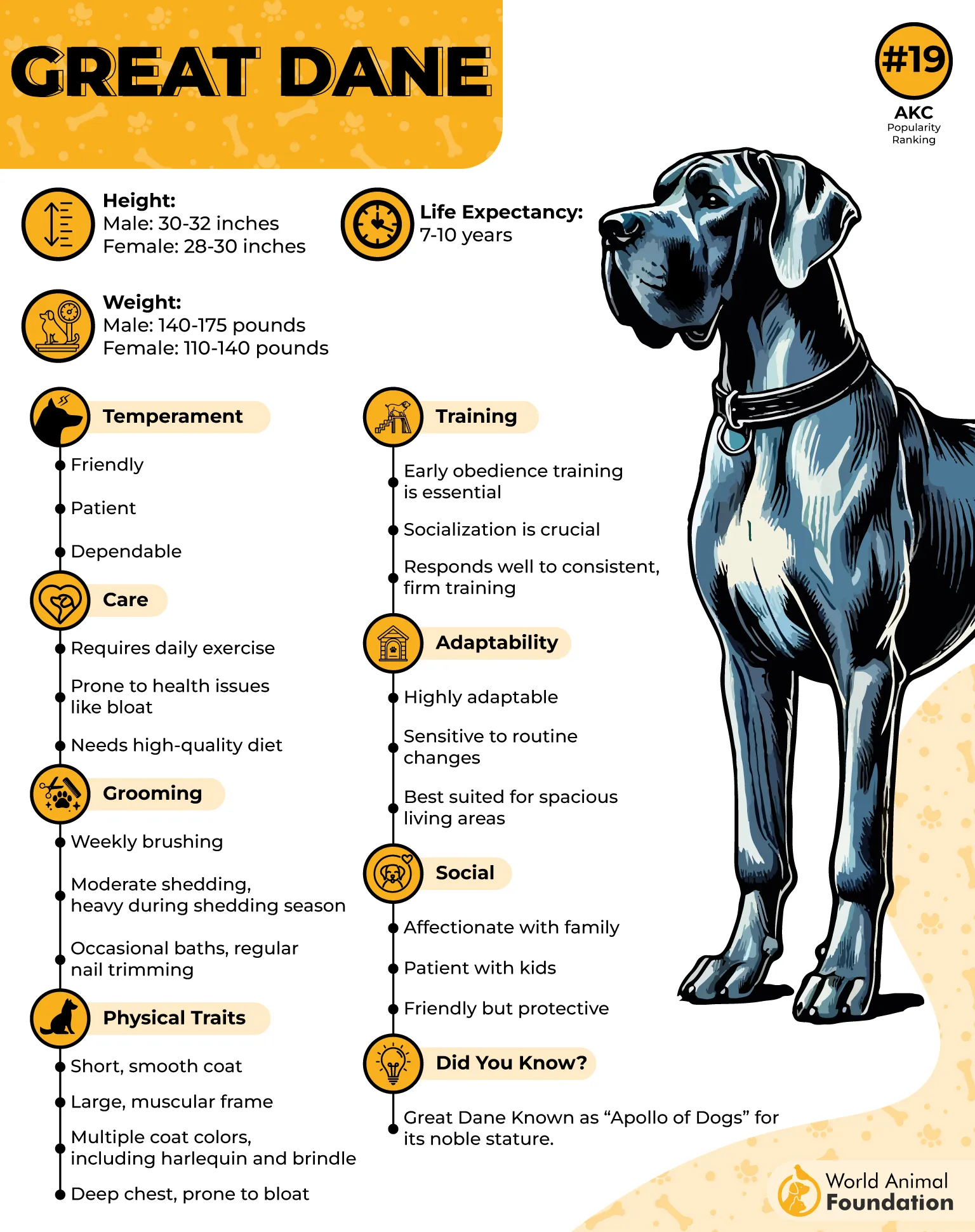
Great Danes are typically good family dogs and do well with children when they are trained and socialized from an early age. However, interactions between children and all dogs, especially one as large as a Great Dane, should always be supervised.
According to WebMD, exercising is necessary for Great Danes, but they should not exercise heavily during mealtimes, as it can cause bloat, which can be life-threatening to Great Danes.
Health Issues That May Affect This Breed
Wobbler Syndrome: A neurological condition due to a large head and neck that can cause cognitive decline.
Degenerative Myelopathy: A spinal disease that can cause lower back pain and even paralysis.
Conclusion
Choosing the right dog means understanding how different factors shape life expectancy. While mixed-breed dogs and smaller dogs are often known for resilience, dogs of all sizes can make rewarding canine companions. Large breeds are often most likely to fall among breeds with the shortest lifespan due to health conditions.
Dog lifespans are influenced by responsible breeding, awareness of early signs of illness, proper exercise, and a balanced diet tailored to individual needs. With a proper diet and attentive care, even giant breeds can thrive alongside other dogs and small animals.
If you’re a first-time dog owner looking for other breeds to consider, you might also explore Cavelier King Charles Spaniel, American Bulldog, French Mastiff, Siberian Husky, Irish Wolfhound, Chinese Crested dog, Bernese Mountain dog, Toy Poodle, Scottish Terrier, and Border Terrier.
