




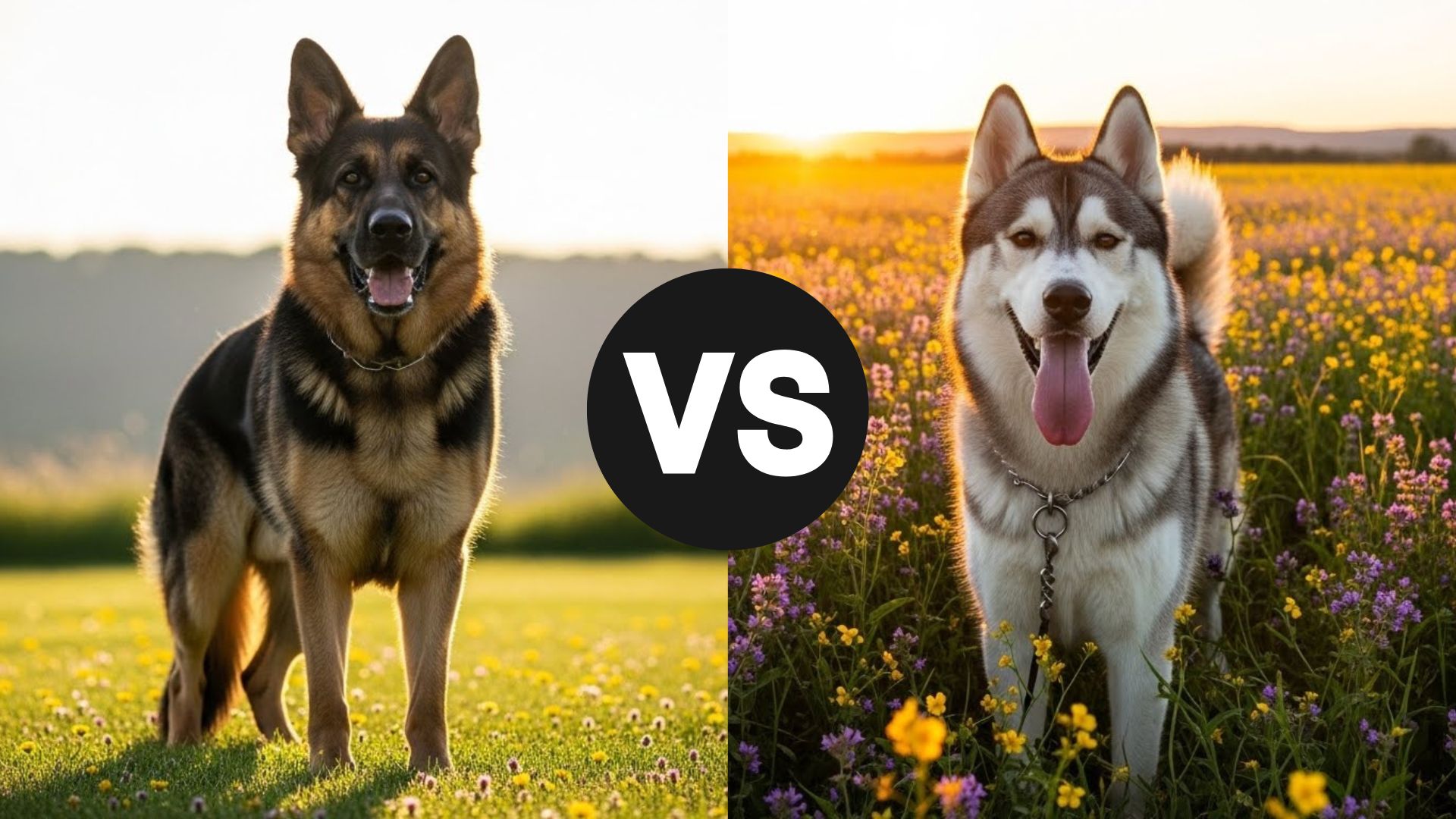
We often imagine what it would be like to have a strong, intimidating, wolf-like dog by our side, one that looks powerful and ready to protect us. Yet behind that fierce appearance, these dogs often have gentle hearts and display deep loyalty and affection toward their owners.
When searching for a breed with such traits, people commonly gravitate toward two breeds: German Shepherds and Huskies. They may appear similar at first glance, but their personalities, energy levels, and instincts are very different from each other.
Both breeds are incredible in their own ways, but they suit different types of owners and lifestyles. In this guide, we explore the key traits of German Shepherds and Huskies to help you decide which breed truly fits what you are looking for in a companion.
Things to Know: German Shepherd Dog Breeds Compared to Huskies
German Shepherds and Huskies may look similar, but they differ greatly in temperament, energy levels, training needs, and lifestyle compatibility.
This guide makes it easy to understand where these two breeds are similar and where they differ, helping you decide which one is the right fit for your home and lifestyle.
German Shepherd vs. Siberian Husky: Size & Build Differences
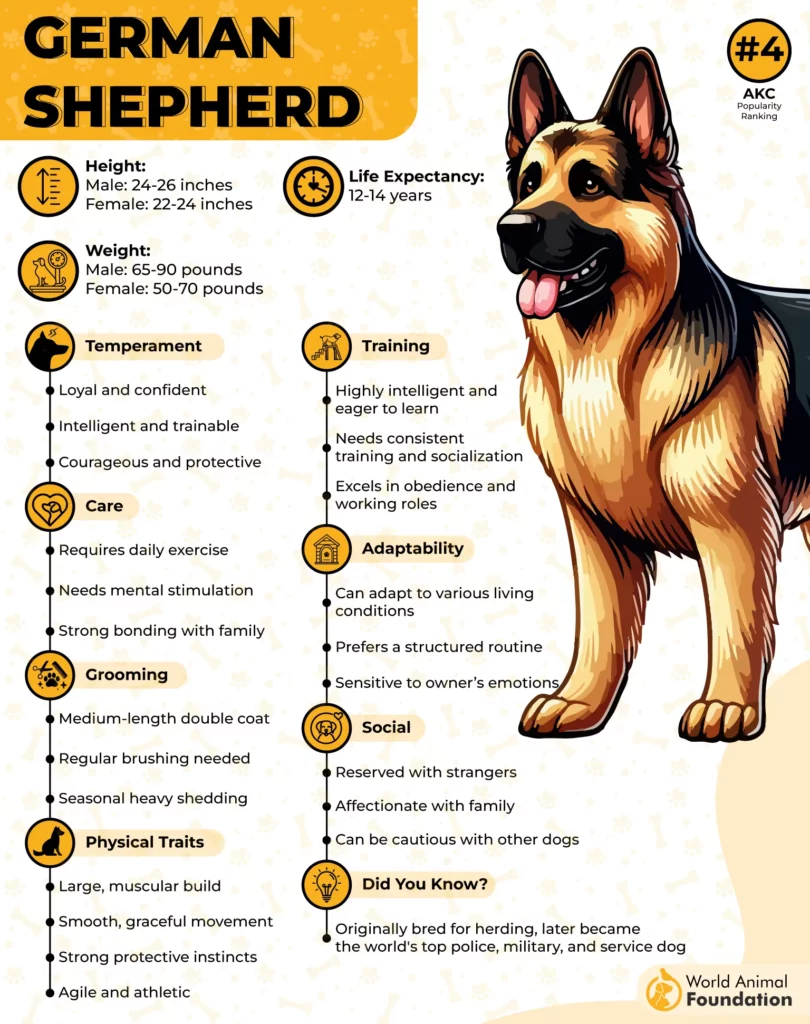
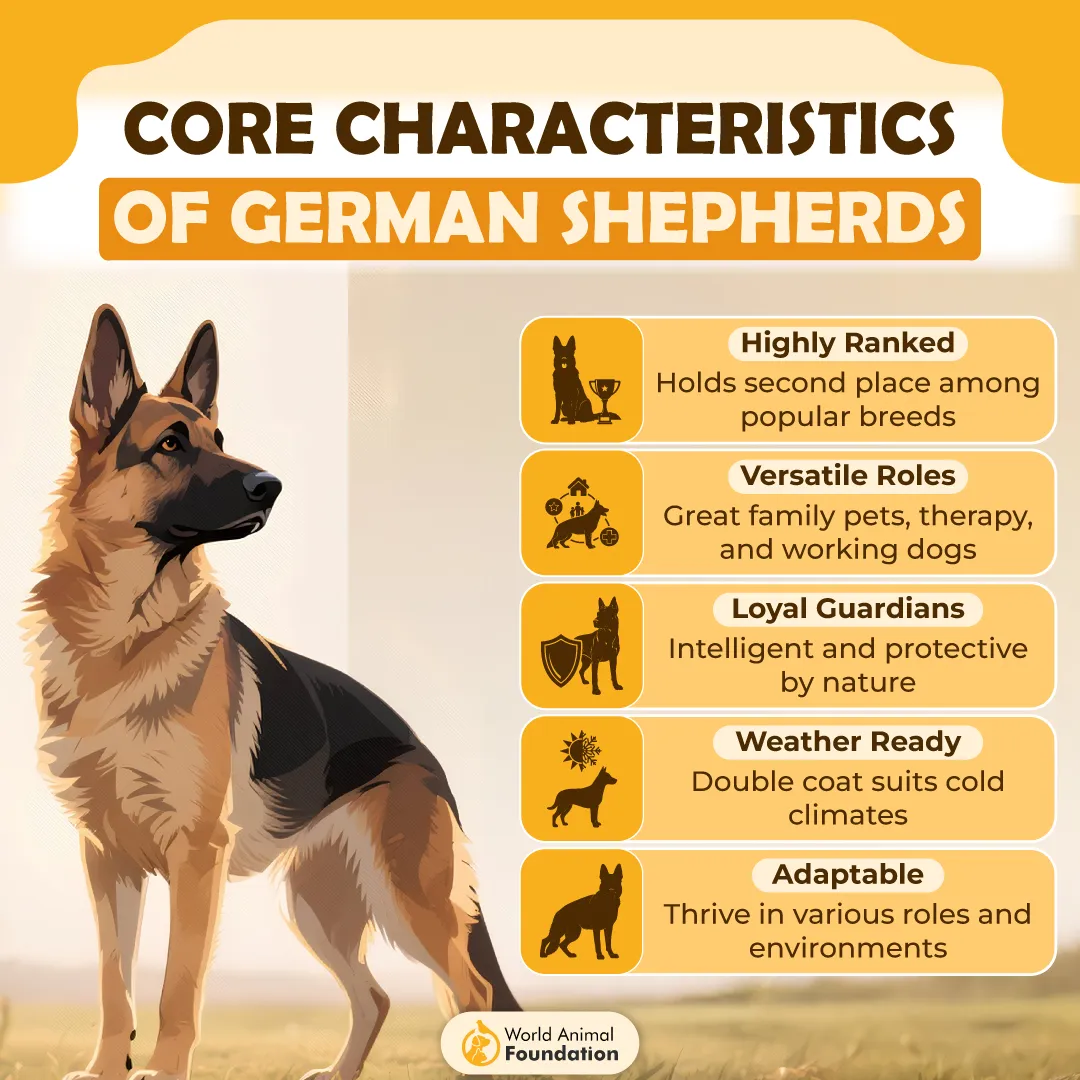
German Shepherds are large, agile, muscular, and highly intelligent dogs. They are loyal and one of the most popular working dogs. They have a remarkable work ethic and would even put their life on the line to protect their loved ones.
According to AKC, male German Shepherds have an average height between 24 and 26 inches, and females have an average of 22 to 24 inches at the shoulder. Both males and females typically weigh between 50 and 90 pounds.
Siberian Huskies are also muscular and strong working dogs, who possess a high cold-weather tolerance and are used for working and pulling sleds in colder regions. They are friendly and energetic and prove to be loyal and loving companions to their owners.
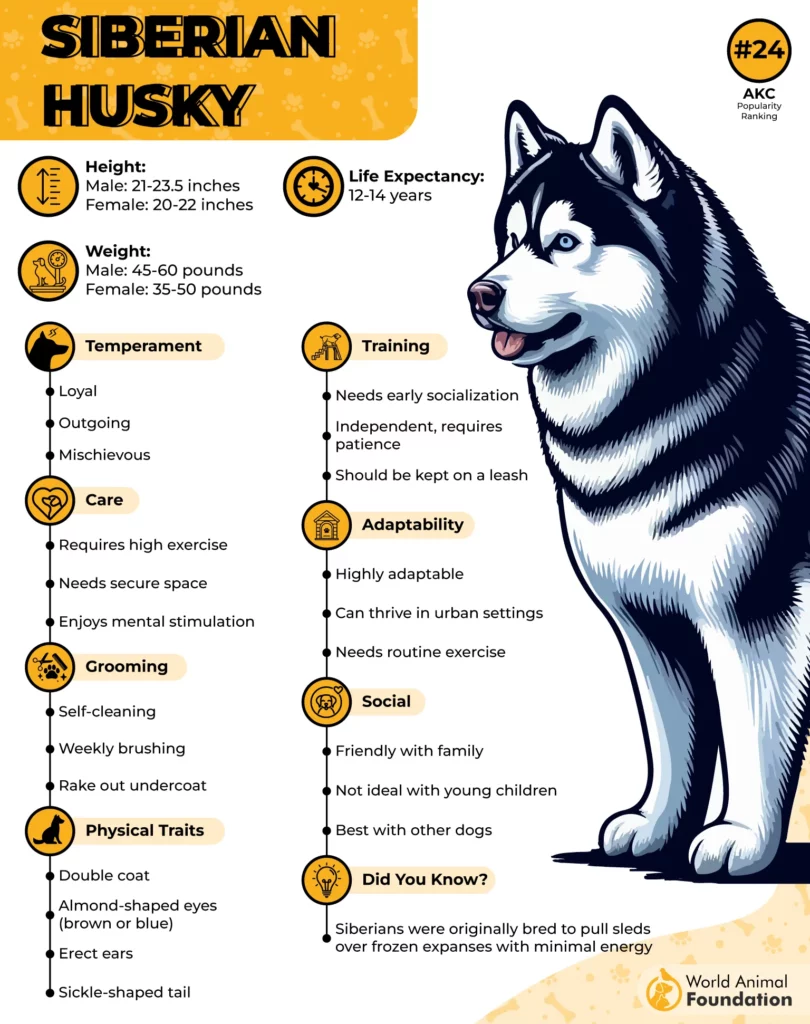
When it comes to height, the male Siberian Huskies on average stand 21 to 23 inches tall, while females have an average height between 20 and 22 inches.
German Shepherd vs. Siberian Husky: Temperament & Personality
One of the main reasons for German Shepherds to be so admired and loved worldwide is their character. Their loyalty, courage, and overall personality are top-tier. German Shepherds are sharp-minded and confident, always aware of their surroundings. They are fiercely loyal to their families and extremely protective of them.
German Shepherds tend to form strong, focused bonds with one primary handler, which makes them highly dependable and responsive in structured environments. Because of their people-oriented nature, they are often sensitive to their owner’s emotions and respond well to clear leadership.
Siberian Huskies, in contrast, are more socially flexible and typically spread their affection evenly among family members rather than attaching strongly to one person. They value independence and freedom, which can sometimes be mistaken for stubbornness.
While German Shepherds naturally look to humans for guidance, Huskies are more likely to make decisions on their own. This difference means German Shepherds generally prefer structured households, whereas Huskies do best in homes that allow room for exploration, patience, and adaptability.
German Shepherd vs. Siberian Husky: Exercise & Energy Levels
As stated by PetMD, German Shepherds are an agile and athletic breed and need at least two hours of daily exercise for their health. Without enough physical and mental stimulation, they develop unwanted behaviors due to pent-up energy.
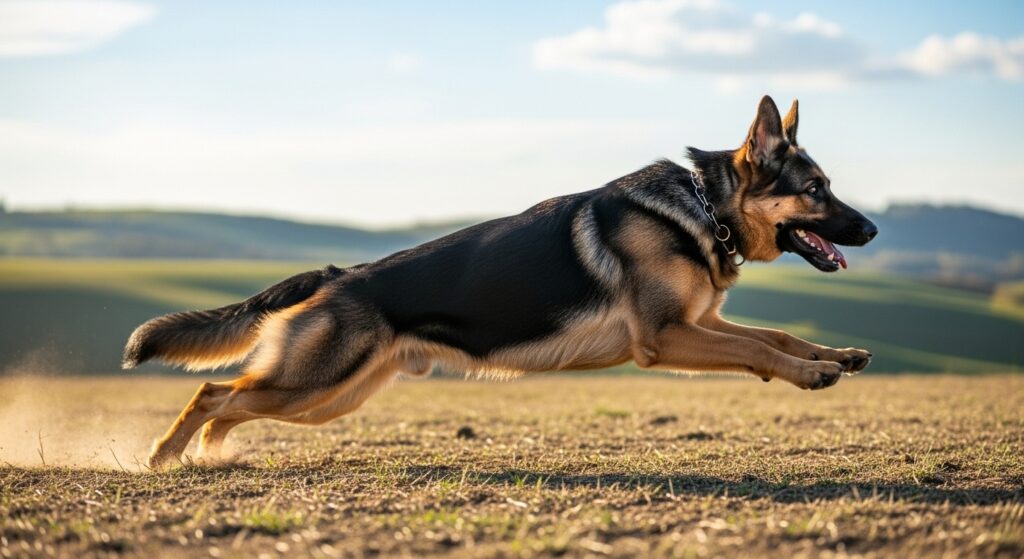
Siberian Huskies are also working dogs and are very active. Huskies were used as sled dogs, so they need enough space to roam around for mental stimulation. Daily physical exercise, such as long walks or running, is essential for this breed.
In comparison, German Shepherds can be described as active in terms of energy levels, and Siberian Huskies can be described as hyper, high-energy dogs. Both of these breeds are suitable for individuals with an active lifestyle.
German Shepherd vs. Siberian Husky: Training & Intelligence
Early socialization and puppy training are vital for the German Shepherd breed; continuing obedience training as they grow up can also ensure they turn out to be well-mannered adults. They are extremely intelligent and quick learners. Consistency and reward-based training yield excellent results in the long run.
Reward-based training, early socialization, and obedience training are essential for Huskies as well. As per Britannica, training this breed requires immense patience and dedication as they are extremely active, mischievous, and occasionally stubborn.
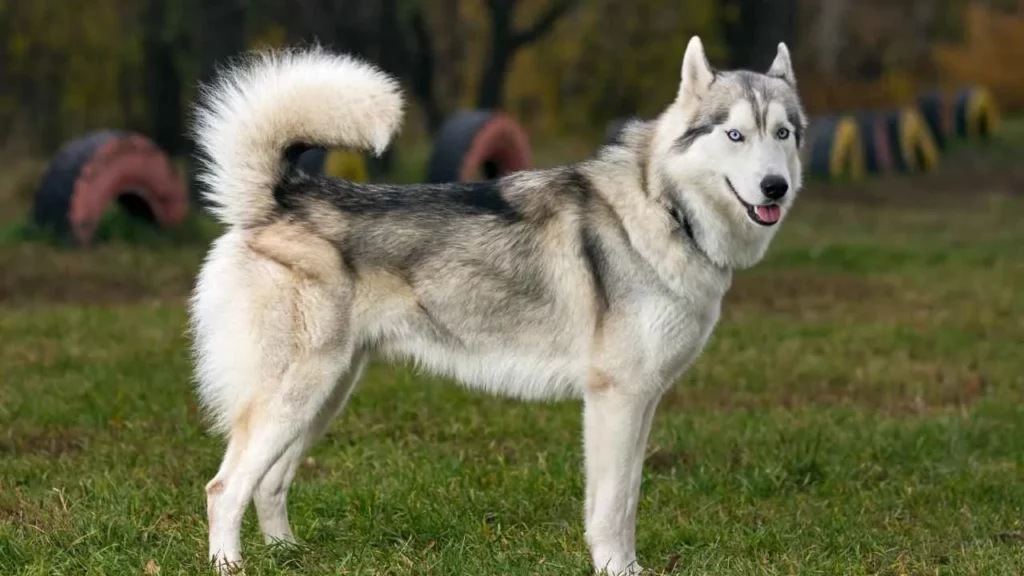
Hence, German Shepherds have a higher intelligence and trainability level as compared to Siberian Huskies. Huskies are also intelligent and trainable, but their independent nature makes them notoriously difficult to train in comparison to German Shepherds.
Vocal Behavior
German Shepherds have a strong protective instinct; they usually bark to alert their owners and protect them from potential danger. They have a loud and intimidating bark, but they usually bark purposefully when necessary.
Siberian Huskies, on the other hand, are loud and expressive. They usually howl or get vocal when they are excited, curious, or seeking attention. They are not suited for individuals who are searching for a quiet dog breed.
So, we can say that Huskies usually howl as they have a playful and bold nature, while German Shepherds usually bark out of purpose.
German Shepherd vs. Siberian Husky: Coat & Grooming
German Shepherds have a medium-length, double coat with a dense outer coat and a softer undercoat. Their coat does not require a lot of grooming; brushing their coat once or twice a week is enough. However, they do shed profusely once or twice a year and require regular brushing at that time to remove loose hair.
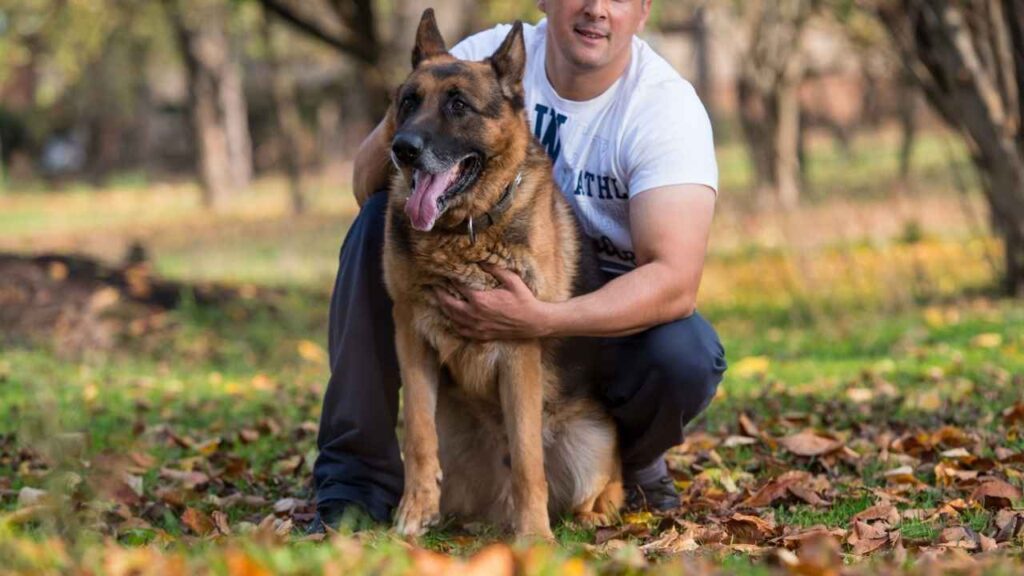
Siberian Huskies usually keep themselves clean on their own and do not require extensive grooming. Huskies blow their coat twice a year. Because they have a thick double coat, it’s important to brush or comb them thoroughly to remove loose, dead hair.
Overall, German Shepherds and Huskies have similar grooming needs, so grooming is not a major factor when choosing between the two breeds.
German Shepherd vs. Siberian Husky: Health Issues & Lifespan
A German Shepherd’s life expectancy is about 12 to 14 years. They are prone to develop bloat, which is a sudden, life-threatening condition. They are also predisposed to health conditions such as myelopathy, elbow dysplasia, and hip dysplasia.

The average lifespan of a Siberian Husky is about 12 to 14 years. They can suffer from eye problems such as progressive retinal atrophy, which is an inherited degenerative disease of the eye’s retina. They can also suffer from corneal dystrophy, hypothyroidism, and hip dysplasia.
Both breeds are predisposed to certain health problems, so regular vet visits are important to help them live long, healthy lives after you bring them home.
German Shepherd vs. Siberian Husky: Suitability For Home Security and Family Life
German Shepherds are naturally protective and are excellent home guardians. They are one of the most popular working dogs and will ensure your safety even at the cost of their own life. They are gentle and affectionate with their owners. While they prove to be good family dogs, any interaction with children should be supervised.
A Siberian Husky can be trained to be alert and attentive. However, generally speaking, they do not prove to be good guard dogs. They are often friendly and social with strangers instead of showing protective aggression.
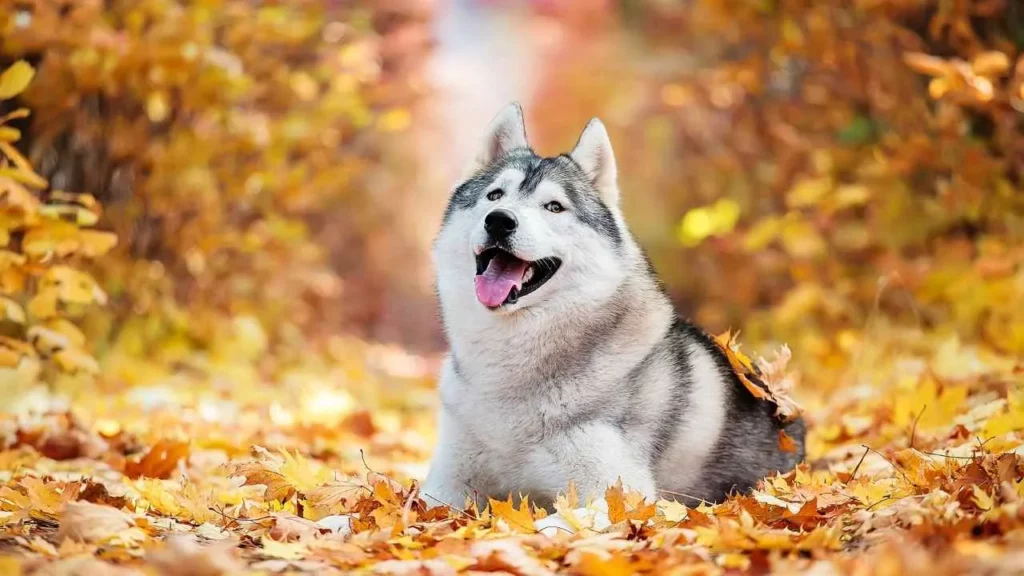
Huskies make excellent family pets. They are playful, affectionate, and enjoy being part of an active household. Their friendly and social nature makes them exceptional companions for adults, but their interactions with kids need to be supervised.
Conclusion
Choosing between these two dogs, the Husky or German Shepherd, really comes down to how you live and what kind of dog you want by your side. Both are large, beautiful breeds, but their personality traits are very different. A German Shepherd is often the perfect match for someone looking for a loyal, smart, and protective companion. They love working closely with humans, which is why they are commonly used in police work, and they often form deep bonds that feel like true best-friend connections.
Huskies, on the other hand, are full of energy and personality. With their striking eyes and playful nature, they bring excitement into any home. Other husky breeds like the Alaskan Husky and Alaskan Malamute are social and enjoy being around other dogs, though smaller animals and cats may be a challenge. Both German Shepherds and Huskies shed all year round and need regular grooming to keep their coats healthy. Both are well-suited for engaging, active homes and may develop separation anxiety if left alone for long periods.
Both breeds can be wonderful companions. Understanding their needs helps you choose the right breed for your lifestyle.
