




Imagine you’re a small, tasty damselfish, happily nibbling on algae on one of the structurally complex reefs of the Caribbean Sea.
You see a big, harmless, herbivorous parrotfish swim by. You don’t even flinch. But what you don’t see is the long, thin trumpetfish using the parrotfish as a moving shield. This is a behavior known as “shadowing,” and it’s a bit like how human duck hunters use decoys to approach ducks. The trumpetfish uses the larger, non-threatening species as a “stalking horse” to approach unsuspecting prey at close range.
This isn’t just a casual observation; researchers from the University of Cambridge’s Department of Zoology and the University of Bristol’s School of Biological Sciences wanted to prove it. In a study published in the journal Current Biology, a team, including dive buddy Christian Drerup, conducted manipulative experiments off the Dutch Caribbean island of Curaçao. They created realistic, hand-painted model fish and used nylon lines to pull them past colonies of damselfish. The research involved hours of painstaking observation, and the results were fascinating.
When a lone trumpetfish model was presented, the damselfish rapidly fled. They know a predatory threat when they see one. But when the trumpetfish model moved past while swimming closely to a parrotfish model, the damselfish were totally fooled and barely reacted! The damselfish inspected the harmless parrotfish, ignoring the danger hiding alongside it. This was the first experimental evidence, proving that this is a valuable strategy that significantly increases hunting success. It’s the only known example of one non-human animal using another as a form of concealment.
Now, with that excellent example of stealth in mind, let’s meet our other masters of disguise!
Fish That Are Masters of Stealth
1. Batfish
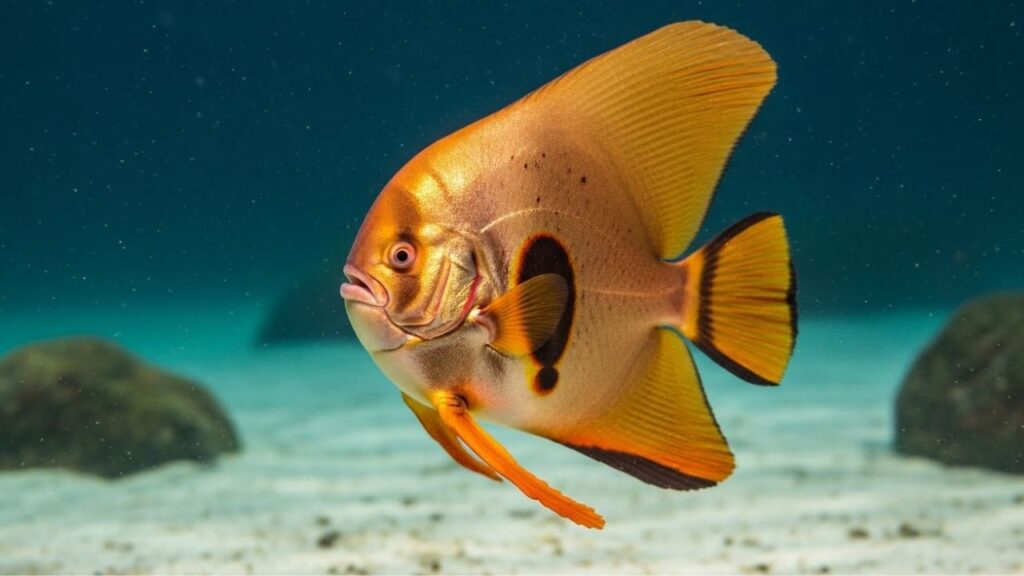
When you hear “Batfish,” you might picture a few different fish, but we’re talking about the Platax, or orbicular batfish.
As adults, they are big, silvery, and hang out in schools. But as juveniles? They are masters of mimicry. These young fish are profoundly different, and their survival depends on their ability to pretend to be something they’re not. They are some of the most convincing actors in the sea.
Their trick is to imitate a dead, rotting leaf or a toxic flatworm. They turn a dark, mottled brown, float on their side, and drift listlessly in the current, barely moving. To any passing predator, they look like a disgusting, unappetizing piece of debris, not a nutritious meal. This clever disguise allows them to avoid detection and live to see another day.
Britannica says they are primarily found in warm waters as they grow, they shed their “dead leaf” costume and embrace their true identity. This transformation is a perfect example of how animals adapt their survival tactics based on their life stage. While they are no longer solitary mimics, they find safety in numbers, forming large schools. It’s a reminder that in the world of tropical and aquatic biology, there’s often more than one way to protect yourself.
For young batfish, their Oscar-worthy performance as a piece of trash is their ticket to adulthood, making them certified stealth swimmers in their own right.
2. Weedy Seadragon
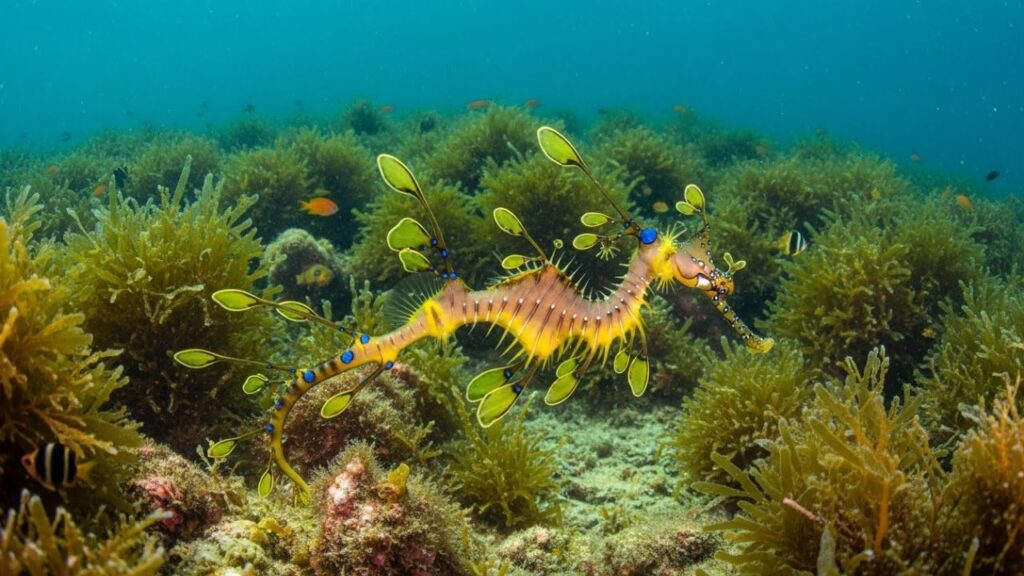
Found in the waters off southern Australia, this fish is less an animal and more a living, breathing piece of art. Its entire body is adorned with delicate, leaf-like appendages that look precisely like the seaweed and kelp it calls home. They are one of the most beautiful marine species you could ever hope to see.
The Weedy Seadragon’s camouflage is so perfect it’s almost absurd.
It doesn’t just look like a plant; it moves like one. It sways gently back and forth with the ocean currents, blending perfectly into the surrounding kelp forest. This motion camouflage is the key to survival. It serves a dual purpose: it helps the seadragon conceal itself from predators and allows it to approach its prey—tiny crustaceans and plankton—without being detected.
This one is a profoundly specialized creature. It has committed its entire existence to one of the most convincing disguises in the animal kingdom.
3. Crocodilefish
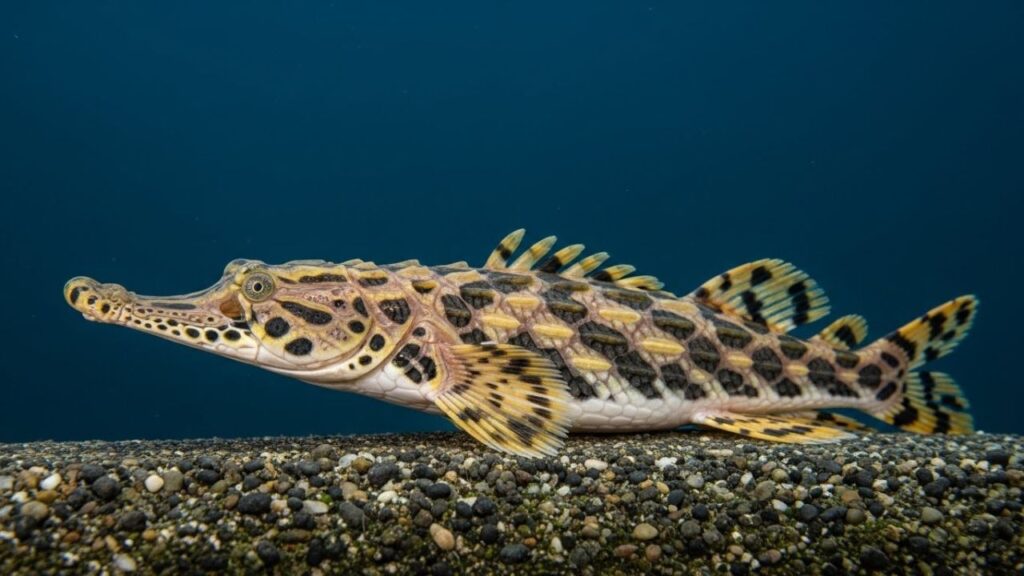
With a flattened body, a vast, wide mouth, and eyes perched on top of its head, the Crocodukefish looks like someone attached a crocodile’s head to a fish’s body. These guys are the undisputed kings of “sit and wait.”
Its stealth strategy is all about becoming one with the seafloor. Its mottled, patchy skin is a perfect imitation of sand, rubble, or a coral-encrusted rock. It will lie motionless for hours, becoming virtually invisible to the prey. What’s especially cool is its iris, which has lacy, branching flaps that break up the distinct, round shape of its eye—often the biggest giveaway for a camouflaged animal.
When an unsuspecting fish or crustacean—what you might call a typical meal—swims by, the Crocodilefish strikes with incredible speed. The attack is a sudden, upward explosion, and the prey is engulfed in its massive mouth before it even knows what happened. This is how they hunt, relying on absolute stillness and a perfectly executed surprise attack.
Even a diver who has spent hours underwater can be completely surprised by a Crocodilefish, often spotting it only when it finally moves.
4. Ghost Pipefish
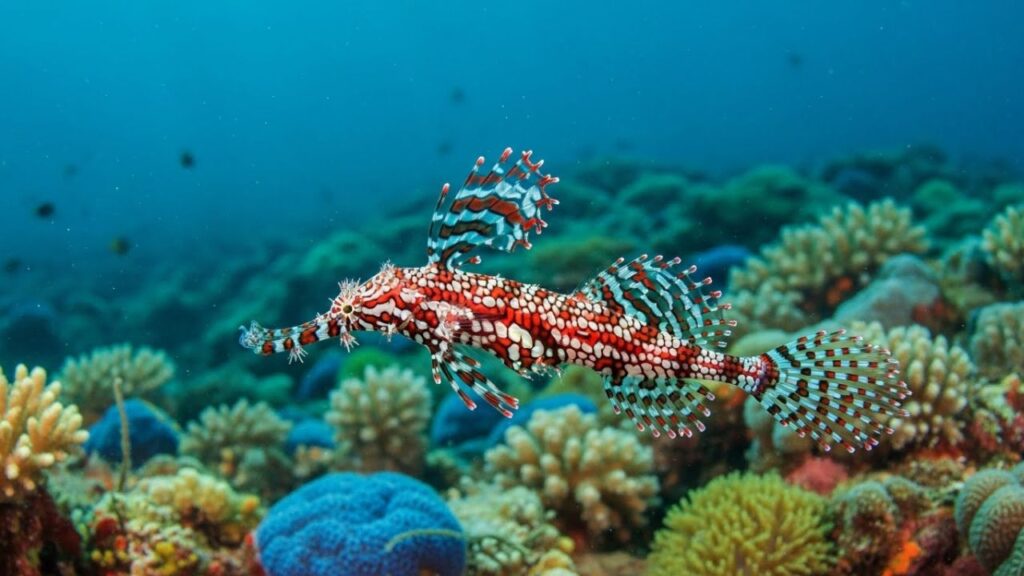
These tiny, delicate creatures, closely related to seahorses, are so good at hiding that finding one is a badge of honor for underwater photographers and divers working on the reef. They practice a form of mimicry so perfect it borders on the supernatural.
Unlike other species of fish that hide among the coral or rocks, the Ghost Pipefish becomes a part of them. There are several different species, and each one is a specialist. The Ornate Ghost Pipefish, for example, perfectly mimics the arms of a crinoid (feather star), hanging motionless among its tentacles.
This behavior is njihov’s primary tool for survival. They hang upside down, barely moving, waiting for a meal of minuscule crustaceans to drift by. Their camouflage protects them from predators and hides them from their prey.
They are so difficult to spot that you could stare directly at one and see nothing but a piece of the reef. It takes a trained eye to pick out their subtle form from the background.
5. Flounder
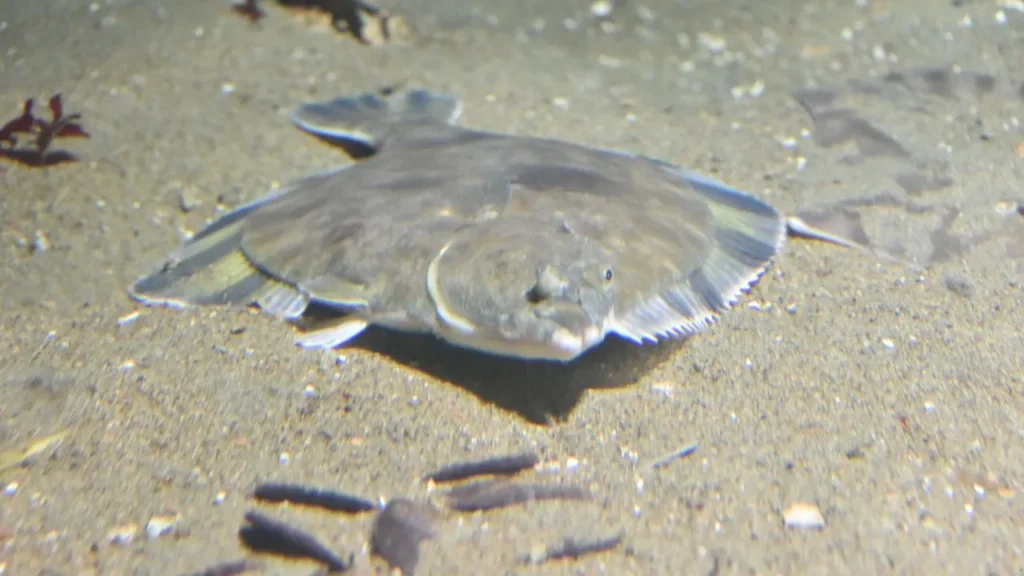
Ah, the Flounder, the classic master of the disappearing act! These fish are so famous for their camouflage that they’ve become the poster child for hiding on the seafloor. The first thing you’ll notice about a flounder is its bizarre anatomy. It starts life as a normal-looking fish, but as it matures, one eye “migrates” to the other side of its head, and it begins its life lying flat on the ocean bottom.
But the real magic is in its skin. A flounder’s ability to change its color and pattern is the stuff of legend. Its skin is covered in specialized cells called chromatophores, which it can expand or contract to alter its appearance rapidly. This isn’t just a slow, gradual change; a flounder can match the pattern of sand, gravel, or even a checkerboard in a lab in a matter of seconds. This active camouflage is its primary defense.
To make its disguise even more convincing, a flounder will often use its fins to flick sand over its body, leaving only its periscopic eyes exposed.
As a typical meal for larger fish, sharks, and even humans, the flounder’s stealth is not just a cool party trick; it’s essential for its survival. With the dual pressures of overfishing and a warming climate impacting marine ecosystems, this fish’s remarkable ability to blend into the seafloor is more critical than ever.
6. Scorpionfish
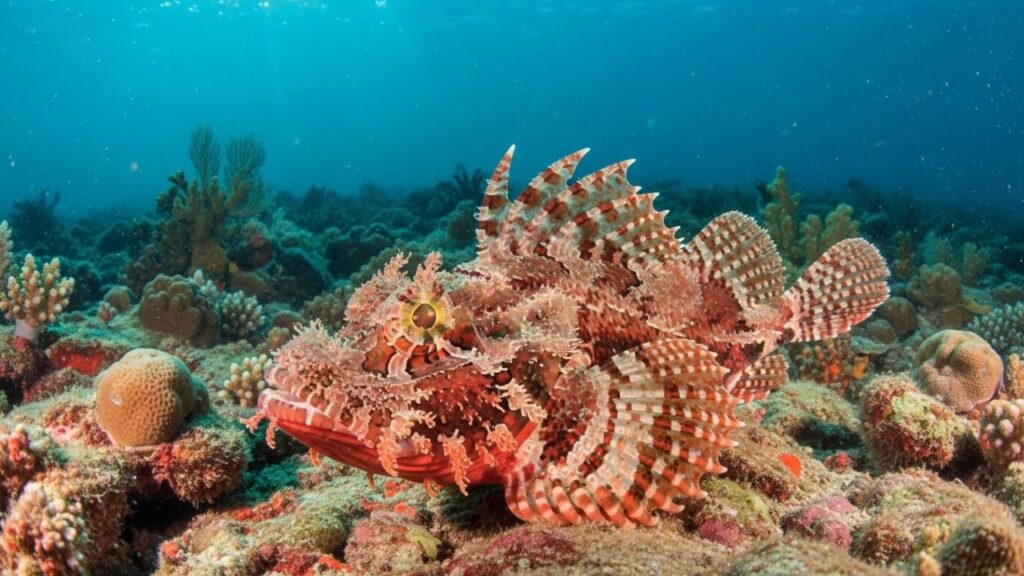
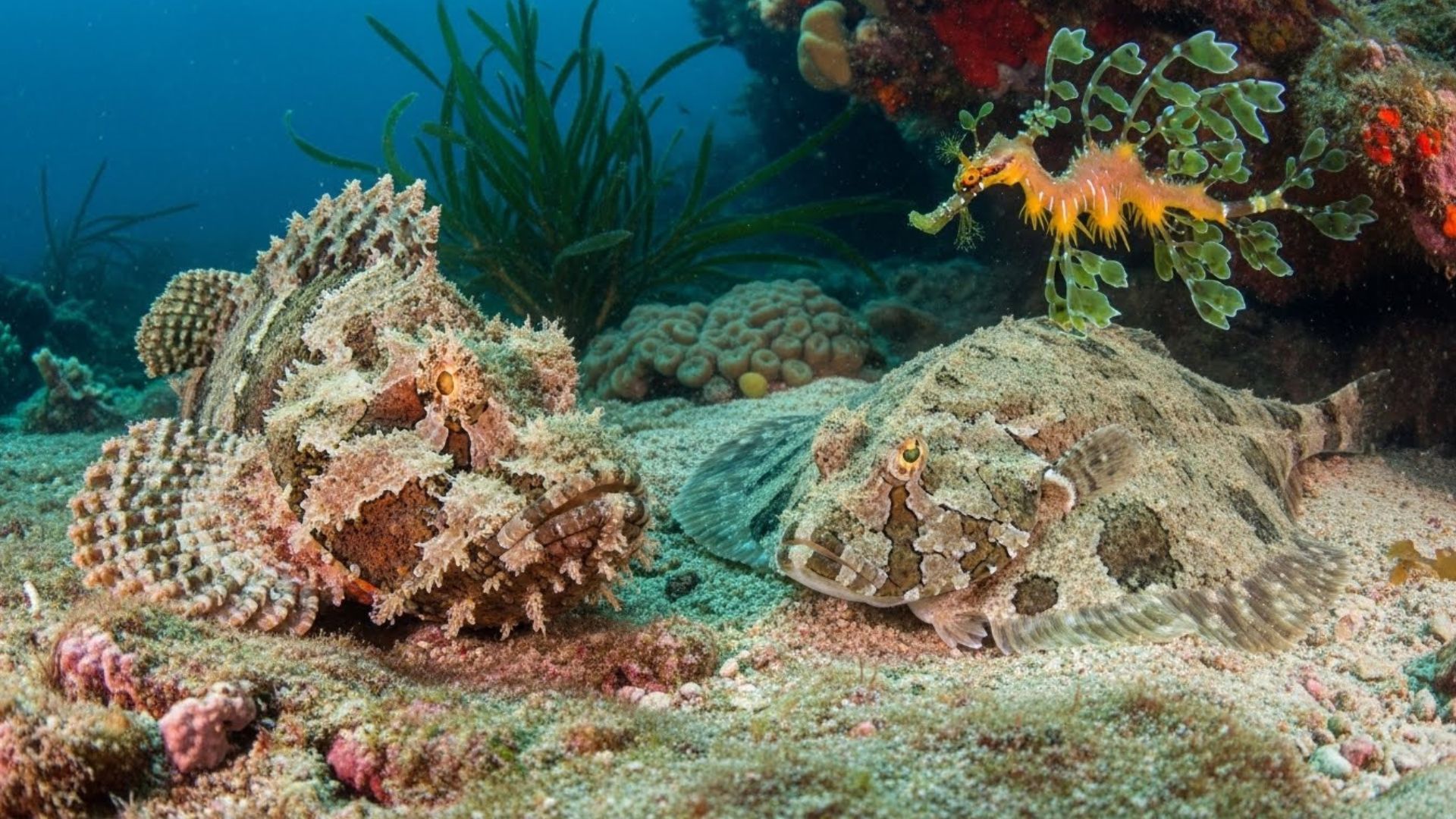
Now we’re entering the “dangerously stealthy” category. Scorpionfish, and their even more venomous cousins the Stonefish, are the undisputed warlords of the reef. They combine elite-level camouflage with a potent defense: a row of venomous spines along their backs. Their strategy is simple: look precisely like a rock, and if anything is foolish enough to bother you, make it regret it.
A Scorpionfish’s disguise is a masterpiece of texture and color. Its skin is a lumpy, bumpy, mottled mess of warts and fleshy tassels. It will remain motionless for so long that algae and other marine organisms will begin to grow on it, enhancing its disguise. It ceases to look like a living creature and becomes just another piece of the reef.
The Stonefish takes this to the extreme. It is the most venomous fish in the world, and its disguise is so perfect that it poses a genuine threat to people wading in shallow tropical waters.
Oceana says the entire life of these bottom-dwelling fish revolves around their ability to conceal themselves. They don’t chase their food; they let their food come to them. Whether it’s an unwary crustacean or a small fish, the victim rarely sees the predator until it is swallowed whole.
7. Reef Stonefish
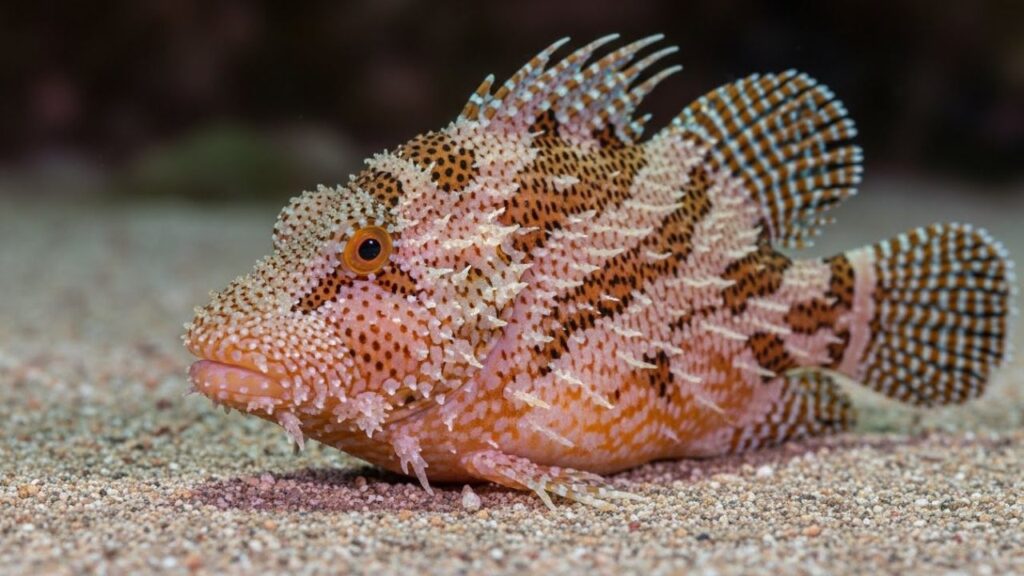
Ever met a rock that could eat you? You have if you’ve seen the reef stonefish, the master of undersea camouflage. Its lumpy, wart-covered skin perfectly mimics an old rock, allowing it to blend into the seafloor. This incredible disguise is the secret to its surprising ecological relevance, making it a highly effective, if lazy, participant in the reef’s food web.
While other predators use active tactics—for instance, when a sneaky trumpetfish appears to be just a floating stick, often swimming alongside parrotfish to use them as a moving blind—the stonefish simply waits. When its prey, like a small fish or shrimp, wanders too close, the stonefish’s mouth explodes open, inhaling the meal in a fraction of a second. It’s the ultimate ambush, requiring almost no energy.
This camouflage is also its best defense. Most sharks and other animals looking for a meal swim right past without a second glance. But for any creature that gets too close, the stonefish has a terrifying backup plan.
In essence, the reef stonefish is a living, venom-packed booby trap that has perfected the art of doing nothing. It proves that in the game of survival, sometimes the best move is no move at all. So next time you’re exploring a reef, remember that some rocks are better left alone—especially the grumpy-looking ones.
8. Tasselled Anglerfish
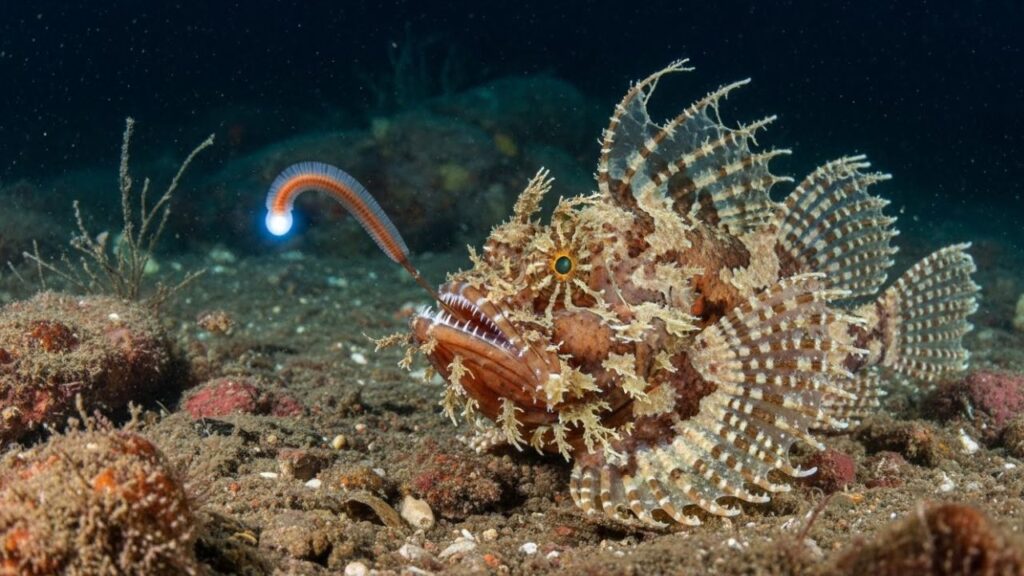
The Anglerfish are among the most cunning predators in the oceans.
The Anglerfish’s claim to fame is its “fishing rod.” It has a modified dorsal spine on its snout, with a fleshy lure (the esca) at the tip. The Anglerfish wiggles this lure, which can imitate a small worm, shrimp, or fish, to attract susceptible prey. This technique, known as aggressive mimicry, is a deadly invitation to dinner, where the guest is the main course.
Of course, this trick wouldn’t work if the Anglerfish itself were easily seen.
Like the Scorpionfish, it is a master of camouflage in the underwater system. Its lumpy body and textured skin allow it to blend in perfectly, often looking identical to a sponge or coral rubble.
It will find a good spot, settle in, and remain barely moving for days, patiently waiting for its next meal.
9. Lionfish
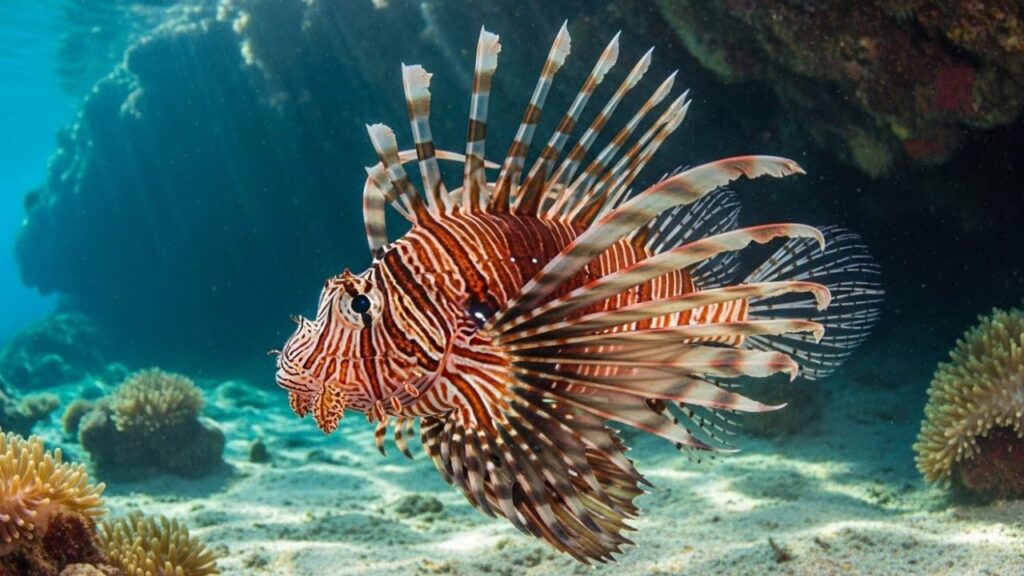
Finally, let’s talk about a fish that breaks all the rules: the Lionfish. At first glance, it seems like the opposite of stealthy. With its bold red-and-white stripes and a dramatic mane of long, venomous spines, the Lionfish is anything but invisible. This is aposematism, or warning coloration. It’s actively advertising its dangerous nature to any potential predators. So how on earth did it make a list of stealth masters?
The Lionfish’s stealth is not in its appearance, but in its hunting behavior. It uses its large, feathery pectoral fins to its advantage. It will slowly and deliberately approach its prey, spreading its fins wide to corner smaller fish against the reef. The prey is often so mesmerized or confused by the wall of gently waving fins that it doesn’t recognize the danger until it’s too late. The Lionfish then strikes with a quick gulp.
This unique hunting method has made the Lionfish an incredibly successful invasive species, especially in the Atlantic and Caribbean Seas. In these new environments, the local reef fish have no evolutionary experience with this kind of predator. They don’t recognize the Lionfish’s hunting tactic, making them easy targets. This has had devastating impacts on native fish populations, a problem that biologists, the fisheries society, and even local dive shops are working hard to manage.
So, while the Lionfish doesn’t hide, it uses misdirection and confusion to hunt. This contrasts sharply with how we think about stealth in domestic animals or other non-human animals, showing the incredible diversity of strategies in nature.
Conclusion
From the leaf-mimicking Batfish to the texture-shifting Cuttlefish, the oceans are filled with fish that are masters of stealth. We’ve seen how these and other reef fish use everything from active camouflage and mimicry to deceptive lures and mesmerizing fins to survive and hunt.
Research in biological sciences and aquatic biology continues to uncover details about these behaviors, such as the first evidence of trumpetfish shadowing, which earlier observations by observant scientists prompted. Trawlers drag their heavy nylon lines past colonies of ancient coral, snagging and shattering formations that have taken centuries to grow. However, these amazing species now face modern threats like overfishing, habitat destruction, and environmental change.
The next time you’re looking into an aquarium or, if you’re lucky, snorkeling over a coral reef, take a closer look.
