




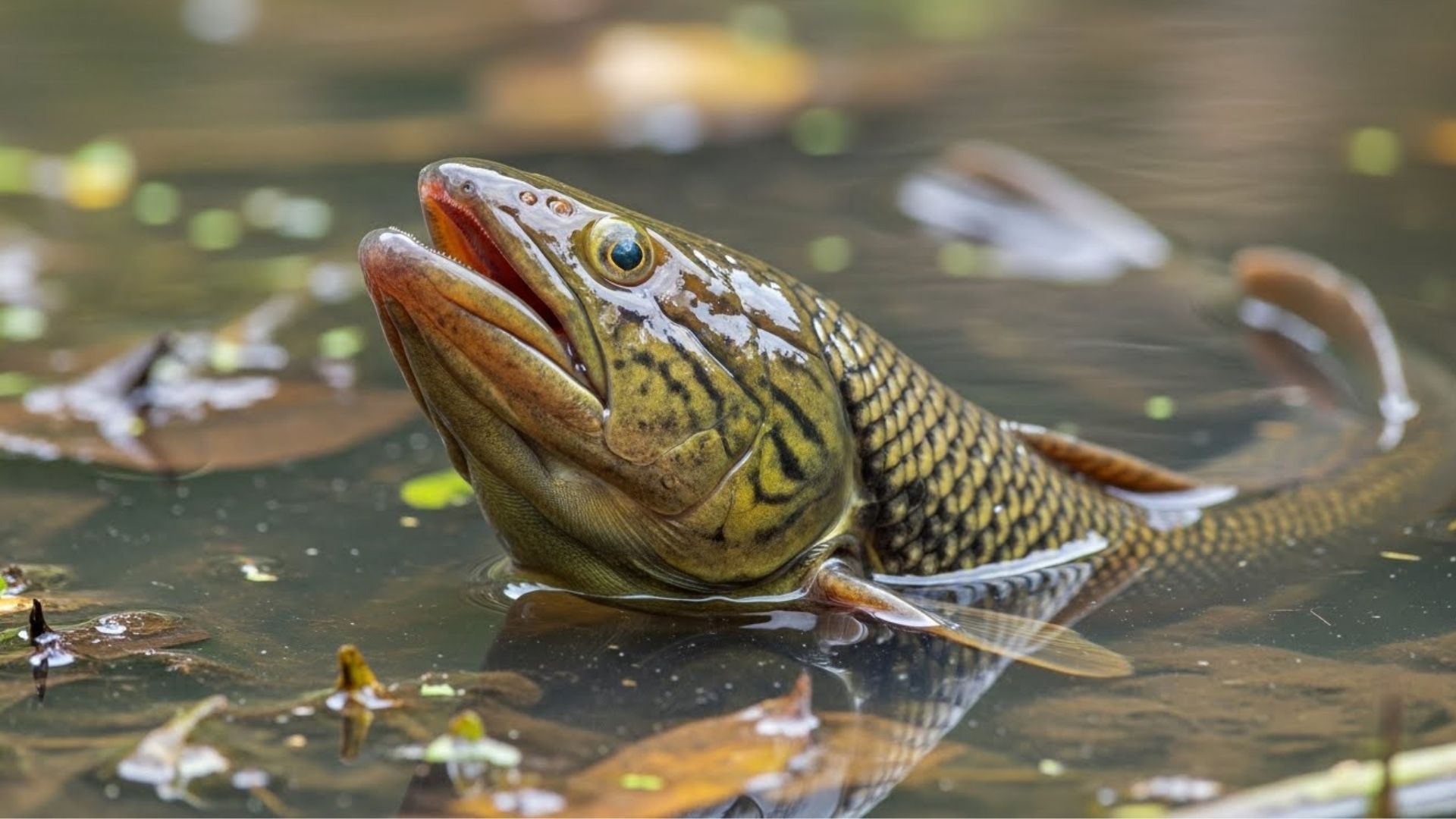
What’s the one thing everyone thinks they know about fish?
They live in water, and they breathe with gills.
Simple, right?
Well, what if we told you that’s only part of the story? What if we told you there’s a whole secret society of fish that has decided the whole “underwater breathing” thing is sometimes optional? Get ready, because today we’re diving into the bizarre and brilliant world of fish that can breathe in air.
These aren’t mythical creatures; they are real, living masters of survival. When you think about it, it makes perfect sense. Many aquatic habitats, such as stagnant swamps, shallow ponds, and even puddles during a dry season, can have dangerously low oxygen levels.
While most fish would suffocate in these conditions, this diverse group of innovators looks up, heads to the surface, and takes a breath of fresh air. They have evolved incredible organs and strategies to extract oxygen directly from the atmosphere.
So, let’s meet some of these amazing air breathers!
Fish That Can Breathe in Air
1. Protopterus
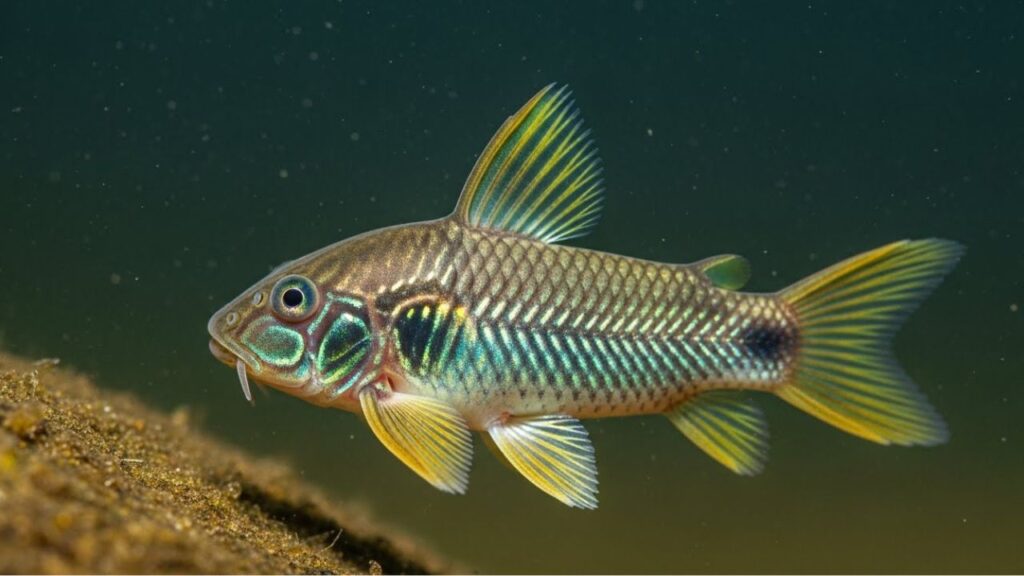
First up is an actual living fossil, a creature that seems to have swum right out of a prehistoric textbook: the Protopterus, better known as the African lungfish.
Unlike other air-breathing fishes that have modified organs, the lungfish has the real deal: a pair of lungs that are remarkably similar to those of terrestrial vertebrates like amphibians and even humans. In fact, these fish are what we call obligate air breathers.
This means they must breathe air to survive. Their gills alone are not enough to meet their body’s oxygen demands, so they have to surface to gulp air regularly. If you prevent a lungfish from reaching the surface, it will literally drown.
But here’s where it gets even crazier.
What happens when the rivers and ponds of Africa dry up under the scorching sun? The lungfish doesn’t panic. It burrows deep into the mud, secretes a mucus cocoon around its body, and enters a state of suspended animation called estivation.
According to ScienceDirect, the lungfish family, which includes South American and Australian lungfish, offers a breathtaking glimpse into evolution.
2. Siamese
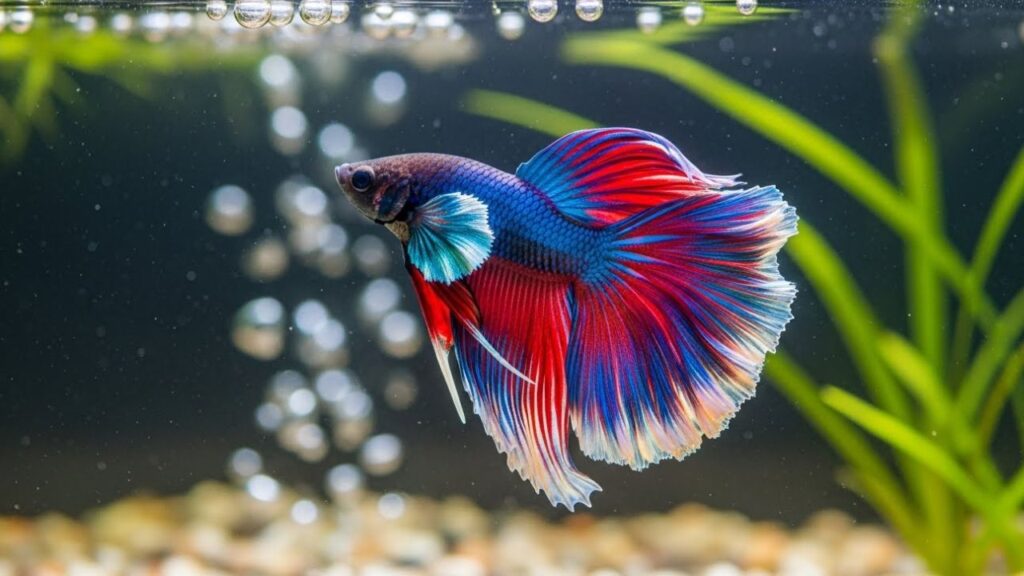
Even if you’re new to the aquarium hobby, you’ve definitely seen the Siamese fighting fish. With their vibrant colors and long, flowing fins, these little jewels are a staple in pet stores around the world. But behind that beauty is a tough, scrappy survivor with a very special adaptation for breathing. The Siamese fighting fish, or Betta splendens, is a member of the labyrinth fish family.
So what is a labyrinth organ? Imagine a maze-like structure of bony plates covered in tissues rich with blood vessels, located in the fish’s head just above the gills. When a Betta goes to the surface to gulp air, it forces that bubble of air into this organ. The intricate folds provide a massive surface area for gas exchange, allowing the fish to absorb oxygen directly into its bloodstream.
This incredible ability didn’t evolve by accident. In their native habitats in Thailand and Cambodia, Bettas live in very slow-moving or stagnant bodies of water, like ditches and rice paddies. This warm, still water is often very low in dissolved oxygen. The labyrinth organ gives Bettas a massive survival advantage, allowing them to thrive where other fish would perish.
Like the lungfish, Bettas are obligate air breathers. This is critical information for anyone keeping them in an aquarium.
3. Gourami

Gouramis possess a labyrinth organ, also known as the suprabranchial organ. You can often observe this fascinating behavior in your own aquarium.
You’ll see your Gourami gracefully swim to the surface, poke its mouth out for just a second to swallow air, and then go about its business. It’s doing this to supplement the oxygen it gets through its gills, ensuring it has plenty of energy.
This air-breathing superpower enables the many species of this fish to inhabit a wide range of environments. They are often found in the same low-oxygen habitats as Bettas, but their generally more peaceful nature has made them a beloved staple in the aquarium trade. They are living proof that this evolutionary trick was so successful that it led to a whole, wonderfully diverse group of fish.
Whether you have a Pearl, Moonlight, or Dwarf Gourami, you are caring for a creature with a hidden talent. This ability to breathe air makes them incredibly hardy and forgiving, which is excellent for beginners.
4. Catfish
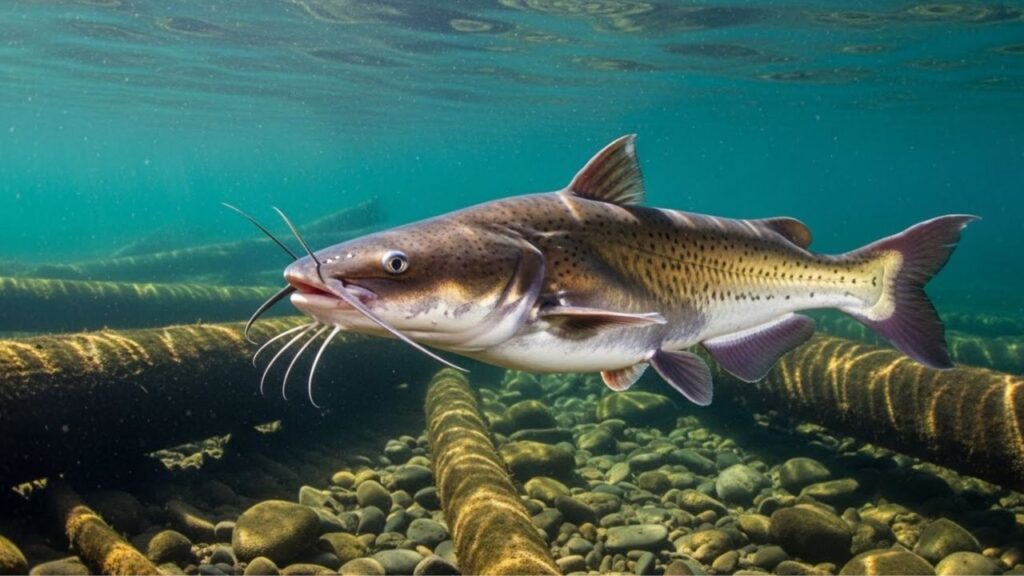
Now we’re getting into some bizarre and wonderful territory. The Walking Catfish sounds like something out of a cheesy horror movie, but it’s a very real species of air-breathing catfish. And yes, to answer your first question, it can indeed walk—or, more accurately, wiggle—across dry land. This fish is a master of survival, using its unique talents to find new homes when its old ones dry up.
So, how does it walk on land? It uses its strong, stiff pectoral fins as pivots, wriggling its body forward in a snake-like motion. It’s not graceful, but it’s effective! This allows it to leave a drying pond and travel to another body of water.
Britannica calls it a bottom-dwelling fish.
This fish is a facultative air-breather. This is a key distinction. It means that as long as there is enough dissolved oxygen in the water, its gills work just fine. But when oxygen levels drop, or it decides to go for a stroll on land, it can switch to air-breathing. This dual-system approach makes it incredibly versatile.
This toughness has a downside, however.
Outside of its native range in Southeast Asia, the Walking Catfish has become a problematic invasive species in places like Florida. Its ability to both breathe air and walk between waterways allows it to spread rapidly, often out-competing native species.
5. Snakehead Fish
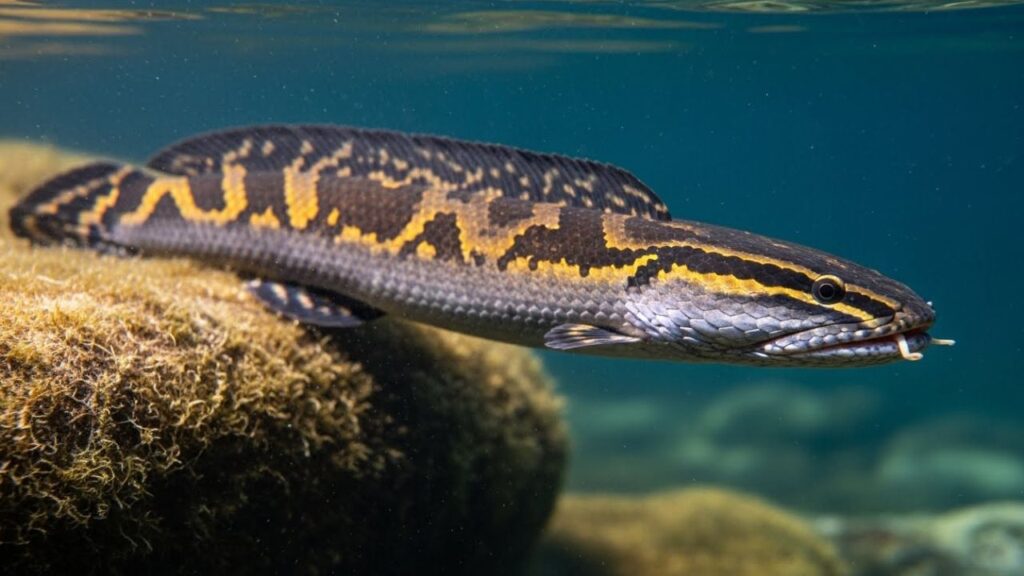
Speak the words “snakehead fish” in North America, and you might get some scared looks. This fish has a fearsome reputation, often portrayed as an unstoppable monster capable of destroying ecosystems. While some of that is hyperbole, the Northern Snakehead is, without a doubt, one of the most resilient air-breathing fish on the planet.
The snakehead is a facultative air-breather. It possesses suprabranchial organs above its gills that allow it to breathe atmospheric air. This is not just a backup system; it’s a critical part of its life. This ability allows it to survive in muddy, low-oxygen water where other predators couldn’t. It also means it can survive out of water for several days, as long as its skin remains moist.
This incredible hardiness is a primary reason the snakehead fish has become such a successful invasive species outside its native Asia. If its pond or stream becomes unsuitable, it can wriggle across land to find a new one. This, combined with its voracious appetite, makes it a serious threat to native ecosystems.
But if we can set aside its reputation for a moment, we can appreciate the snakehead fish for the evolutionary marvel that it is. It is a perfectly honed survivor, equipped to handle extreme environmental challenges.
6. Mudskipper
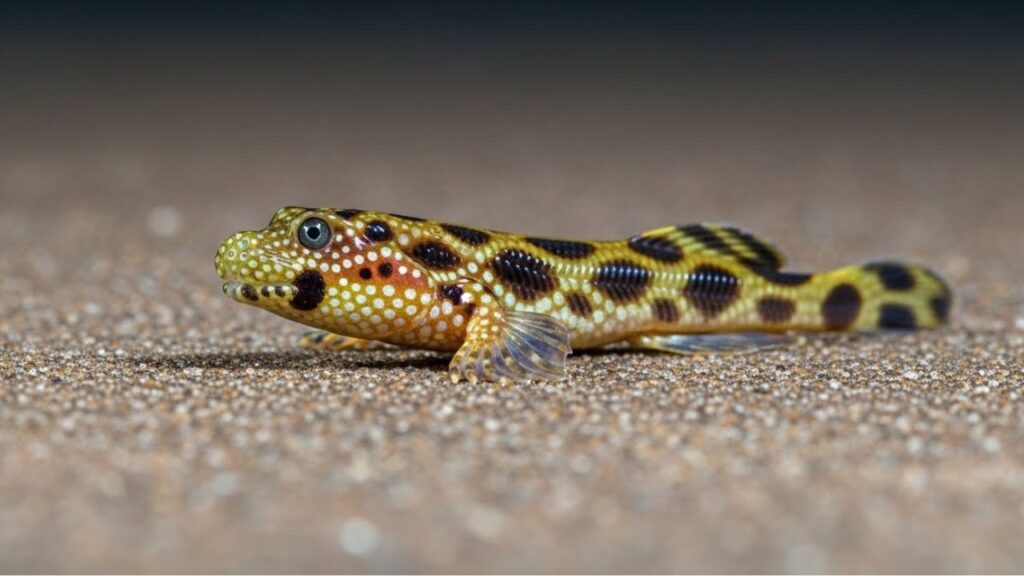
Of all the fish that can breathe in air, the Mudskipper is arguably the one that has most fully embraced a life on land. This incredible amphibious fish is a common sight in the mangrove swamps of Africa and the Indo-Pacific, and it spends far more of its time out of the water than in it.
So how does a fish that lives on land breathe?
The Mudskipper has a multi-pronged strategy. First, it can perform cutaneous respiration, meaning it can soak oxygen directly through its wet skin and the lining of its mouth, much like an amphibian.
Second, it holds a bubble of water in its large gill chambers, which acts like a personal scuba tank it can use while on the mud flats. It has to return to the water periodically to refresh this supply.
The Mudskipper has also adapted its body for terrestrial life. It uses its powerful pectoral fins to “walk” or “crutch” across the mud, and it can even use its fins to climb onto mangrove roots.
Its eyes are perched high on its head, like periscopes, giving it a great view of its surroundings to spot both prey and predators. It is, for all intents and purposes, a fish behaving like a frog.
7. Bowfin
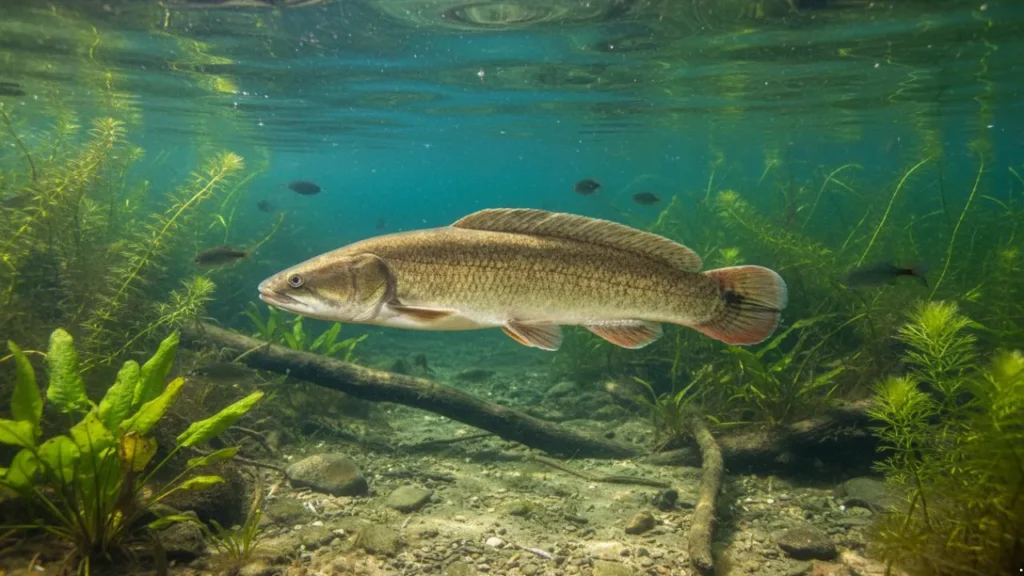
Let’s end our journey with a North American native: another living fossil, the Bowfin. This long, cylindrical predator patrols the slow-moving, often murky freshwater rivers and swamps of the eastern United States. It’s a relic of an ancient lineage, with an old-school breathing method for when the going gets challenging.
The Bowfin doesn’t have a specialized breathing organ in its head. Instead, it has adjusted its gas bladder—the organ most fish use for buoyancy—into a primitive lung. This gas bladder is filled with blood vessels and connected to its throat, allowing for effective gas exchange. When oxygen in the water is low, the Bowfin will rise to the surface and gulp a bubble of air to fill its lung-like organ.
This makes the Bowfin another facultative air-breather. In cool, clean, oxygen-rich water, its gills are perfectly sufficient. But during the heat of summer, when the water warms and stagnates, this ability to supplement its breathing with atmospheric air becomes a lifesaver. It’s a powerful tool that has allowed this ancient species to survive for millions of years.
Conclusion
From the muddy burrows of Africa to the vibrant aquarium on your desk, the world is full of incredible fish that can breathe in air. Even other fish you might not expect, like Electric Eels from South America, have developed the ability to breathe air.
These remarkable species have shattered the simple definition of what a fish can be. They have created an astonishing array of tools—true lungs, complex labyrinth organs, and multipurpose gas bladders—all to solve one fundamental problem: how to survive when the water runs out of oxygen.
These air breathers are more than just biological curiosities; they are champions of adaptation. They teach us that life is resilient, innovative, and endlessly surprising. The next time you see a Betta dart to the surface, or read about a catfish walking to a new pond, take a moment to appreciate the incredible evolutionary journey that made such a breath possible.
It’s a reminder that even in the most challenging habitats, life doesn’t just survive; it finds a way to thrive.
