




Horses famous in history have a way of stirring something deep inside us. Their stories are woven into battles, journeys, triumphs, and moments that decided the course of nations.
When you picture a lone rider crossing unfamiliar terrain or a cavalry charging forward with fierce determination, the horse becomes more than an animal. It becomes the pulse of the moment. These historical horses carried weight that went far beyond saddles. They carried hopes, commands, secrets, and futures.
They walked through smoke, storms, parades, and open silence with equal steadiness. They shaped legends without speaking a single word. Their presence amplified courage, and their absence altered outcomes. The world moved differently because they moved through it with force and grace.
As you read ahead, prepare to meet the horses whose steps left marks on time itself and whose stories still echo through every chapter they touched.
Key Takeaways
History remembers those who made an impact, and horses like Bucephalus and Marengo were silent partners in moments that defined nations.
Copenhagen carried the Duke of Wellington tirelessly at Waterloo, and Man o’ War left competitors far behind on the racetrack with astonishing power.
Seabiscuit and Sergeant Reckless showed resilience that turned setbacks into triumphs, leaving legacies of courage that still inspire.
These nine remarkable horses show that greatness often comes on four legs, and every step they took echoed through time.
Most Famous Horses in History
1. Bucephalus
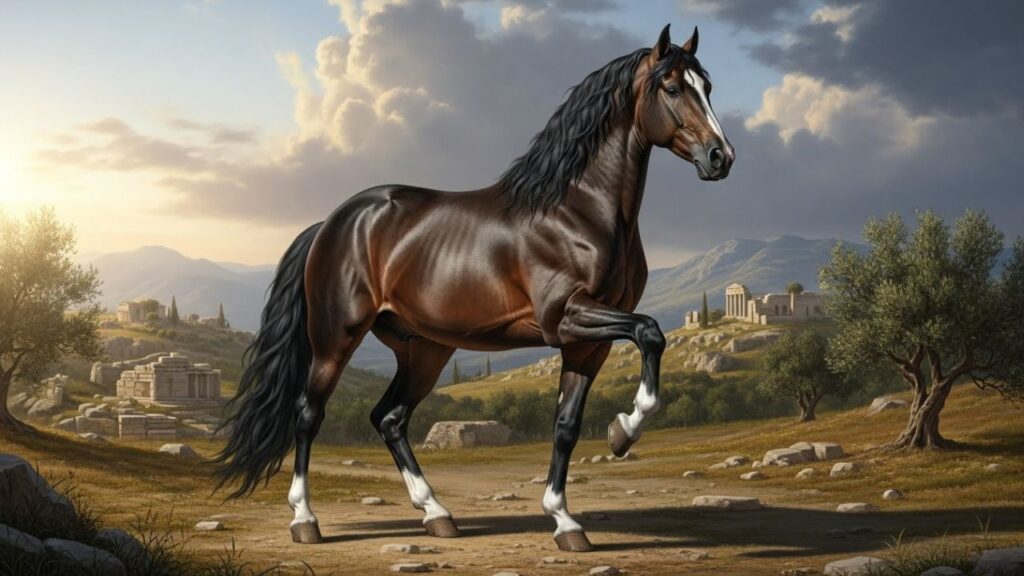
Bucephalus displayed unmatched bravery, showing sharp instincts that no rider had mastered until Alexander stepped forward.
His striking appearance included a mark resembling an ox’s head, which inspired his name. Alexander’s early success with him highlighted a bond that would shape history across continents.
Loyalty Forged in Battle
The horse’s loyalty and strength carried Alexander through countless military campaigns, marking him as an irreplaceable companion, as mentioned in The Collector.
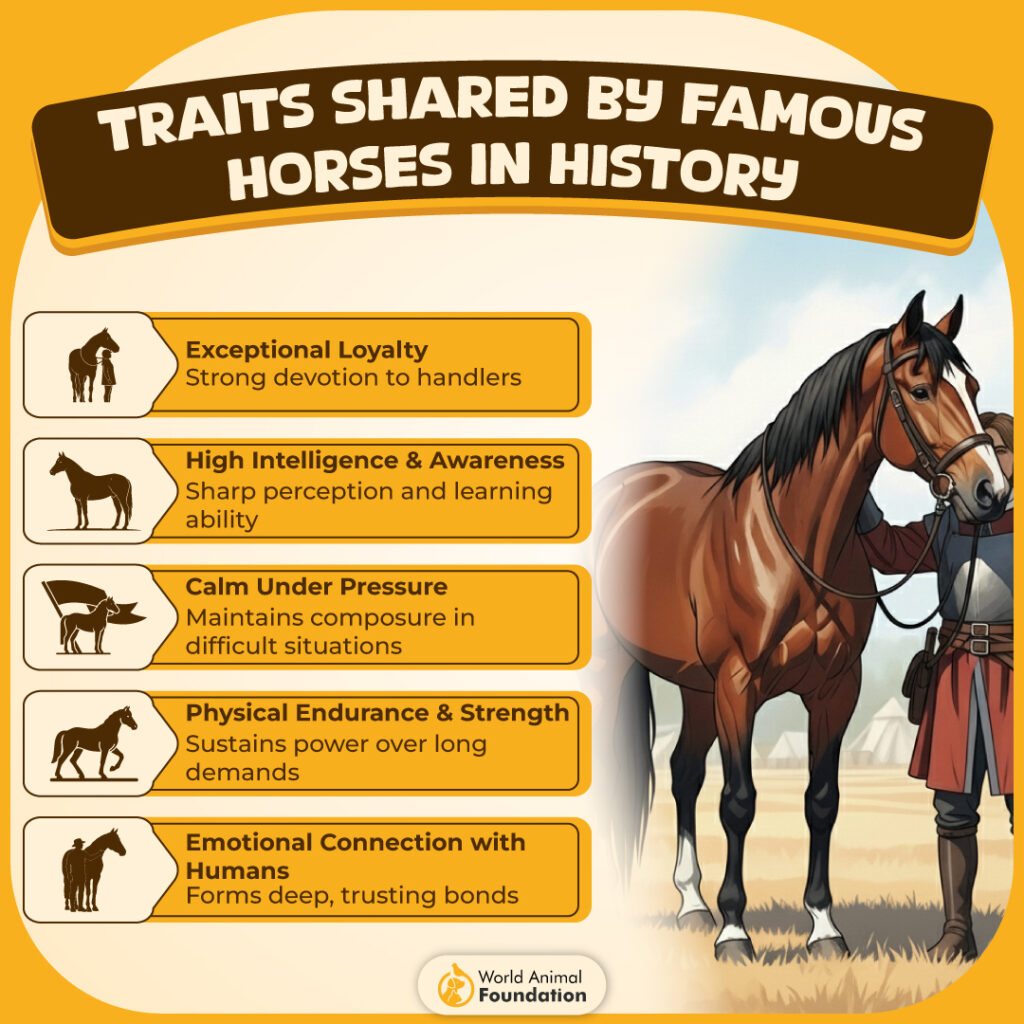
Key points that underline his historical significance:
Trusted in battles across vast lands
Central figure in Alexander’s tactical maneuvers
Commemorated with a city named Bucephala
A Partnership That Changed Empires
Their connection went beyond riding; Bucephalus provided both mobility and courage in dangerous situations. Alexander’s confidence in this breed allowed swift movements in warfare that few others could match. This partnership contributed to victories from Greece to India.
2. Marengo
Marengo gained fame through his stamina and speed, enabling Napoleon to move quickly across battlefields. His agility allowed the emperor to survey combat zones with effectiveness few horses could match. This warhorse became a symbol of determination and tactical advantage in campaigns.
A Legacy Preserved in History
Marengo’s story continued even after being captured by the British following Waterloo in 1815. His skeleton is now displayed at the National Army Museum in London, reminding visitors of his lasting importance, as per the National Army Museum.
Remarkable details of one of the most famous horses are these:
Carried Napoleon in numerous campaigns
Exhibited exceptional stamina over long distances
Symbol of Napoleonic Power
The horse’s presence on the battlefield reflected not just strength but a quiet responsiveness to commands. Officers noted how Marengo moved with precision, maintaining composure amid chaos. This ability contributed to key maneuvers and strategic successes during multiple wars.
3. Copenhagen
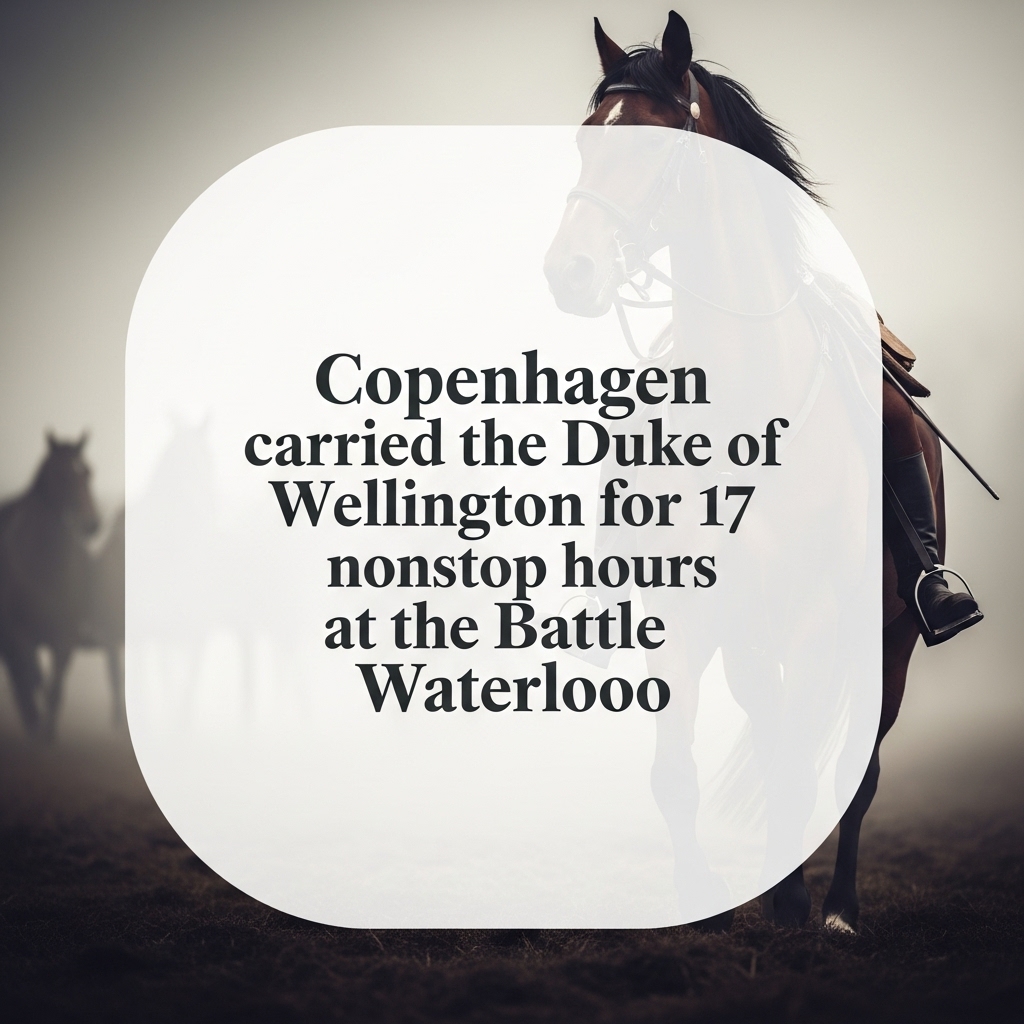
Copenhagen gained fame after carrying the Duke of Wellington for 17 straight hours during the Battle of Waterloo. His endurance reflected both thoroughbred speed and Arabian stamina. Despite a fiery temperament, he remained steady through one of history’s most grueling battles.
Fiery Temperament in Action
Copenhagen’s bold nature became clear after the battle, nearly catching the Duke with a sharp kick when patted. His spirited personality demanded respect and careful handling. Horses like him showed that courage often comes with a touch of unpredictability.
Short points that highlight his remarkable character:
Maintained focus over long hours of combat
Reacted strongly when startled or touched suddenly
Demonstrated resilience under extreme conditions
A Horse That Made History
His actions during Waterloo left a lasting impression, showing how crucial a reliable mount could be in war. His quick movements and reactions gave insight into the sharp instincts of top battle horses. His performance proved that stamina alone was not enough without courage.
4. Secretariat
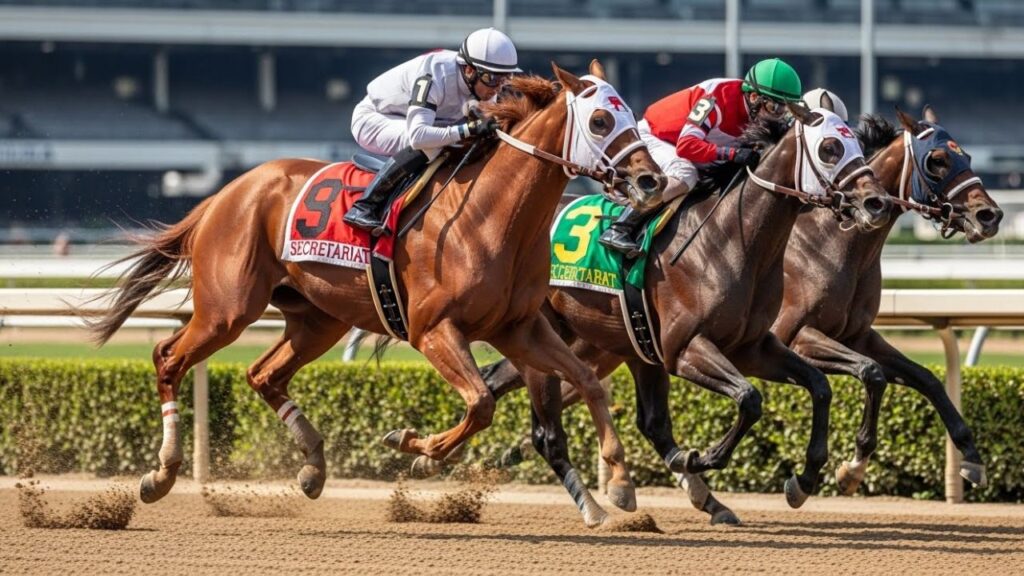
Secretariat stunned the racing world with unmatched strength and a vibrant chestnut coat. His long stride and muscular build allowed him to cover ground effortlessly, turning races into displays of sheer athleticism. From early on, he showed a combination of spirit and stamina that hinted at greatness.
Records That Redefined Racing
1973 marked a historic year as Secretariat claimed the Triple Crown with performances that remain legendary, as Britannica highlighted. His Belmont Stakes win by 31 lengths is often cited as one of the greatest athletic feats in sports history.

Notable highlights of his racing career include:
Triple Crown winner in 1973
Belmont Stakes victory by 31 lengths
Set records in all three Triple Crown races
A Heart That Made History
An autopsy revealed his heart weighed an estimated 22 pounds, nearly three times the size of a typical horse’s heart. This extraordinary organ likely fueled his remarkable endurance and oxygen delivery during races. His physiology remains a subject of fascination among racing enthusiasts.
5. Comanche
Comanche faced severe injuries on the battlefield yet continued to carry Captain Myles Keogh through combat. He survived seven bullet wounds during the Battle of the Little Bighorn and was found two days later in a ravine. His resilience during such extreme circumstances earned him lasting recognition.
Remarkable Recovery and Recognition
Even before the Little Bighorn, Comanche proved his toughness in earlier conflicts, surviving an arrow wound while remaining in action. His bravery inspired his name, derived from a word meaning “anyone who wants to fight me all the time.”
This demonstrates his enduring stamina and courage:
Survived roughly 12 battle injuries
Recovered fully under army care
Maintained composure despite severe wounds
Honored Retirement After Service
After retiring in 1878, the army issued orders to ensure his comfort and protection, making him the living symbol of the Battle of the Little Bighorn. He was never ridden again, allowed to roam freely, and became a favorite among soldiers. This period highlighted respect for his service and resilience.
6. Man o’ War
Man o’ War grew into a horse of imposing stature with unmatched spirit, quickly dominating the early 20th-century racing scene. Winning 20 of 21 starts, he thrilled crowds and left competitors struggling to match his pace. His fiery nature and commanding physique made him a force in every race he entered.
Victories That Shaped History
He captured prestigious events such as the Preakness Stakes and the Belmont Stakes, showcasing incredible speed and stamina. Competing against time itself, he often raced with few willing opponents, proving his dominance on the track.
Notable highlights include:
The only loss was to Upset, yet the reputation remained untarnished
Routinely left competitors far behind in major races
Repeatedly demonstrated endurance over long distances
Influence Beyond Racing
After retiring to Faraway Farm in 1920, he sired several exceptional racehorses, including 1937 Triple Crown winner War Admiral. His offspring carried forward his legacy, impacting American racing for decades. The combination of performance and breeding cemented his place in history.
Fun Fact: Man o’ War’s dominance was so legendary that fans often referred to his races as witnessing “the horse against the clock,” a testament to his speed and power.
7. Seabiscuit
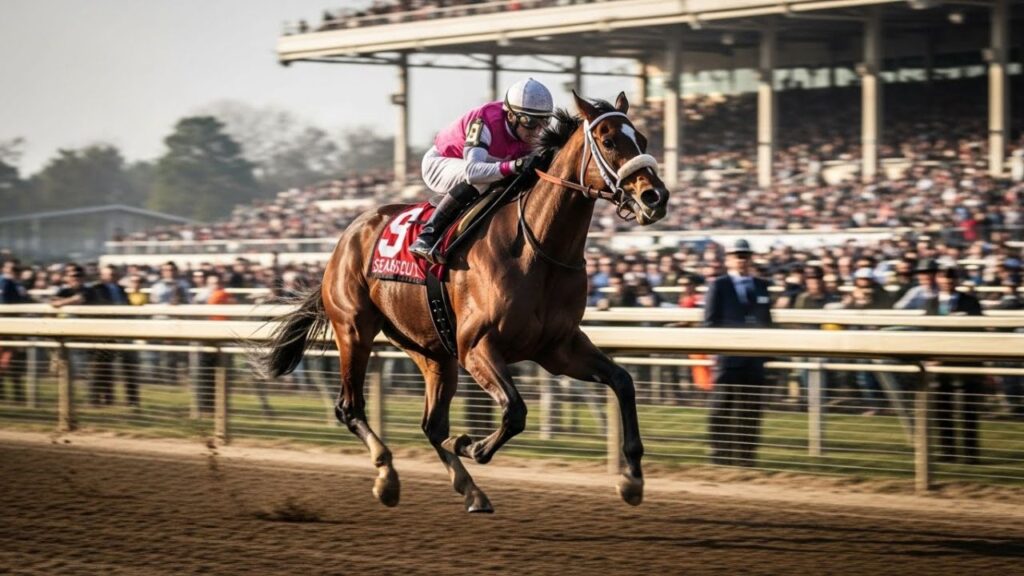
Seabiscuit began life overlooked due to his small size and uneven gait, yet he showed remarkable determination on the track.
Early races brought little success, but persistence shaped his growth and racing skill. Trainer Tom Smith and owner Charles Howard believed in his potential, setting the stage for historic victories.
Turning Setbacks Into Triumphs
Despite a slow start, Seabiscuit steadily improved under focused training and guidance from jockey Red Pollard. He captured attention with consistent performances that hinted at something greater.
Here’s what helped define his rise:
Won 33 of 89 races during his career
Beat Triple Crown winner War Admiral in 1938
Symbol of hope during the Great Depression
Overcoming Injury With Courage
In 1940, Seabiscuit suffered a ruptured suspensory ligament in his left front leg, putting his racing future at risk. Months of careful rehabilitation allowed him to regain condition and confidence. His return to win the Santa Anita Handicap demonstrated extraordinary resilience and spirit.
8. Sergeant Reckless
Sergeant Reckless was a small Mongolian mare whose courage stood out in intense combat situations. She was trained to carry ammunition and supplies, navigating dangerous terrain without human guidance. Her intelligence and loyalty quickly expanded her role on the frontlines during the Korean War.
Record-Breaking Service
During the Battle of Outpost Vegas in March 1953, she made 51 solo trips in a single day, covering over 35 miles under heavy fire. Her actions resupplied frontlines and evacuated wounded soldiers, proving critical to the Marines’ success.
Some notable points from her service include:
Earned two Purple Hearts for bravery
Managed missions solo with precision
Carried loads repeatedly under extreme conditions
Honored and Promoted
After the war, Reckless was brought to the United States and promoted to Staff Sergeant. She lived at Camp Pendleton with privileges equal to those of other Marines, including her own stall. Recognition reflected both her heroism and the respect she earned from the Corps.
9. Trigger
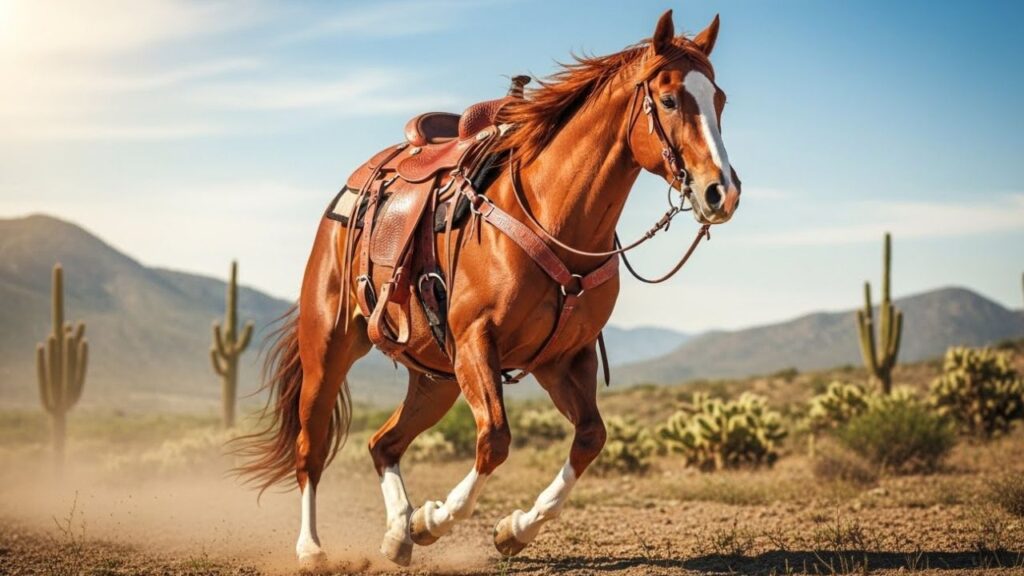
Trigger earned fame as Roy Rogers’ loyal palomino companion, dazzling audiences with both beauty and agility. Originally named Golden Cloud, he quickly proved himself during early film tests. His presence added energy and precision to every scene he appeared in.
Memorable Moments in Film and TV
His performances were consistent across decades, showing intelligence and responsiveness that few horses could match. He adapted to complex stunts and repeated takes with ease, making him indispensable on set.
Quick highlights of what made him exceptional:
Appeared in 81 Roy Rogers films
Featured in all 100 television episodes
Outfitted with a gold-and-silver saddle worth $5,000
Speed and Smarts Behind the Scenes
Observers noted how quickly he reacted to cues, inspiring his eventual name, Trigger. His quick thinking allowed for smooth coordination with both cast and crew. The bond between horse and rider became a model of trust and timing on screen.
Conclusion
The stories of these remarkable horses remind us how deeply they shaped human history. Each war horse carried a weight far beyond battle, leaving marks that still guide our understanding of courage. From ancient history to modern achievements, they stood apart from other horses through devotion and strength.
Every smartest horse we admire today carries a trace of their legacy. Not only do horses define the past alone, but each has also become a symbol of resilience. They shaped military history with fearless hearts and steady steps. Choosing a favorite horse becomes difficult when every story holds its own quiet power.
Famous Horses in History 🐎 Can You Score 5/5?
Which horse was the trusted companion of Alexander the Great?
Which famous horse carried Napoleon into many battles?
Which horse won the Triple Crown in 1973?
Which horse made 51 solo supply trips during the Korean War?
Which horse became a symbol of hope during the Great Depression?
