




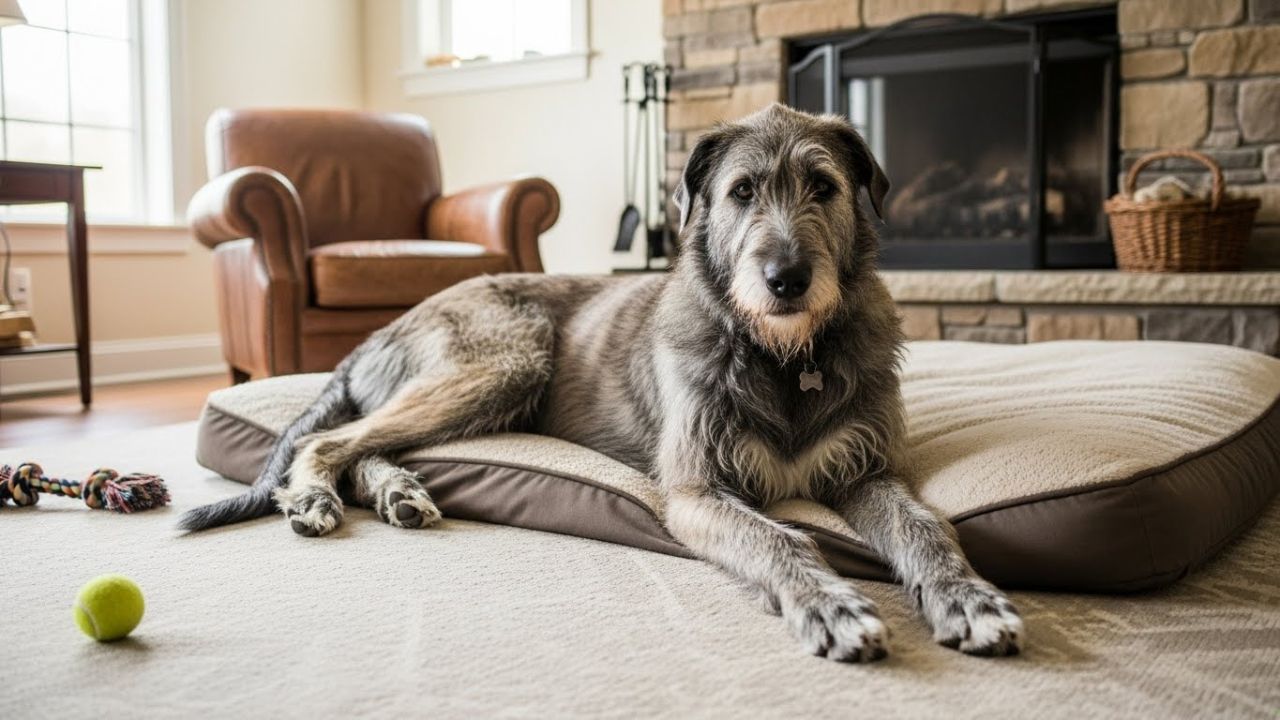
Life feels calmer when the right dog is by your side. For many people, a relaxed, easygoing dog is not just a pet but a source of comfort after long days and busy routines. Choosing a dog that matches a slower pace can turn everyday moments into something more peaceful and enjoyable, especially for families or owners who value quiet companionship.
Choosing the right dog for your family can feel like a big decision, but it does not have to be stressful. Size, temperament, exercise needs, and grooming all matter, and low-maintenance breeds often make life easier. Since they need less grooming, are usually calmer, and fit smoothly into everyday family routines.
This blog explores relaxed dog breeds that suit easygoing owners. You will learn which breeds thrive on moderate exercise, simple care routines, and close human connection, making them ideal for a calmer lifestyle.
Relaxed Dog Breeds for Easygoing Owners
1. Cavalier King Charles Spaniel
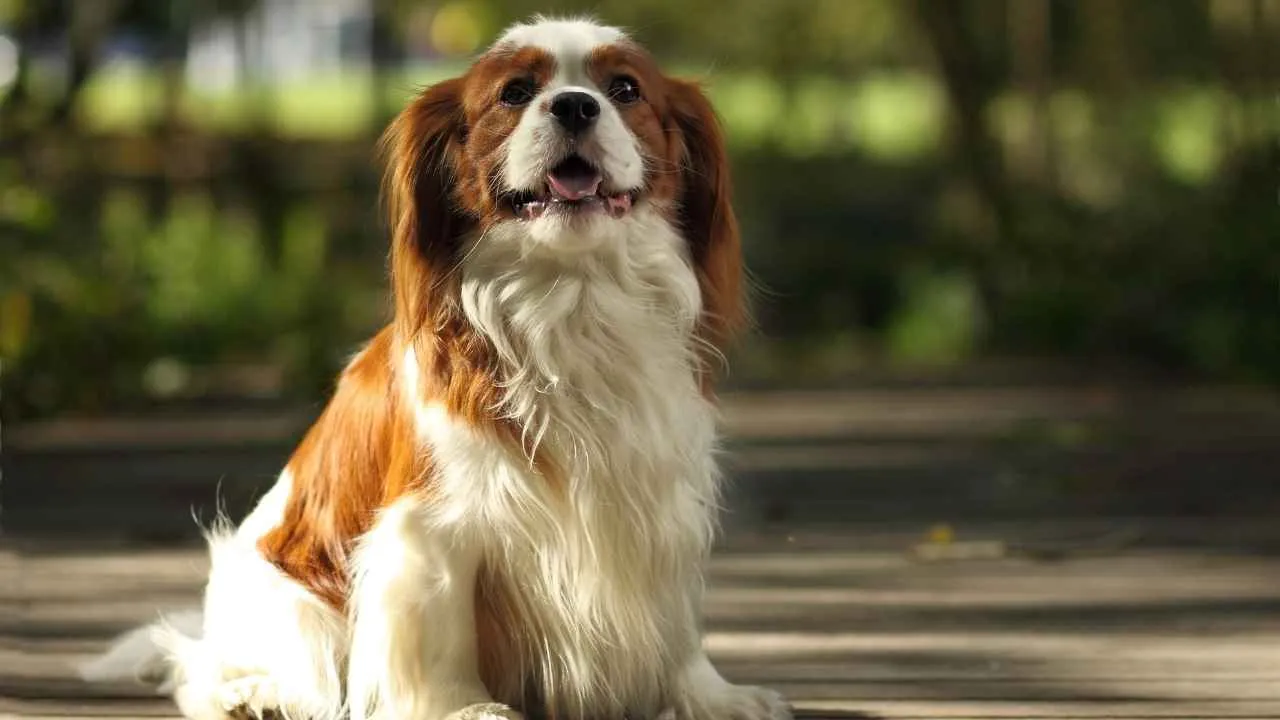
The Cavalier King Charles Spaniel is a true lap luxury. This small spaniel breed boasts beautiful, silky coats and expressive, dark eyes that seem to melt your heart. Historically, members of the British royal family adored these companion animals, as mentioned by PetMD.
You will find the Cavalier is perfectly content living in apartments or smaller homes. This lap dog requires only moderate daily activity to stay happy and healthy. Its size makes it very adaptable to many living situations, which is a real plus for busy dog owners.
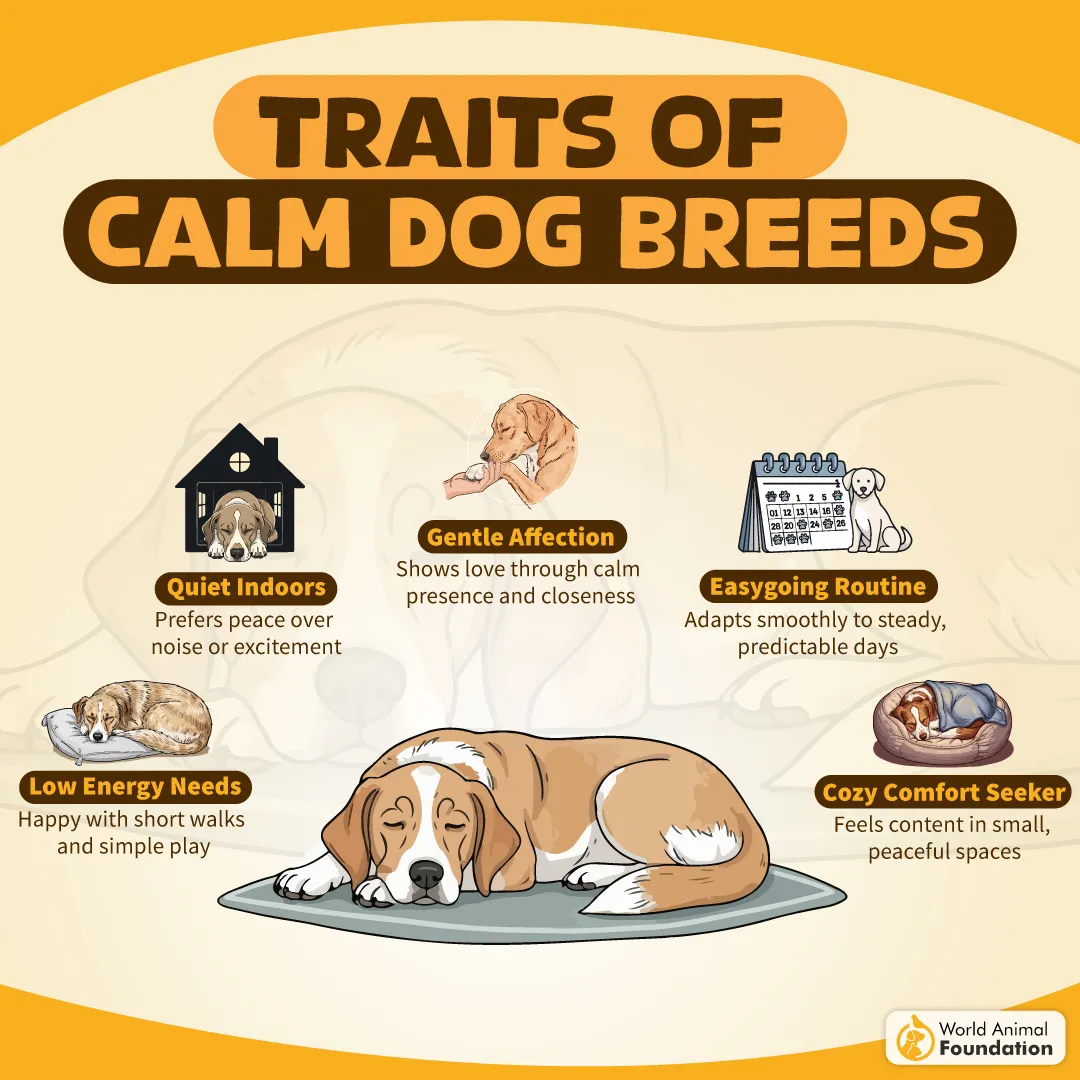
This calm dog breed thrives on close human companionship and does not like being left alone for extended periods. The Cavalier gets along famously with children and other pets, making it a wonderful addition to a multi-species family.
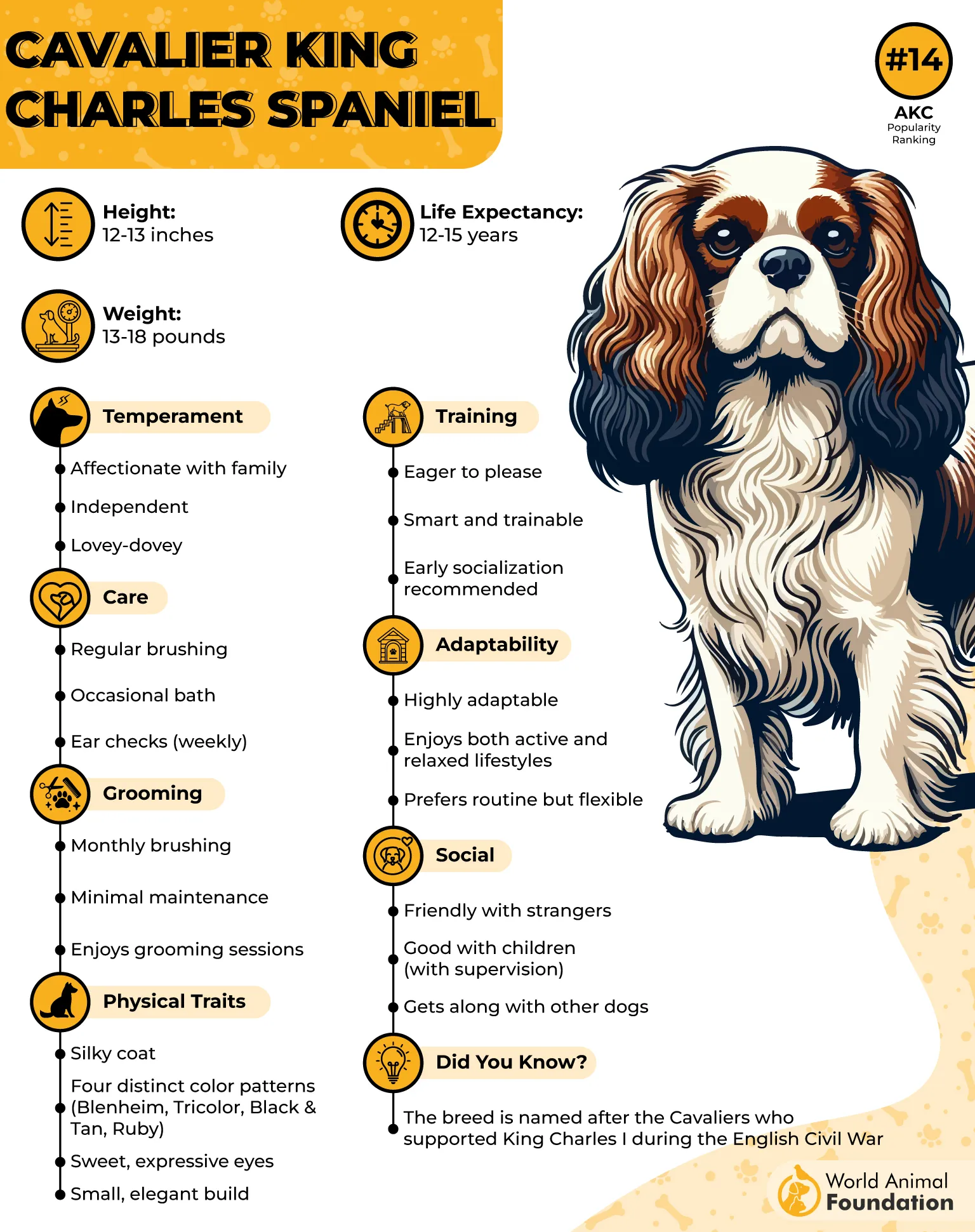
The Cavalier King Charles Spaniel needs consistent grooming to keep its beautiful coat tangle-free. Daily brushing is often required to prevent painful matting, particularly around the ears and legs, where the fur is longest.
2. Golden Retriever
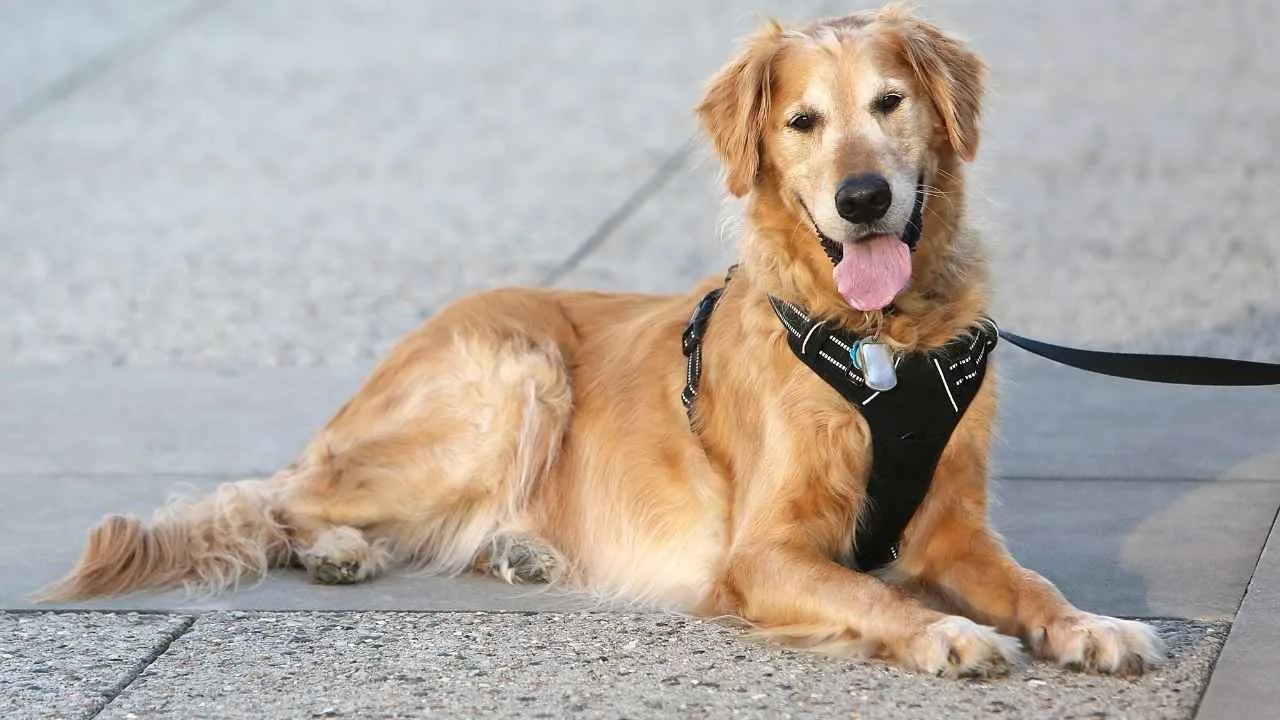
The handsome Golden Retriever sports a dense, water-repellent outer coat that comes in rich shades of golden yellow. Its powerful, athletic build and friendly demeanor have made the Golden one of the most popular breeds across the globe. They are basically the supermodels of the dog world.
Goldens are famously patient and exceptionally good with children of all ages. This loyal companion forms strong bonds with its entire human family unit very quickly. Their desire to please their people, high intelligence, and gentle nature make them therapy dogs.
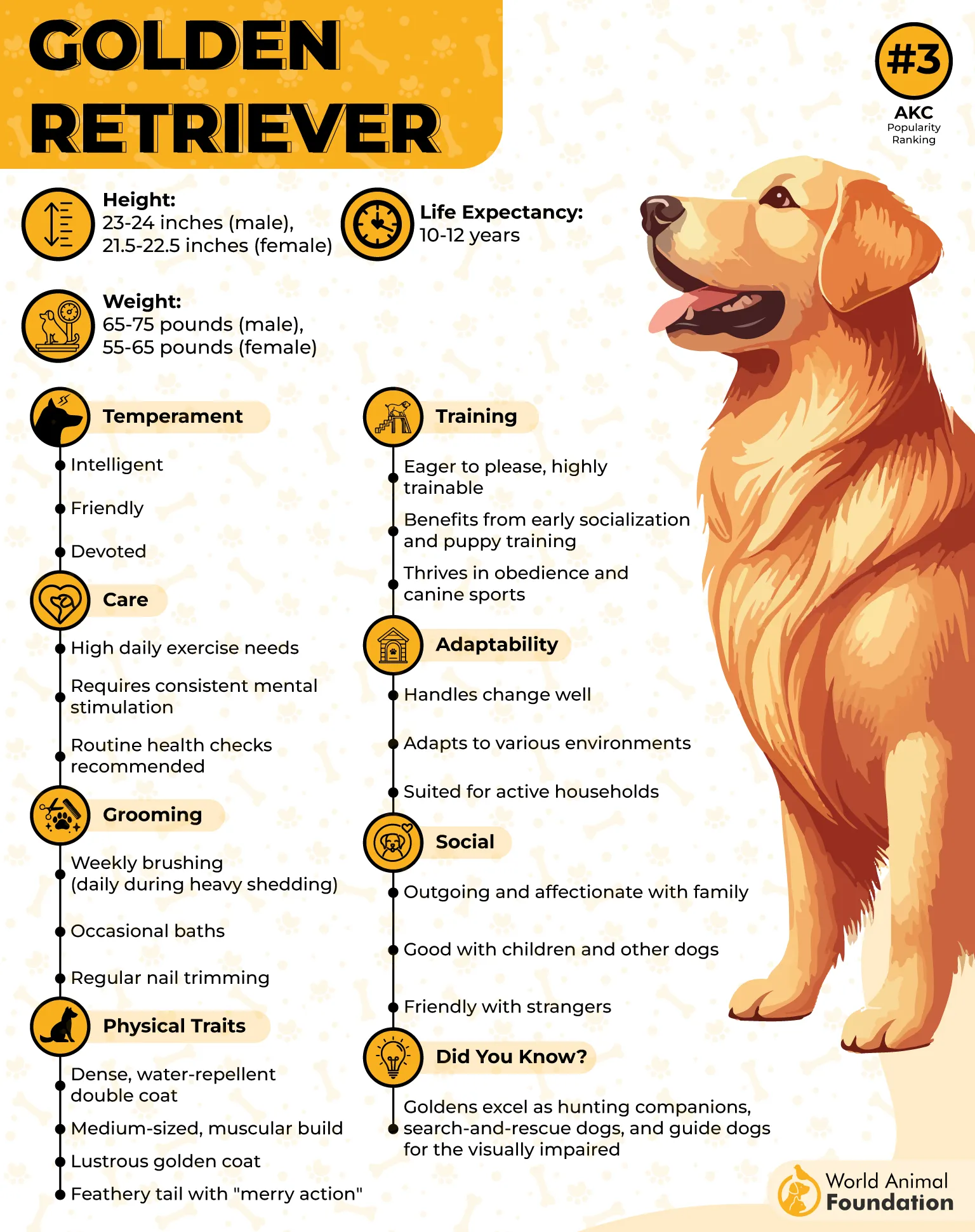
Despite being a very calm companion indoors, the Golden needs a fair amount of daily exercise to burn off energy. This generally means vigorous activity, such as a long jog or extended, active play sessions, to keep your dog physically and mentally stimulated. Remember, a tired Golden is a good Golden.
Grooming a Golden Retriever requires regular effort, especially during shedding seasons. Brushing the thick coat several times a week helps manage the loose hair and keeps the skin healthy. This lovable dog sheds a lot, so you will need to invest in a good vacuum cleaner to maintain your home.
3. Pug
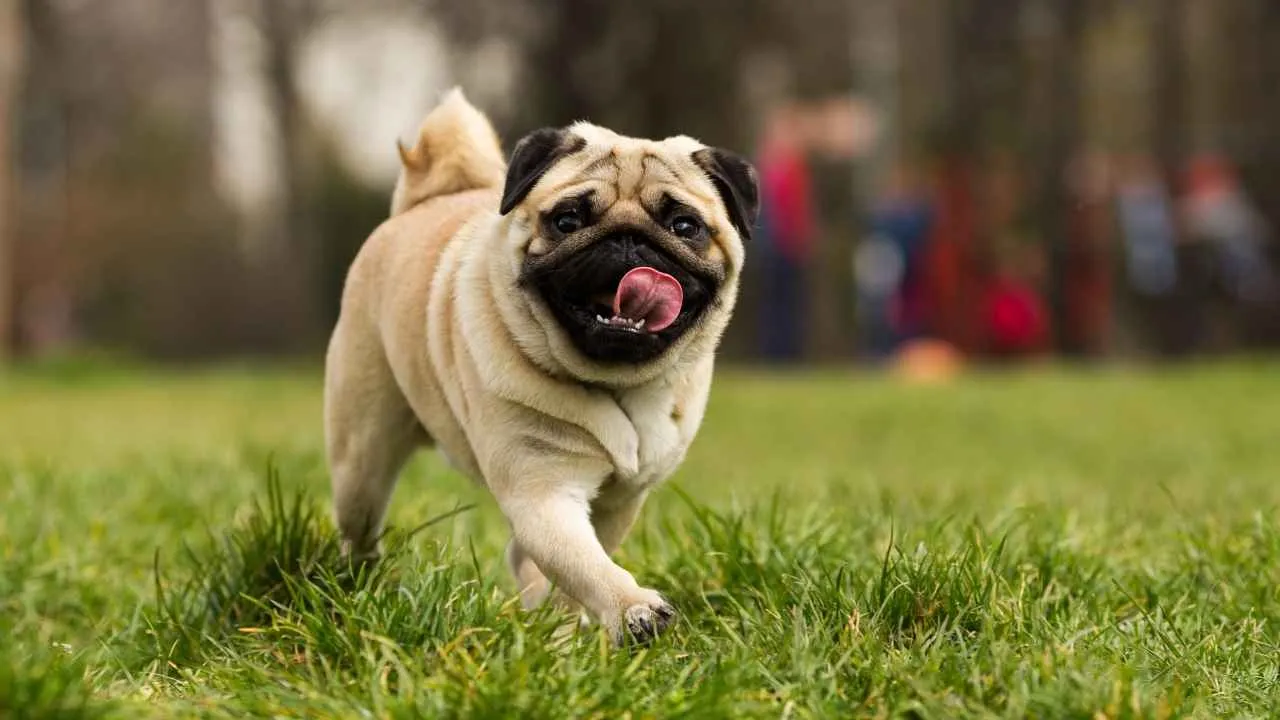
The distinctive Pug features a unique, flat face with large, expressive eyes and adorable wrinkles. According to the American Kennel Club, this small, stocky dog has a long, illustrious history, having been prized by Chinese emperors for centuries.
For the easygoing owner, Pugs are somehow lazy dogs, thriving in smaller spaces thanks to their very low exercise requirements. They enjoy a short, casual walk or a bit of playful tumbling on the carpet, but nothing too strenuous.
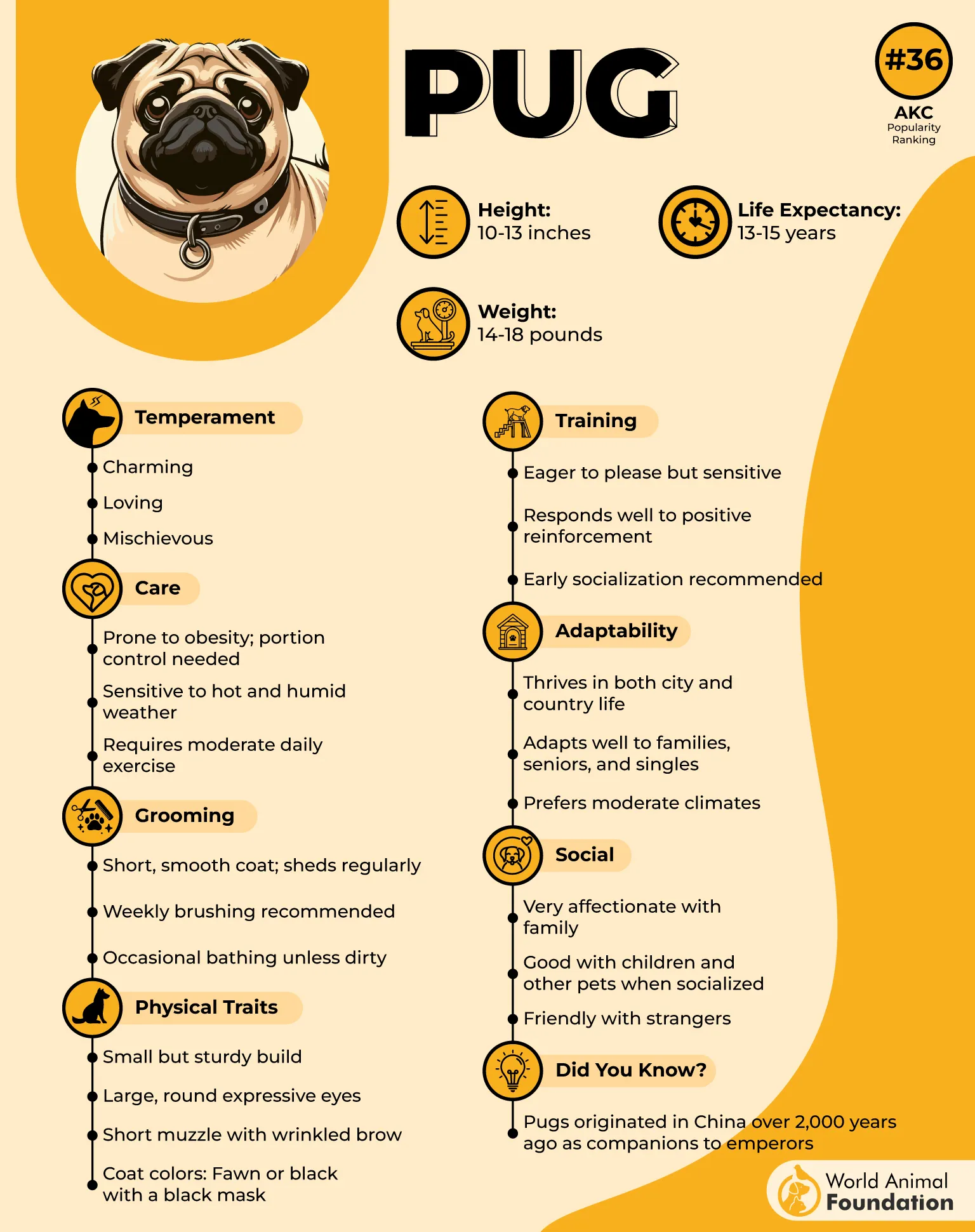
This small dog possesses an undeniable charm and a wonderfully stable disposition. The Pug is an affable and social breed, generally getting along well with everyone, including strangers and other household animals. They are basically professional couch potatoes.
The short, smooth coat needs only minimal brushing to stay neat, which is perfect for minimal effort pet owners. The many wrinkles on a Pug’s face need special attention during grooming to prevent skin irritation. You must regularly clean and dry the folds to ensure good hygiene.
4. Labrador Retriever
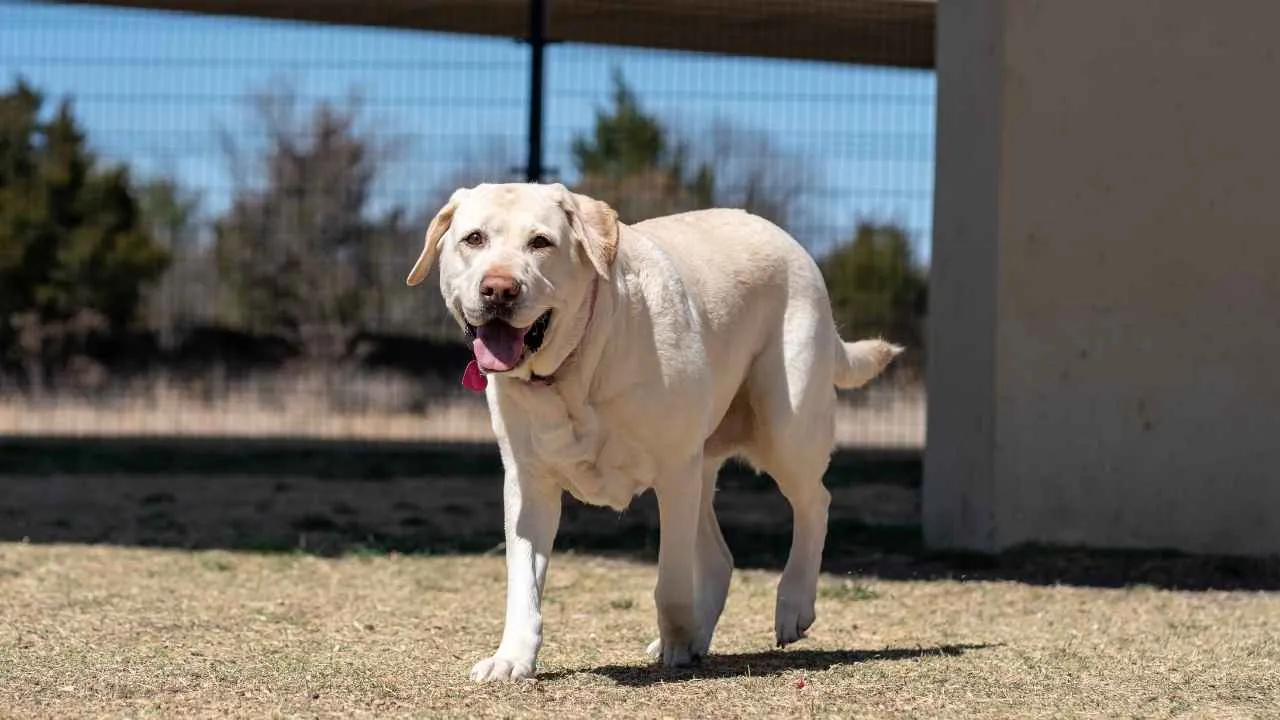
The Labrador Retriever is easily identified by its broad head, floppy ears, and its thick, “otter” tail used as a powerful rudder when swimming. This enthusiastic breed was originally used by fishermen in Newfoundland to retrieve nets and fish from the cold waters. They are the quintessential canine athlete.
Labs possess an exceptionally stable and outgoing temperament, making them the ultimate family dog. Also excellent companions for the easygoing owner who still loves activities. They are naturally calm, which means they adapt well to various household routines and make popular service dogs.
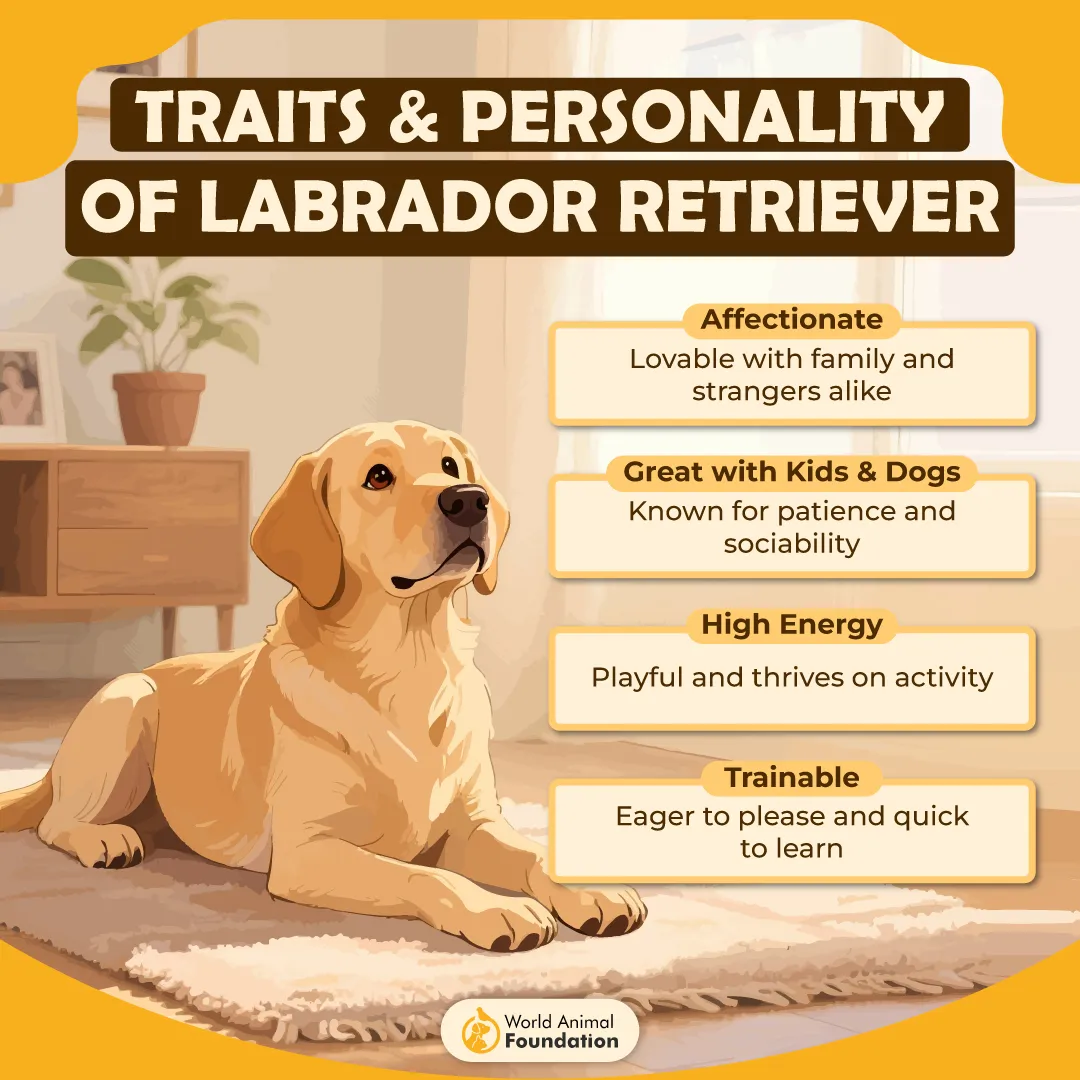
Because the Labrador Retriever is a high-energy dog, it does need significant exercise for physical and mental stimulation. Daily, vigorous activity, such as long jogs or extended retrieving games, is absolutely essential for the Lab’s well-being. A Lab will be relaxed indoors if it gets its play time outside.
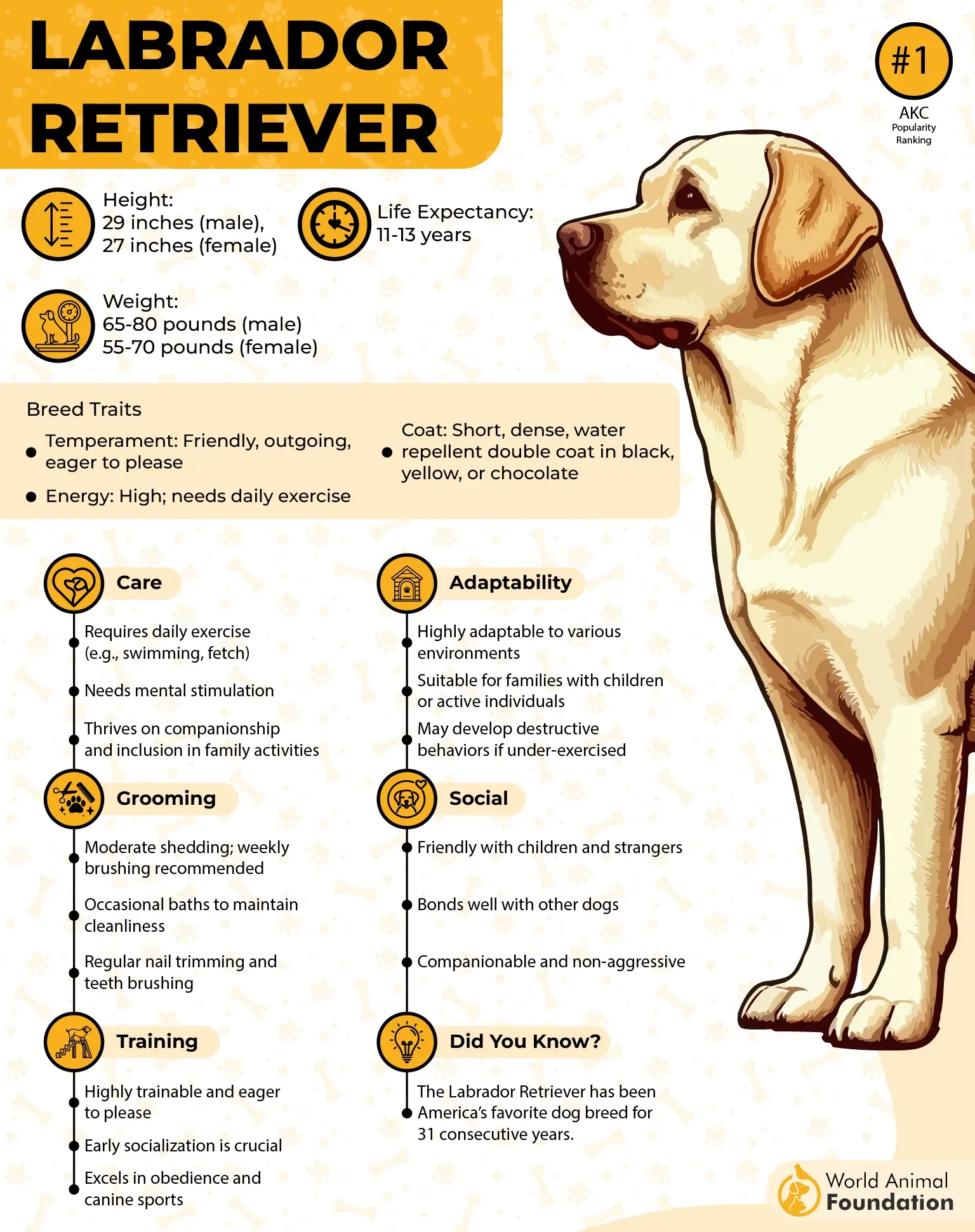
Training a Lab is typically easy because this dog is highly intelligent and responds eagerly to positive reinforcement. Consistent training and early socialization help ensure the Lab becomes a well-mannered companion. Just watch out; they are also professional counter surfers due to their love of food.
5. Irish Wolfhound
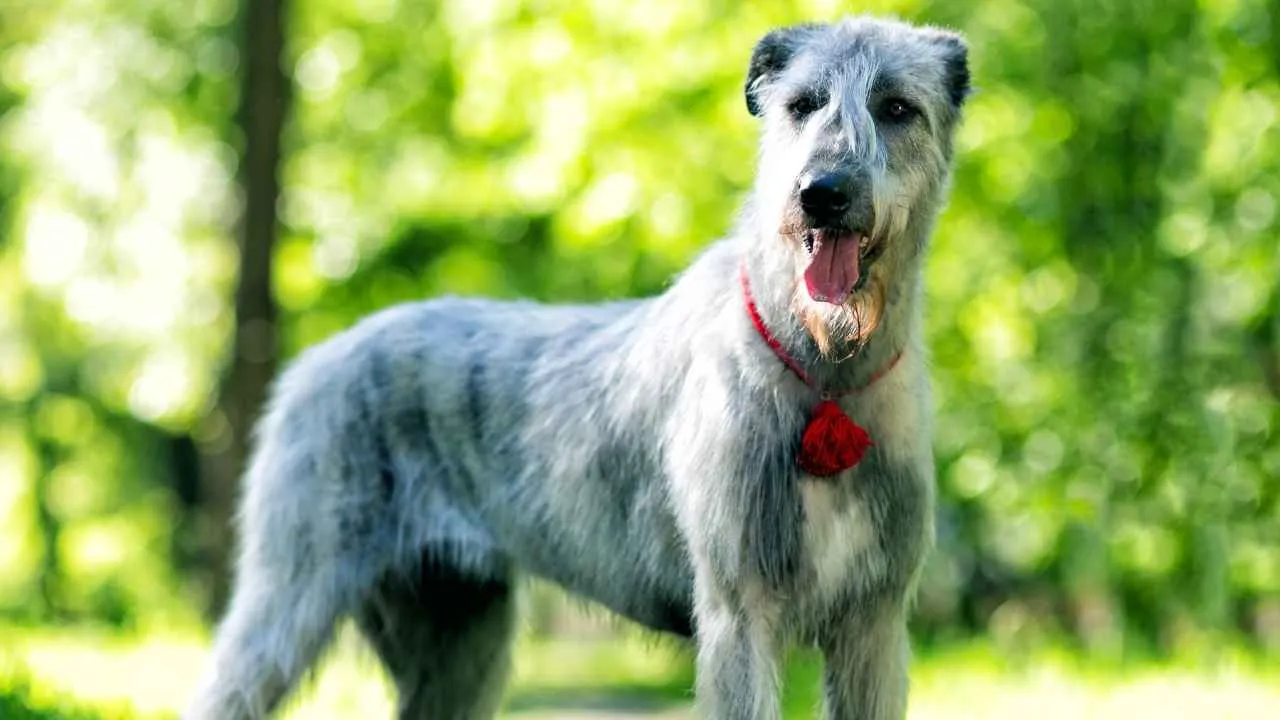
The towering Irish Wolfhound is one of the largest and tallest dog breeds in the world, often reaching the size of a small pony. These working dogs possess a rough, shaggy coat and a graceful, commanding presence. Historically, these noble giants were fearsome war dogs and were later used to hunt wolves and elk.
Despite their incredible size and history as hunters, Irish Wolfhounds are gentle giants with a surprisingly calm disposition that suits a laid-back lifestyle. They are generally patient and remarkably good with children, earning them the nickname of “the good-natured giant.”
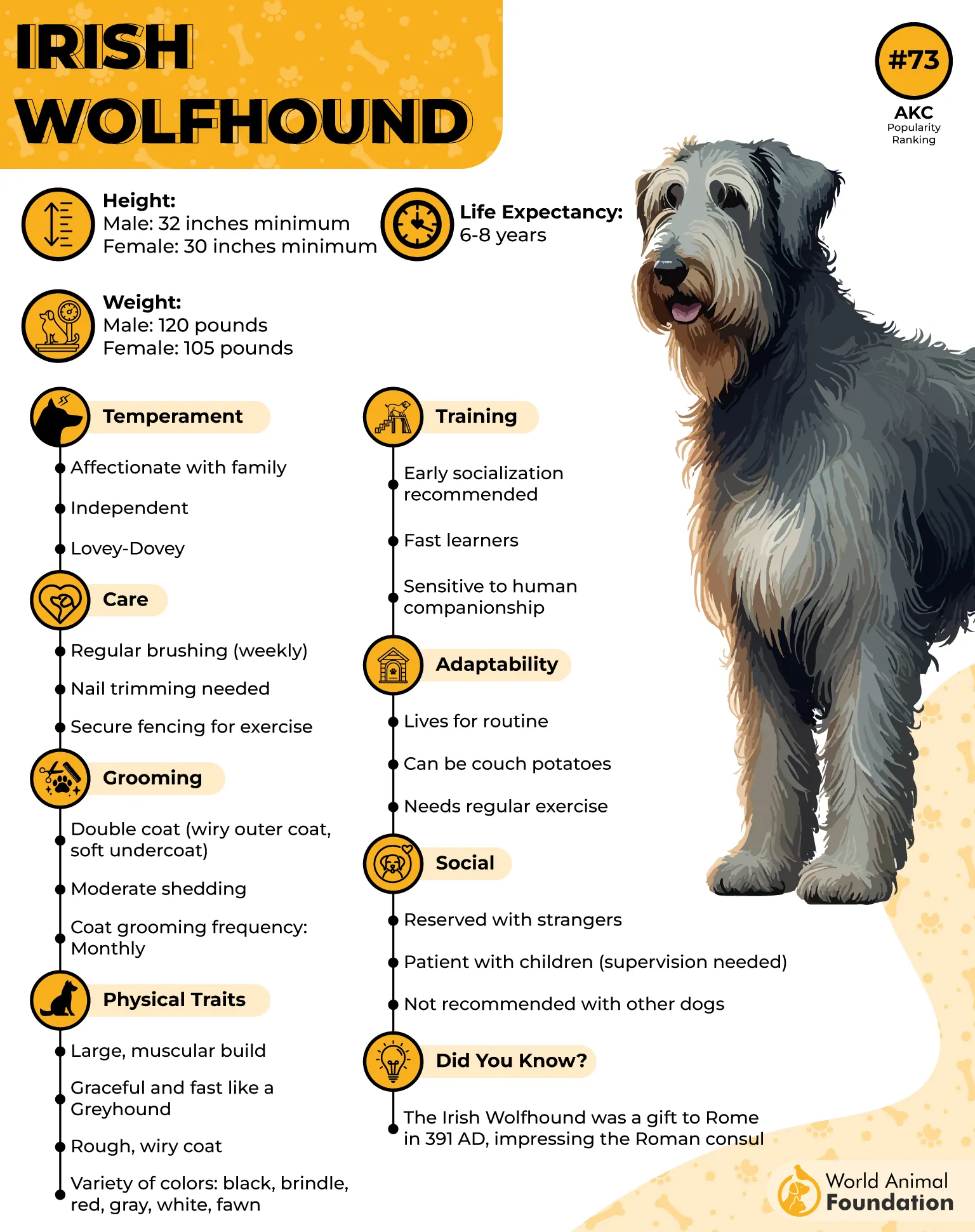
For a dog of this size, they don’t require vigorous exercise, making them well-suited for easygoing owners. They enjoy a daily, lengthy stroll but are not built for intense endurance activities like running marathons. Careful management of exercise is critical during their long puppy growth phase.
Irish Wolfhound is a low-maintenance dog; the harsh, wiry coat should be brushed weekly to remove loose hair and dirt. Sadly, this large dog has a shorter life expectancy than many smaller breeds, a sad consideration for prospective owners.
6. Basset Hound
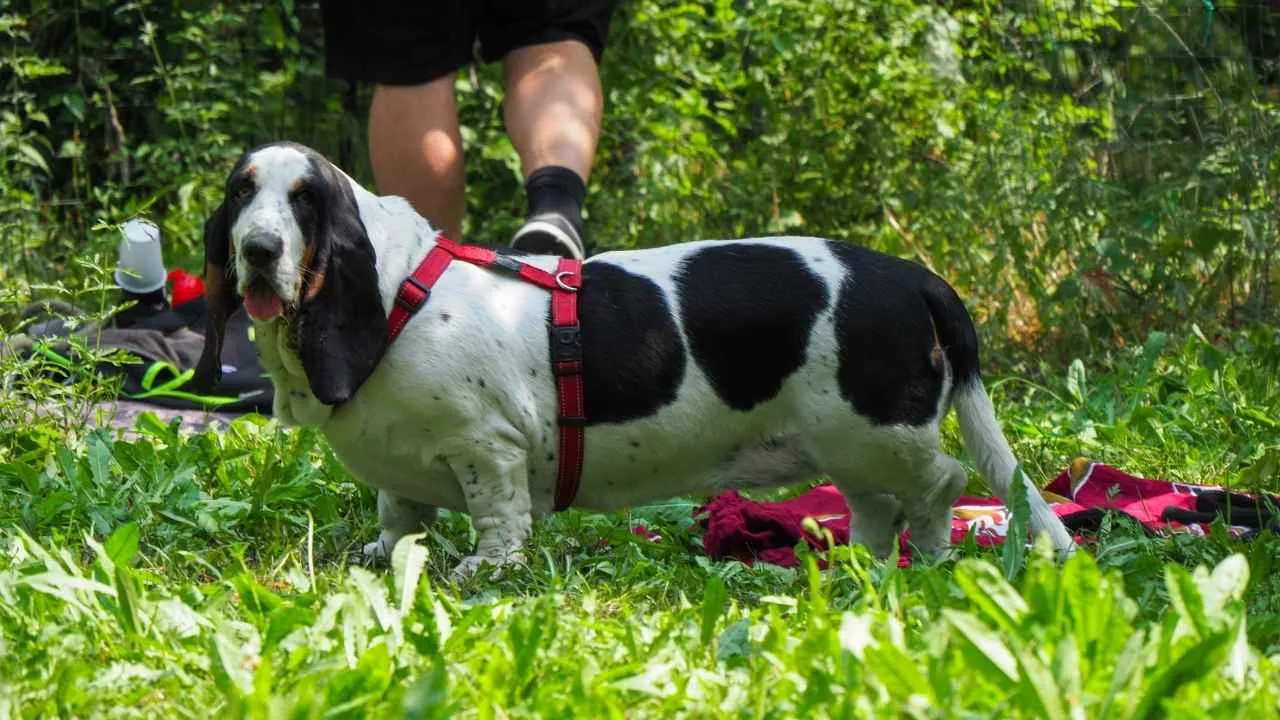
The Basset Hound is instantly recognizable by its short legs, long body, mournful eyes, and incredibly long, velvety ears. Their loose skin hangs in adorable folds, and they possess a prominent, dome-shaped head. They are truly one of the most uniquely shaped dogs.
The Basset Hound’s easygoing nature stems from their preference for a slow, scent-driven walk rather than a fast run. These dogs were bred for scenting game, and once they pick up a smell, they become utterly focused on the trail. This breed is low-energy and happy with minimal, casual exercise.
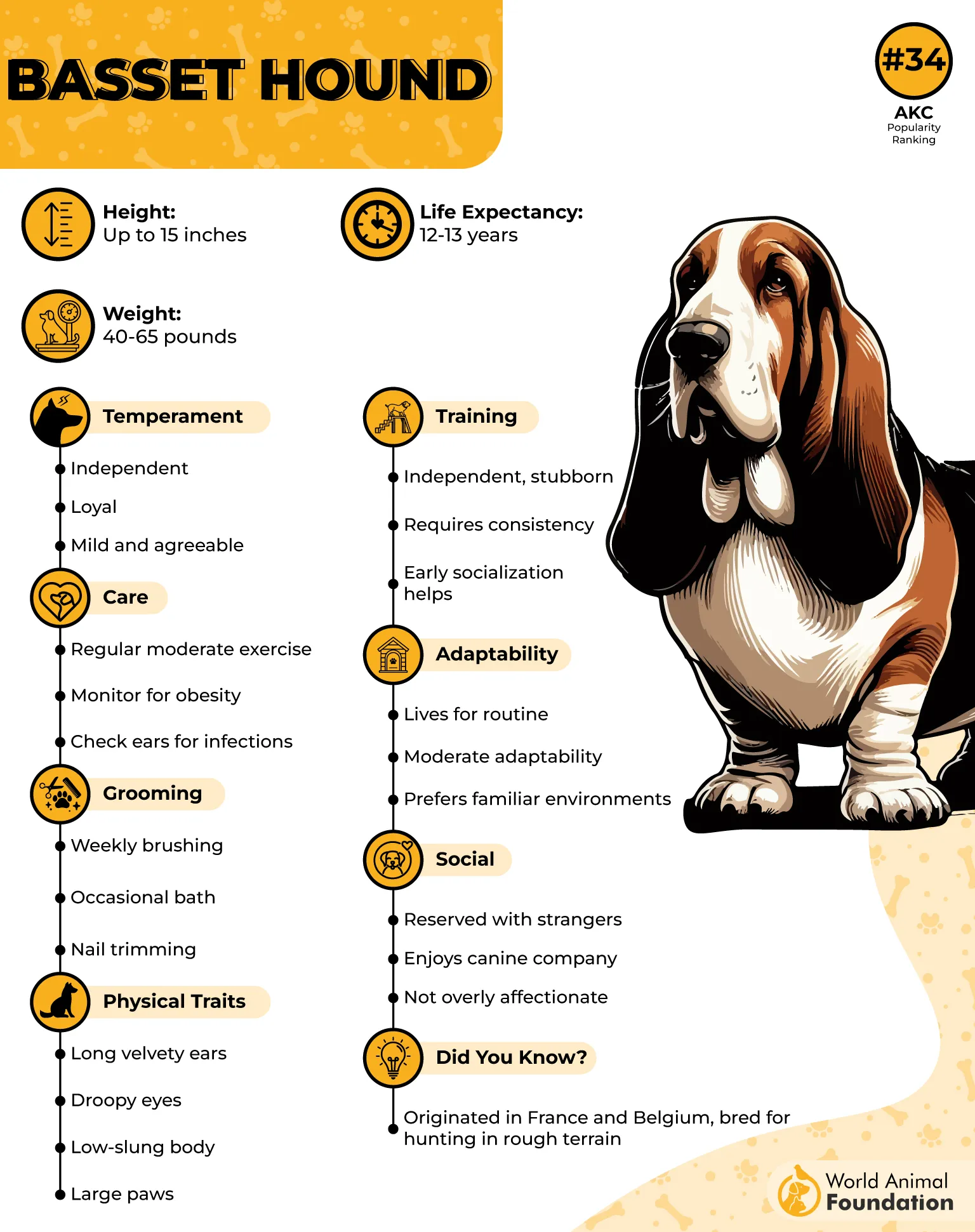
This dog is a very social animal that thrives in the company of its people and other dogs, making them a cooperative housemate. The Basset has a gentle demeanor, making it a good companion for families with calm, respectful children. This hound often expresses its happiness or loneliness through a surprisingly loud, baying howl.
Basset Hounds are prone to weight gain, so managing their diet is crucial for preventing health issues. Owners must also pay close attention to cleaning their long, floppy ears to prevent trapped moisture and ear infections. Their short coat needs only occasional brushing.
7. Clumber Spaniel
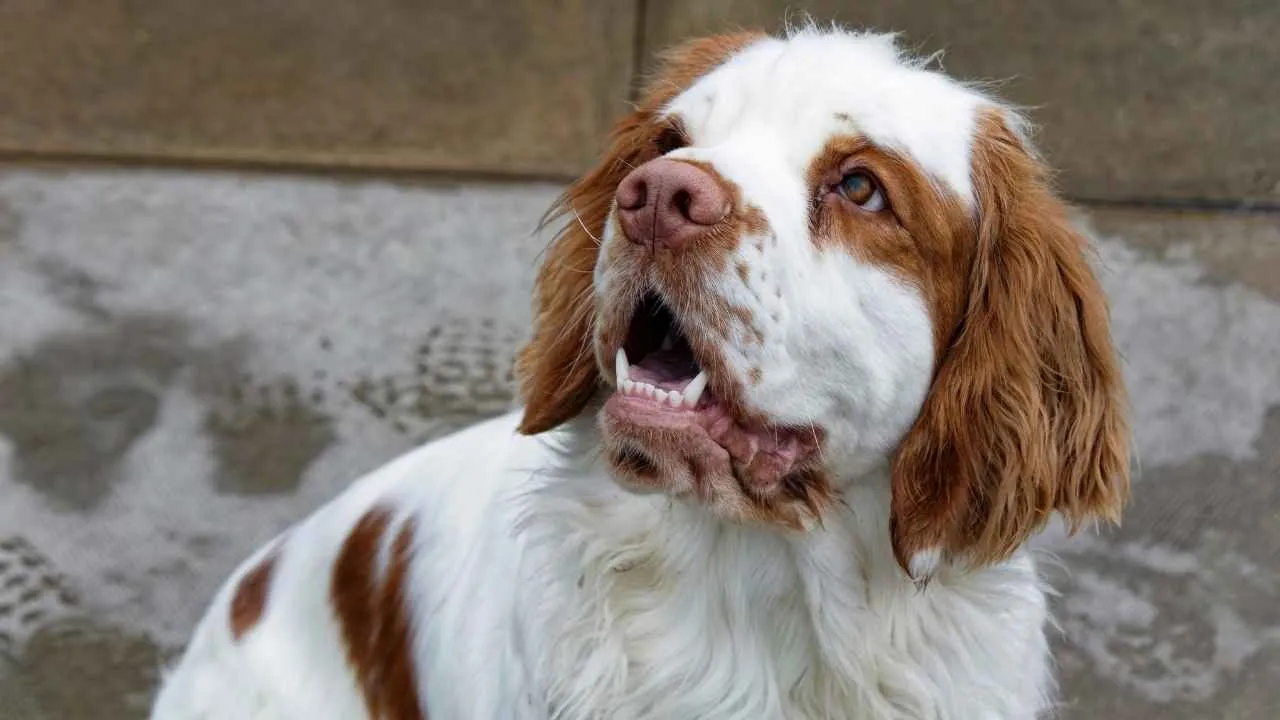
The Clumber Spaniel is the largest of the spaniel group, boasting a heavy bone structure and a somewhat serious, thoughtful expression. This sturdy dog has a heavy, white coat with characteristic lemon or orange markings. The breed was named after Clumber Park in Nottinghamshire, England,
This spaniel possesses a sweet and rather reserved temperament compared to some other spaniel varieties, making them a very relaxed housemate. While they adore their family, they are not typically boisterous or overly demanding of attention.
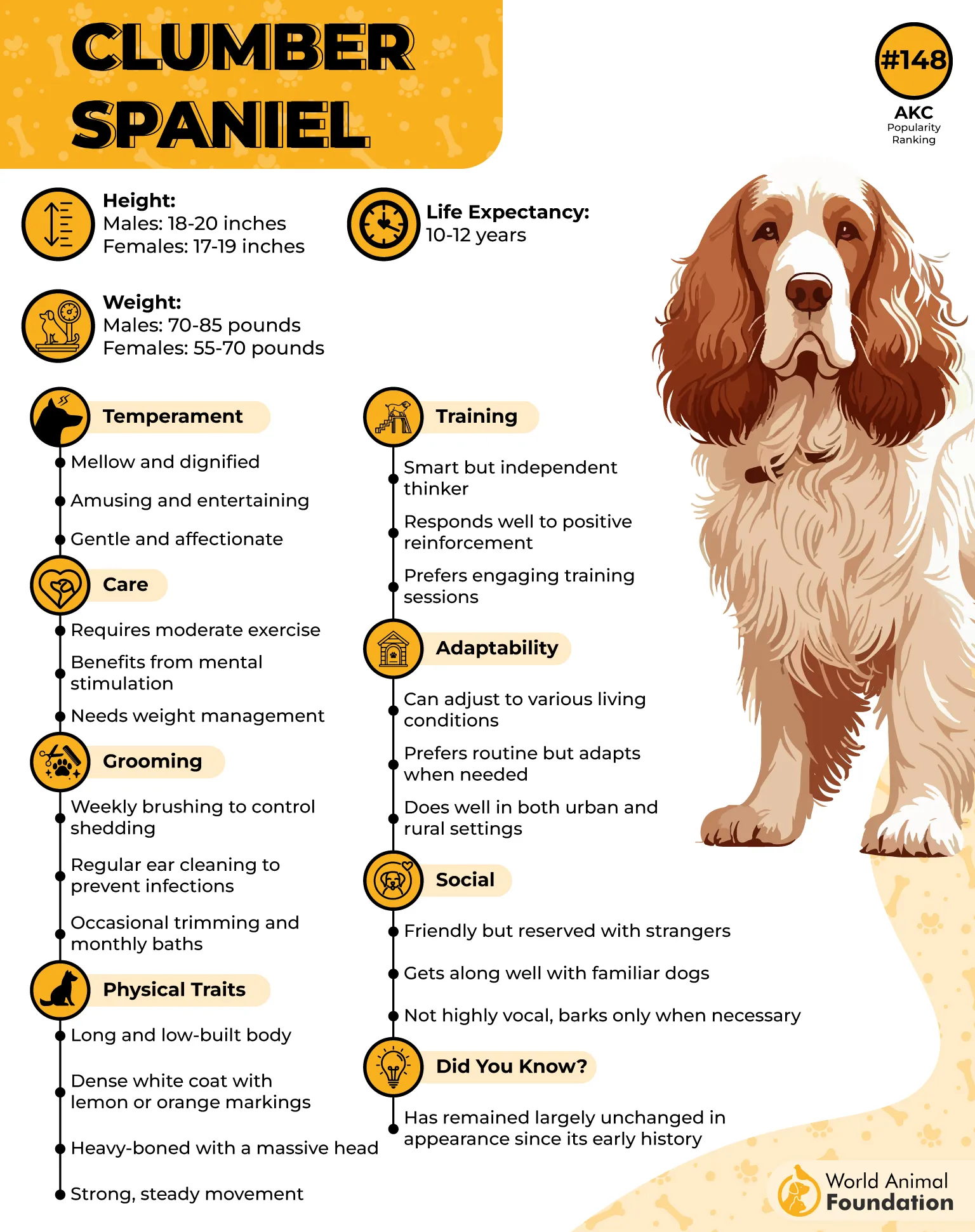
The Clumber Spaniel loves regular exercise, particularly if it involves sniffing and walking in a field or woods. A brisk daily walk or a session of focused retrieving is great for this dog. Their exercise needs are moderate, fitting well with an easygoing owner who still likes brief outdoor time.
Due to its low-to-the-ground build, the Clumber’s coat often drags through dirt and debris, requiring regular upkeep. Brushing the thick, straight coat must be done frequently—often daily—to prevent mats, especially in the long feathering on the legs.
Conclusion
Looking for a relaxed, easygoing companion can make pet ownership a breeze. These dogs thrive on moderate activity, simple routines, and lots of human company, making them perfect for owners who prefer a calmer lifestyle without constant chaos.
Many enjoy indoor living, adapt well to apartments or smaller homes, and are content with leisurely walks rather than marathon runs. Their calm demeanor and gentle nature make them excellent family pets, happy to lounge by your side while still offering affection and companionship.
With low-maintenance grooming, moderate exercise needs, and a patient temperament, these dogs bring joy without stress. They prove that a laid-back pet can fill your home with love, laughter, and lighthearted moments every day.
