




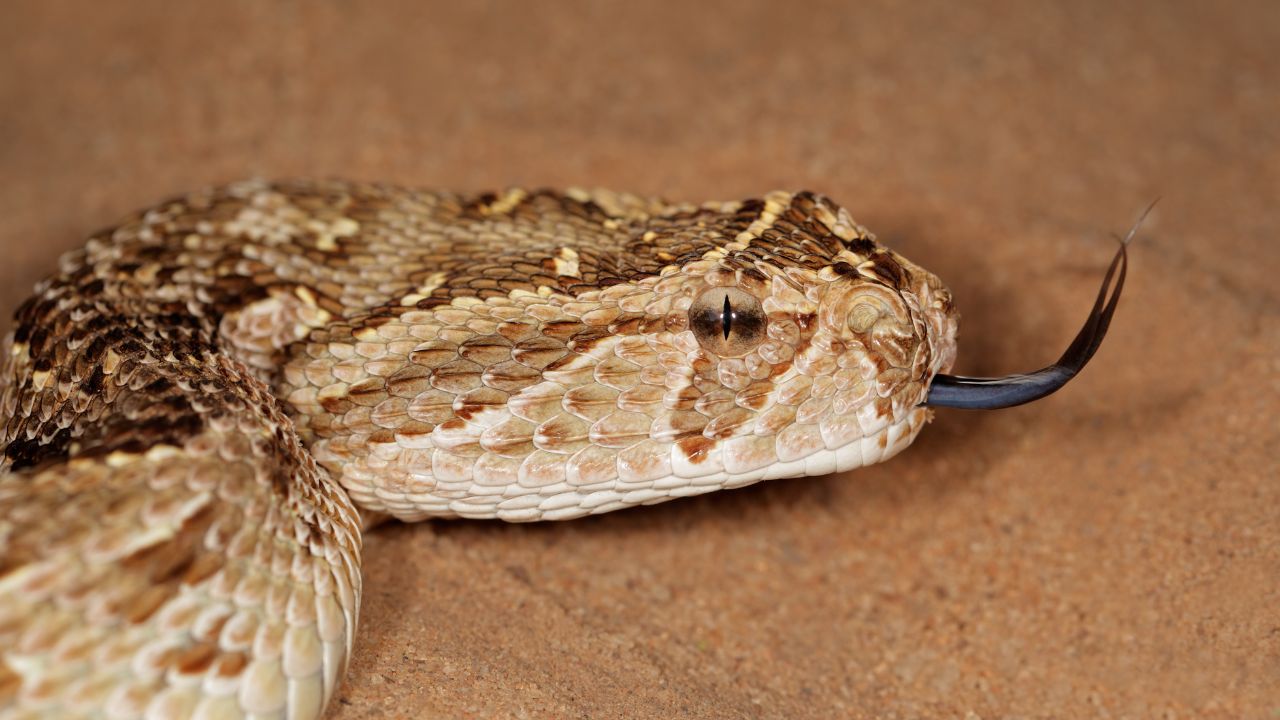
In the unpredictable world of the wild, survival often comes down to quick thinking and even quicker striking. While many snake species use venom to hunt, some wield this natural chemistry set for a completely different purpose—self-defense.
These snakes aren’t looking for a meal when they bite; they’re fighting to stay alive. For many species, venom is a last resort, deployed only when escape, camouflage, or intimidation fails. Yet when needed, it becomes one of nature’s most effective defensive tools.
A sudden strike delivers venom designed not to stun prey, but to deter predators—sending a clear message that this is one battle not worth fighting. Some venoms cause intense pain; others act so rapidly that predators learn instantly to avoid these dangerous reptiles.
What makes this defensive strategy fascinating is the intelligence woven into it. Most snakes often give warning signs—hissing, rattling, hood-flaring—before ever resorting to a bite. Venom is precious, and using it comes at a cost, so defensive bites are deliberate, purposeful, and often measured.
We’ll discover the venomous snakes, how they do self-defense, how their venom works, and why evolution perfected these remarkable tactics. Prepare to see venom in a whole new light—as a shield, not just a weapon.
Quick Insight: The term “spitting cobra” refers to several cobra species that can intentionally spray venom from their fangs as a defensive weapon.
Snakes That Use Their Venom for Self-Defense
1. Red Spitting Cobra

These sleek, crimson-toned serpents aren’t just venomous—they’re performers. During the day, adult red spitting cobras prefer to lounge like introverts, hiding from their responsibilities—tucked inside termite mounds, hollow logs, burrows, or anything else that counts as “Do Not Disturb” real estate.
The youngsters, though? Total opposite. They roam around in broad daylight like rebellious teens who refuse to follow the family schedule.
Scientists believe this day-night behavior difference may be due to the adults being, well… occasionally snackish. Yes, red spitting cobras are known to be cannibalistic, which means juveniles wisely avoid being in the wrong place at the wrong time.
But the real signature move of this species is their defensive spit attack. When threatened, the cobra rises up, spreads its hood, and delivers a performance that screams, “Back off!” If the intruder still doesn’t take the hint (some creatures really don’t read the room), the cobra fires off two precise jets of venom—straight at the eyes.
Wikipedia says in rare cases, a red spitting cobra will unleash its venom without even lifting its hood. That’s basically the snake equivalent of yelling at someone before you’ve even stood up from the couch.
Now, while the venom can cause burning pain and even temporary or permanent blindness if it hits the eyes, fatalities in humans are surprisingly rare. This snake isn’t trying to pick a fight—it’s more like, “I really don’t want to be here, please leave me alone,” but with a hazardous biological squirt gun.
2. Egyptian Cobra
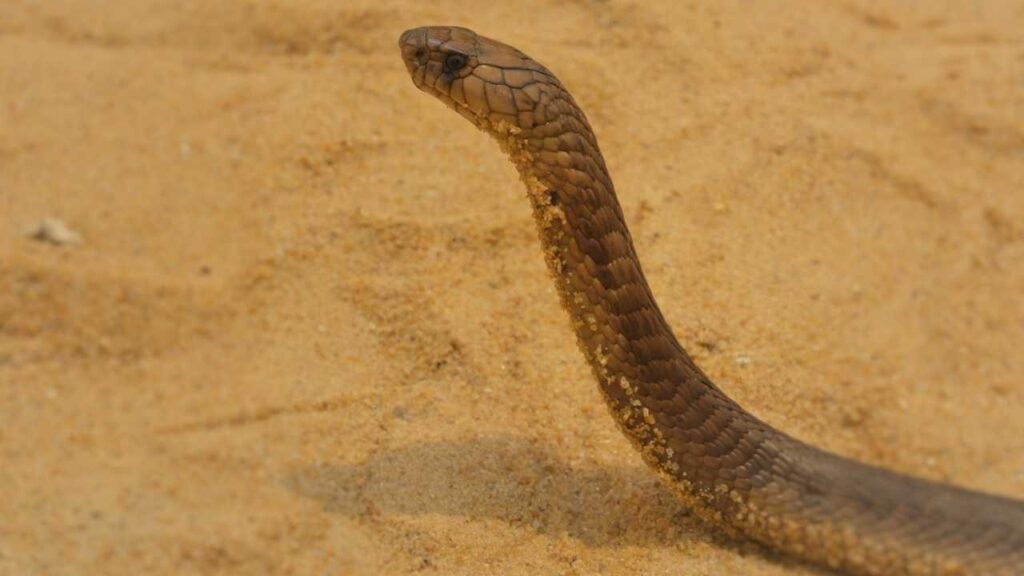
If the ancient Egyptians had a national reptile, the Egyptian cobra would be it—long, regal, and capable of delivering instant regret to anything that annoys it. This impressive snake can stretch up to 8 feet long, making it the second-largest cobra in Africa.
The only cobra bigger is the forest cobra—because apparently someone needed to take the “largest” trophy. Egyptian cobras may have a reputation for being shy, but don’t let that soft image fool you.
This is the kind of shy that still chases threats if they get too close—like an introvert who panics when someone invades their personal space and responds by sprinting in the opposite direction… right at you.
They’re also extremely productive parents—well, the eggs are productive. A female can lay over 30 hatchlings in one clutch, which explains why the IUCN isn’t sweating over their population numbers. When one cobra family meeting has 30 babies in attendance, endangerment isn’t exactly on the horizon.
But what truly sets the Egyptian cobra apart is its venom, which is basically the VIP package of toxins:
Neurotoxins (that shut down nerves),
Cytotoxins (that destroy cells),
And enough power to kill an elephant in about three hours.
According to Britannica, the Egyptian cobra can release anywhere from 175 to 300 mg of venom in a single bite. That’s not a warning shot—that’s a “good luck with that” level of potency.
Despite the cobra’s ancient fame (Cleopatra’s rumored companion, anyone?), the truth is that these snakes don’t typically go looking for drama. They’d much rather slither unseen through fields and ruins, minding their own business. But if pushed, startled, cornered, or asked to participate in anything resembling a group project, they’ll defend themselves with speed and intensity.
So yes, the Egyptian cobra is majestic, historic, slightly terrifying, and undeniably iconic. A true monarch of the African reptile world—just with fangs, deadly venom, and absolutely zero patience for bothering.
3. Western Diamondback Rattlesnake
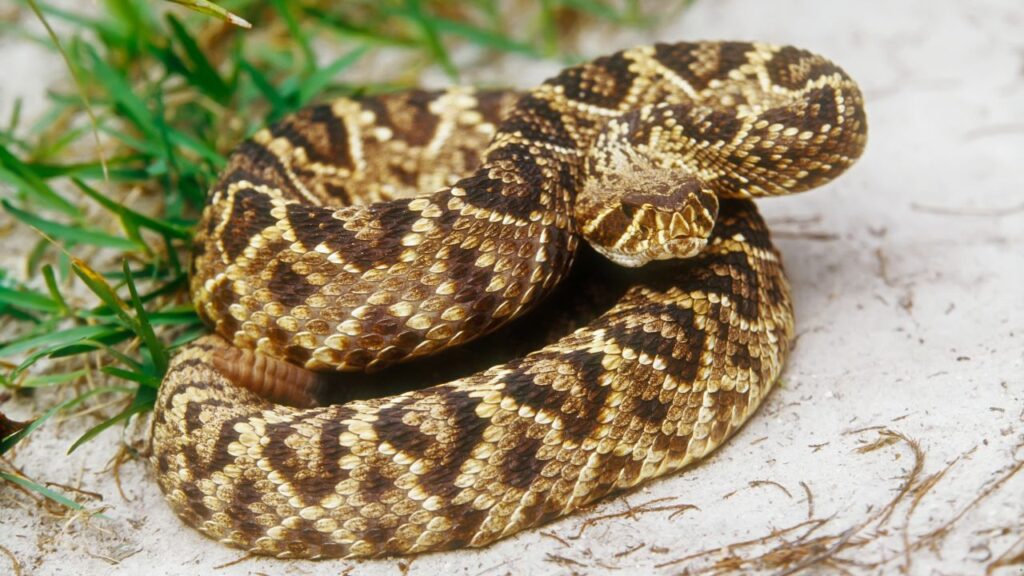
This snake is the iconic rattler of the American Southwest, starring in more cowboy stories than actual cowboys. With bold diamond patterns running down its back and a tail that ends in a rattle sounding suspiciously like a maraca of doom, the Western diamondback doesn’t sneak around quietly.
When it feels threatened, the rattlesnake coils up like a spring-loaded jack-in-the-box, lifts its head, and starts buzzing its rattle at full volume. It’s the reptile equivalent of waving your arms, shouting, “Please step away from my personal space!”—but with far more bite if the warning goes ignored.
And that bite?
Yeah… It’s not a love tap.
The Western diamondback is armed with potent hemotoxic venom, designed to immobilize prey and ruin the ego of anything that underestimates it. This venom affects blood and tissue, which is why rattlesnakes are not the kind of animals you want to put on your cuddling list.
But here’s the twist: despite their fearsome reputation, Western diamondbacks aren’t villains—they’re introverted survivalists. They prefer to hide under rocks, in burrows, or nestled in shady spots, dreaming about rodents (their favorite snack) rather than chasing people.
And although they’re perfectly capable of defending themselves with fangs that fold out like biological switchblades, they rarely strike unless absolutely necessary. Think of them as the desert’s grumpy but fair sheriff.
Just remember—if you ever hear the infamous buzz in the wilderness, it isn’t a free percussion concert. It’s a very polite, very serious request to walk the other way… preferably fast.
4. Puff Adder
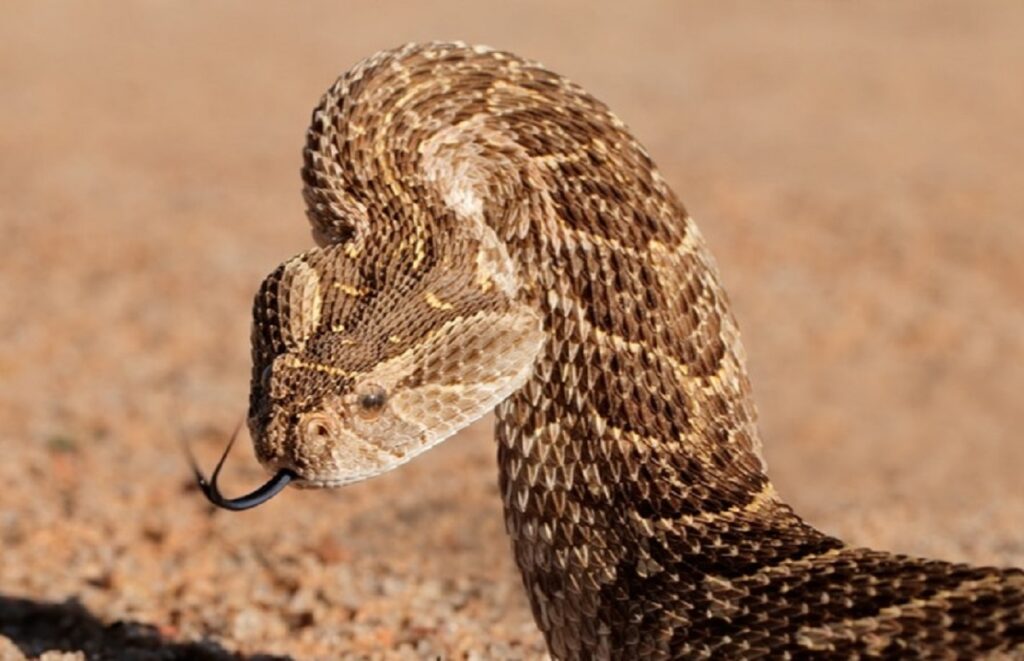
Meet the puff adder, Africa’s ultimate master of patience. If snakes had a motto, it would probably be: “Why run when you can sit and let lunch come to you?” This stout, camouflaged serpent blends perfectly into the leaf litter and savanna grass, turning invisibility into an art form.
Step too close, though, and you’ll meet its world-famous defensive move: inflation, hissing, and, if necessary, a lightning-fast strike. True to its name, the puff adder puffs up when threatened, expanding its body to look bigger, louder, and way more intimidating.
Imagine a snake putting on a dramatic costume for effect—think Broadway, but with fangs. And that hiss? It’s less “hello” and more “back. off. now.”
But here’s the kicker: the puff adder is one of the most dangerous snakes in Africa, not because it actively hunts humans, but because it’s extremely common, well-camouflaged, and fast when it needs to be. Its venom is potent, mostly hemotoxic, and designed to immobilize prey quickly.
One bite can be serious—even fatal—so if you’re unlucky enough to cross paths, emergency help is essential. Despite the danger, puff adders are master ambushers rather than aggressive hunters. They don’t chase, negotiate, or bark warnings—they just wait patiently, often for hours, until an unsuspecting prey (or human foot) wanders by.
So next time you’re hiking in African grasslands, remember: the puff adder is the drama queen of the savanna—silent, invisible, yet capable of an Oscar-worthy hiss-and-strike performance.
5. Russell’s Viper

If there were a “most wanted” list for snakes in India, Russell’s viper would be at the very top—and with good reason. This snake is small to medium in size, but what it lacks in length, it more than makes up for in ferocity and reputation.
Responsible for an estimated 25,000 human fatalities annually, it’s safe to say that this viper doesn’t mess around. Found across the Indian subcontinent—in India, Sri Lanka, Bangladesh, Nepal, and Pakistan—Russell’s viper is a familiar sight in open grasslands, farmlands, and even near human settlements.
Why? Its favorite snack is rodents, meaning it often follows the local rat population straight into the places humans call home. Basically, it’s an uninvited guest who never brings wine to the party.
Unlike some more laid-back snakes, Russell’s viper is short-tempered and aggressive. Step too close, and it can strike in a flash, delivering one of the most excruciatingly painful bites imaginable. And this isn’t just discomfort—it’s a biological knockout punch.
Victims can suffer internal bleeding, vomiting, kidney failure, and potentially death from respiratory or cardiac failure without immediate medical care.
It’s a grim reminder that in the snake world, size doesn’t always equal danger. Despite its relatively small frame, Russell’s viper commands respect. Farmers and villagers know this viper isn’t one to ignore—think of it as the desert’s tiny, grumpy security guard, except its “alarm system” bites.
So, while it may not have the dramatic flair of a spitting cobra or the majestic size of an Egyptian cobra, Russell’s viper proves that attitude—and venom—make all the difference. If you see one in the wild, give it space… and maybe a polite nod from a safe distance.
6. Texas Coral Snake
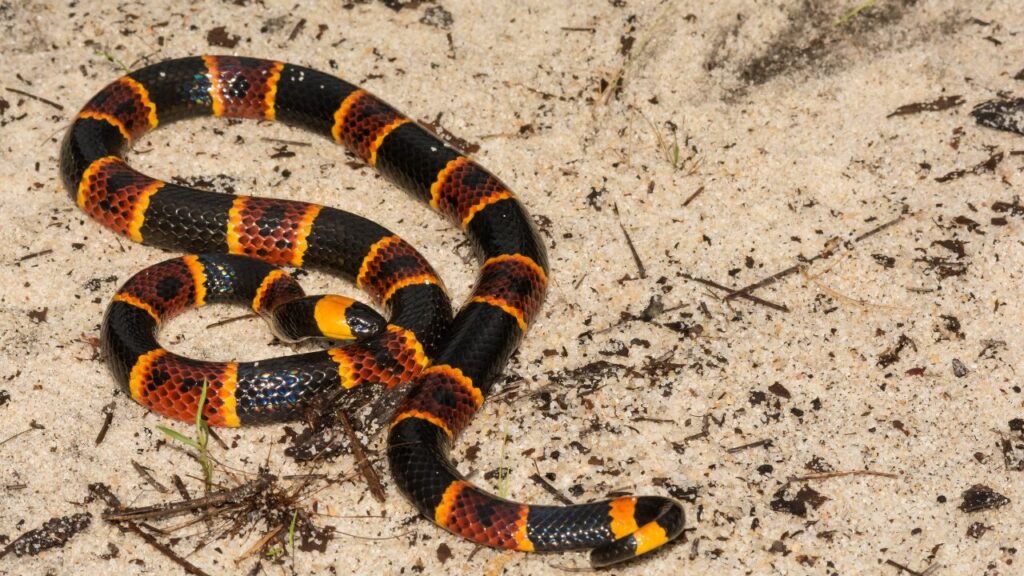
Don’t let the Texas coral snake’s bright, candy-colored stripes fool you—it’s not a festive decoration; it’s a warning label in nature’s language.
With its bold bands of red, yellow (or white), and black, this little serpent is a master of disguise among leaves, brush, and undergrowth—but the message is clear: “Touch me at your own peril.”
Texas coral snakes are small and shy, usually only 20–30 inches long, but they pack a venomous punch far beyond their size. Their venom is neurotoxic, meaning it attacks the nervous system, potentially causing paralysis, respiratory failure, and death if untreated.
The kicker? Coral snakes are rear-fanged, so bites are relatively rare—they need to chew a little to deliver the venom effectively. In other words, they’re not aggressive, but if provoked or handled, the consequences can be severe.
These snakes are most active during the warmer months, slithering quietly through the leaf litter or hiding under logs and debris. Their shy, secretive nature means that most encounters with humans are accidental—usually when someone reaches into a place they shouldn’t. Consider it nature’s subtle reminder to look before you poke.
And let’s talk aesthetics: the Texas coral snake’s stripes have inspired countless childhood mnemonics (“Red touches yellow, kills a fellow; red touches black, venom lack”) to help distinguish it from harmless lookalikes like the scarlet kingsnake.
Despite their potent venom, Texas coral snakes prefer to slip away quietly rather than confront, making them cautious but extremely effective little predators. So if you’re exploring the southern U.S., enjoy the view of those brilliant stripes—but keep your fingers out of the leaves.
7. Eastern Coral Snake

Meet the Eastern coral snake, one of North America’s most elegant little assassins. With its striking bands of red, yellow (or white), and black, this snake looks like it just rolled out of a fashion magazine—but don’t let those stylish stripes fool you.
Underneath that chic exterior lies a potent neurotoxic venom that can paralyze and, in extreme cases, kill. Unlike some of its flashier cousins, the Eastern coral snake is shy and secretive. It prefers to hide under leaf litter, logs, or in the nooks and crannies of the forest floor.
Most people never see one unless they accidentally disturb it—so think of it as the Southern gentleman of snakes: polite, unassuming, but don’t cross it.
Its venom works quietly but effectively, targeting the nervous system. Unlike rattlesnakes or vipers, the Eastern coral snake doesn’t inject hemotoxins or cause tissue damage—it’s all about precision paralysis. And because it’s rear-fanged, it has to chew a little to deliver a full dose, which makes bites rare. Still, any bite is a medical emergency.
Humans have even developed a little rhyme to remember which snakes are safe and which are not:
“Red touches yellow, kills a fellow; red touches black, venom lacks.”
It’s a handy mnemonic for keeping your fingers out of trouble—and a gentle reminder that the Eastern coral snake is small, stylish, and not to be trifled with.
Despite its deadly potential, this snake is more likely to retreat than to attack. Its defensive strategy is simple: slip away quietly and hope the intruder doesn’t notice. But if you do accidentally corner it, remember—it may look like a tiny, colorful garden accessory, but it’s a snake that demands respect.
Conclusion
Snakes that use their venom for self-defense demonstrate how venomous snakes like the King Cobra, African cobras, and Asian cobras have evolved specialized defense mechanisms to protect themselves from potential predators and potential threats in the animal kingdom, including regions like Sub-Saharan Africa. These snakes rely on cobra venom, spitting venom, and other tactics to survive encounters, often displaying warning behaviors such as raising their head or body and using sticks or movements to adjust their posture.
Through repeated encounters, they act independently, combining defensive behaviour and venom delivery to minimize injury while deterring attackers. This fascinating combination of biology and behavior highlights how venom serves not only to catch prey but also as a powerful self-defense tool.
