




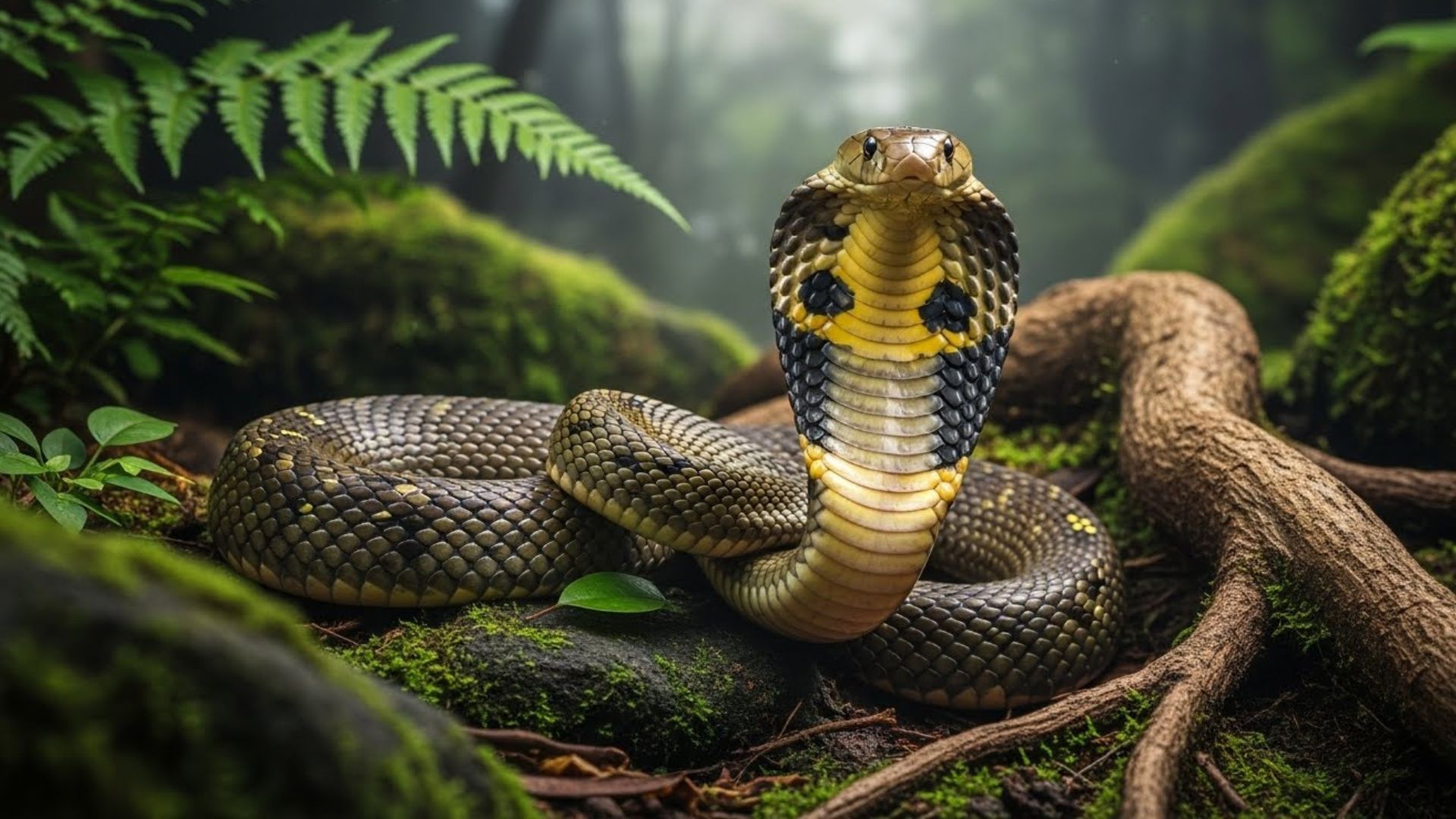
In the wild, survival isn’t about speed or size—it’s about strategy. Snakes, often underestimated, have evolved some of the most incredible defense mechanisms in the animal kingdom. These masters of self-preservation use a blend of biology, behavior, and pure cunning to stay alive, making them as fascinating as they are formidable.
Some snakes rely on venom—a precise, scientific weapon—to protect themselves or hunt. Others employ striking visual signals like hood displays, rattles, or bright warning colors to tell predators: “Back off, or face the consequences.” Some species even mimic dangerous counterparts, turning deception into a life-saving tool. And then there are the subtle experts of camouflage, blending so perfectly into their surroundings that danger passes them by unnoticed.
What’s remarkable is how these defense strategies reveal the complexity of evolution. Every hiss, rattle, and coiled posture is more than instinct—it’s a calculated move honed over millennia.
Here, we’ll uncover the snakes with the most impressive defense mechanisms and reveal the clever ways they survive in a world full of threats. Prepare to be amazed by nature’s ultimate survivalists.
Survival Experts: Some snakes have evolved defenses that are as clever as they are effective. The hognose snake plays dead to trick potential predators, the cobras flare their hoods to look larger and more threatening, and rock pythons can use their immense strength to constrict attackers.
Snakes with the Best Defense Mechanisms
1. King Cobra
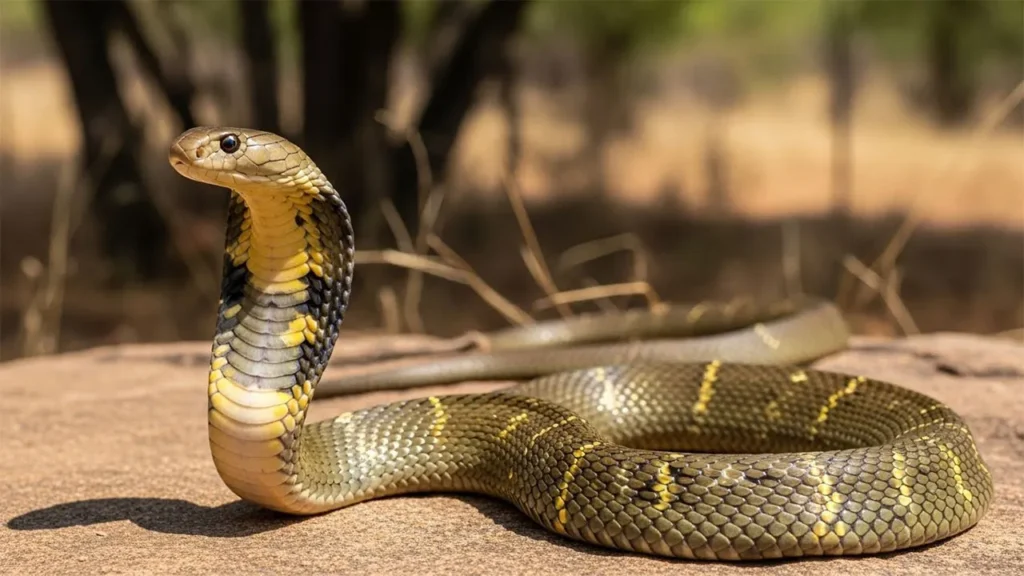
Meet the King Cobra, the superstar of the snake world. Stretching up to a jaw-dropping 18 feet, this slithery giant doesn’t just intimidate with size—it brings the full theater experience.
When threatened, the King Cobra rears up, spreads its iconic hood like it’s on a red carpet, flashes its fangs, and lets out a loud hiss that could wake the dead—or at least terrify your neighbor.
But here’s the twist: As per Wikipedia, despite its scary reputation, the King Cobra is more of a “don’t bother me, and I won’t bother you” type. It’s like that friend who’s terrifying in theory but actually pretty chill. This snake mainly slinks away when humans get too close.
The only time it really loses its cool? Protecting its eggs. Then, it becomes the ultimate parent—ready to defend its clutch with rapid strikes and venom that can paralyze.
And speaking of venom, it’s not just a dramatic prop. That potent neurotoxin serves a dual purpose: helping the Cobra take down dinner and ward off anyone foolish enough to mess with it.
So, in short, this snake’s defense is a mix of stealth, theatrics, and a venomous punch—basically the James Bond of the reptile world.
2. Gaboon Viper
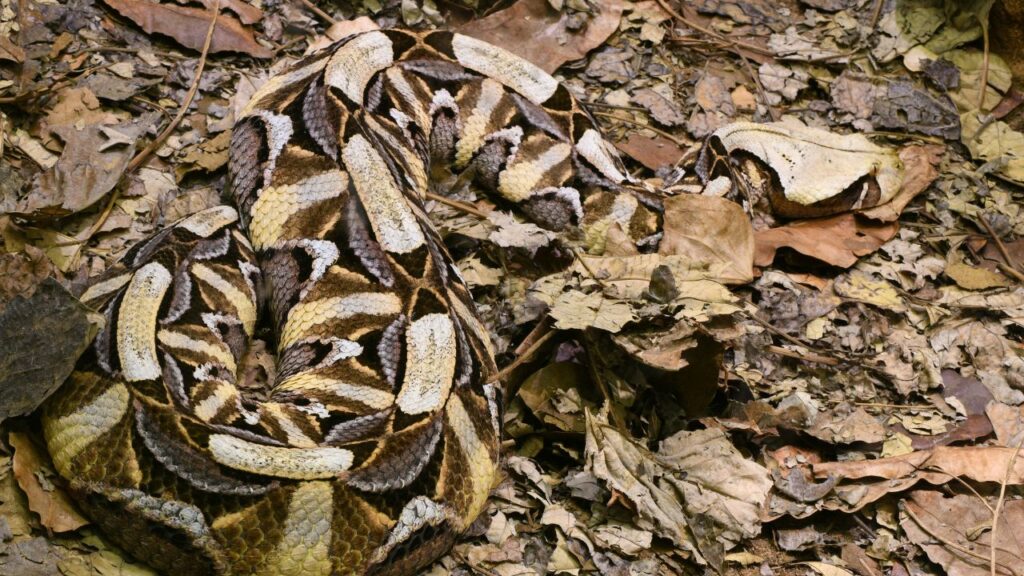
If the King Cobra is the drama queen of the snake world, the Gaboon Viper is more like a stealthy ninja lounging on the forest floor.
Found in the tropical forests of Central and West Africa, this heavyset viper doesn’t bother running around—it prefers chilling among the leaves, blending in so perfectly that you could step on it and not even notice (don’t try this at home!).
This snake isn’t just about hiding—it’s armed with some serious hardware. The Gaboon Viper boasts the longest fangs of any snake—up to 1.6 inches long. That’s longer than your average house key. One bite, and its prey—mostly rodents and ground-dwelling birds—doesn’t stand a chance.
But don’t let that make it sound mean-spirited; this snake is actually quite docile and would rather let you pass by unnoticed.
Its body is a masterpiece of patterns, with rectangles and triangles in shades of buff, purple, and brown, giving it a velvety appearance. And those little hornlike projections on its snout?
Think of them as the finishing touches on a snake that’s part warrior, part work of art. When provoked, it will hiss loudly—but mostly, it’s content being the forest’s invisible heavyweight champion, lying in wait like a velvet-coated ambush artist.
3. Hognose Snake
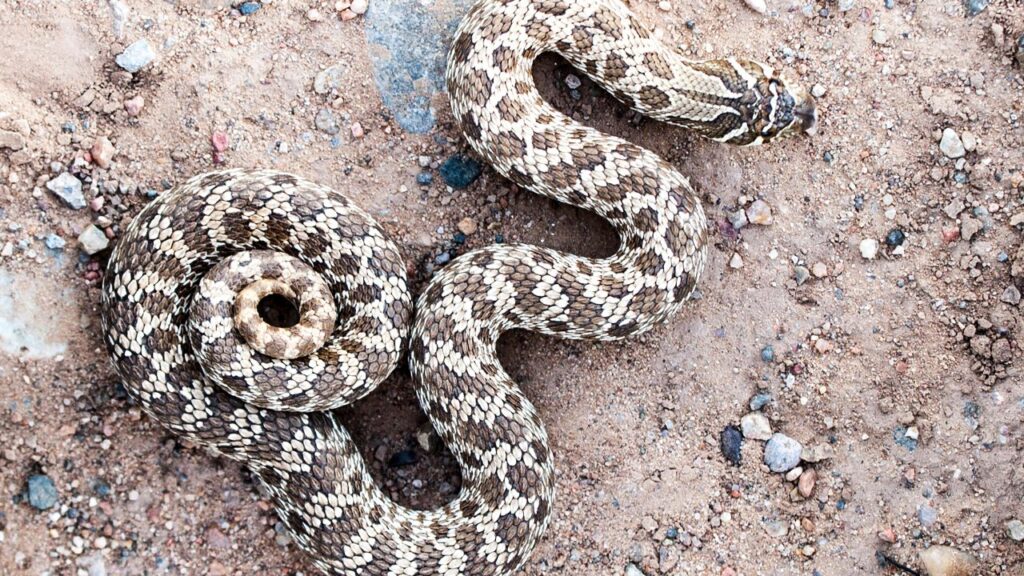
Meet the Hognose Snake, the true Oscar-winning actor of the snake kingdom. Named for its adorable upturned snout—perfect for digging in search of worms, insects, and small rodents—this little snake has perfected the art of “all bluff, no bite… usually,” says Britannica.
When it feels threatened, the Hognose doesn’t just hiss—it flattens its head and neck, puffing itself up like it’s wearing a tiny cobra costume. Suddenly, this small snake looks bigger, fiercer, and way more intimidating than it really is.
If that initial scare doesn’t work, the true drama unfolds. The Hognose rolls onto its back, limbs flailing, tongue lolling, eyes wide—and goes full-on plays-dead mode. It’s a snake soap opera, complete with theatrics, suspense, and sometimes a touch of stinky musk for extra realism.
This clever routine works surprisingly well. Predators often get so confused, disgusted, or just plain creeped out that they leave the Hognose alone. Meanwhile, the snake slithers away to safety, probably imagining a round of applause for its performance.
Its defense strategy is simple but genius: “Why fight when you can freak them out?” It’s a masterclass in intimidation, theatrics, and survival, proving that in the wild, a little drama can go a very long way.
4. Coral Snake
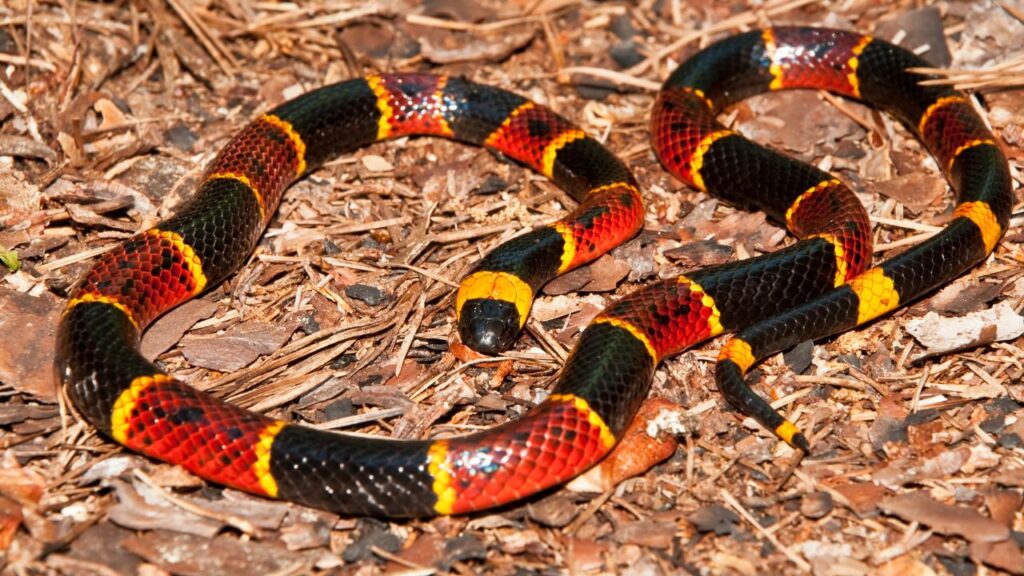
Don’t let the Coral Snake’s small size fool you—this little beauty is basically the haute couture model of the snake world: flashy, colorful, and dangerously stylish.
Its iconic bands of red, yellow (or white), and black aren’t just for show—they’re nature’s version of a neon “stay away” sign. Predators quickly learn that those bright stripes mean business, thanks to the Coral Snake’s potent neurotoxic venom.
One bite can paralyze, so these tiny reptiles pack a punch far bigger than their size suggests. But here’s the kicker: despite being deadly, Coral Snakes are surprisingly shy and secretive. They’d much rather slither quietly under leaves or hide in the shadows than get into a confrontation.
If threatened, they rarely bite, relying on their bold colors to send a clear message: “Admire from afar, pal.” Think of them as nature’s warning sign with legs—well, no legs, but you get the idea.
Their defense strategy is basically style, stealth, and a tiny bit of lethal flair—a combination that has kept them alive and feared for generations. And just like a runway model, they know how to make an impression without ever making a scene.
5. Rattlesnake
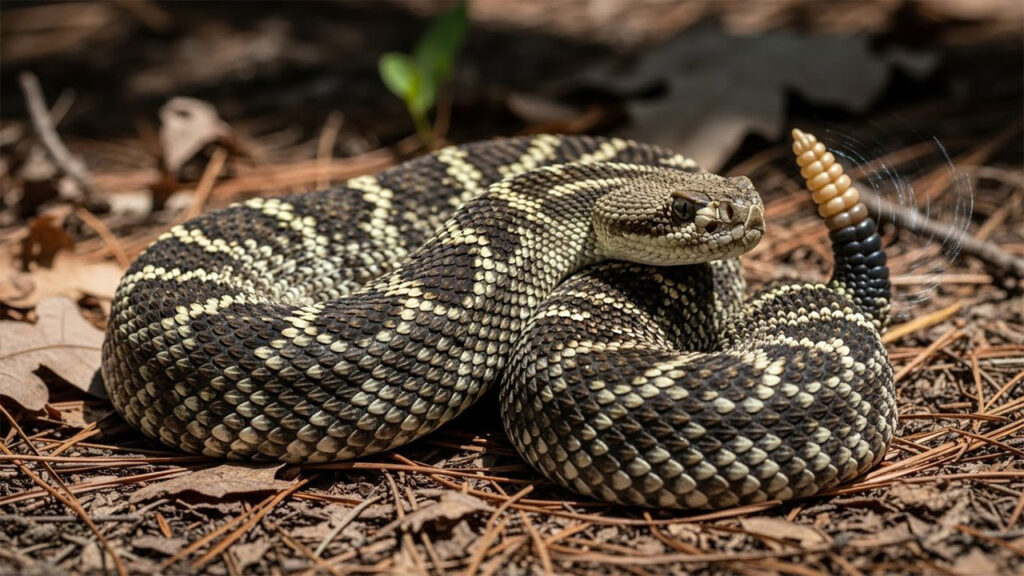
Meet the Rattlesnake, the ultimate snake with a built-in alarm system. Famous for the distinctive rattle at the end of its tail, this clever reptile doesn’t need to yell or bite first—it just shakes things up… literally.
That rattle is nature’s way of saying, “Back off, or else!” to would-be predators, giving the snake a chance to avoid unnecessary fights.
Rattlesnakes are masters of ambush. Using their remarkable camouflage, they blend seamlessly into deserts, forests, or grasslands, waiting patiently for dinner to wander by.
With heat-sensing pits and lightning-fast reflexes, they can detect prey even in the dark and strike with precision, delivering venom that incapacitates quickly. It’s like having infrared vision and a built-in taser all in one.
Despite their fearsome reputation, rattlesnakes prefer warning over warfare. That rattle is basically a polite “I’m armed and dangerous—please keep your distance” sign. And if the warning fails? Well, then their venomous strike does the talking.
With this combination of stealth, warning signals, and quick action, the rattlesnake is a true survival expert and a reminder that sometimes, the loudest voice comes from the tiniest tail shake.
6. Black Mamba
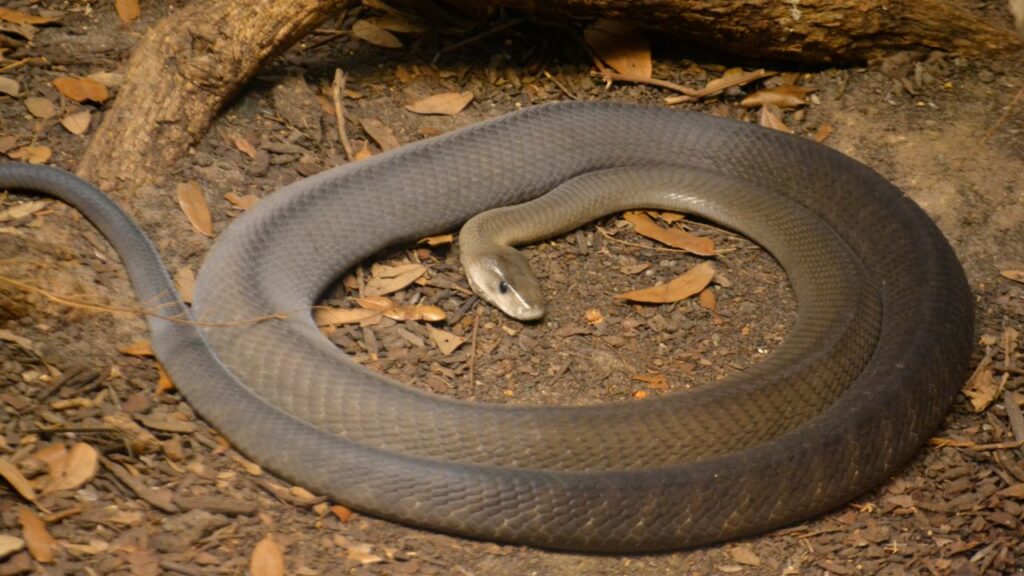
The Black Mamba has a reputation that could make even the bravest adventurer think twice. Native to Africa, it’s one of the fastest and most venomous snakes on the planet.
Despite its ominous name, the Black Mamba’s skin is usually brown or olive—so it’s less “midnight terror” and more “sneaky woodland sprinter,” silently gliding through grass and brush like a shadowy blur.
This snake is not one to mess around. When threatened, it can strike repeatedly with terrifying precision, delivering potent neurotoxic venom that incapacitates prey—or any unfortunate predator—almost instantly.
Imagine a ninja with fangs: lightning-fast, lethal, and nearly impossible to outrun. It’s the ultimate combination of speed, skill, and venomous firepower, which is why this snake is both feared and respected across its African range.
But the Black Mamba isn’t just a reactive fighter—it’s an active, strategic hunter. Using its keen sense of smell and heat-sensing pits, it tracks down prey with remarkable accuracy, homing in on warm-blooded targets as if guided by an internal GPS.
In short, if snakes had superhero alter-egos, the Black Mamba would be the Flash with fangs: sleek, rapid, and undeniably lethal. It’s a reminder that in the wild, speed, stealth, and venom can make one of the smallest creatures the most formidable—and the Black Mamba embodies all three with terrifying elegance.
7. Boa Constrictor
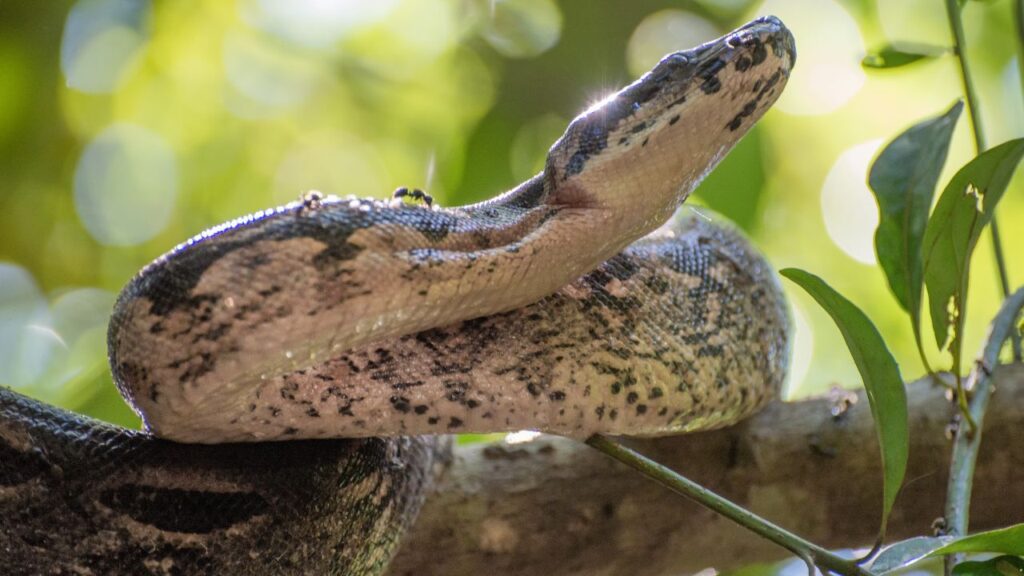
If snakes had a strongman competition, the Boa Constrictor would take home the gold. Native to the tropical regions of Central and South America, this non-venomous powerhouse doesn’t need fangs to get the job done—it uses pure muscle power.
When hunting, the Boa wraps its body around prey and squeezes… and squeezes… until the prey has no choice but to surrender.
But the Boa isn’t just about brute force. It’s a versatile athlete of the snake world: an excellent climber that can slither through trees, and a capable swimmer that can glide through rivers. This adaptability makes it a master of ambush hunting, waiting patiently for the perfect moment to strike.
Despite its intimidating abilities, the Boa is generally calm and prefers stealth over confrontation. Its defense is simple but effective: size, strength, and a slow, deliberate presence.
When threatened, it may coil tightly and hiss, letting would-be predators know that messing with this snake is a serious workout challenge they won’t survive.
In short, the Boa Constrictor proves that sometimes, the best defense doesn’t come from venom or speed—it comes from muscle, patience, and the art of the perfect squeeze.
Conclusion
Most snakes with the best defense mechanisms are venomous species, yet many non venomous snakes also show remarkable defensive behaviours. From spitting cobras delivering toxins as a powerful weapon to coral snake mimics using Batesian mimicry to resemble poisonous species, these fascinating creatures employ defensive tactics to deter predators and protect themselves. Common strategies include tail rattling, producing a rattling sound or buzzing sound, coils, tongue hanging, mouth opening, dramatic threat display, or hiding among dry leaves.
Some harmless snakes stop moving or escape when confronted, while boas and others may catch attention with shape, an impressive defensive display, or movements that appear disgusting to predators. These defensive behaviors are used primarily to respond to potential threats, many animals, and most people, showing that snakes have evolved an array of strategies to survive in the wild and maintain their role as both dangerous species and watch-worthy marvels of snake behavior.
