




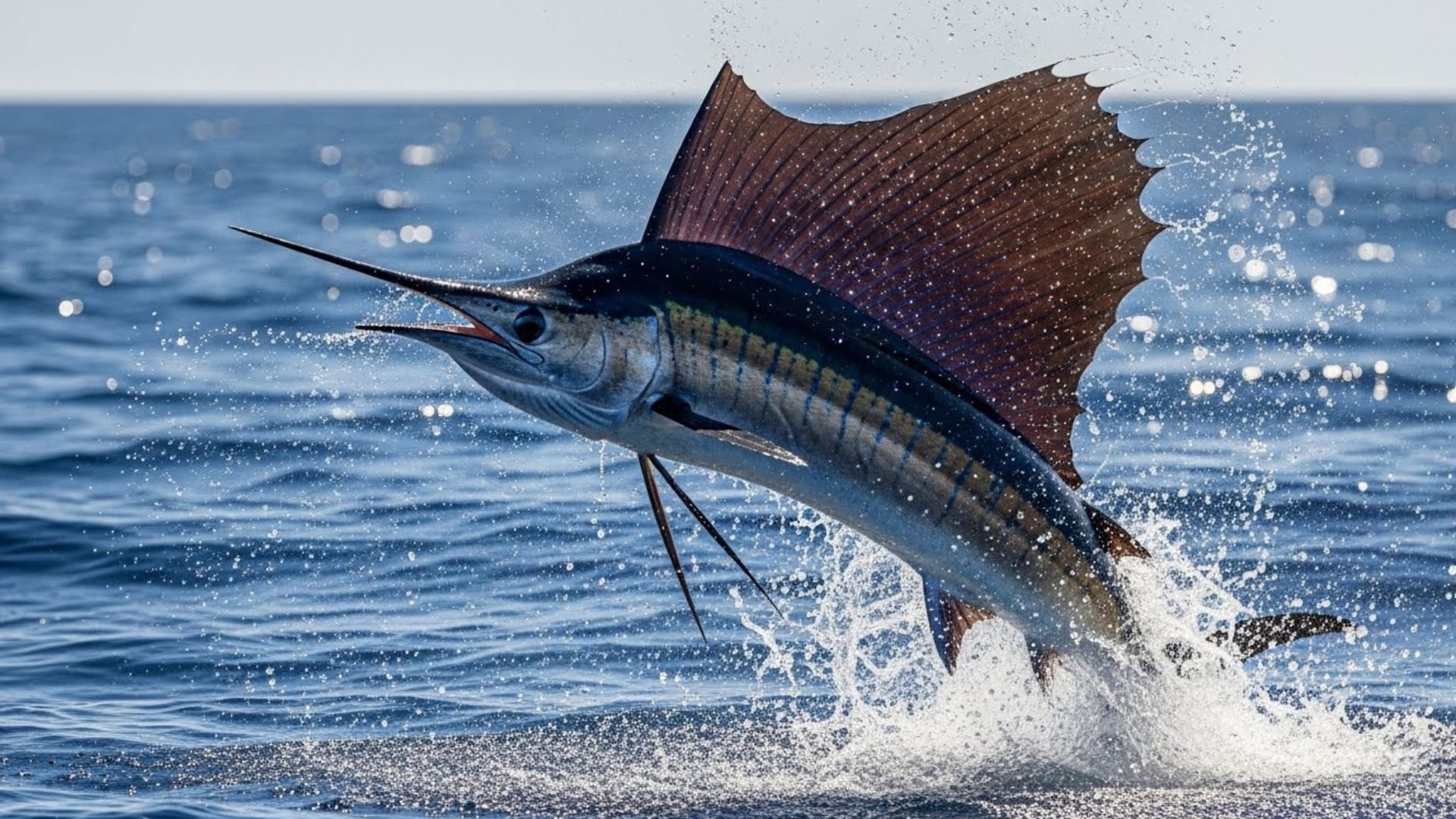
The sea is full of unbelievable creatures with streamlined bodies, crescent-shaped tails, and mighty muscles that help them swim faster than most animals on land can even dream of.
In the grand race of the animal kingdom, the marine fish blast through tropical and subtropical waters, leap like flying fish, and ride with stunning agility. They are phenomenal predators, swift prey chasers, and marathon migrants that cross vast distances in the Atlantic and Indian Oceans with the tiniest resistance.
In this fun dive, we’ll meet some of the fastest fish known for their speed and agility. We’ll look at their striking, sleek body shapes, how their numerous fins arrayed along the body act like a toolkit for maneuverability, and how a torpedo-shaped body creates forward propulsion.
These fish are known for their speed and agility and are definitely worth talking about.
Fish Known for Their Speed and Agility
1. Sailfish
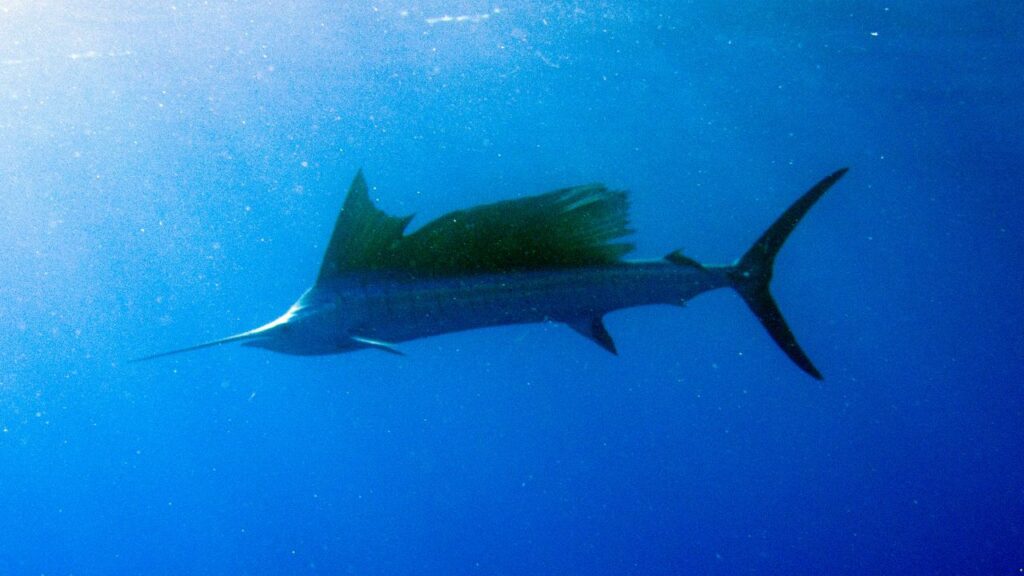
Sailfish’s giant, sail-like dorsal fin is not just for show; it helps with stability, signaling, and even herding smaller fish into tight balls.
With a streamlined body and a sharp snout, it can reach remarkable speeds that make other fish look like they’re swimming in slow motion.
They are famous for astonishing speeds during short bursts. Some reports say they reach speeds over 60 mph. Whether you measure in miles per hour or “whoa,” that’s fast. Their pectoral fins fold in, their dorsal fins flatten, and their sleek shape cuts through water with minimal resistance.
These pelagic fish inhabit tropical and subtropical seas worldwide, including the Atlantic and Pacific Oceans. Many scientists study their feeding habits because they show a remarkable hunting strategy: team herding. The sail is raised to confuse prey, then the blunt snouts flick like swords—no relation to the swordfish’s actual “sword,” but still effective.
Fun fact: Indo-Pacific sailfish sometimes hunt alongside other fast fish like wahoo and yellowfin tuna. A local legend among anglers says if your coffee is still warm when a sailfish hits your line, you’re not in the right spot. As an essential asset to a healthy marine ecosystem, sailfish remind us that speed is a critical survival tool, not just a party trick.
2. Shortfin Mako Shark
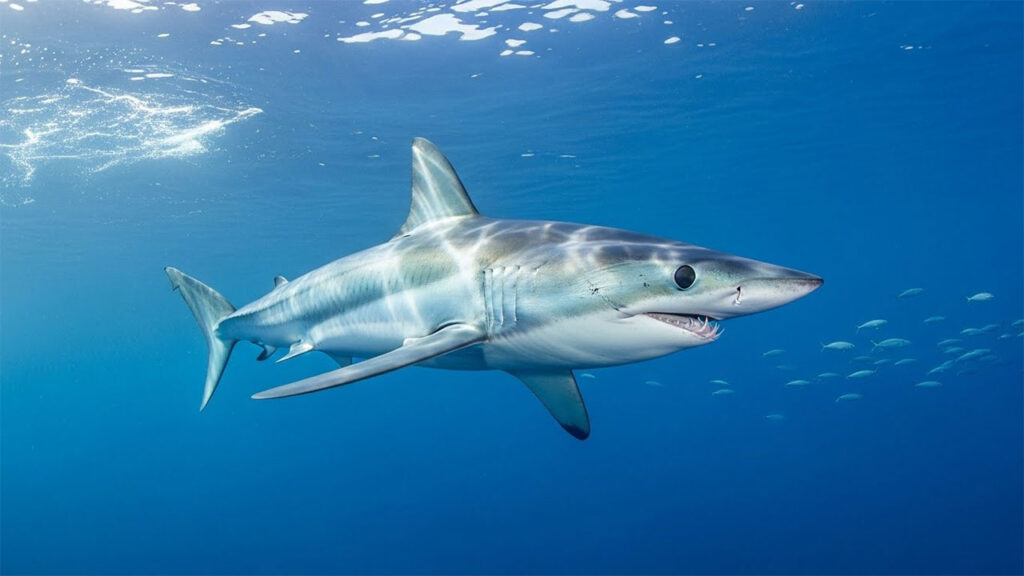
Meet the mako shark, the blue streak of the sea. With a torpedo-shaped body, thick skin, and a phenomenal jawline, the shortfin mako can reach astonishing speeds in pursuit of prey. It shares the stage with its cousins, the blue sharks, but in a sprint, this one usually wins.
They have powerful muscles, crescent tails, and a streamlined shape designed for forward propulsion and efficiency. They are peak predators in waters, known for short bursts that reach top speeds mid-hunt. Their dexterity lets them twist and turn to snatch other fish, squid, and sometimes even fast birds at the surface.
Sharks inhabit tropical waters worldwide and are true ocean roamers. Their endurance enables them to cover extensive distances across the Atlantic and beyond. Fun history tidbit: early ocean racers (the human kind) marveled at mako leaping; fishermen tell tales of makos launching into boats.
Conservation note with a wink: these incredible sharks face pressure from overfishing. Responsible fishing techniques—like avoiding juveniles and using proper gear—help protect a species that has evolved for superb speed. After all, the ocean without makos would be like a racetrack without cars.
3. Barracuda
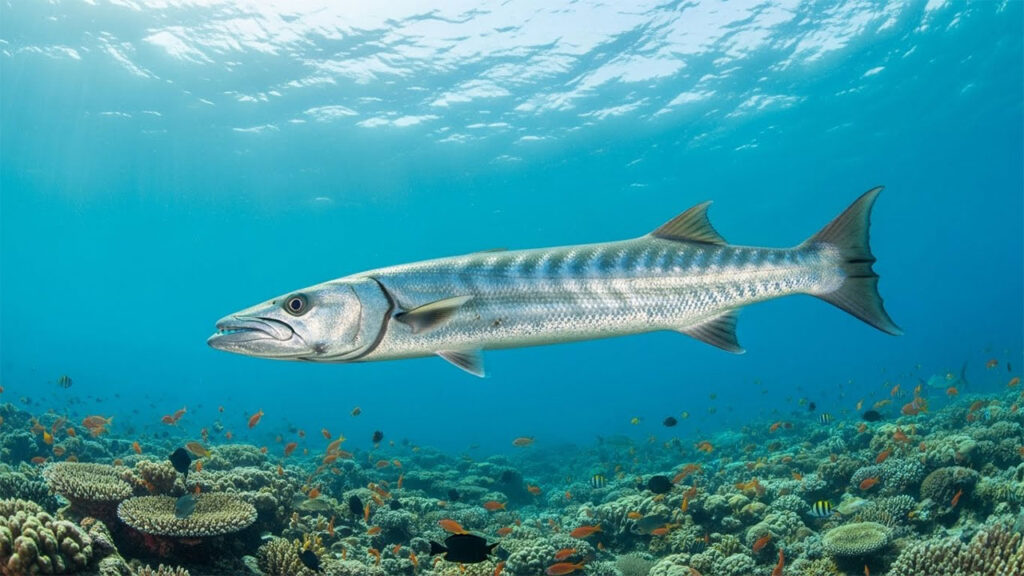
Barracuda are the stealth jets of coral reefs and open water edges. With elongated bodies, a sharp, pointed snout, and bony spines along their back near the dorsal fins, they look like living spears. Their normal speed is surprisingly relaxed, but when they decide to go, they achieve elevated speeds in a blink.
Their hunting strategy is a mix of patience and explosion. They hang calmly, then fire forward with spectacular speed to grab smaller fish. Their numerous fins provide control, especially the anal fin and pectoral fins for quick pivots. Think of them as aquatic sprinters that save energy until the perfect moment.
Barracuda occupy tropical waters around reefs, drop-offs, and nearshore flats. They love clear water, where their streamlined bodies give them an advantage over other fish. Fisher lore says shiny lures work a little too well—because barracuda mistake the flash for a wounded fish. That’s efficiency and a lesson in not wearing your shiniest jewelry while snorkeling.
Fun fact: barracuda can change what looks like “mood” fast—from motionless statues one second, to lightning bolts the next. They’re not villains; they’re very efficient predators. In the marine ecosystem, they help keep prey populations healthy, proving that speed and smarts are universal and essential assets.
4. Wahoo
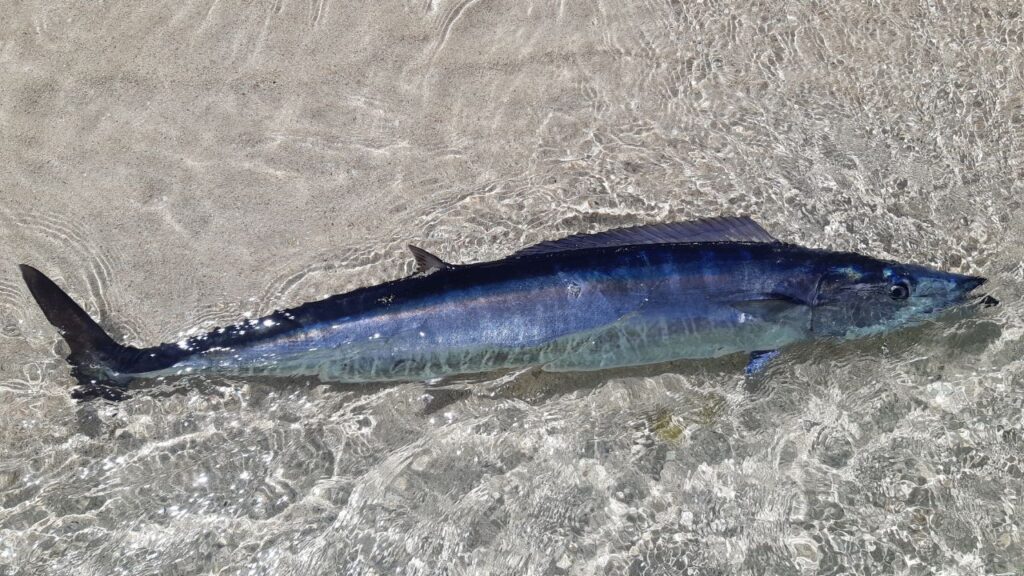
Wahoo, are the rockets you didn’t see coming? Sleek and slender, they can reach speeds that make anglers double-check their drag. The wahoo’s diet includes smaller fish, squid, and even flying fish—anything that dares to be aerodynamic near them.
Their multiple fins arrayed along the back, including small finlets behind the dorsal and anal fins, reduce turbulence and improve resilience at increased speeds. Add a crescent tail fin and powerful muscles, and you’ve got a fish that can reach impressive speeds with minimal splash. Hydrodynamics teachers would applaud.
Wahoo inhabit tropical and subtropical seas worldwide, especially around offshore structures and current lines in the Atlantic and Pacific. On a good fishing trip, a single pass can turn into screaming reels and big smiles. Their streamlined shape isn’t just for show; it’s a crucial survival tool that lets them chase swift prey and dodge larger fish.
Fun tidbit: In some places, wahoo are called “ono,” which means “delicious.” Speed doesn’t just help them survive—it has culinary consequences. Humor aside, careful, sustainable harvests matter. These strong fish play a crucial role in the food web, and their incredible speed is an essential asset for the world’s oceans.
5. Bluefin Tuna
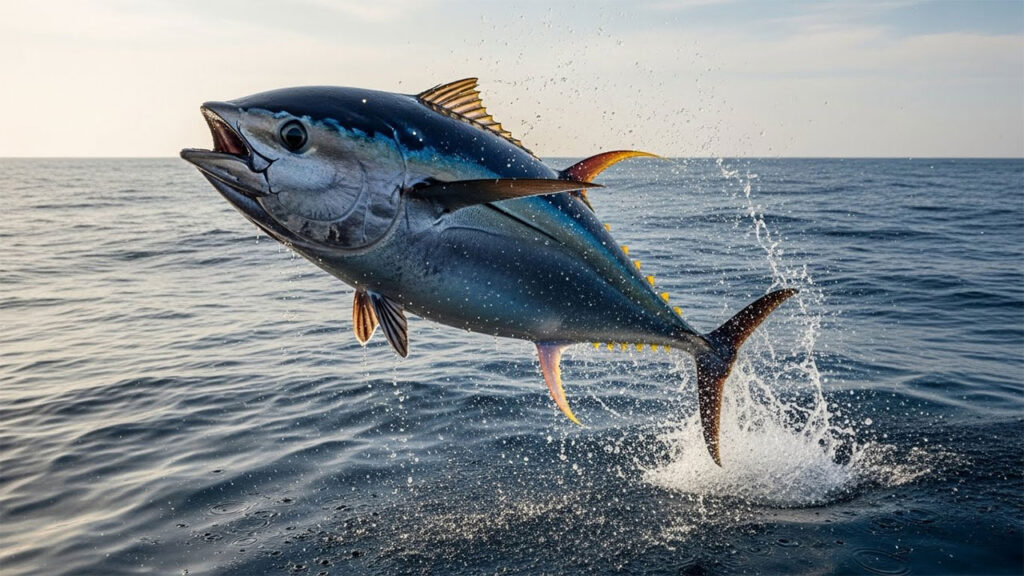
Bluefin tuna are the heavyweight sprinters. Despite their size, they reach impressive speeds thanks to a torpedo profile, thick skin, and specialized gills that supercharge oxygen flow. They’re the endurance champs too, crossing extended distances between the Atlantic Ocean and Pacific during migrations.
Their body is a masterclass in design: a streamlined shape, retractable dorsal fins and pectoral fins, and a rigid, crescent-shaped tail fin for onward propulsion.
They’re built to maintain elevated speeds and then cool down efficiently—nature’s ultimate long-distance athlete. Compared with yellowfin tuna and Atlantic bonito, the bluefin is bulkier but no slouch in a sprint.
Bluefin are apex predators of temperate zones, but they often chase prey into subtropical waters. Scientists track them with tags, revealing extraordinary creatures that dive deep and then rocket to the surface. It’s like watching a submarine become a missile.
Good News: This fish is not endangered anymore, as per MCSUK, thanks to the conservative efforts across the globe.
6. Swordfish
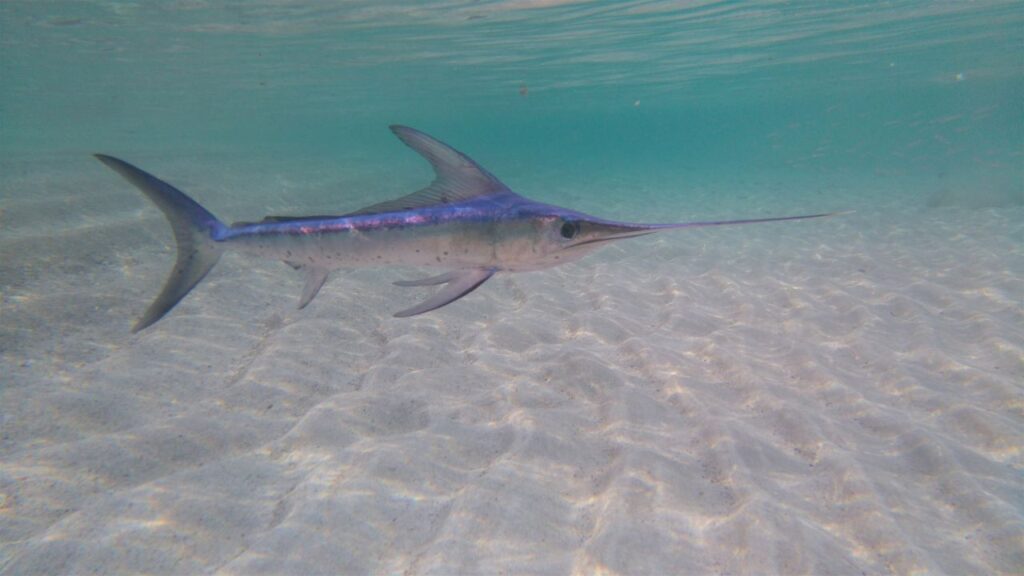
Swordfish’s “sword” is a long, flat bill used to slash and stun prey. With numerous fins tuned for equilibrium, Britannica claims they move through waters with a grace that hides their raw power.
These predators can achieve high speeds during short bursts. Their dorsal fins project upward, and their large pectoral fins enhance movement, while their robust tails power them forward. Swordfish are also warm-blooded in key areas, giving muscles an edge for such high speeds.
They roam the Atlantic, Pacific, and Indian Ocean, often rising at night to hunt near the surface. Their dark blue backs fade to lighter sides, a classic countershading that keeps them stealthy from above and below. In the world of pelagic fish, they’re the night shift.
Fun tidbit: swordfish lack true scales as adults and have a unique eye-heating organ in the head—an efficient adaptation that boosts vision in dim deep waters. Talk about built-in night-vision goggles. They’re not just about speed; they’re about clever engineering.
7. Giant Trevally
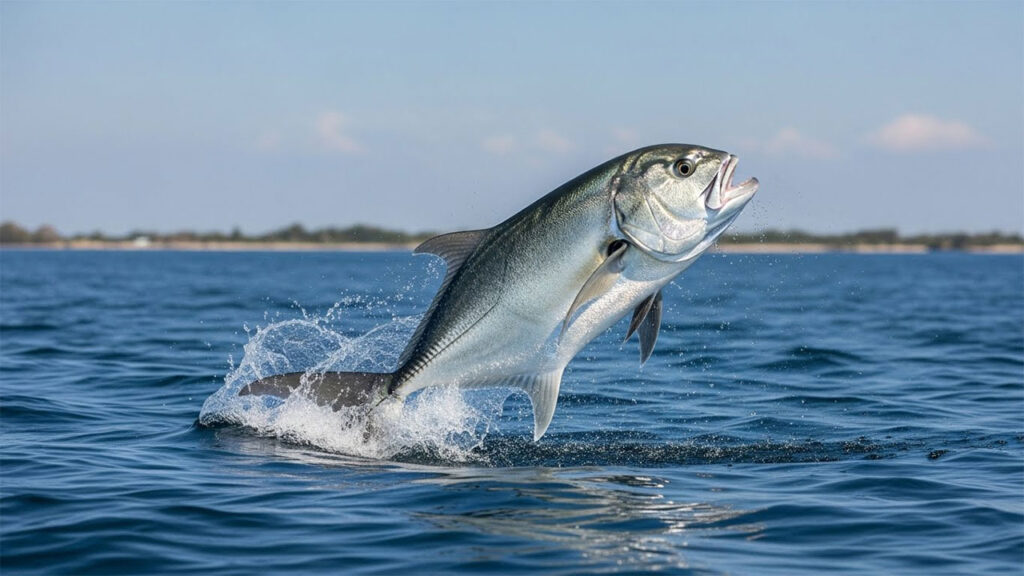
The giant trevally (GT) is the reef bully with a heart of steel. Stocky yet streamlined, it uses strong muscles to explode into motion and hammer prey. It’s not the absolute fastest fish, but Marine Sanctuary claims its power makes it a legend among anglers.
GTs often hunt in the surf zones and reef edges, using waves and currents as cover. Their combination of endurance and remarkable ambush technique gives them a benefit over other fish. A GT smashing a surface lure is a moment you never forget.
They inhabit tropical & subtropical waters of the Indo-Pacific, patrolling channels, flats, and drop-offs. They’ll eat fish, squid, rays, and even the occasional unwary bird. When you see a shadow that looks like a torpedo with fins, it might be a GT inspecting your lure with intent.
Fun fact: GTs have been filmed hunting flying fish, timing the leap to meet the “wings” mid-air. Efficient, ruthless, and impressive—all the qualities of a powerful fish that grew to dominate its niche. Respect the reef boss.
Conclusion
Speed in the sea is more than a trick—it’s survival, style, and sometimes pure showmanship. From the jaw-dropping sprint of a sailfish to the bulldozer surge of a giant trevally, these animals prove that fish’s speed is an essential asset in a watery world where being fast can mean dinner—or being dinner. Whether you’re dreaming of a future fishing trip, cheering for the fastest fish, or simply admiring the engineering that lets them reach such high speeds, remember: the ocean is a racetrack, and every lap matters.
As climate change reshapes currents and habitats, protecting these species and their prey is crucial. The world’s seas are a grand, blue highway, and these incredible creatures are its most striking, efficient, and agile racers. If you ever doubt the power of a streamlined shape and a well-placed fin, just watch a wahoo disappear into the horizon. Blink, and it’s gone.
