




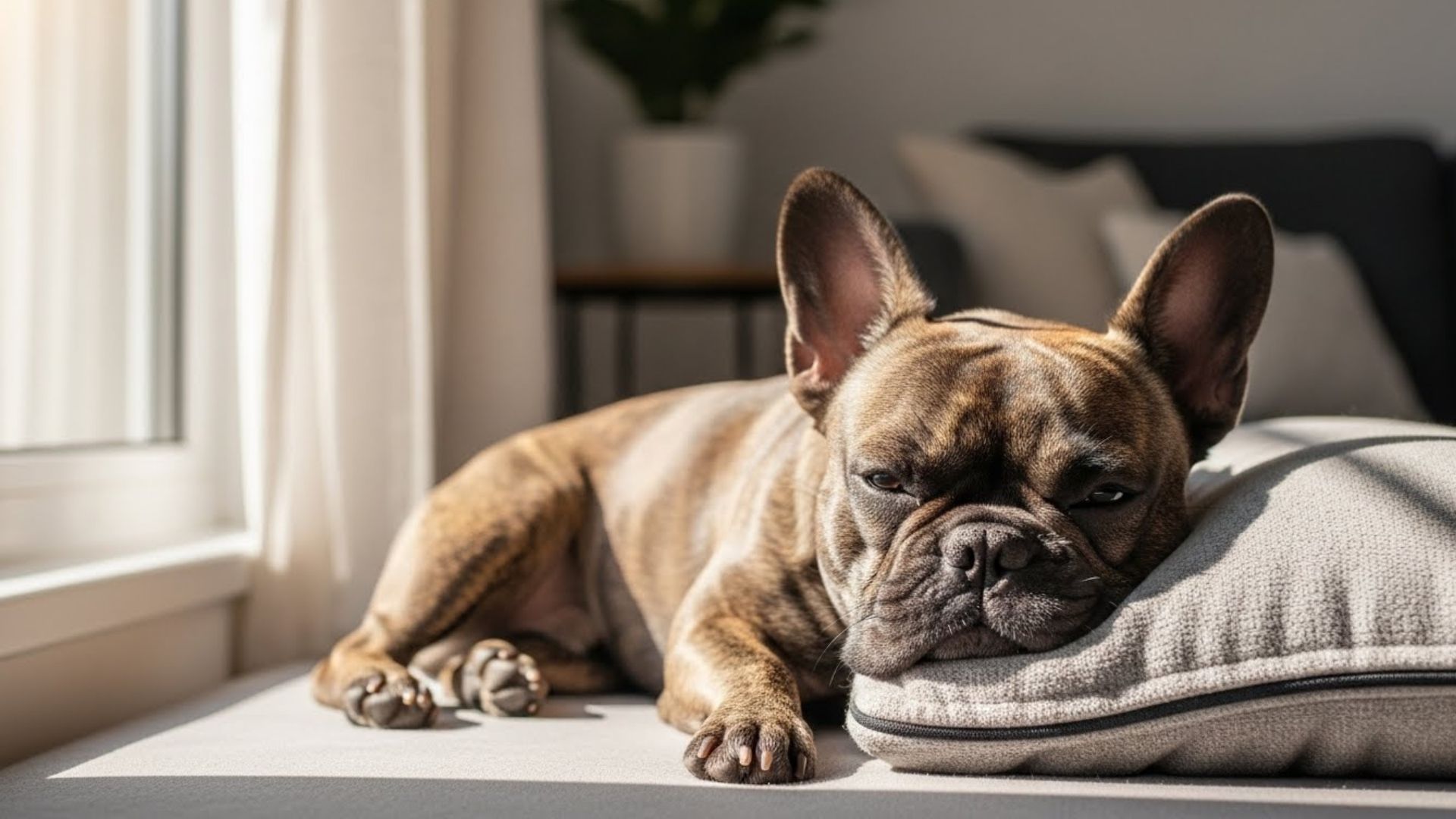
Growing older often comes with the desire for calm, companionship, and comfort—and the right dog can bring all of that and more. Seniors often benefit from a furry friend who is gentle, affectionate, and low-maintenance, making everyday life brighter without overwhelming energy or constant activity.
These dog breeds thrive in quiet, steady environments. They enjoy slow walks, cozy naps, and meaningful interaction rather than high-octane games or endless running.
Beyond emotional support, these dogs help seniors stay active in a manageable way, providing short walks, light play, and a routine that encourages gentle movement and social interaction.
Their calm demeanor makes them easy to care for, and their affection fosters emotional well-being, reducing loneliness and boosting daily happiness.
Choosing a dog suited for senior life isn’t just about energy levels—it’s about personality, love, and harmony. With the right companion, seniors can enjoy peace, comfort, and the special bond that only a devoted dog can offer, turning everyday moments into warm, heart-filled experiences.
Did you know? Study show that pet ownership can help lower blood pressure and reduce anxiety. The companionship, physical activity, and emotional support provided by dogs contribute to improved mental and cardiovascular health.
Best Dog Breeds for Seniors Looking for Peace & Quiet
1. French Bulldog
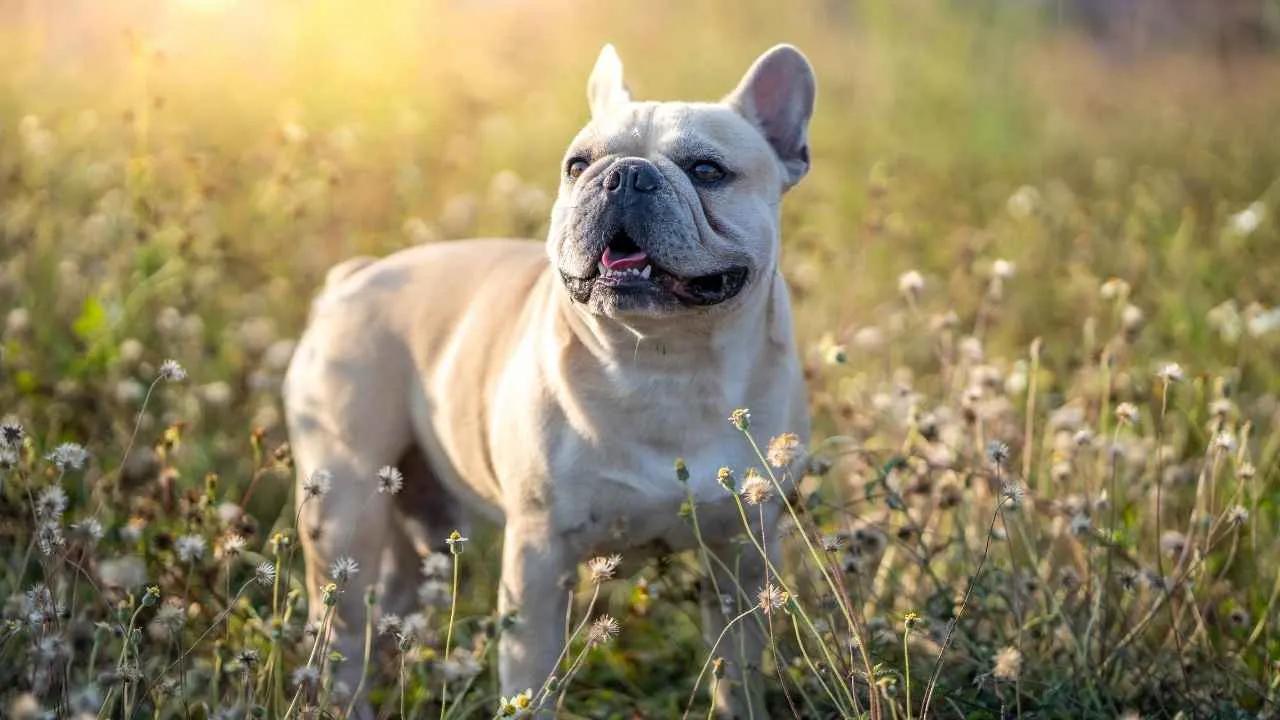
The French Bulldog is a compact bundle of charm with a personality much bigger than its small stature. With their iconic bat-like ears, smooshed faces, and stocky little bodies, Frenchies are affectionate, playful, and endlessly entertaining.
These small dogs love spending time with their humans, whether it’s lounging on the couch, going for short walks, or enjoying a gentle romp around the yard. Perfect for seniors, first-time dog owners, or city dwellers, these pups thrive on companionship without needing endless exercise.
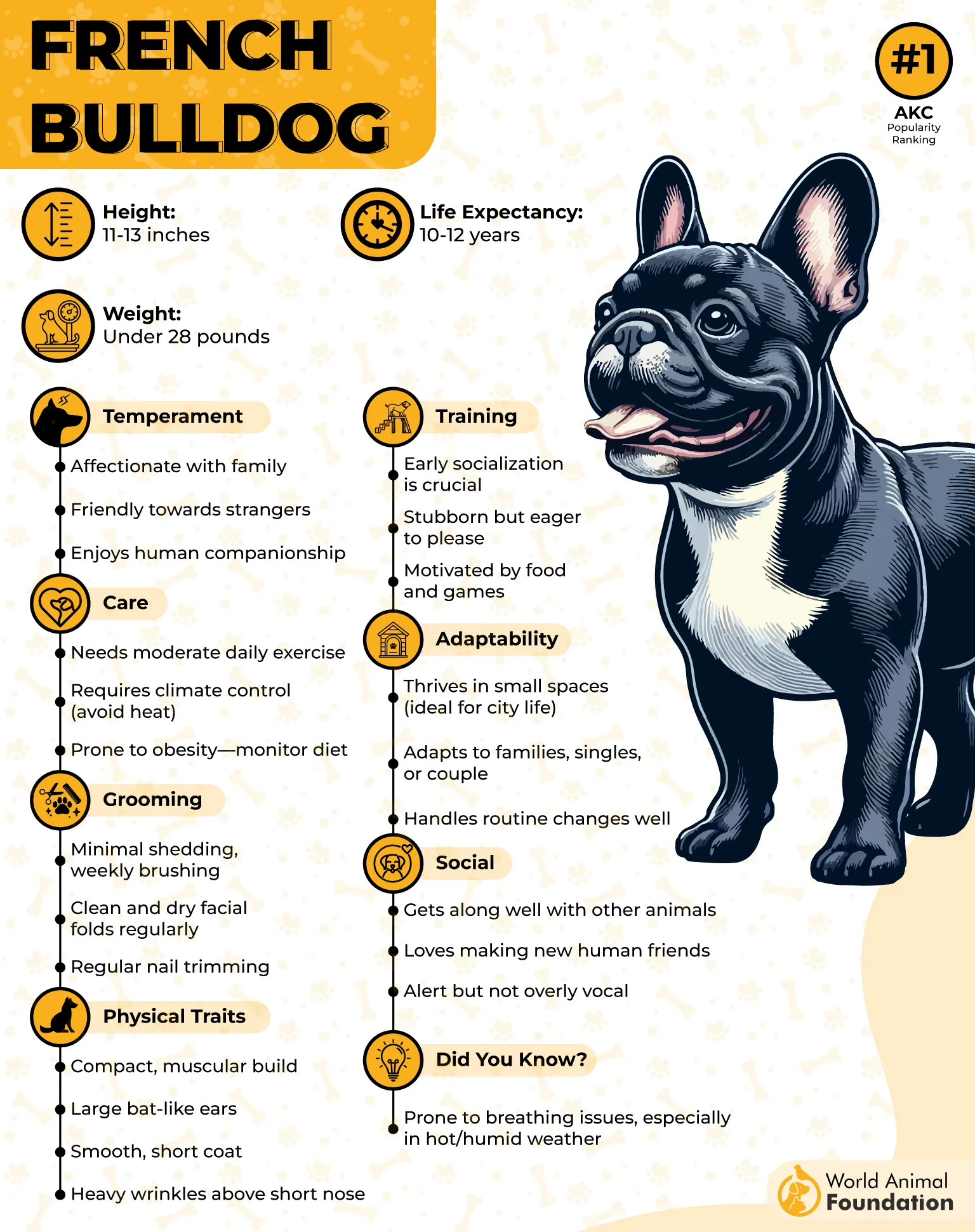
Grooming Needs: Minimal grooming—just a quick weekly brush keeps their coat shiny. Don’t forget to clean facial folds regularly to prevent irritation or infections.
Exercise Needs: Low to moderate; a couple of short daily walks and light play indoors are usually enough.
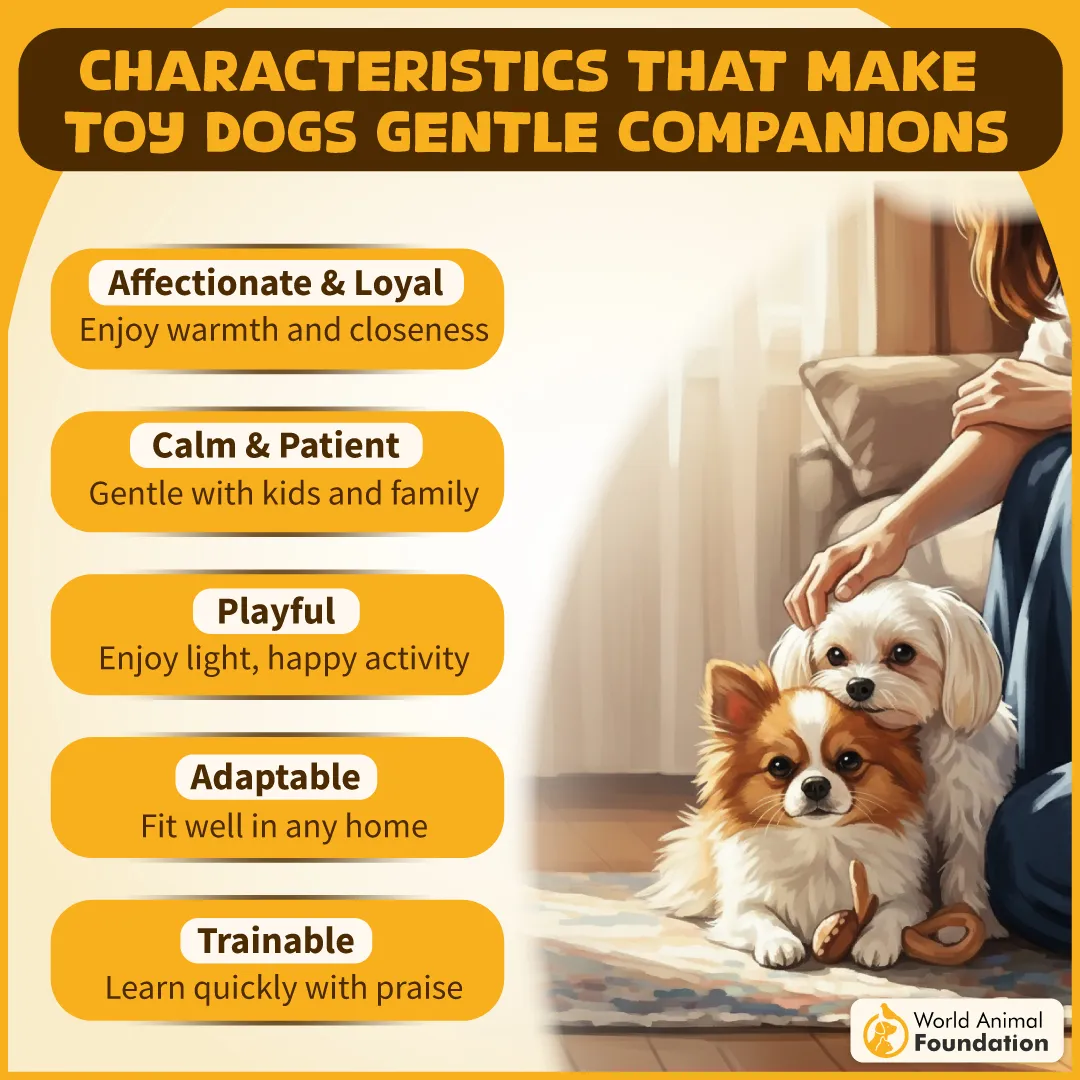
Personality & Behavior: Affectionate dog, social, and playful with a calm side. They enjoy attention but are not high-strung, making them perfect lap companions.
Before bringing home a French Bulldog puppy, it’s important to be aware of potential health concerns. Because of their unique body structure, Frenchies may experience breathing difficulties, be prone to overheating, face challenges during birth, develop allergies, and have back problems.
2. Japanese Chin
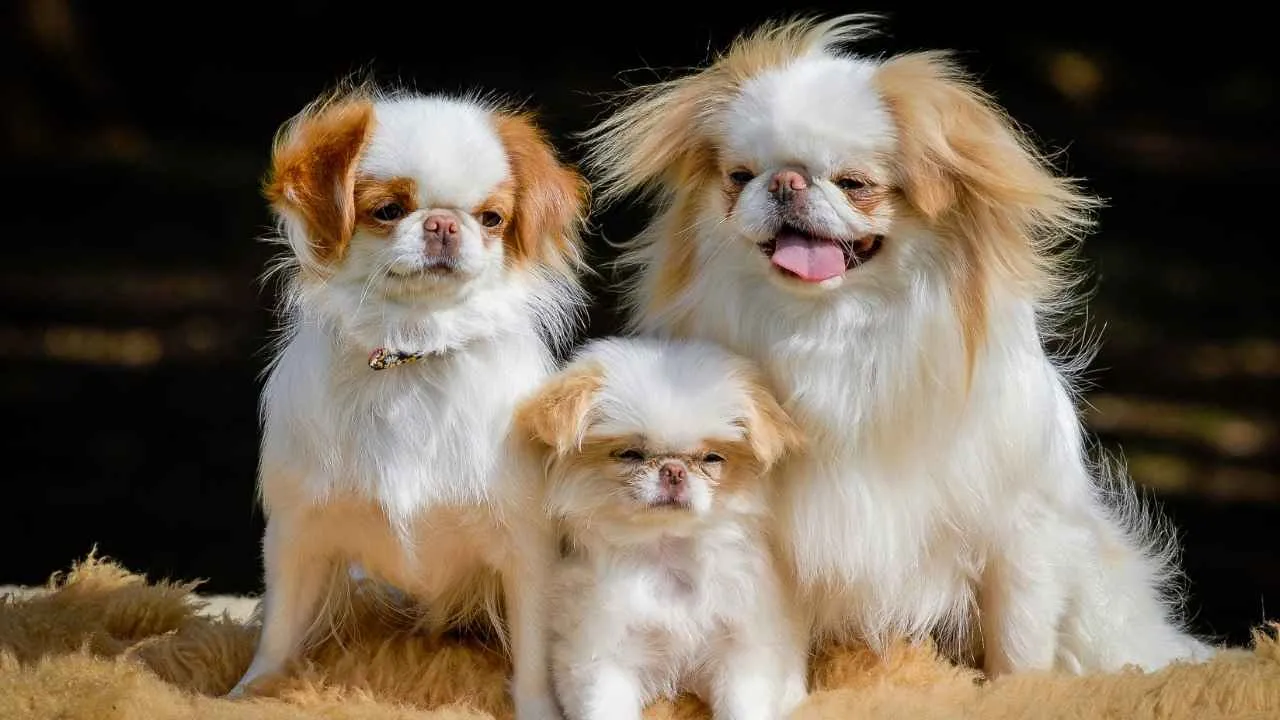
The Japanese Chin is a tiny bundle of charm with a personality that makes you forget all about their small stature. These elegant little dogs were originally bred as companion dogs for Japanese nobility, so they know how to be sophisticated—and a bit sassy—while still being affectionate.
Despite their refined appearance, Japanese Chins are playful and curious. They enjoy short bursts of activity indoors, like chasing a toy or playing hide-and-seek, but they’re equally happy curling up in your lap for a long afternoon snooze.
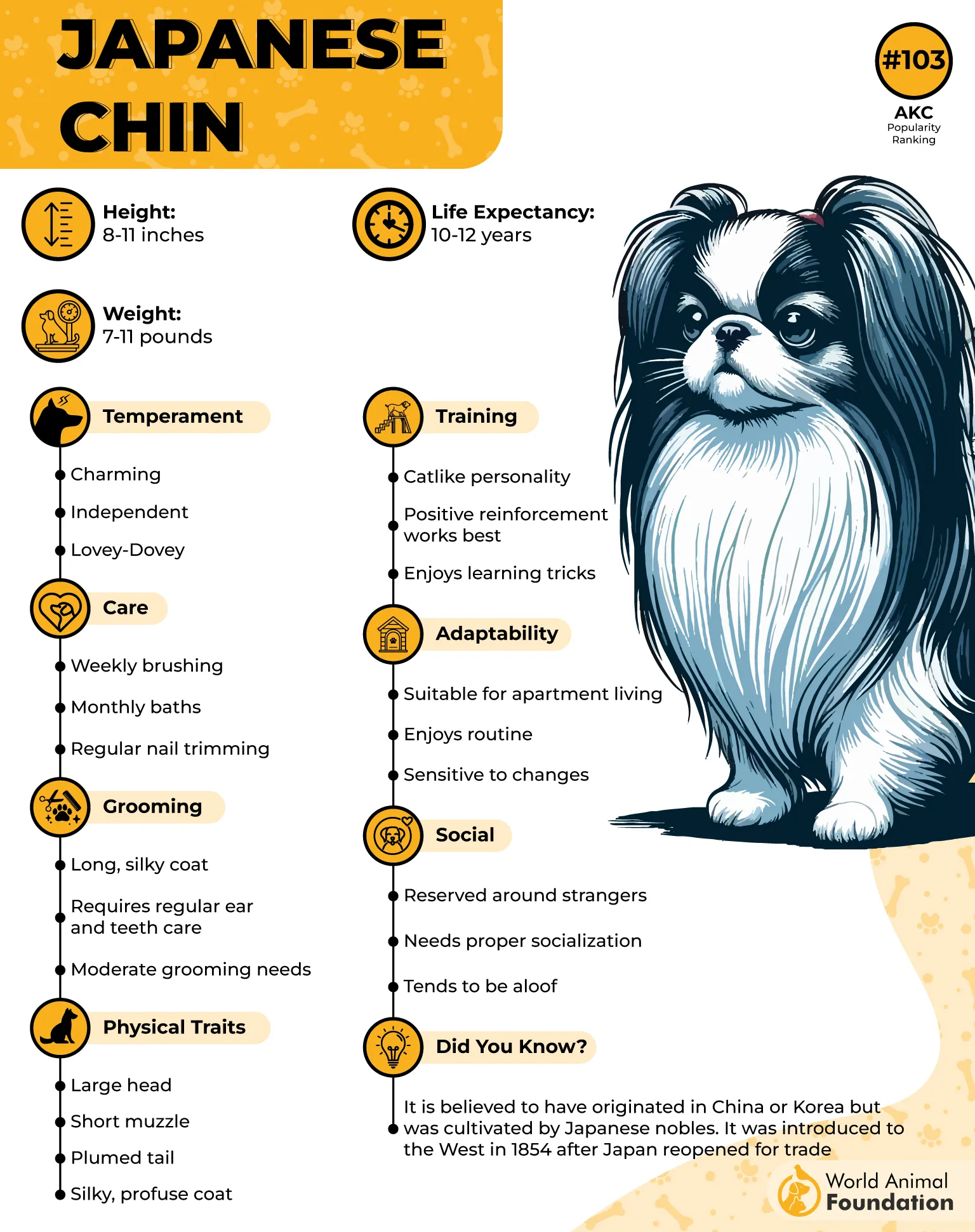
Grooming Needs: Moderate. Their long, silky coat looks like it belongs in a royal portrait, but it does require regular brushing to prevent tangles.
Exercise Needs: Low. A few short indoor play sessions or gentle walks each day are enough to keep them healthy and happy, making them great for owners who prefer a relaxed lifestyle.
Personality & Behavior: Affectionate, intelligent, and gentle. Japanese Chins are highly adaptable to apartment living or smaller homes.
They thrive on human company and form deep bonds with their owners, often following them around the house just to be near them. This makes them ideal for seniors or anyone looking for a dog that provides companionship without requiring high-energy exercise.
Purina says they’re alert and will signal when something unusual is happening, but they’re not yappy or overbearing. Their playful yet refined demeanor makes them a joy to have around.
3. Pekingese
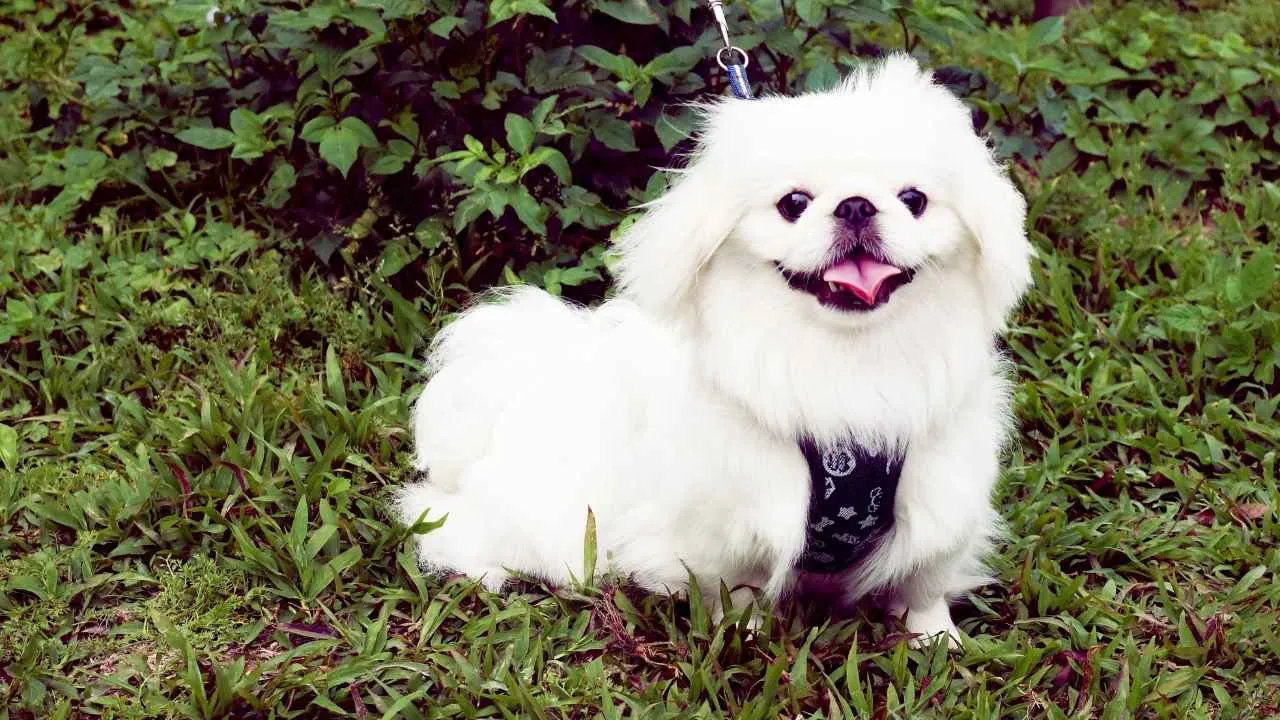
Don’t let their royal, lion-like mane fool you—Pekingese are little companions with big hearts. This breed was originally favored by Chinese royalty, which explains their regal posture and confident personality.
Despite their noble appearance, they are affectionate, loyal, and happiest when by their owner’s side. Pekingese are ideal for seniors who want a devoted lapdog without too much high-energy activity.
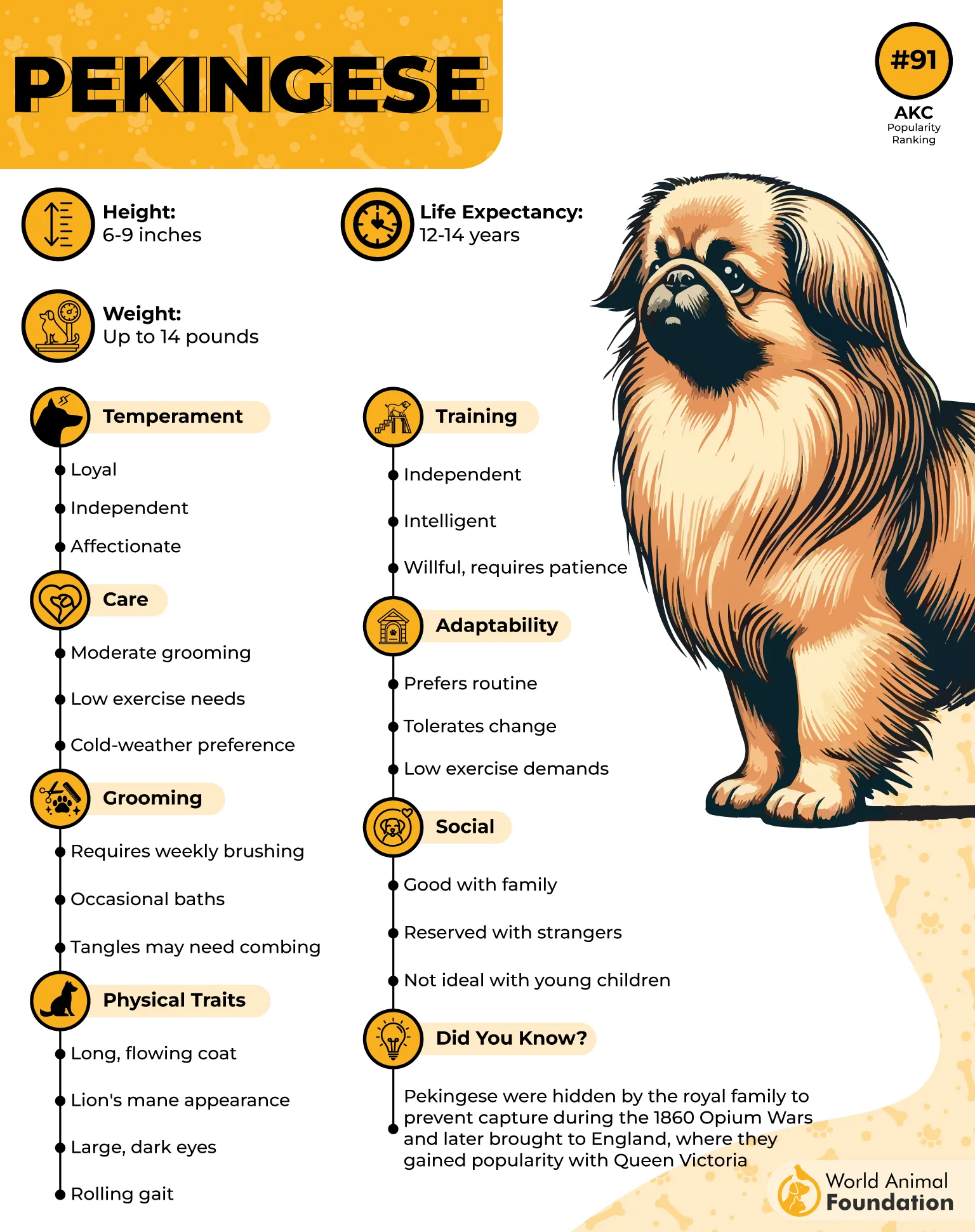
Grooming Needs: High. Their long, dense coat requires regular brushing—at least several times a week—to prevent mats and tangles.
Exercise Needs: Low. Pekingese enjoy brief walks or gentle indoor play, but their energy level is moderate, making them excellent for less active seniors.
Personality & Behavior: Affectionate, loyal, and calm. They thrive on companionship and enjoy being pampered, yet retain a dignified independence that makes them amusingly charming.
Though small, Pekingese have a charmingly independent streak. They may take a moment to warm up to strangers, but once introduced properly, they can form lasting friendships.
Their playful nature means they enjoy short indoor play sessions, but they’re just as content lounging and observing the household from a comfy spot.
4. Pug
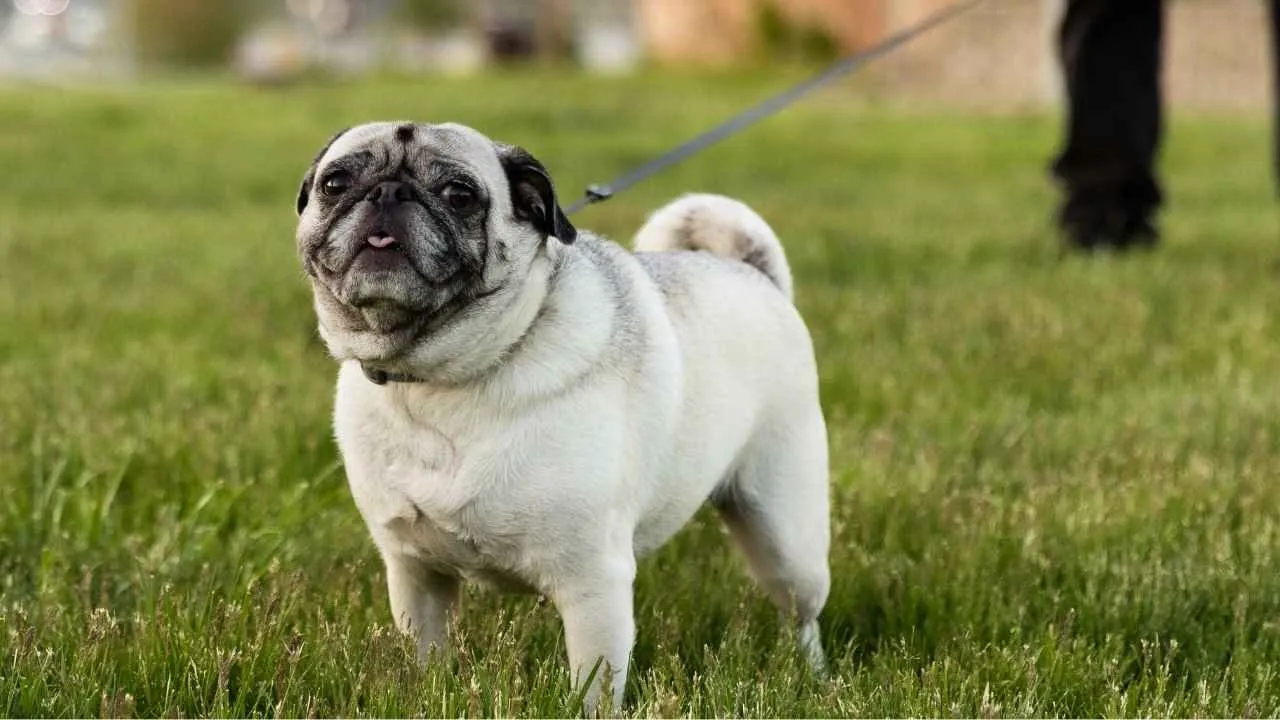
Pugs are little comedians with big personalities. Friendly, charming, and mischievous, these dogs are always ready to entertain their family with playful antics or a goofy expression that melts hearts.
Despite their playful side, Pugs are content to lounge by your side and enjoy a nap—perfect for seniors seeking companionship without a high-maintenance dog. These small, sturdy dogs adapt well to city apartments or country homes, and they thrive as part of a household with children, adults, or other pets.
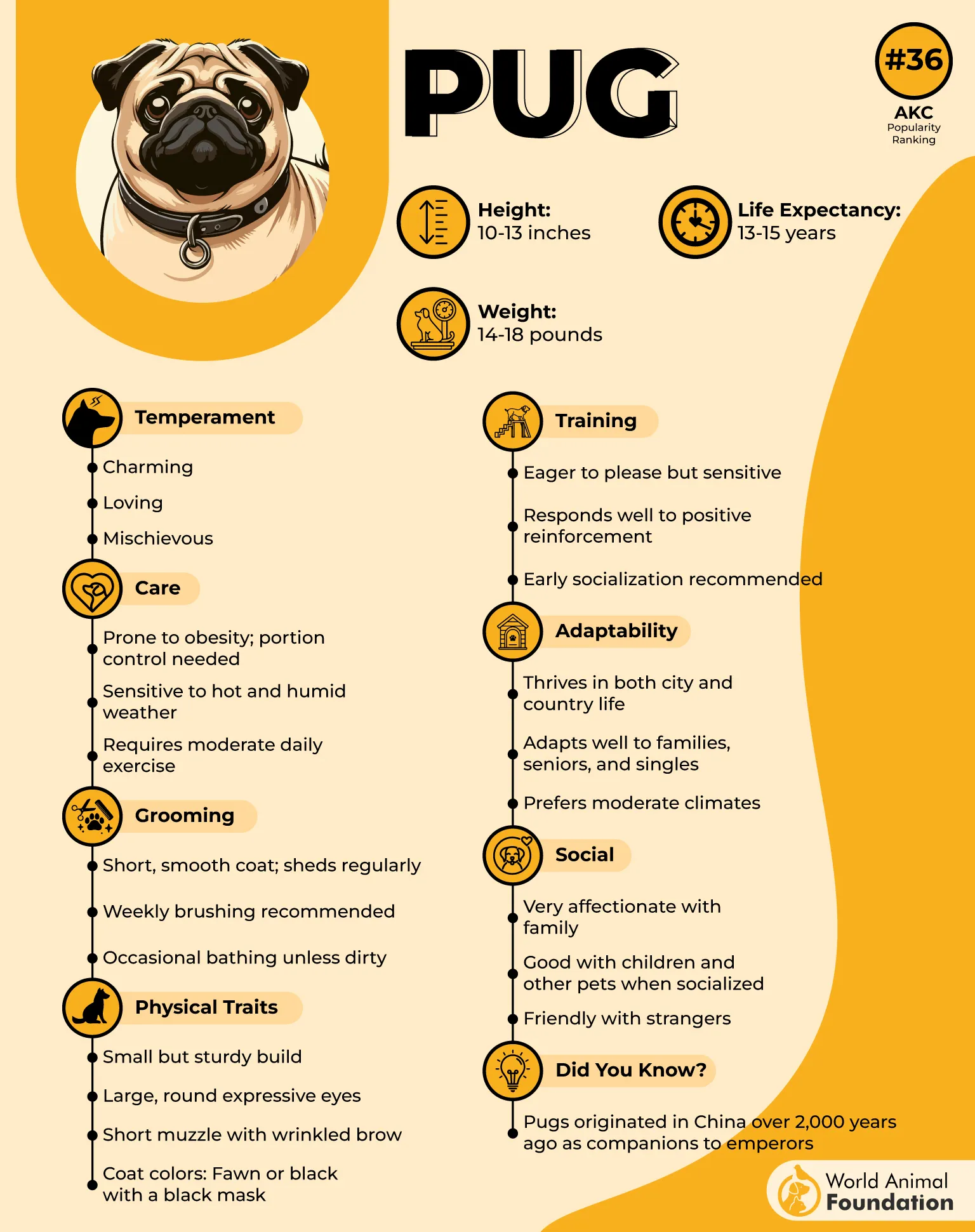
Grooming Needs: Moderate. Pugs have short coats but shed frequently. Regular brushing helps keep shedding under control, and occasional baths maintain skin health.
Exercise Needs: Low to moderate. Short daily walks or light playtime indoors are sufficient to keep them happy and healthy.
Personality & Behavior: Affectionate, social, and playful. Pugs are great companions, rarely bark excessively, and are known for their easygoing temperament.
According to the American Kennel Club, with proper care, they’re content in almost any environment, as long as temperatures aren’t extreme.
Pugs love attention, enjoy food, and can become a bit portly if their diet isn’t monitored, so regular walks and portion control are key. While they enjoy a bit of playtime, their exercise needs are moderate, making them manageable for older adults.
5. Shih Tzu
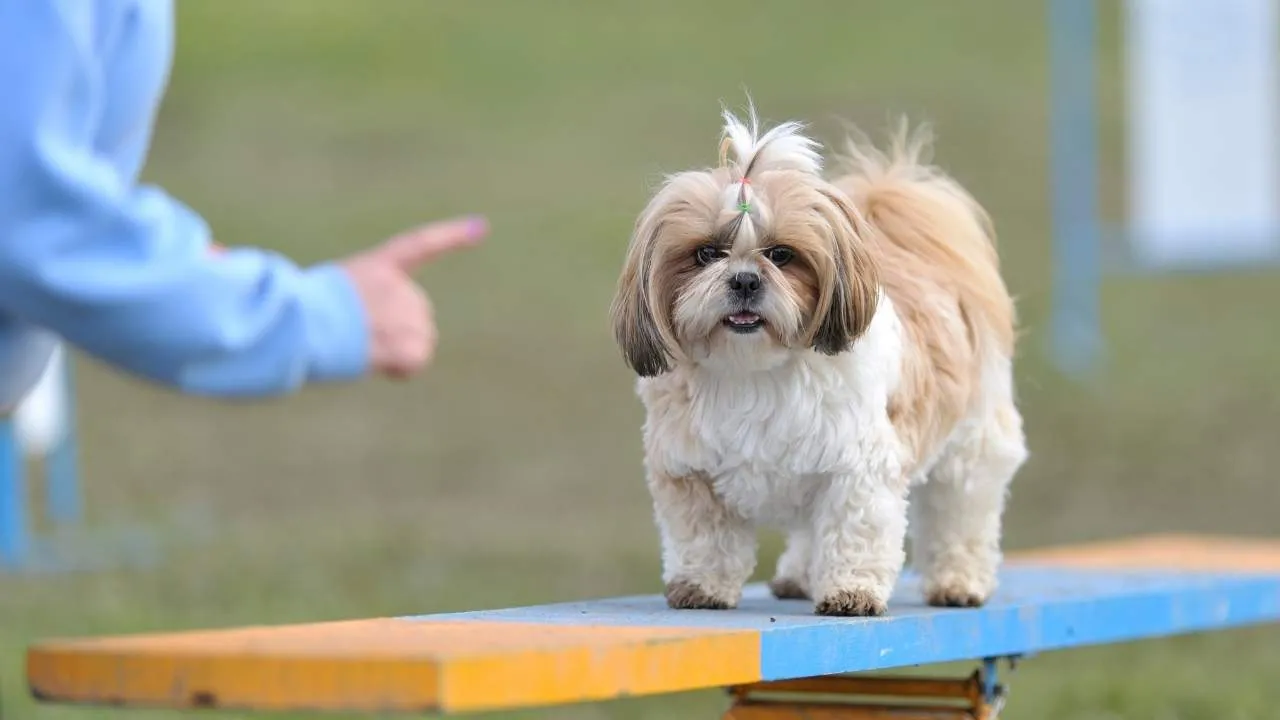
The Shih Tzu hails from China and is believed by some to be a cross between a Pekingese and a Lhasa Apso. Its name comes from a Chinese word meaning “lion.”
This small breed is instantly recognizable with its long, silky coat, short legs, and large, expressive eyes. Friendly demeanor and affectionate, Shih Tzus are well-suited to smaller living spaces, making them a favorite among dog lovers who appreciate a charming, lap-loving companion.
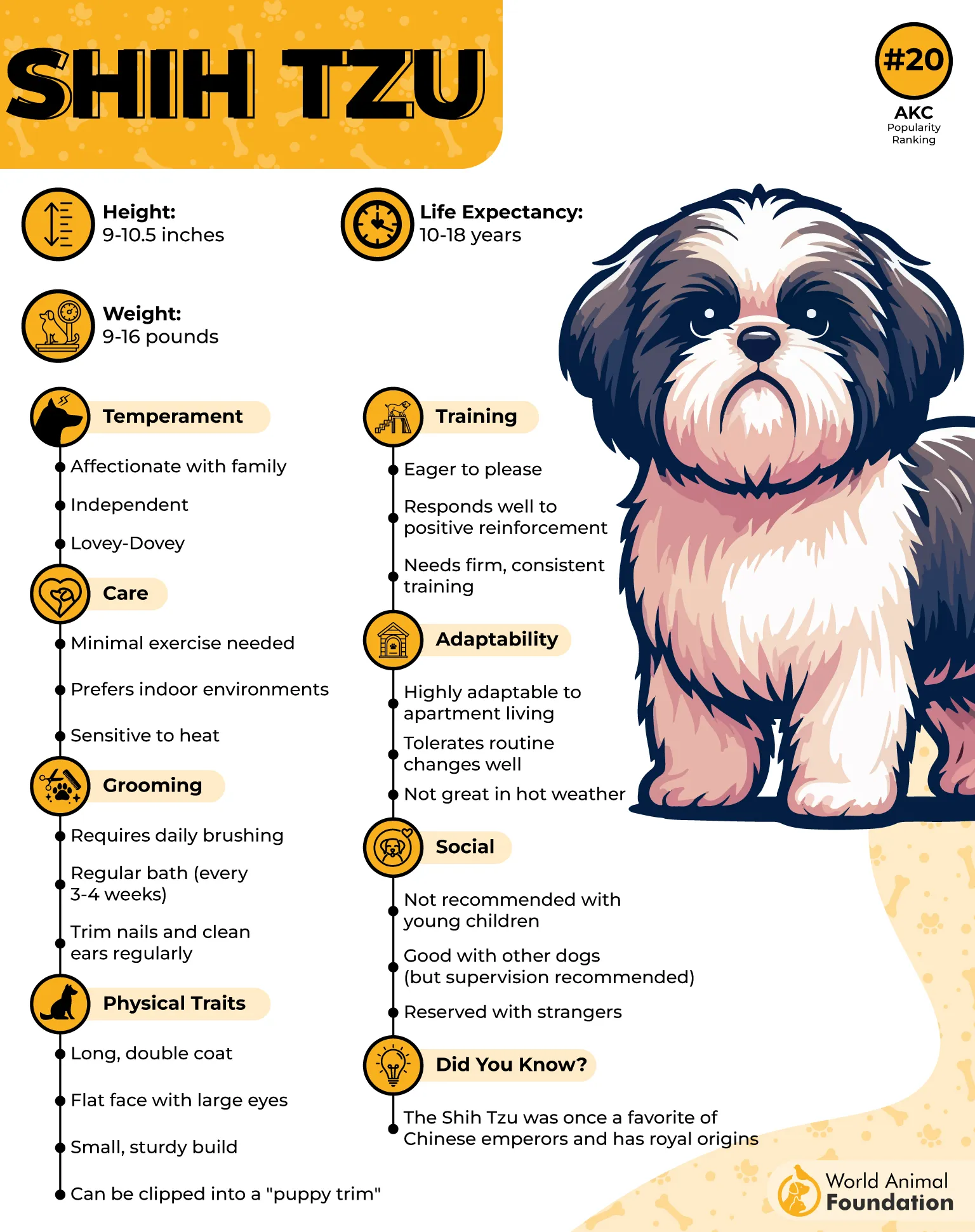
Grooming Needs: High. Their luxurious, long coat requires daily brushing to prevent tangles and regular professional grooming to keep it healthy and manageable.
Exercise Needs: Low. Short walks or light indoor play are usually sufficient to keep them happy and healthy.
Personality & Behavior: Affectionate, cheerful, and adaptable. Shih Tzus thrive in close companionship with their owners and are gentle with children and other pets.
They get along well with children, other pets, and even new visitors once properly introduced. While playful, they’re equally content curling up in a cozy lap for a relaxing afternoon nap, making them an ideal companion for seniors seeking a calm yet engaging pet.
Shih Tzus are highly adaptable, handling changes in schedule or environment with ease—whether it’s a walk at a different time of day or adjusting to indoor climate changes like air conditioning. Their charming personality and gentle temperament make them excellent companions for both active and more relaxed households.
6. Cavalier King Charles Spaniel
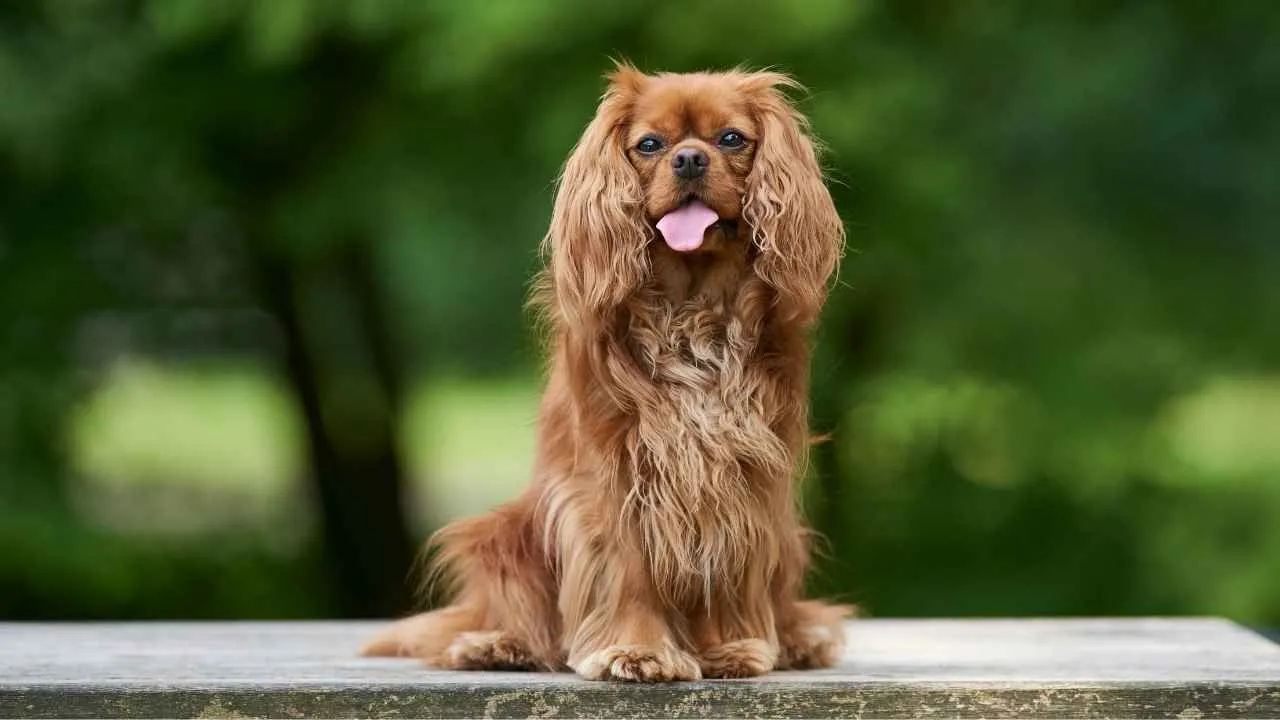
The Cavalier King Charles Spaniel got its name from British royalty in the 17th century. King Charles I and his son, Charles II, adored this breed so much that they brought their dogs everywhere—even to Parliament, according to the Cavalier King Charles Spaniel Club.
Originally, these little Spaniels were bred to keep laps warm in drafty castles and during chilly carriage rides, making them the perfect cozy companions for royalty.
The Cavalier King Charles Spaniel is a gentle, affectionate companion that thrives on human interaction. These dogs are calm, friendly, and adapt well to indoor living, making them ideal for seniors or first-time dog owners.
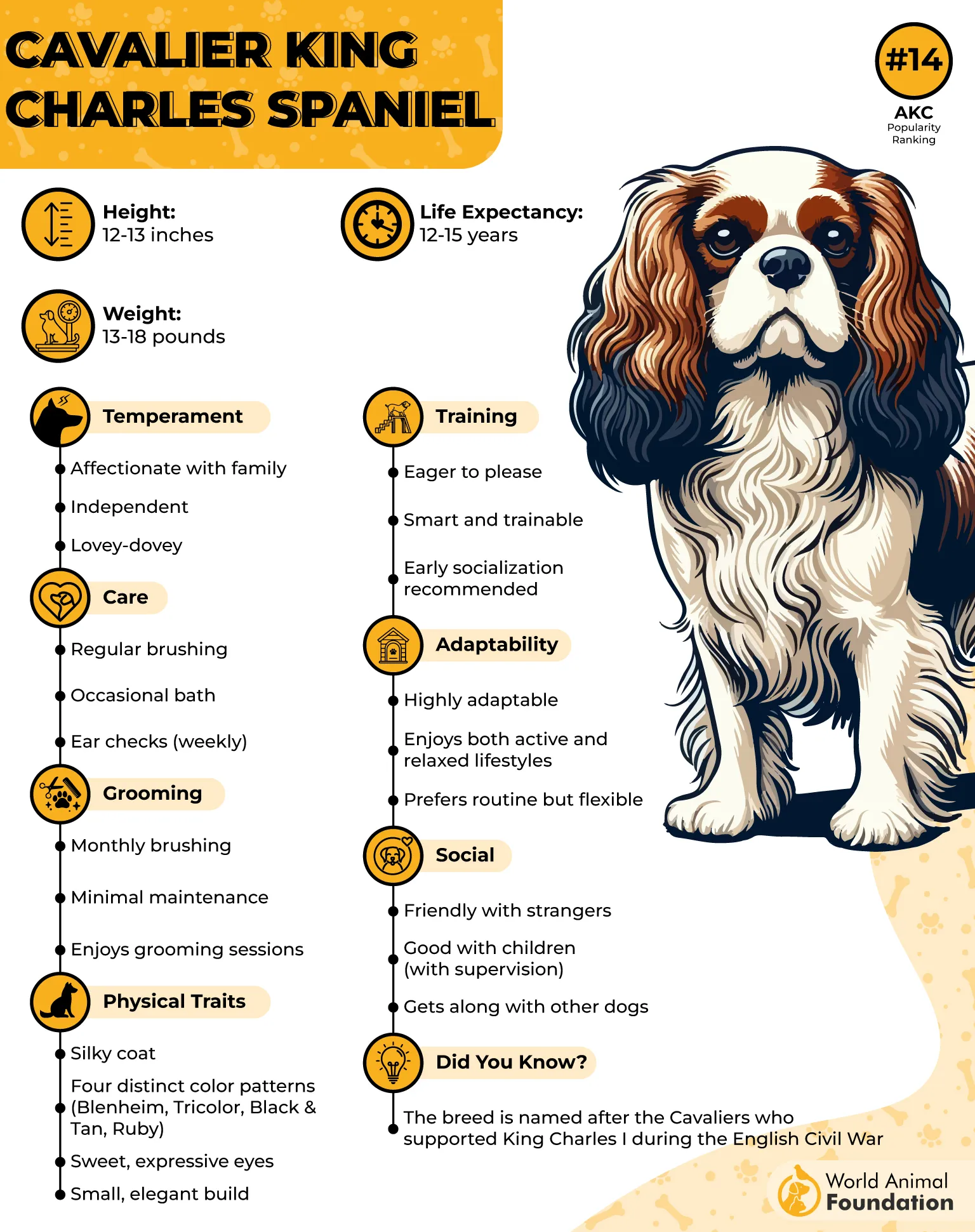
Grooming Needs: Moderate. Their silky coat requires brushing a few times a week and professional grooming roughly once a month to stay tangle-free.
Exercise Needs: Doesn’t require extensive exercise. Daily walks and light playtime, such as fetch or indoor games, keep them happy and healthy.
Personality & Behavior: Gentle demeanor, affectionate, and sociable. Cavaliers are friendly with children, other pets, and adapt well to various household routines.
Despite their small size, Cavaliers have a playful side and enjoy minimal exercise. They love walks, exploring their surroundings, and playing games like fetch.
WebMD notes that they make great adventure companions for short hikes or gentle outdoor activities, and their stamina can be gradually increased over time.
7. Maltese
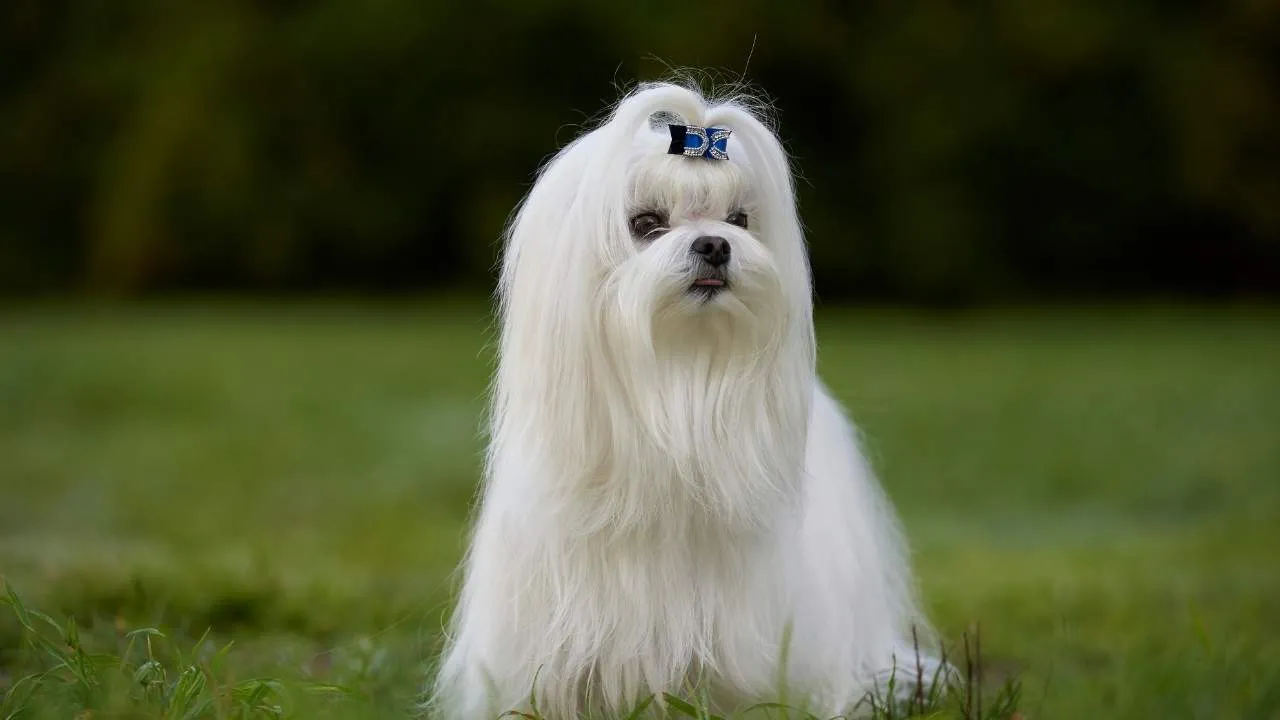
The Maltese is the quintessential lapdog—small, affectionate, and eager to spend time with their favorite humans. The Maltese is a petite dog breed famous for its silky, floor-length white coat and lively, playful personality.
Originating from the Mediterranean island of Malta, these little dogs remain highly adaptable and continue to be affectionate, charming, and devoted members of the family.
Their gentle and cheerful disposition makes them ideal companions for seniors who want a loving pet without the need for high-energy activities. These tiny dogs are alert and social, quickly forming strong bonds with family members and responding well to affection.
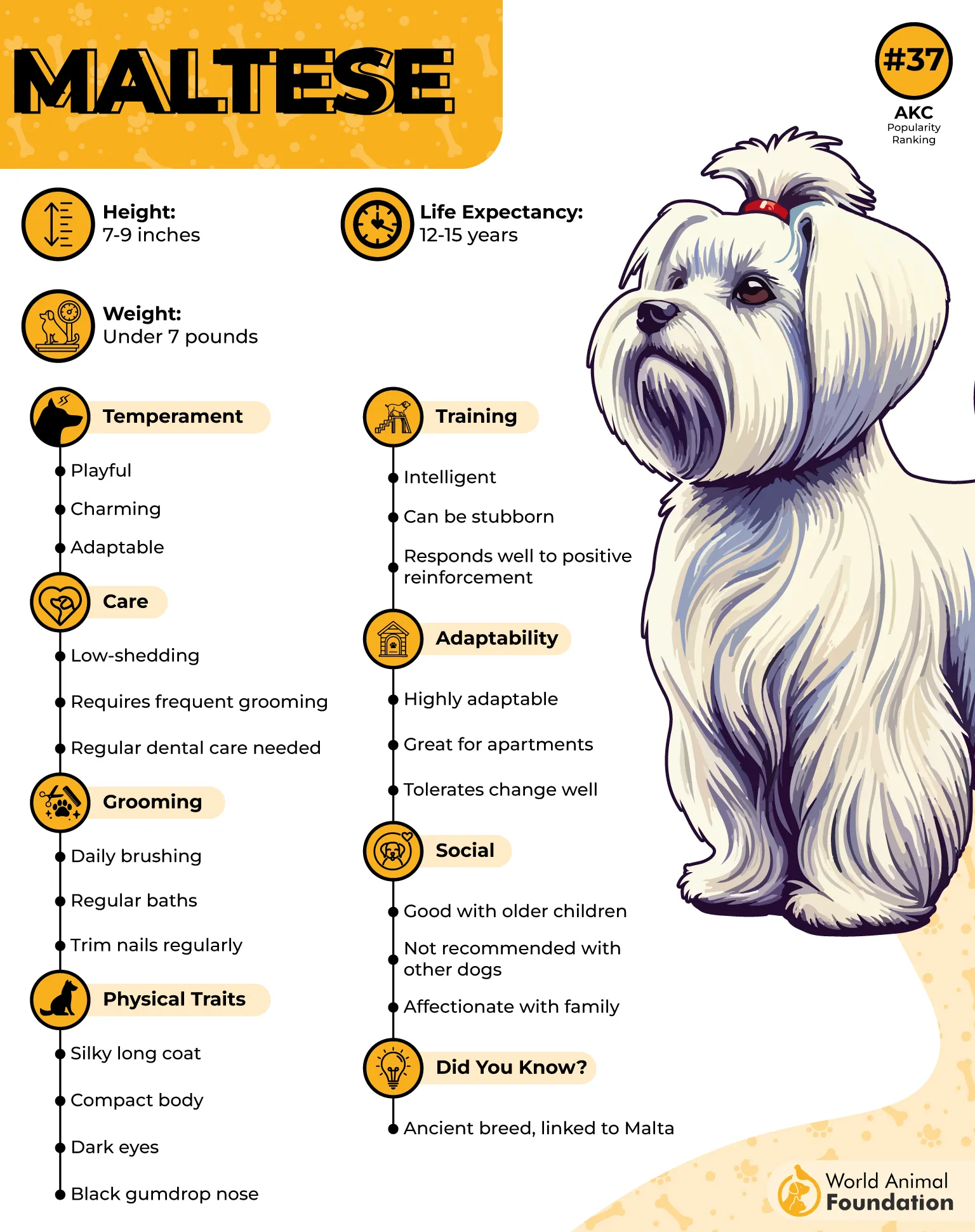
Grooming Needs: Moderate to high. Daily brushing is recommended, and professional grooming every 4–6 weeks keeps their long coat in top condition.
Exercise Needs: Low. Short walks and indoor playtime are sufficient to meet their activity requirements.
Personality & Behavior: Friendly, affectionate, and gentle. Maltese dogs thrive on companionship and are happy living in apartments, houses, or any cozy space where they can be close to their human family.
Maltese dogs have a playful streak and enjoy short bursts of indoor play. They’re happy to follow you around the house, curl up in your lap, or even participate in gentle games of fetch.
Due to their small size, Maltese dogs can find the high energy of young children a bit overwhelming, but they tend to thrive in families with older, gentler kids.
Conclusion
Many dog breeds suitable for seniors looking for peace combine a gentle temperament, generally calm demeanor, and affectionate nature, making them perfect companions for independent living or indoor living in small apartments or limited space.
Breeds like the Bichon Frise, Miniature Schnauzer, and Labrador Retriever are charming dogs with hypoallergenic coats, moderate exercise needs, and low maintenance companions, offering endless affection, quiet moments, and cuddles to their senior owners.
These dogs excel as human companions, providing emotional support, a loyal friend, and the perfect four-legged friend for many seniors.
With dog breed characteristics such as being highly intelligent, obedient, and eager to please, they are typically easy to manage, enjoy gentle play, long walks, and daily routine activities, making dog ownership an enjoyable, positive experience.
By selecting the right dog breed, seniors can find the perfect match that brings joy, fits smaller spaces, and offers mental stimulation, ensuring both you and your four-legged companion thrive together.
