




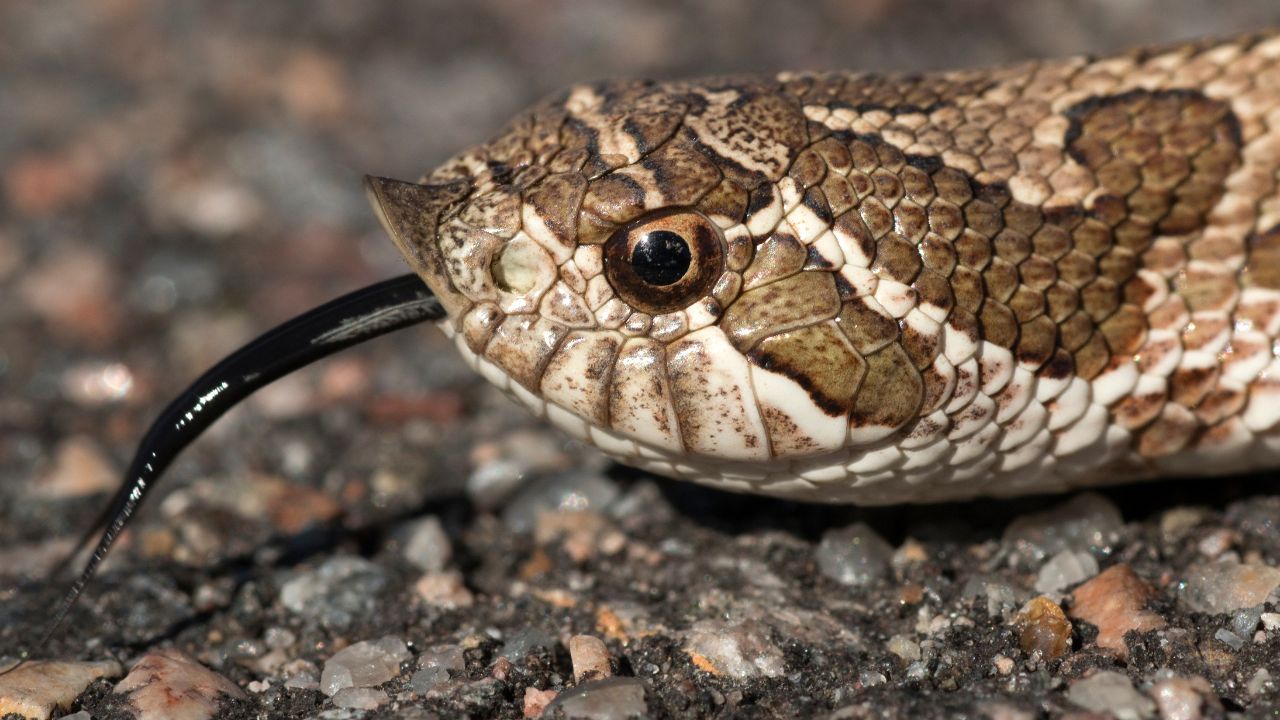
When it comes to feeding, snakes are some of the most fascinating predators on the planet. With no limbs and no chewing ability, they’ve evolved remarkable, often mind-blowing techniques to capture and consume their prey.
These unique feeding strategies reveal just how creative and adaptable snakes can be—turning every hunt into a display of evolutionary brilliance.
Venomous species add another layer of complexity—some inject toxins that paralyze instantly, while others release digestive enzymes that begin breaking down prey from the inside moments after the bite.
These feeding techniques aren’t just unusual—they’re masterpieces of evolution. Each one is tailored to a specific habitat and prey type, proving that snakes are far more diverse and clever than most people realize. Prepare to be amazed by the feeding strategies that make these species truly extraordinary.
Quick Inisght: Some serpents take “unique” to a whole new level—they eat other snakes. Known as ophiophagus (literally “snake-eating”), these hunters include species like the king cobra, which prefers other serpents over anything else. Some even target the tails of their prey first to keep them from escaping!
Snakes with the Most Unique Feeding Techniques
1. King Cobra
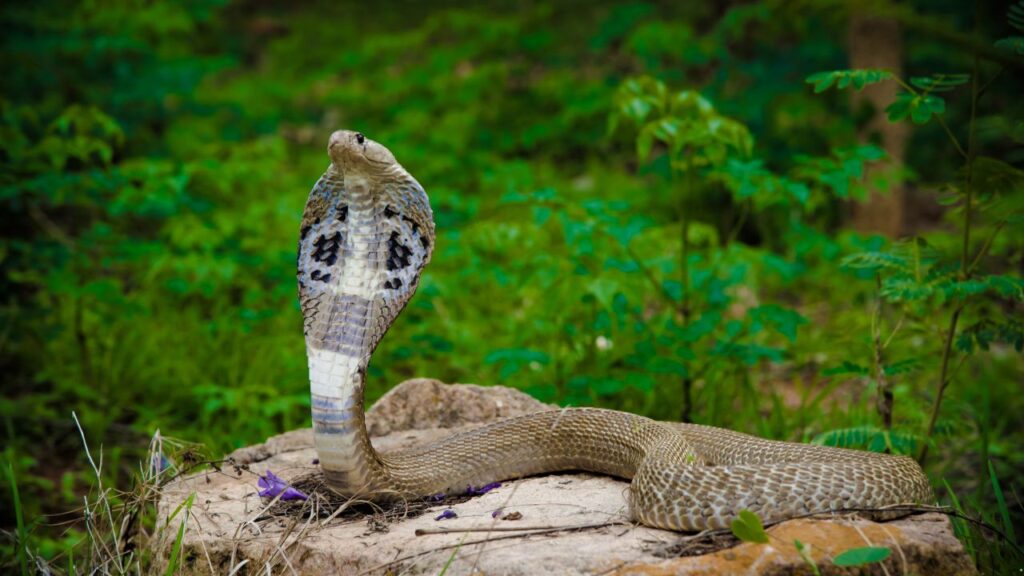
These serpentine masterminds aren’t just long (an average of 11–13 feet and sometimes over 18 feet—basically one snake away from being a bus); they’re also famously smart. Yes, a snake that could probably outstrategize you in a game of chess… if it had arms.
King cobras don’t just hunt—they plot. They size up a situation, adapt their tactics, and go after their prey with the kind of precision that would make a Navy SEAL nod in approval. Unlike many snakes that follow the “strike first, ask questions never” philosophy, king cobras shift strategies depending on what they’re chasing.
They’re even known to recognize their handlers, which is either heartwarming or deeply unsettling—depending on how much you trust a 13-foot noodle with fangs. Living across southern China, India, and Southeast Asia, these regal reptiles prefer scenic real estate: forests, bamboo thickets, streams, and swamps. Think of them as snakes with a taste for the outdoorsy lifestyle.
But their menu is where things get really interesting. King cobras are hardcore snake-eaters—seriously, it’s like their version of comfort food. Asian rat snakes, dhamans, pythons—you name it, they’ll slurp it like living spaghetti.
They’ll even go after other venomous snakes like Indian cobras and kraits, which is kind of like eating a jalapeño stuffed with ghost pepper. Bold, risky, and extremely on brand for a snake that literally has “king” in its name.
And when the snake buffet runs low? They’ll switch to birds, lizards, or even rodents. Because even royalty has to improvise sometimes.
King cobras are fascinating, fearsome, and undeniably dramatic hunters—masterful predators who prove that being long, venomous, and strategic is a powerful combo. Just don’t expect them to share their snacks.
2. Tentacled Snake
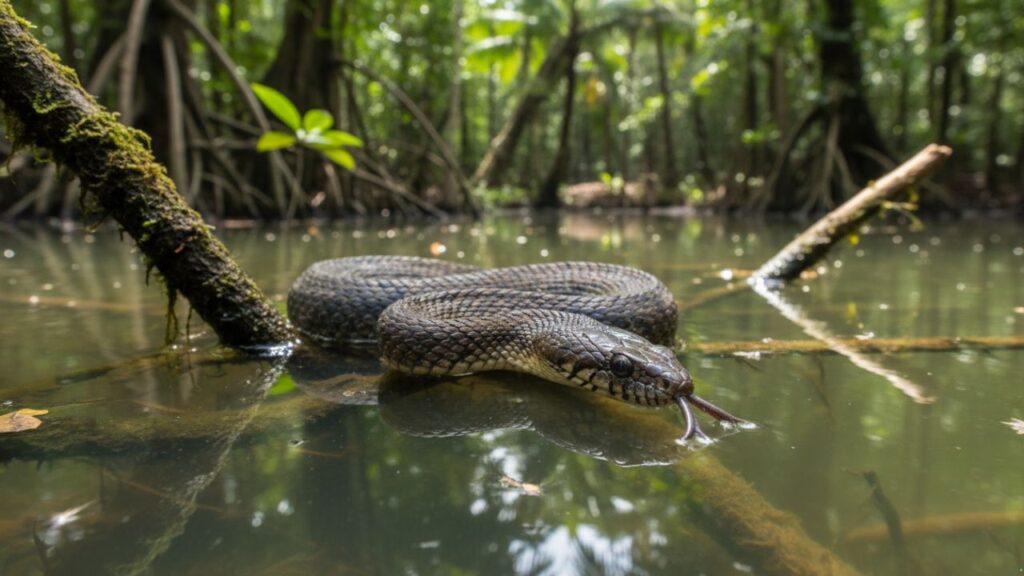
This quirky reptile is the only snake in the world rocking two tiny “tentacles” on its snout. They’re not just decorative accessories either; these little appendages act like underwater motion sensors, helping the snake detect fish before the fish even realize they’re being watched. Basically, it’s the reptile version of having built-in radar.
While most snakes hunt on land or ambush from trees, the tentacled snake is fully committed to aquatic life. It spends its entire existence underwater, lounging in murky ponds across Southeast Asia, blending in like a soggy stick with ambition.
Sure, it has venom—but it’s the hyper-specialized “For Fish Only™” kind. The fangs are small, tucked away in the back, and really just designed to politely inform fish: “Your time is up.” For humans, it’s about as threatening as a wet shoelace.
Wikipedia says, its diet? Fish. Only fish. Exclusively fish. If a tentacled snake ever wrote a cookbook, it would be one page long.
But the real magic trick is how it hunts. When a tentacled snake strikes, it doesn’t just snap at a fish; it manipulates the fish’s escape reflex. Yes—you read that right. It startles the fish in one direction, knowing the fish’s brain will instinctively make it flee in the wrong direction… straight into the snake’s mouth. That’s next-level strategy.
Strange, sneaky, and superbly adapted, the tentacled snake is one of nature’s most bizarre and brilliant hunters—proof that evolution has a sense of humor and sometimes just goes, “Let’s see what happens if we add tentacles.”
3. Vine Snake
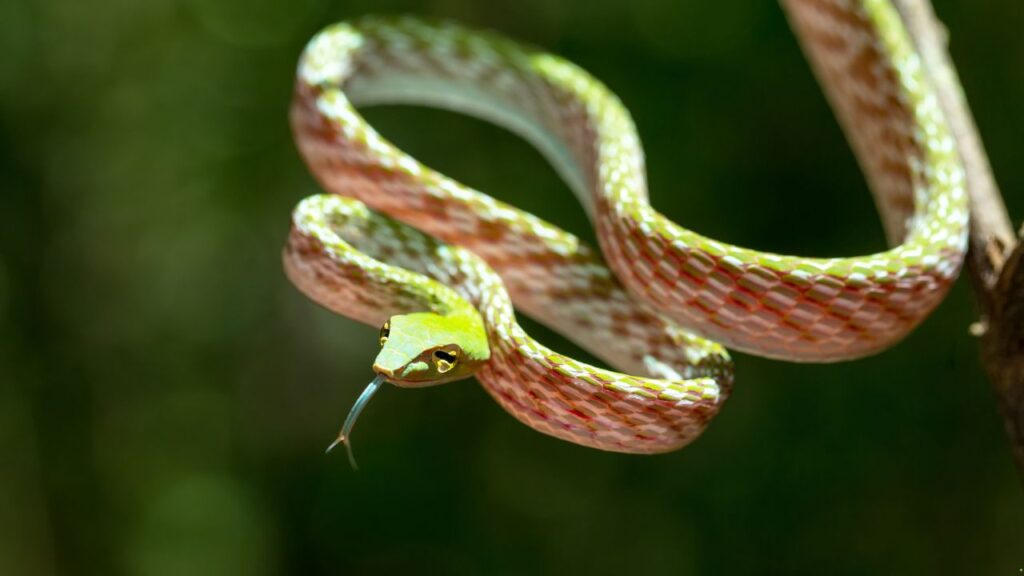
The Asian vine snake might be the closest thing nature has to a living neon-green noodle. Native to the forests of Southeast Asia, this pencil-thin serpent uses sleekness as a lifestyle. With a body so narrow it could practically double as a piece of spaghetti (albeit a venomous one), the vine snake is a master of camouflage—an emerald whisper among branches and vines.
Spotting one in the wild is like playing the world’s hardest game of “Where’s Waldo,” except Waldo is long, green, and watching you with large, leaf-shaped eyes that seem to say, “You don’t see me… but I see everything.”
Its venomous bite is surprisingly chill—mild enough that humans don’t need to panic, but potent enough to make a frog rethink every decision it has ever made. This is part of why some people even keep vine snakes as pets.
According to Research Gate, frogs are their absolute favorite food—basically vine snake comfort cuisine. But they also enjoy lizards, insects, and the occasional tiny bird when they’re feeling fancy. Their hunting style is all about stealth: freeze, blend, and strike at the exact moment your prey is contemplating lunch plans.
Despite being venomous, they’re calm, beautiful, and not considered dangerous to humans. Conservationists happily report that their populations are stable and listed as Least Concern, which means these leafy ninjas continue to thrive in their canopy kingdom.
If you ever walk through a Southeast Asian forest, remember: the vines might not all be vines. Some of them are snakes pretending to be vines… who are pretending to ignore you.
4. Burmese Python
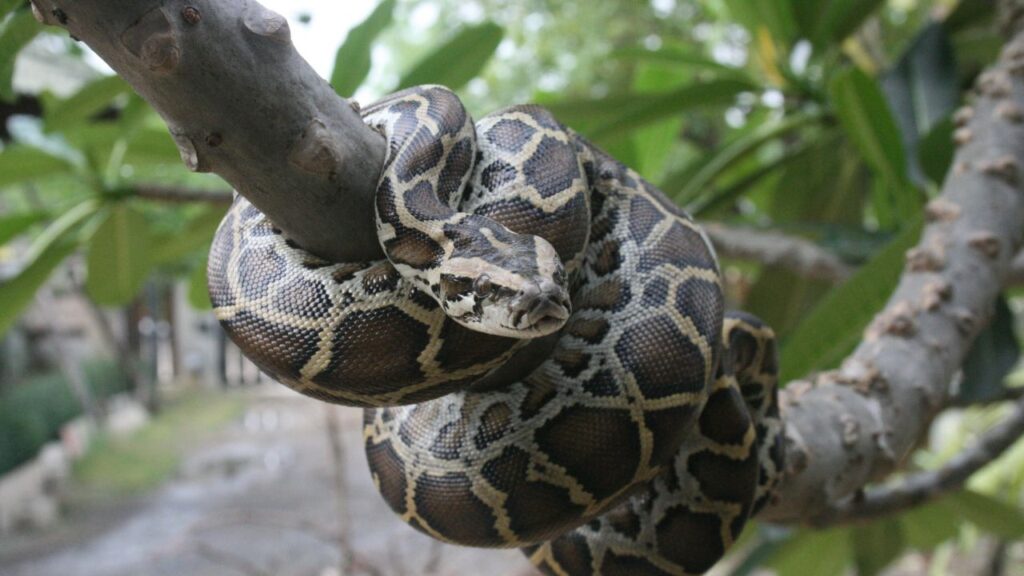
These serpentine overachievers have long been famous for their cartoonishly massive meals, but recent research says they’re even better at it than anyone predicted. Basically, Python looked at the limits of physics and said, “Cute. Watch this.”
Unlike many predators, Burmese pythons don’t bother with the whole chew-your-food thing. Chewing is for amateurs. Instead, they open their mouths to an astonishing width and swallow their prey whole—like a scaly, muscular vacuum cleaner powered by determination.
Sure, they’ll snack on rats and birds, but they’re also known for taking down pigs, goats, deer, and even alligators. Yes, alligators. The python’s mantra seems to be “If it fits, it sits… in my stomach.”
Now, here’s where it gets really interesting: pythons aren’t “unhinging” their jaws—despite the popular myth. They’re not performing some supernatural jaw dislocation ritual. Instead, they come equipped with ultra-stretchy skin, elastic ligaments, and lower jawbones that aren’t fused together.
Scientists call this their “maximal gape,” which sounds like an indie band but actually refers to the diameter of the python’s wide-open mouth. That gape determines exactly how big a victim they can engulf—so the python lifestyle is basically: stretch, eat something enormous, and then nap for a month. Truly the dream.
The Burmese python remains one of nature’s most extreme eaters—a reptile that not only pushes the boundaries of biology, but also challenges everyone else’s sanity by swallowing meals that feel like they should come with a warning label.
5. Hognose Snake
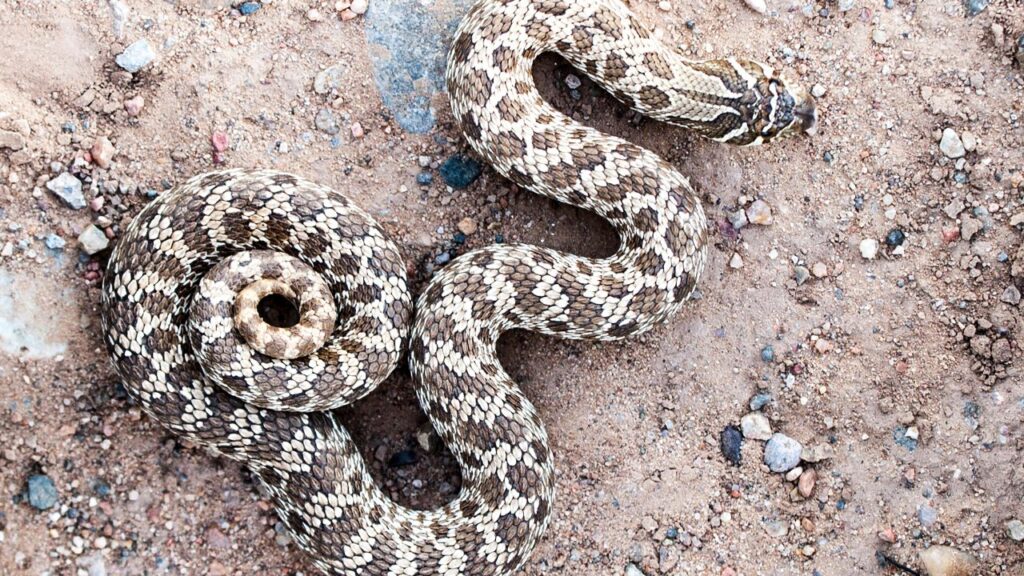
Known for their adorable upturned snouts and Oscar-worthy defensive performances, these little drama noodles also happen to have one of the more unusual feeding styles out there. Unlike big constrictors that wrestle their dinner like it’s a UFC match, hognose snakes… don’t. They’re not built for it.
They’re more like the “gently nibble your food and hope it stops moving” type. Their bodies don’t expand as well as those of other snakes, and they simply aren’t strong enough to overpower large prey. So in the wild, they specialize in smaller, slower foods—most famously toads.
Seriously, wild Western hognoses eat toads like it’s a full-time job. Frogs, salamanders, lizards, and the occasional reptile egg make appearances, too, but mammals and birds? Those are rare—like “special guest star” rare.
In captivity, their eating habits can be a little… particular. Their food should usually be no larger in diameter than the snake’s head. If you offer something bigger, there’s a good chance your hognose will dramatically struggle, then regurgitate it like it’s reenacting a tragic scene from a Victorian novel. And while it looks theatrical, it’s actually dangerous and very stressful for the snake.
That’s why hognose keepers often feed multiple small meals instead of a single big one. Once their snake finishes one bite-sized prey item, they just offer another. If the snake is still hungry, it’ll accept it. If not, it’ll give a look that clearly says, “I’m full, peasant.”
One thing to watch out for, though: hognoses have no problem packing on the pounds. Too much food and they’ll turn from a tiny garden-hose shape into a plump sausage with scales. So adjusting the number of prey items is key unless you want your snake to audition for the role of “Chubby Noodle #1.”
6. African Rock Python
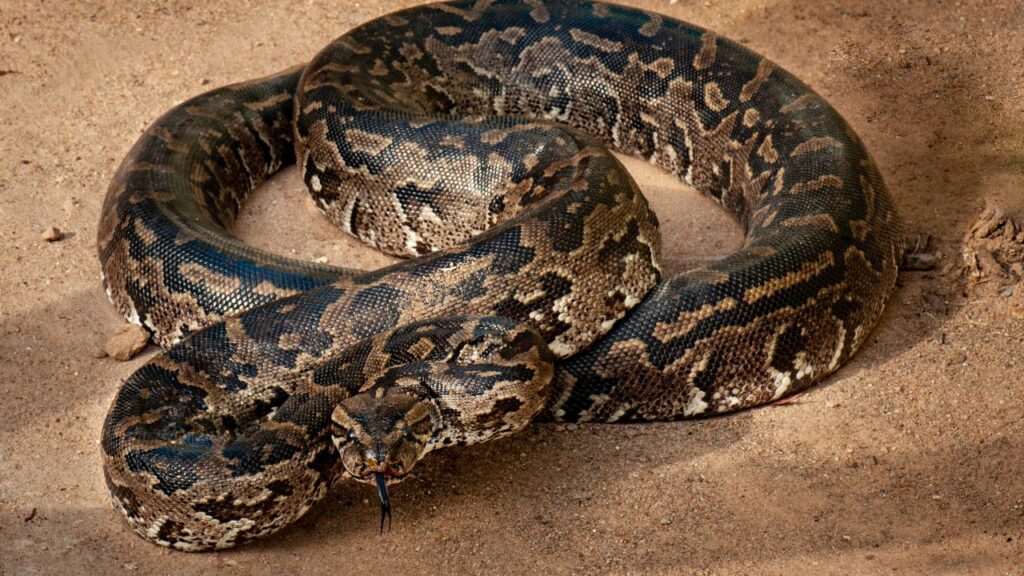
Meet the African rock python: a reptilian tank, an absolute unit of a snake, and a creature that takes the phrase “don’t mess with me” very seriously. These pythons can grow to massive lengths and are known for being powerful, bold, and—let’s be honest—a bit spicy in personality. They’re not snakes for beginners, households with kids, or anyone who enjoys having all their limbs in their original positions.
Despite their tough reputation, African rock pythons are intelligent, observant creatures. In the wild, that intelligence helps them spot danger and pick excellent hiding spots. In captivity, it means they’re smart enough to remember who feeds them, who bothers them, and who shows up with the salad tongs instead of the mouse.
And although they’re infamous for being aggressive, captive-bred individuals can actually become calm with regular, respectful handling. In other words: yes, they can be sweet—but only if you put in the time, don’t annoy them, and understand that you are living in their world.
When threatened, they don’t hold back. African rock pythons may hiss, coil, strike, or unleash the dreaded nasty tail musk, a foul-smelling substance that they spray like an angry reptile skunk. The musk lingers. Your clothes remember. Your soul remembers.
Their feeding habits are as impressive as their personality. These snakes grow fast, and PetMD points out that their growth rate is heavily tied to how often they eat. Herpetoculturists generally taper feeding once the python hits sexual maturity—around three years old—to avoid turning a powerful predator into a dangerously overweight noodle.
Hatchlings start small with baby mice, then graduate to adult mice, and eventually move on to a more structured feeding schedule as they grow.
And grow they will—African rock pythons don’t do anything halfway. With each meal, they inch closer to their full, awe-inspiring size, proving once again that they are the heavyweight champions of the python world.
7. Indigo Snake
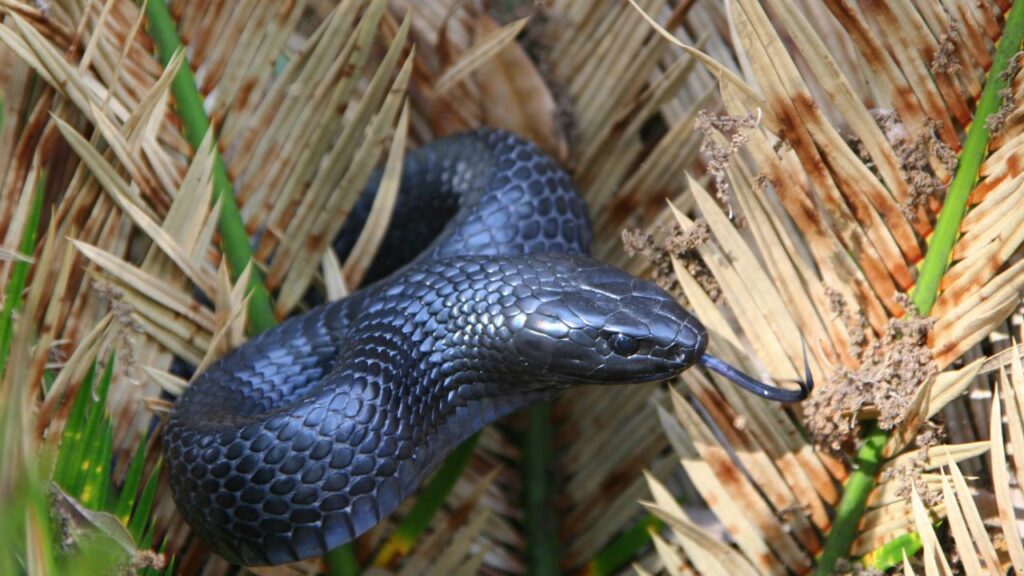
The indigo snake is basically the USA’s long, glossy, blue-black superstar. Holding the title of largest snake in the United States at an impressive 8.5 feet, it slithers through the southeastern wilds like a shiny obsidian rope with attitude.
These snakes are so sleek and dark that they practically sparkle in the sun—like they’re wearing a custom midnight tuxedo for every occasion. Despite being one of the biggest colubrids in the world, the indigo snake is surprisingly chill.
Calm, curious, and known for having a solid temperament, it’s the reptile equivalent of a giant who gives great hugs and doesn’t pick fights… unless you happen to be its lunch.
The indigo snake is famous for its fearless diet. We’re talking frogs, birds, small mammals, and yes… other snakes, including venomous ones. Rattlesnakes? Copperheads? Coral snakes? The indigo snake shrugs and says, “Cool, extra spicy.” They’re immune to the venom of many pit vipers, so they can dine on dangerous snakes like it’s no big deal.
Unlike constrictors that squeeze their prey into submission like a reptilian boa hug machine, the indigo snake uses a different method. It doesn’t constrict but instead crushes small animals with the power of its jaws and its own body weight.
The indigo snake may look mysterious, but it’s a true gentle giant toward humans—more likely to glide away peacefully than cause a fuss. But for its prey? It’s the dark knight of the reptile world: silent, powerful, and absolutely not someone you want showing up in your burrow uninvited.
Conclusion
Snakes with the most unique feeding techniques demonstrate the incredible diversity of snake species and their behavior. Some climb trees to catch amphibians or animals, while others hunt on the ground or in sand, using their tongue and skull to detect and connect with prey. Many kill and pull their catch carefully before swallowing, while others lay eggs or protect their young afterward. The methods snakes use to catch and consume prey—sometimes soft, sometimes warm—are amazing to observe. When a snake finally strikes, it appears effortless, showing why enthusiasts are so interested. Each example reminds us of the subtle ways snakes adapt, which can easily be noticed in the wild.
