




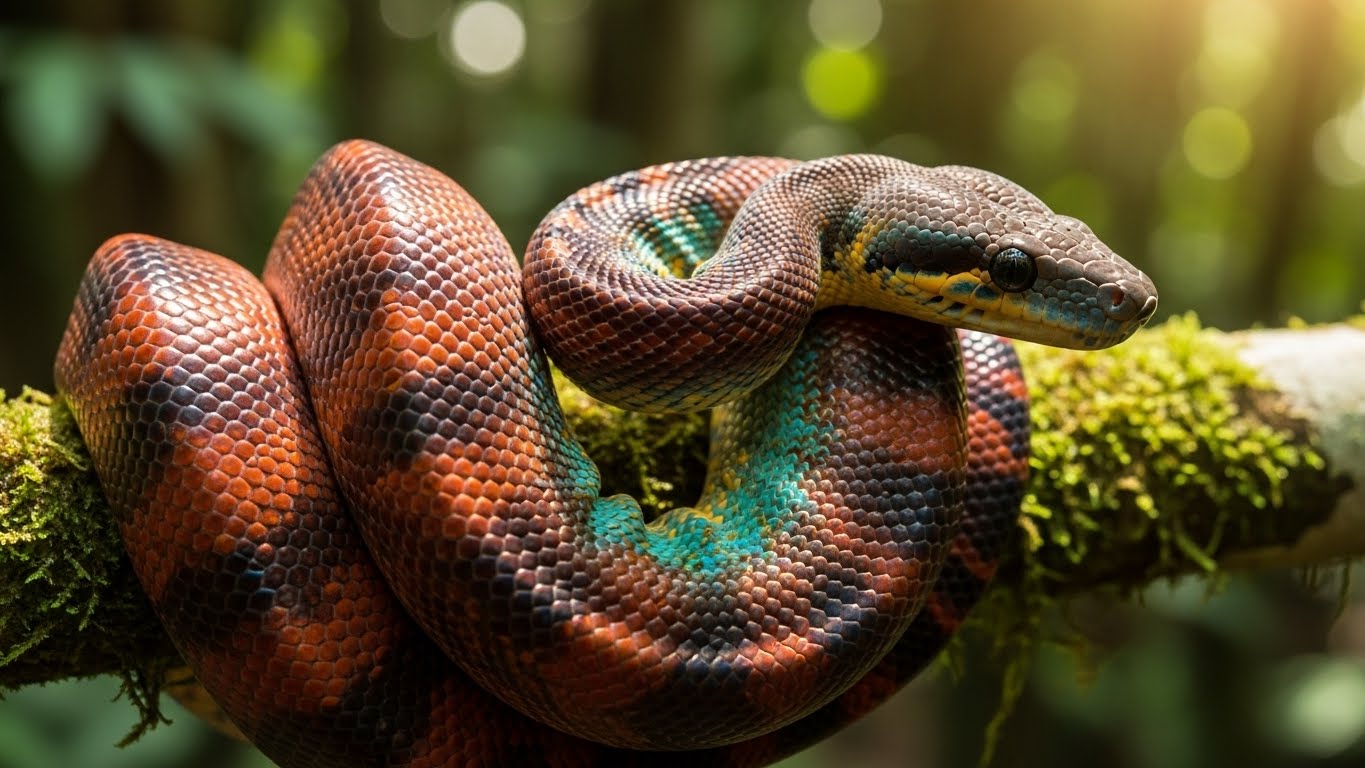
Snakes are often seen as stealthy or sneaky—but some species are impossible to ignore. Their dazzling colors make them living masterpieces, turning every jungle, reef, or desert into a runway of scales. These vibrant snakes captivate not only with beauty but with survival strategy—warning predators, blending into exotic surroundings, or dazzling potential mates.
Each hue isn’t just eye-catching; it’s a carefully evolved tool for protection or camouflage. Bright colors can warn predators of venom, mimic more dangerous species, or even communicate with other snakes.
Exploring these brilliant reptiles shows that snakes are not only masters of stealth—they’re also nature’s color virtuosos. Every scale seems carefully painted to perfection, making these snakes irresistible to nature lovers and photographers alike.
If you think snakes are dull or uniform, these radiant creatures prove otherwise. Vibrancy, survival, and elegance intertwine in every slither, leaving you in awe of the artistry hidden in the wild.
Did You Know? Some snakes don’t just blend in—they show off! The Rainb boa and coral snake flaunt colors so vivid that predators often think they’re poisonous… even if some of them aren’t. Nature’s own optical illusion!
Snakes with the Most Vibrant Colors
1. Rainbow Boa
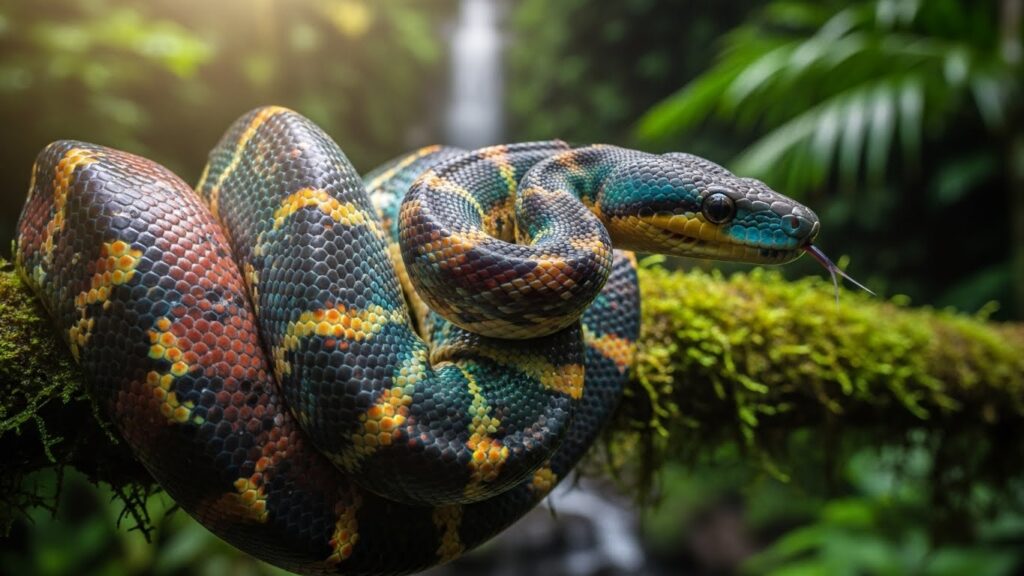
If snakes could moonlight as gemstones, the Rainbow Boa would be a top contender. With its body already sporting style, the real magic happens when light hits its scales.
Thanks to microscopic structures on its skin, it refracts light like a disco ball, giving it a dazzling iridescent sheen that can make any snake lover’s heart skip a beat. Seriously, it’s basically the rockstar of the snake world.
Rainbow Boas are fairly popular in the pet trade, and it’s easy to see why—who wouldn’t want a pet that looks like it’s straight out of a fantasy novel? But don’t be fooled by their beauty: these snakes are a bit high-maintenance.
Here’s a closer look at its stunning coat:
Medium brown body – a rich, warm base color.
Intricate black markings – like nature’s own artwork.
Iridescent sheen – sparkles in rainbow hues when light hits it just right.
They require a very specific balance of heat and humidity, so you can’t just let them chill in a random corner of the house. Think of it as running a tiny, squirmy spa for a rainbow-themed royalty.
Rainbow Boas are usually pretty chill and docile once they get used to you. But like many young celebrities—or, you know, actual celebrities—they can be a little feisty at first. Don’t be surprised if a younger boa gives you a warning nip until they realize you’re more “adoring fan” than “threatening paparazzi.”
In short: gorgeous, sparkly, and a little high-maintenance. But if you can meet their needs, you’ve got yourself a snake that’s equal parts beauty queen and gentle companion.
2. Blue Pit Viper
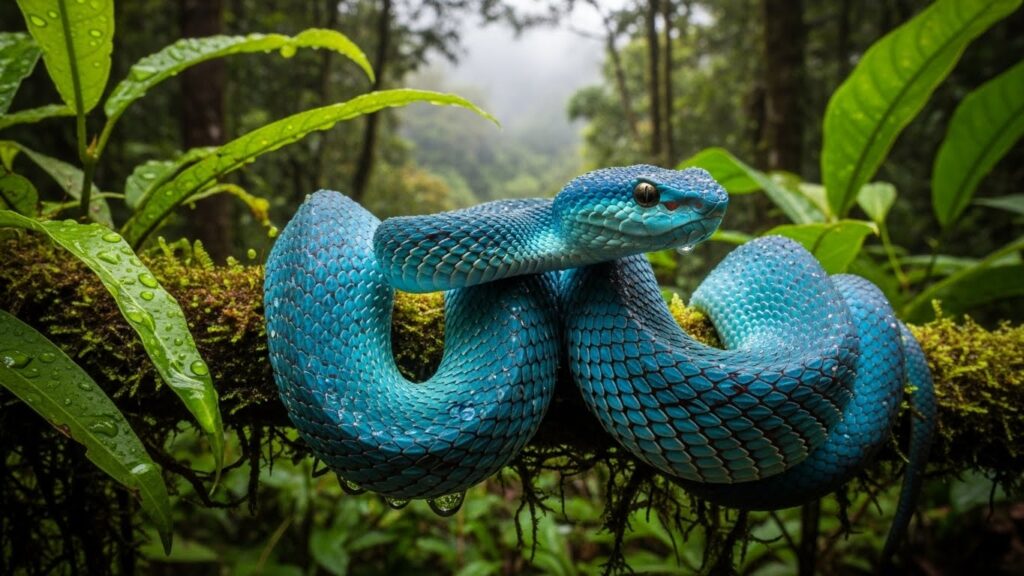
If the Rainbow Boa is the disco-ball rockstar of snakes, the Blue Pit Viper is more like a sleek, neon-lit ninja. Native to Southeast Asia, these vipers thrive in tropical forests and often perch high in trees, waiting patiently for unsuspecting prey to wander by.
Their combination of bold coloration, stealthy hunting skills, and tree-climbing agility makes them one of the most impressive snakes in their range.
These snakes are famous for their striking hues that can make you do a double-take in the jungle. Depending on the population, their colors can range from subtle to jaw-droppingly vivid, making each individual a little work of living art, as per Wikipedia.
Coat colors of the Blue Pit Viper include:
Blue or blue-green – the most iconic shades, like a gemstone, come to life.
Green – perfect camouflage in leafy habitats, helping them vanish among the branches.
Yellow variants – rare pops of sunshine that make certain individuals extra special.
They are nocturnal hunters, relying on their heat-sensing pits to detect the body heat of birds, lizards, and small mammals even in complete darkness—making them the ultimate nighttime predators.
These vipers aren’t just a feast for the eyes—they’re also equipped with potent venom, which they use to immobilize prey quickly. While stunning, they are definitely not beginner-friendly. Handling a Blue Pit Viper requires experience, care, and respect; for most snake enthusiasts, it’s safer to admire their neon brilliance from a distance.
Behavior-wise, they are generally solitary and territorial, only coming together to mate. Despite their venomous reputation, they prefer to avoid confrontation, striking only if threatened or cornered.
In short: the Blue Pit Viper is a masterclass in snake style—part stealth, part neon fashion show, all lethal efficiency, and 100% wow factor. With its glowing blue scales and ninja-like movements, it’s a snake you’ll remember long after you see it.
3. Coral Snake
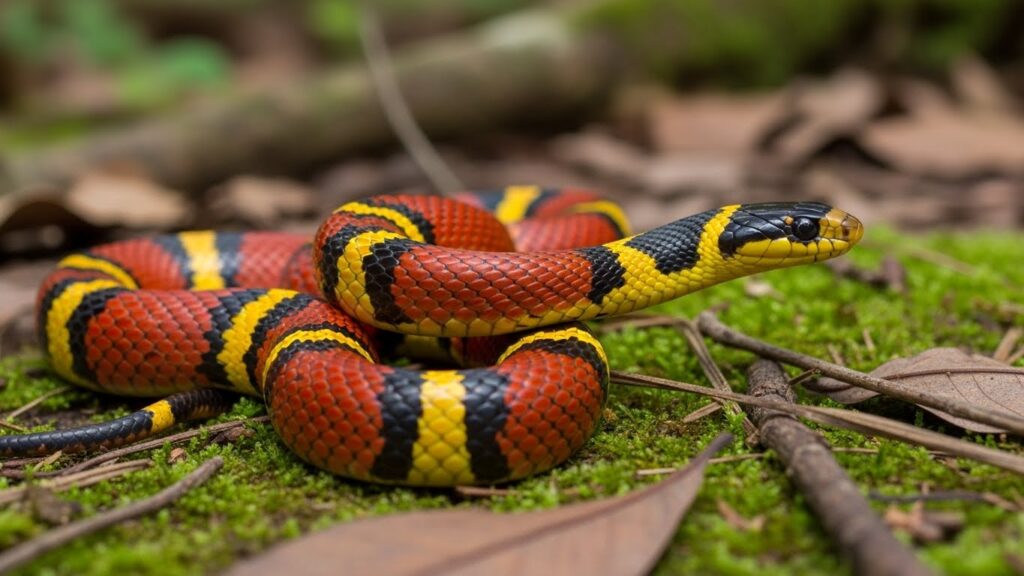
The Coral Snake is basically nature’s warning sign wrapped in a sleek, smooth package. Famous for its vivid tricolored rings, this little serpent is as striking as it is dangerous.
Most species have three colors—red, black, and yellow or white—with the widths of the rings varying from snake to snake. Its short tail and smooth scales give it a polished, almost jewelry-like appearance.
Coat colors of the Coral Snake include:
Red – bold and attention-grabbing.
Black – provides a sharp contrast between the other colors.
Yellow or white – the final pop that completes the iconic pattern.
This snake isn’t just a pretty face—it packs a punch. Short hollow fangs deliver potent neurotoxic venom, so admiration from a distance is highly recommended.
Interestingly, the Coral Snake has a whole entourage of look-alikes. Britannica noted there are around 50 genera of coral snake mimics, such as the scarlet king snake and the false coral snakes.
In North America, nearly a third of all species sport some version of the coral pattern. To help humans distinguish the deadly originals from their harmless impostors, folks have coined rhymes like:
“Red on yellow, kill a fellow; red on black, venom lack.”
“Red and yellow can kill a fellow; red and black, friend of Jack.”
Herpetologists point out that these mnemonics are mostly useful in the U.S., so don’t rely on them for coral snakes in other parts of the world—these snakes take their safety very seriously! In short: the Coral Snake is a tiny, tricolored firecracker—bright, bold, and not to be trifled with.
4. Green Tree Python
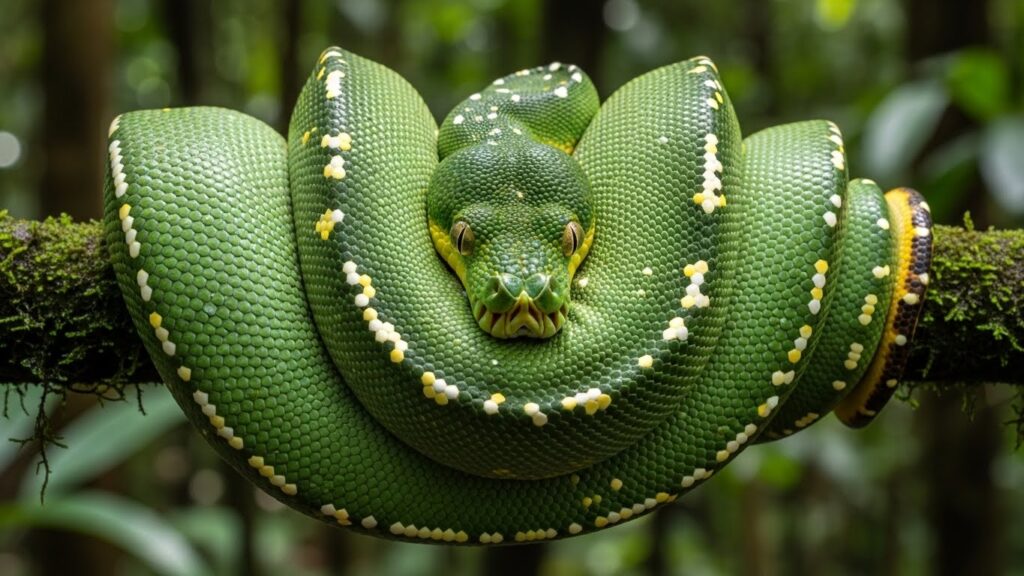
If the Rainbow Boa is a disco ball and the Blue Pit Viper is a neon ninja, the Green Tree Python is pure leafy elegance.
Found in New Guinea, Indonesia, and parts of Australia, this snake is famous for its vibrant green hue, which helps it vanish seamlessly into the tropical foliage. It’s basically a master of hide-and-seek.
Interestingly, these snakes don’t show off their signature green until they’re between 6 and 12 months old. Juveniles start life in those bright yellow, red, or red-brown tones, which are equally captivating but serve a different purpose—likely helping them hide from predators while they’re still small and vulnerable.
Coat colors of the Green Tree Python include:
Bright green – the classic adult shade, perfect for blending into the canopy.
Yellow – common in juveniles, making them look like tiny tropical bananas.
Red or red-brown – some juveniles sport these striking shades before they transition to green.
Mostly nocturnal, Green Tree Pythons spend their nights hunting for prey but remain perched like living vines during the day. They’re a spectacular example of form meeting function: beauty, camouflage, and agility all rolled into one.
In short, the Green Tree Python is a leafy superstar—vivid, elegant, and a true master of blending in.
5. Mangrove Snake
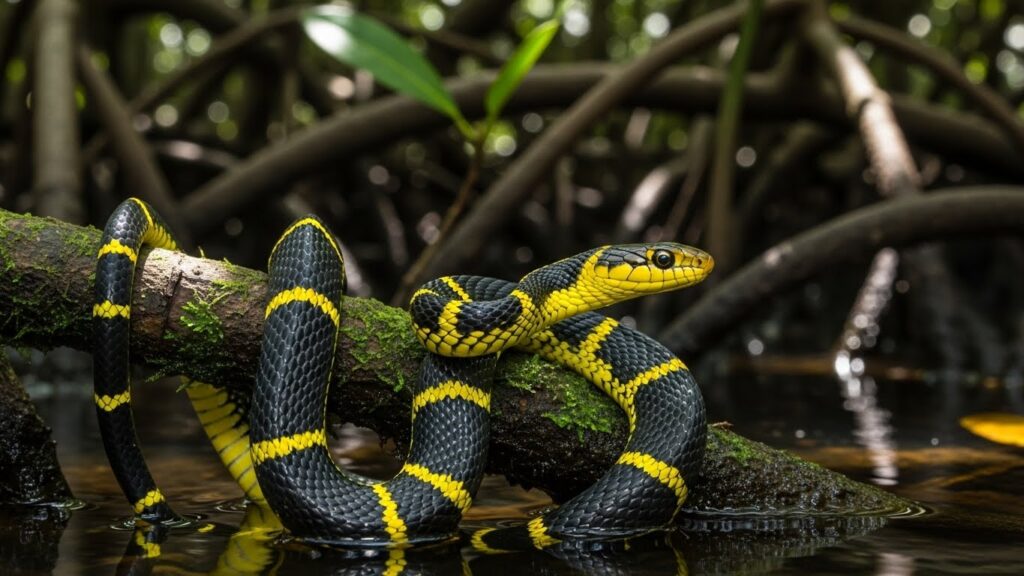
If snakes had a fashion runway, the Mangrove Snake would stroll down in sleek black with bold pops of yellow. The mangrove snake (Boiga dendrophila), also known as the golden tree snake or black-and-yellow mangrove snake, is a strikingly patterned, mildly venomous snake native to Southeast Asia.
Adults can grow 2–3 meters long and feed on birds, lizards, small mammals, and eggs. Although mildly venomous, its rear fangs make it rarely dangerous to humans, causing mainly localized pain or swelling if bitten.
This slender, elegant serpent is as striking as it is specialized, blending stealth with style in the mangrove forests it calls home. Coat colors of the Mangrove Snake include:
Black – the primary color, sleek and stealthy.
Yellow scales around the face – like a natural highlight, drawing attention to its sharp features.
Yellow bands along the body – striking accents that rarely connect over the back or under the belly, creating a bold contrast.
The Mangrove Snake isn’t just about looks—it comes equipped with denmotoxin, a venom specially designed to hunt birds, its main prey.
Imagine a natural hunter dressed to impress, built for precision, agility, and efficiency. Despite its bold appearance, it is generally non-aggressive and prefers to flee rather than fight.
In short, the Mangrove Snake is a sleek, stealthy fashion icon of the mangroves—dramatic black, flashy yellow, and deadly effective.
6. Panamanian Spotted Night Snake
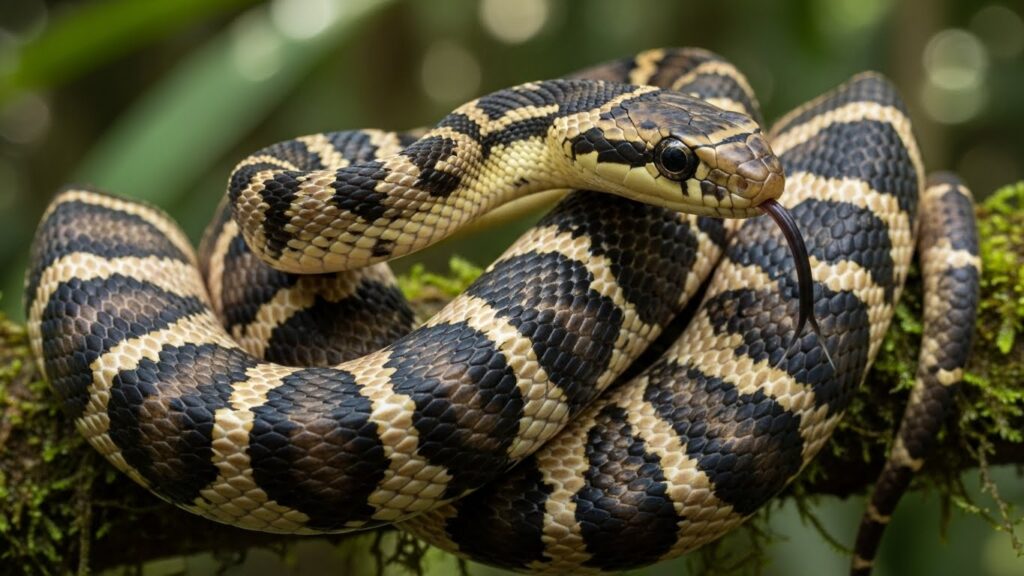
The Panamanian Spotted Night Snake, commonly known as the Checkerbelly Snake, is a rare species found in the rainforests of Amazonian South America as well as in Trinidad and Tobago.
The Panamanian Spotted Night Snake is like the starry sky wrapped in a sleek, slithery body. Mostly nocturnal, this snake prowls under the cover of darkness, making its subtle but beautiful markings all the more mysterious.
Coat colors of the Panamanian Spotted Night Snake include:
Dark brown or black base – a perfect canvas for its night-active lifestyle.
Cream or yellow spots – scattered across its body like tiny constellations.
Occasional lighter bands – some individuals have faint banding that adds extra flair.
These snakes are generally shy and elusive, preferring to hide under leaf litter or in crevices during the day. Their patterns not only make them visually striking but also provide excellent camouflage, helping them stay safe while hunting small prey at night.
In short: the Panamanian Spotted Night Snake is a subtle stunner—a quiet, nocturnal beauty with a coat sprinkled like the night sky.
7. Corn Snake
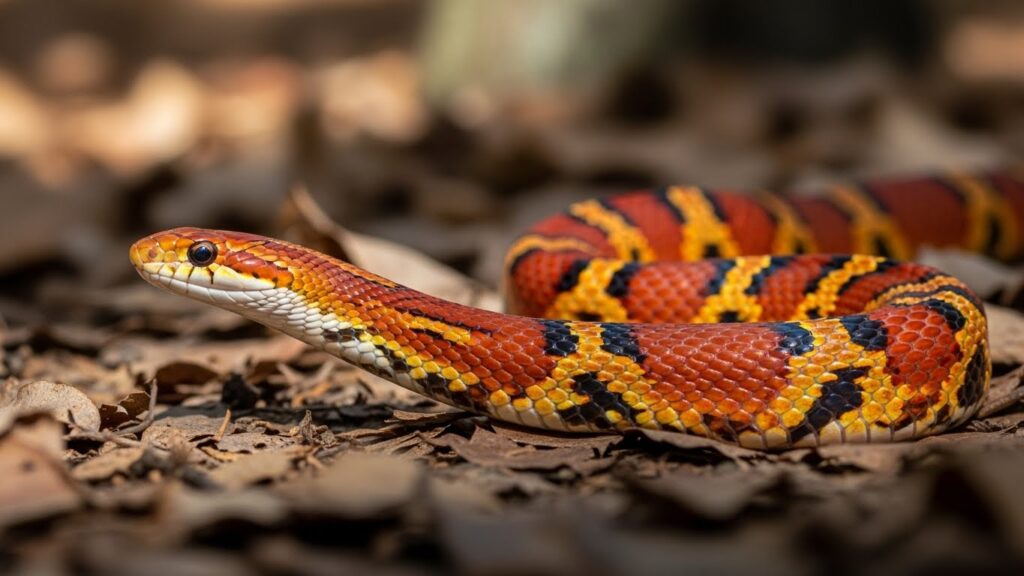
The Corn Snake (Pantherophis guttatus), sometimes called the Red Rat Snake, is a North American species of rat snake in the Colubridae family. Like other constrictors, it subdues its small prey by coiling around it and applying pressure.
The Corn Snake is basically the “friendly neighbor” of the snake world—non-venomous, approachable, and easy on the eyes.
Found in dry scrublands and forests across the U.S., these snakes are not only popular pets but also skilled hunters of rodents, often found near grain stores—hence the name. Coat colors of the Corn Snake include:
Orange or reddish-brown base – warm and eye-catching.
Black-bordered red or brown blotches – forming a classic checkerboard-like pattern along the back.
Creamy or white underside – adorned with a striking checkerboard pattern that’s iconic to the species.
Corn Snakes are constrictors, which means they wrap up their prey in a snug, careful embrace before dinner.
Temperament-wise, they’re relatively docile, making them perfect for beginner snake enthusiasts. Plus, their striking patterns and range of color morphs in captivity make them a true favorite in the pet trade.
In short, the Corn Snake is approachable, beautiful, and a natural-born hunter—like a cozy, patterned guardian of your backyard or terrarium.
Conclusion
Colorful snake species captivate reptile enthusiasts with their pretty colors, bright red, bright blue, pale yellow, blue-green stripes, and black stripes. From the San Francisco Garter Snake and Milk Snake in the central United States to Paradise Flying Snake, Paradise Tree Snake, Gold Ringed Cat Snake, Eastern Coral Snake, Blue Malayan Coral Snake, Sunbeam Snake, vine snakes, banded sea kraits, and reticulated pythons in southern Asia, central and South America, and the Lesser Sunda Islands.
These attractive snakes display striking snakes, intricate patterns, eyelash-like scales, striped morphs, and dark bands that completely encircle their small head and tree branches in the forest canopy or dense vegetation. Whether first glance reveals vibrant red, vibrantly colored patterns, or the most colorful snakes in nature, their beautiful sight continues to fascinate experienced reptile keepers and inspire appreciation for the different species of highly venomous and nonvenomous smaller animals alike.
