




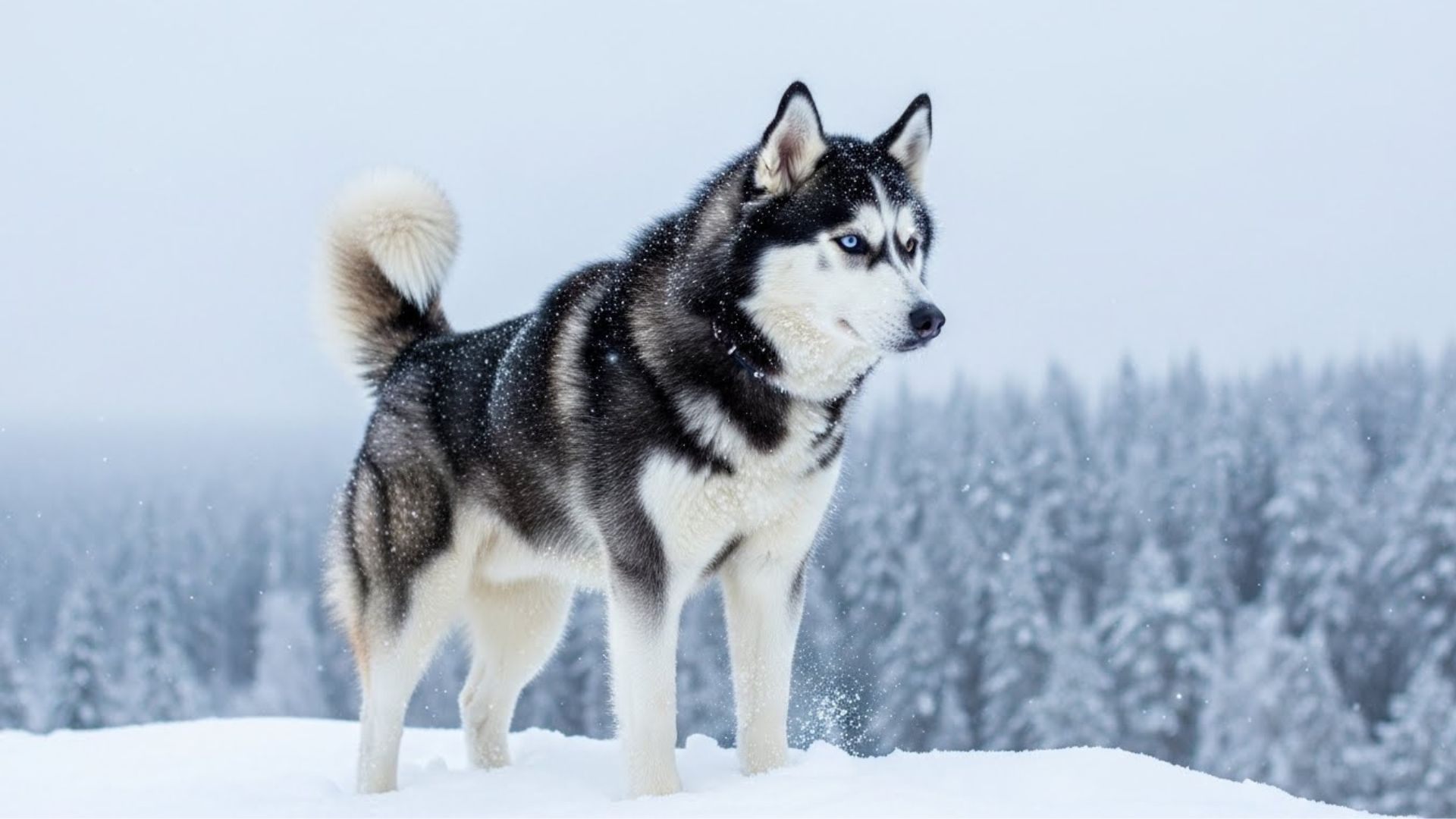
Winter may chill the air, but for some dogs, it sparks pure excitement. If you’re dreaming of snowy trails, frosty mornings, and cold-weather adventures with a canine companion, you’re in the right place.
Not all pups are built for icy conditions, and understanding the difference can help you choose the toughest dog that stays comfortable and confident outdoors. Cold-ready breeds often have unique traits that make winter their favorite season.
This guide explores what makes certain dogs natural partners for snowy activities. From coat structure to stamina, we’ll examine the qualities that enable them to thrive when temperatures drop.
As you read, you’ll discover how these traits translate into real-world winter fun. The right dog can turn a simple walk in the snow into a memorable experience.
Whether you’re planning mountain hikes or backyard snow play, this introduction sets the stage for finding a pup who loves the cold as much as you do.
Ideal Dog Breeds for Frosty Outdoor Activities
1. Siberian Husky
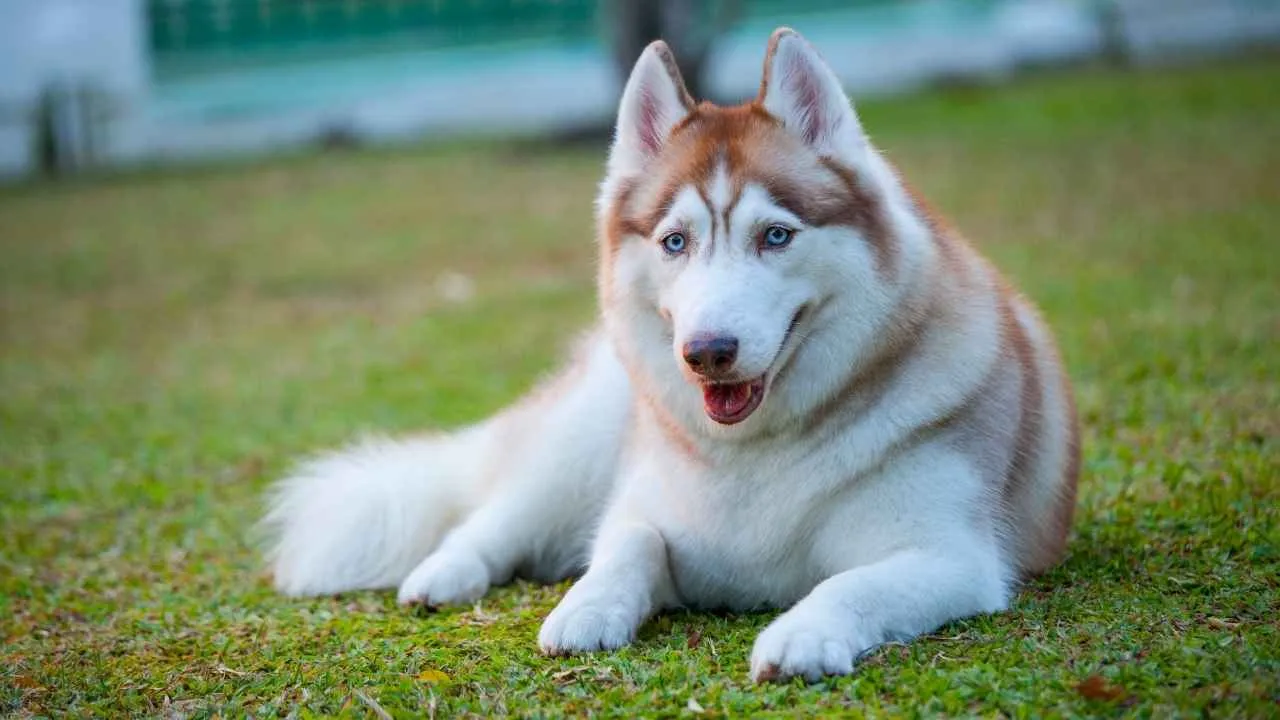
The Siberian Husky carries a long Arctic heritage shaped by the Chukchi people, who relied on these dogs for endurance travel across frozen landscapes.
Their background blends stamina with companionship, creating strong bonds with the families they served. This deep-rooted history still shows in how naturally they navigate winter terrain.
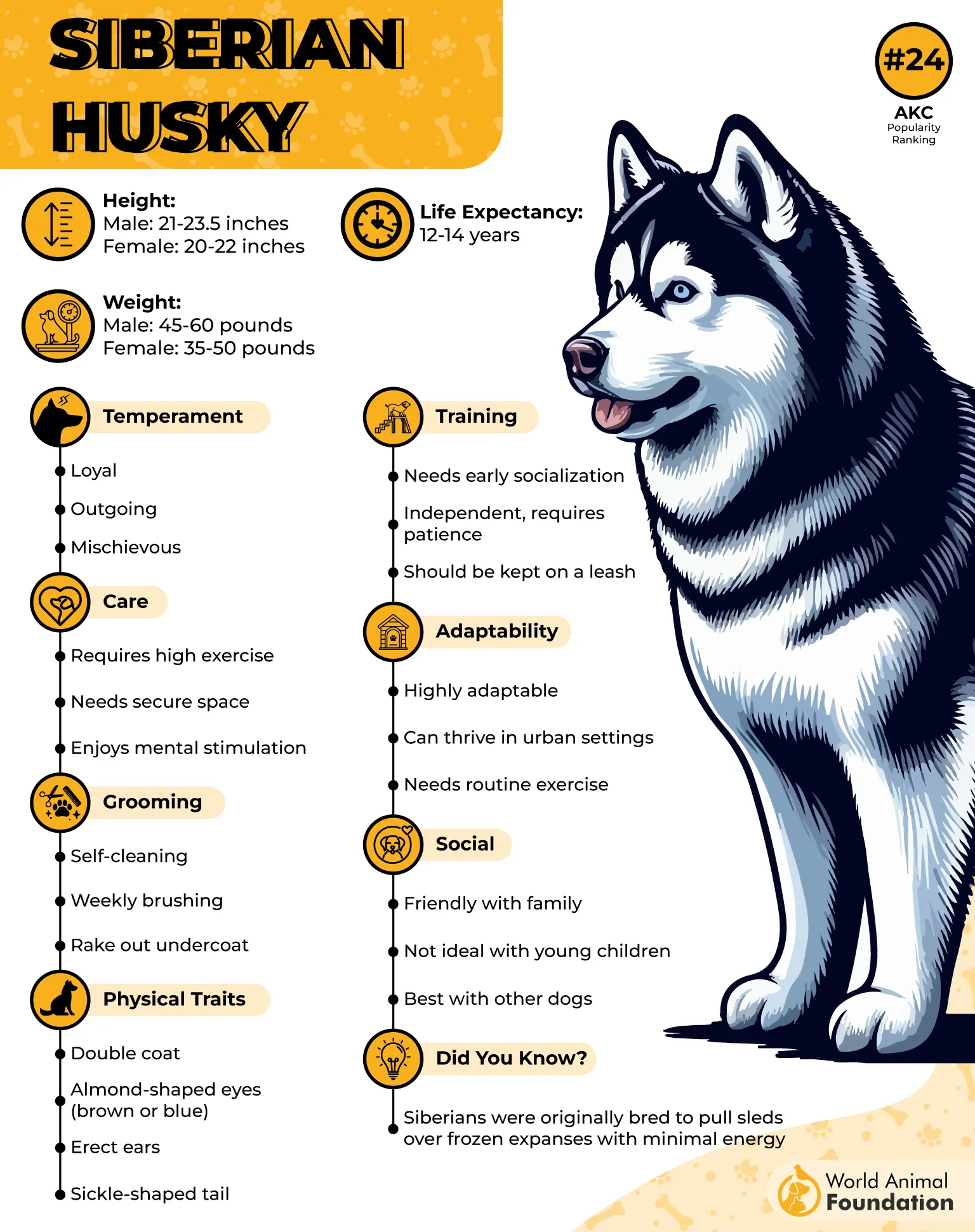
Thick double coats help them handle sub-zero temperatures with ease, and their fur’s insulating layers maintain warmth even during long treks. Their paws are naturally designed for icy grip, offering impressive traction on hard-packed snow.
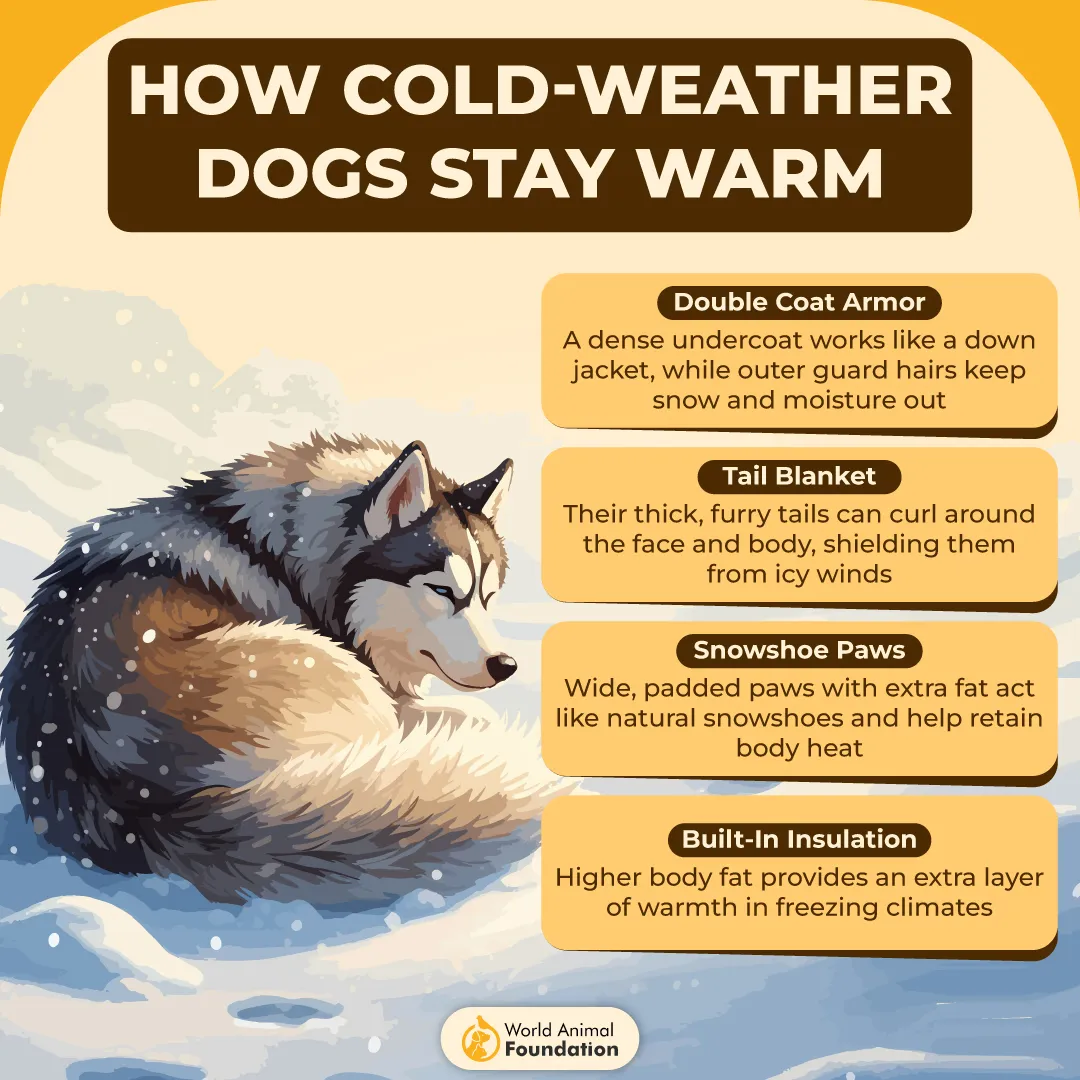
These features work together to make them one of the world’s most efficient cold-climate dogs.
Energy Level & Exercise Needs
• Requires vigorous daily activity
• Benefits from winter sports like skijoring or sled pulling
• Thrives with mentally stimulating tasks
Safety Considerations in Extreme Cold
• Monitor for ice buildup around paws
• Maintain coat health to preserve insulation
• Provide hydration, even on cold days
Their natural strengths shine during long-distance winter adventures, where they can maintain a steady pace for miles. Snowy hiking trails, frozen lakeshores, and open fields feel almost effortless to them. Their endurance and confidence make them ideal partners for winter-ready explorers.
AKC claims that a Husky’s personality leans playful, social, and expressive, creating a lively home environment. They connect well with active individuals who appreciate communication and routine. A great match is someone who wants a dog that embraces frosty outdoor activities with enthusiasm.
2. Alaskan Malamute
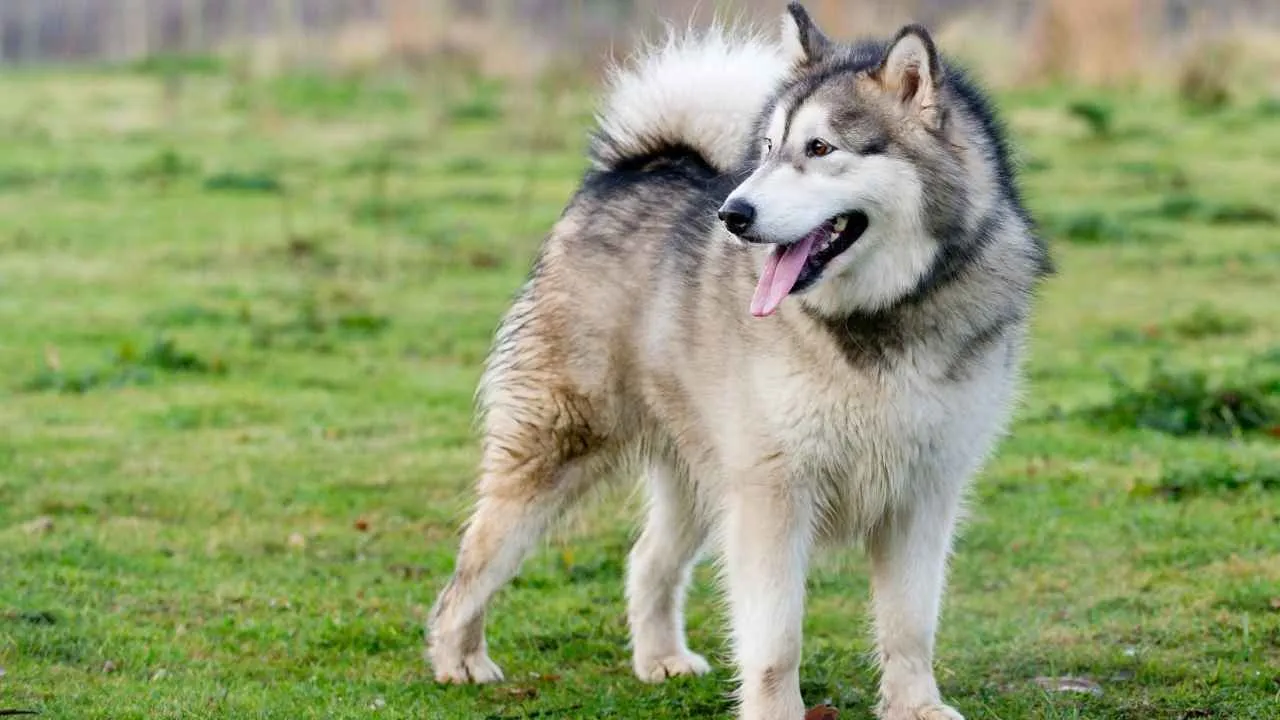
The Alaskan Malamute developed alongside the native Inupiat communities, serving as a powerful freight dog long before modern equipment existed. Their heritage centers on teamwork, resilience, and survival in harsh climates. This background gives them a steady confidence that winter lovers admire.
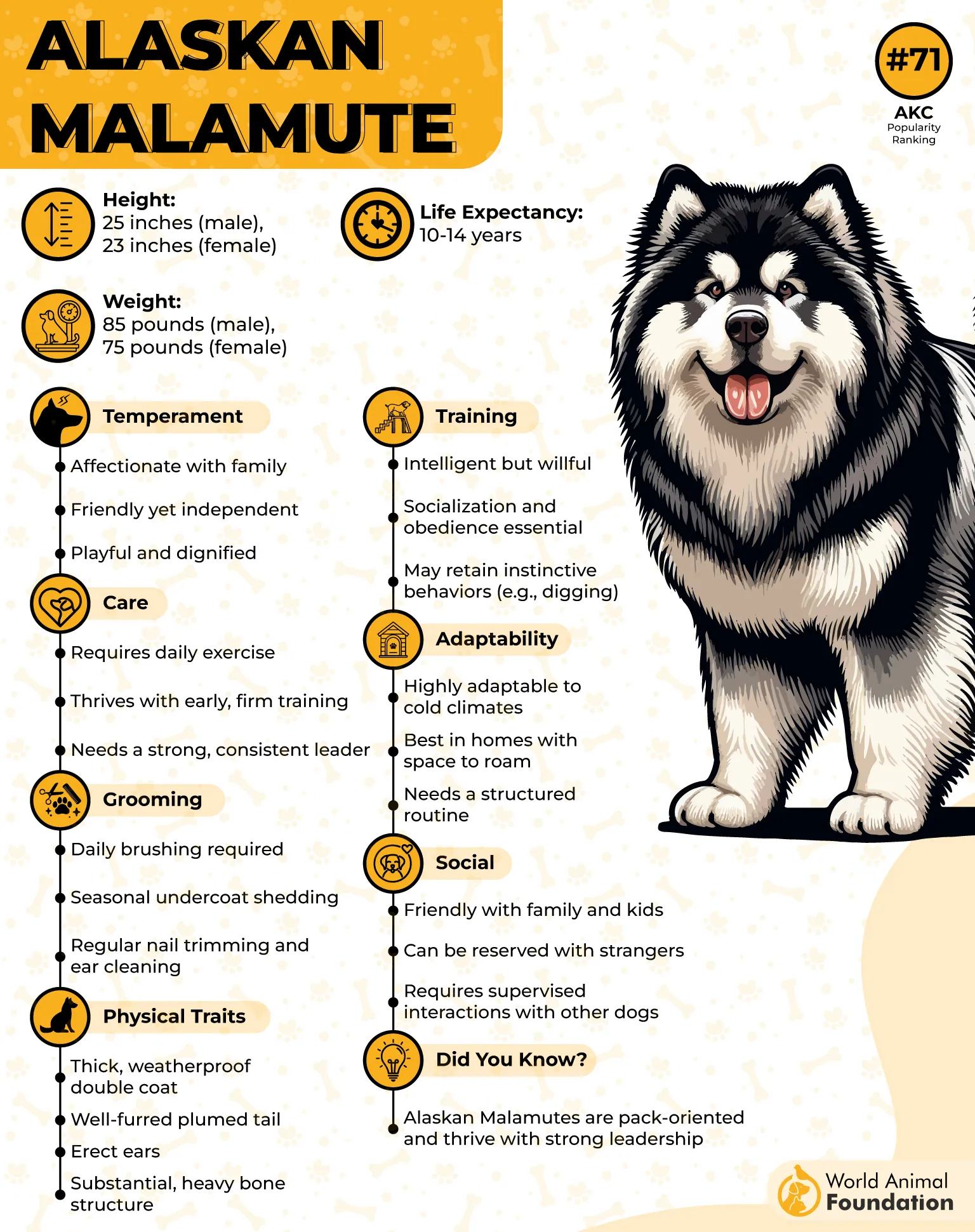
PetMD explains that their thick coats, heavy frames, and broad chests allow them to work through deep snow that challenges most other dogs. Their paws spread naturally under pressure, creating a “snowshoe” effect for better flotation. Combined with a dense undercoat, their structure supports both strength and warmth.
Energy Level & Exercise Needs
• Enjoys strength-based winter workouts
• Needs consistent, structured activity
• Ideal for pulling sports or rugged hikes
Safety Considerations in Extreme Cold
• Guard against overheating during heavy exertion
• Maintain hydration on long outings
• Regularly check paws for compacted snow
In frosty conditions, their power becomes most noticeable as they move calmly through difficult terrain. They excel in pulling gear, breaking trail, or accompanying owners on slow, steady winter treks. Their skill lies in reliable endurance more than speed.
A Malamute tends to be affectionate, grounded, and loyal to a close-knit family group. They appreciate households that value routine, time together, and outdoor adventures. They fit best with owners who enjoy winter landscapes and want a strong, dependable partner at their side.
3. Samoyed
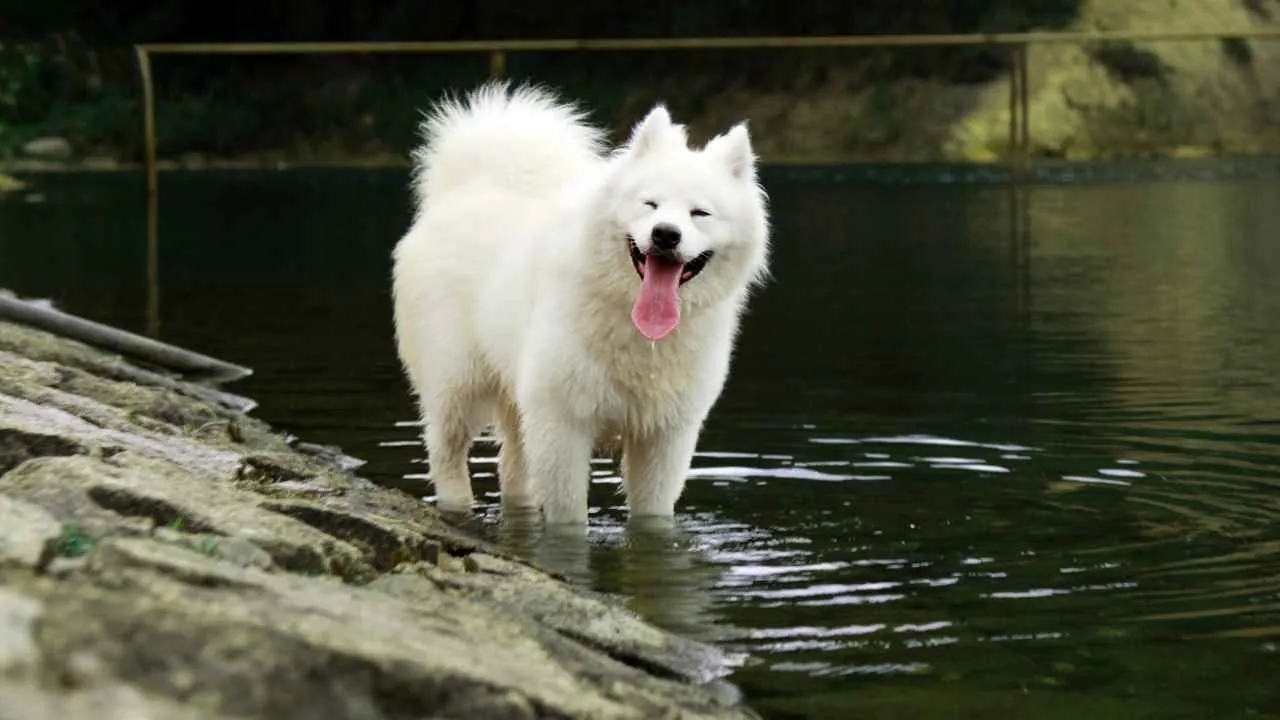
The Samoyed traces its roots to the Samoyedic peoples of Siberia, who raised these dogs as herders, sled pullers, and family guardians, according to Britannica. Life in the Arctic shaped them into versatile winter companions with warm personalities. Their history speaks to partnership, not just work.
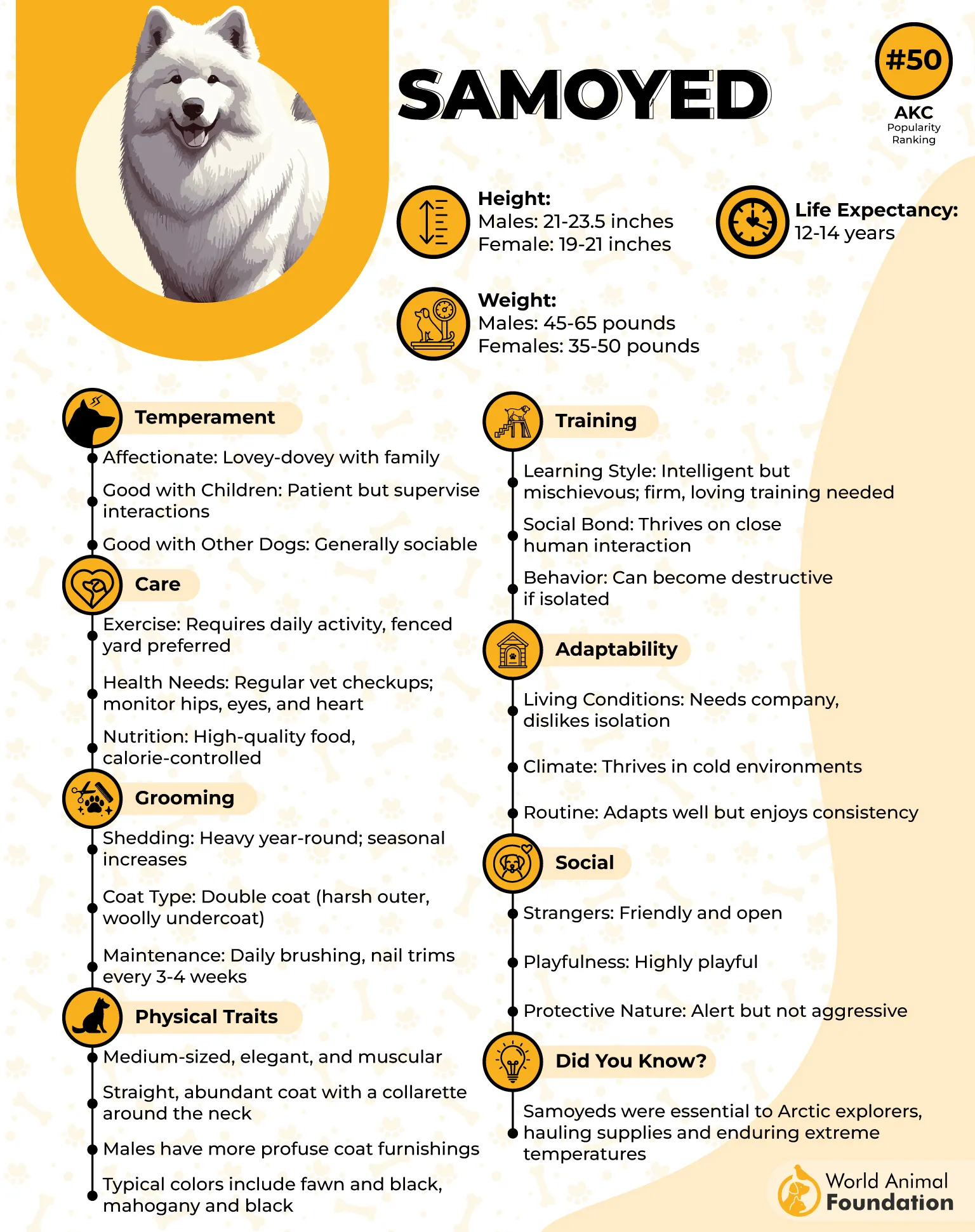
Their signature white coat does more than look beautiful—it insulates, repels frost, and keeps body temperature steady. Their fur grows in layers that trap heat, creating a natural barrier from icy winds. Even their curled tails play a part, providing warmth during rest.
Energy Level & Exercise Needs
• Enjoys daily structured play
• Responds well to winter herding-style activities
• Appreciates outings that mix movement and bonding
Safety Considerations in Extreme Cold
• Grooming is essential for airflow and insulation
• Prevent matting after snow exposure
• Observe for ice clinging to feathers around legs
Sammies move lightly across snow, offering agility instead of brute force. They excel in swift winter hiking, recreational sledding, or energetic snow games. Their natural cheerfulness brings a fun energy to even the coldest days.
Their temperament is famously gentle, social, and people-oriented. They flourish in families that enjoy companionship as much as outdoor fun. The best fit is someone who wants a winter-ready dog with a joyful personality and warm spirit.
4. Saint Bernard
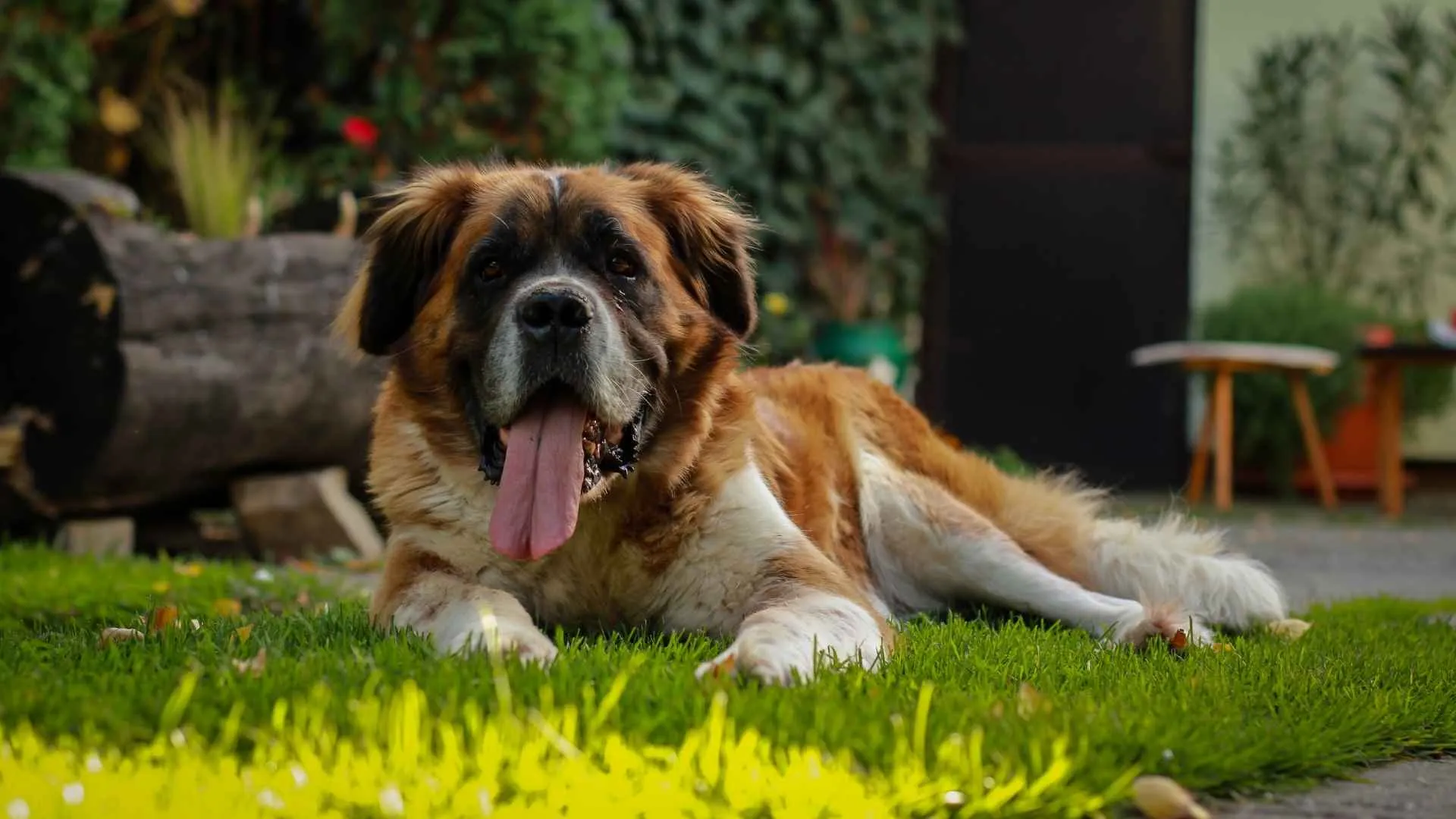
The Saint Bernard’s story begins in the Swiss Alps, where they served monks at the Great St. Bernard Pass. Known for rescue work in treacherous conditions, they navigated mountain snowfields with instinctive awareness. Their history reflects responsibility and calm determination.
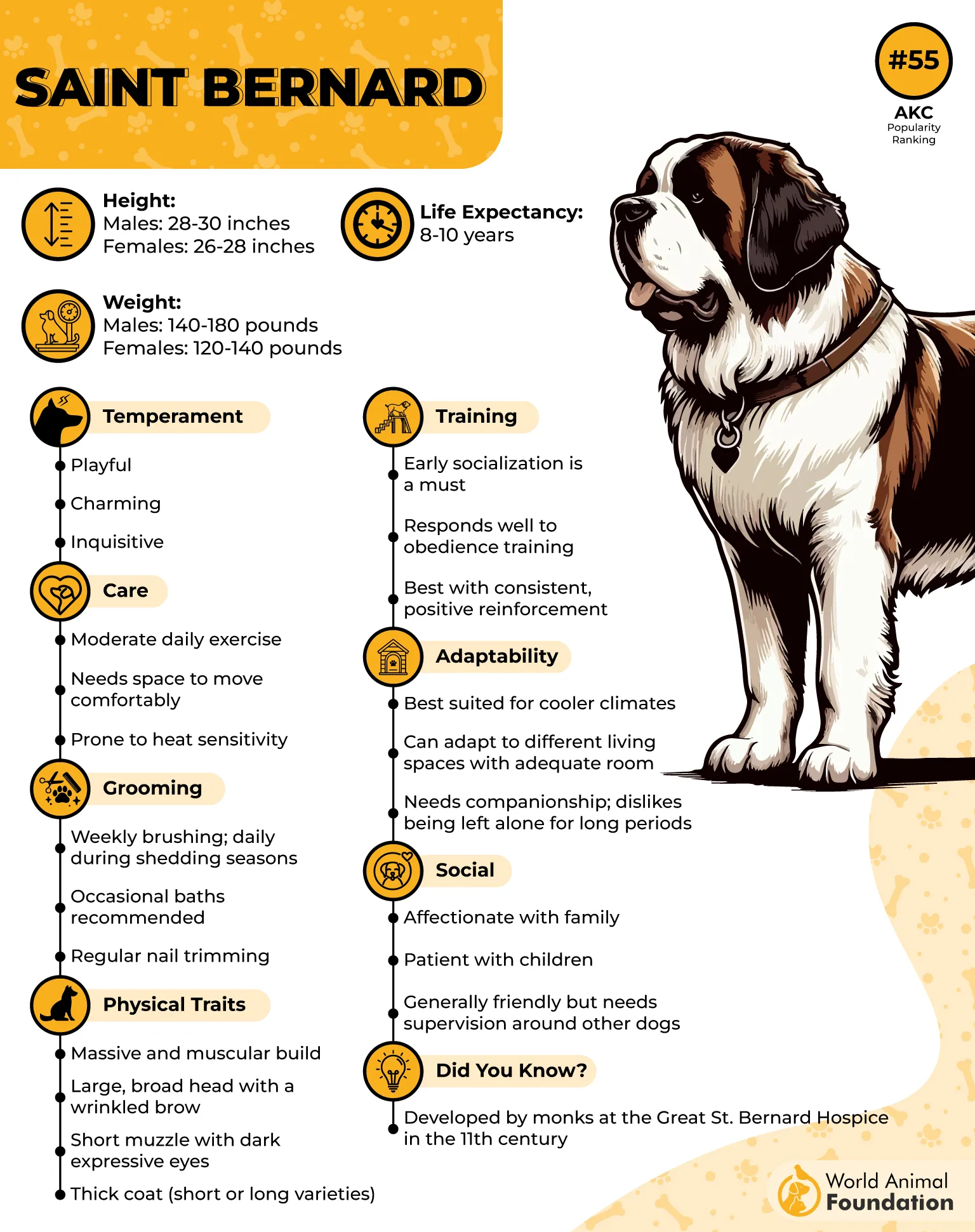
Their heavy build and thick coat help them withstand cold temperatures during extended time outdoors. Their large paws support stability on icy surfaces, reducing slips in steep or uneven terrain. Dry-mouth versions of the breed manage winter moisture comfortably.
Energy Level & Exercise Needs
• Prefers steady, moderate activity
• Enjoys cold-weather strolls and mountain paths
• Responds well to purposeful winter tasks
Safety Considerations in Extreme Cold
• Monitor joints during longer outings
• Avoid heavy workloads in deep snow
• Regular coat care to maintain warmth
This breed excels in slow, controlled movement across snowy terrain, making them ideal for winter trekkers who appreciate a measured pace. Their instincts help them read challenging landscapes intuitively. They bring strength and calmness to frosty adventures.
Saint Bernards are gentle, family-centered, and emotionally intuitive. Their patient nature suits households that enjoy quiet winter activities and time together. Best matched with someone wanting a winter-loving dog who brings a sense of security and companionship.
5. Bernese Mountain Dog
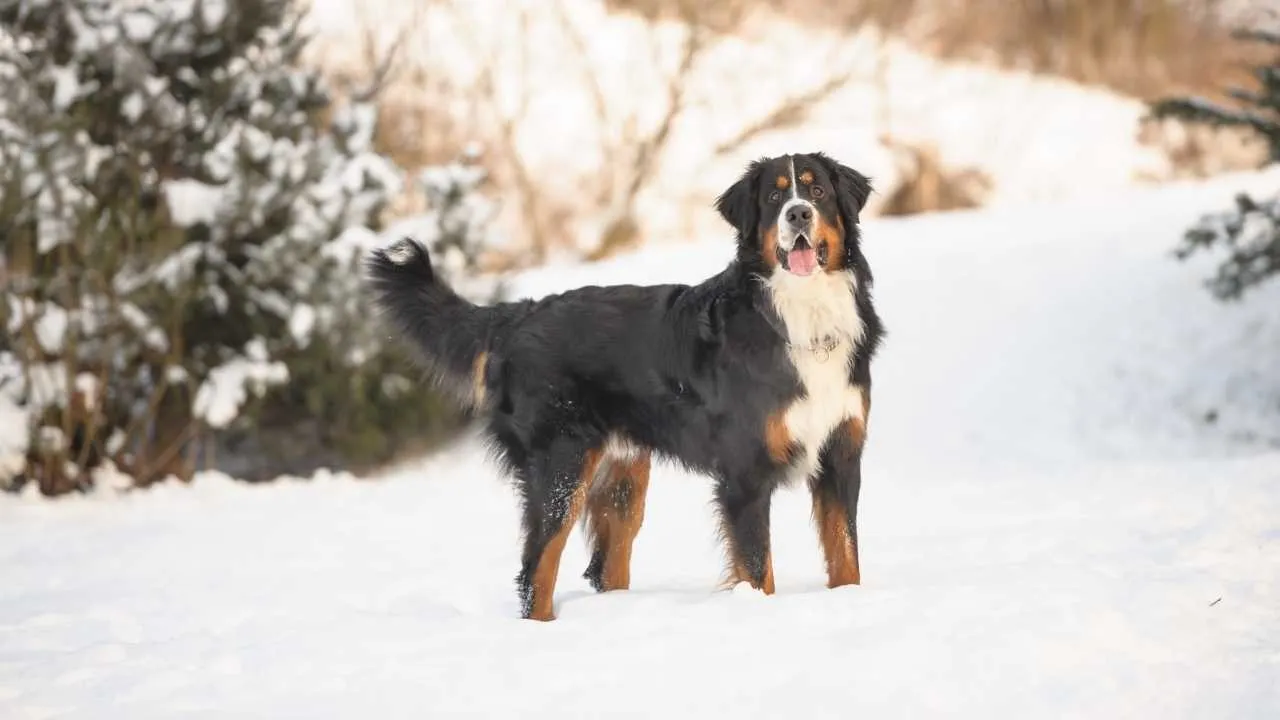
Bernese Mountain Dogs originated in the Swiss Alps, where they assisted farmers with cattle work and cart pulling. Their background blends labor, loyalty, and high-altitude living. This mountain heritage prepared them well for chilly outdoor routines.
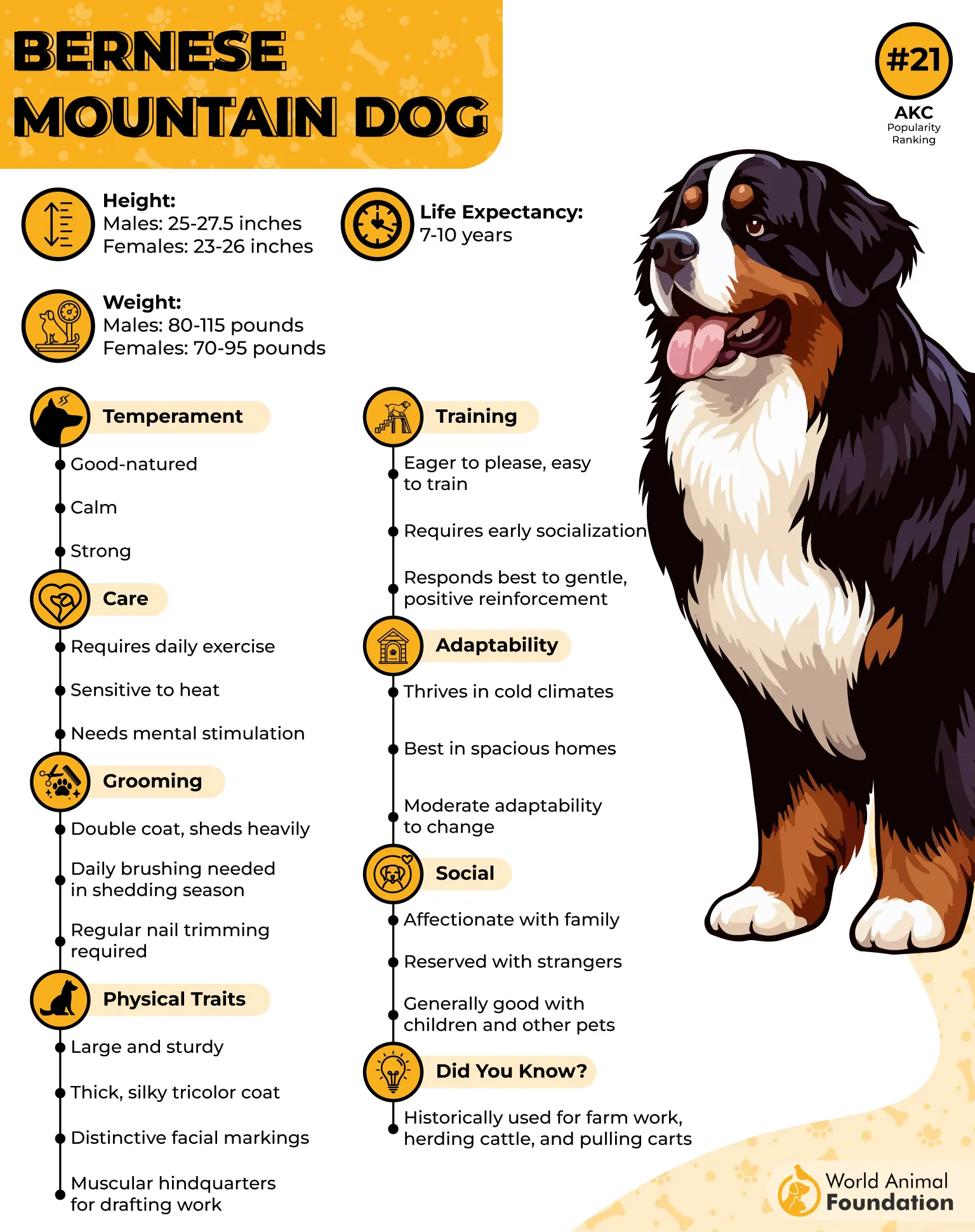
Their tri-colored coats are not just striking—they offer substantial protection against cold mountain air. Their sturdy frame and strong limbs provide balance on snowy paths and forest trails. These natural adaptations make them reliable winter hiking partners.
Energy Level & Exercise Needs
• Enjoys moderate daily exercise
• Excels in winter cart-pulling or agility-style activities
• Benefits from outdoor family adventures
Safety Considerations in Extreme Cold
• Observe for fatigue during long sessions
• Keep paws free of ice buildup
• Maintain coat cleanliness for proper insulation
Their outdoor strengths show best in mountainous winter environments, where they move confidently over rolling snowy terrain. They handle chilled weather with ease and maintain a steady pace. Their reliability makes them wonderful companions for relaxed winter explorations.
Berners are affectionate, calm, and deeply connected to their families. They blend beautifully into households that enjoy scenic winter outings and quiet evenings. An ideal match is someone seeking a gentle, snow-ready companion that thrives on togetherness.
6. Newfoundland
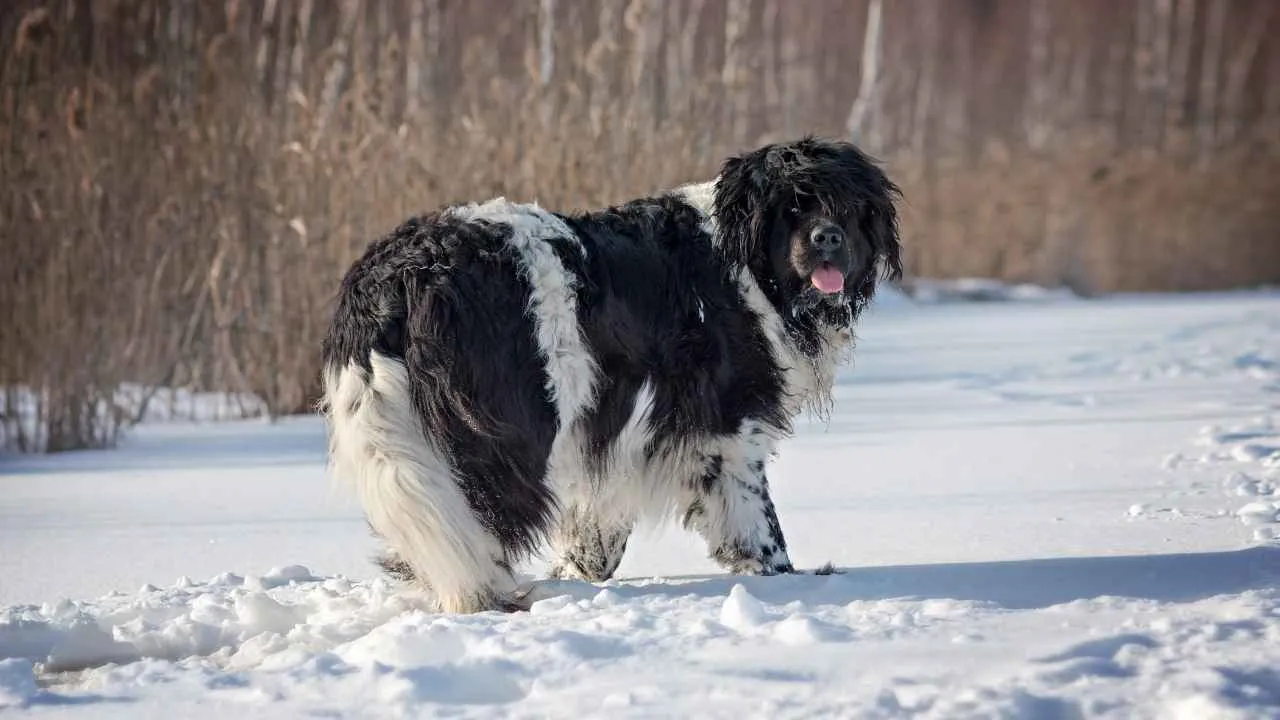
The Newfoundland’s origins on the rugged coasts of Canada shaped them into strong, dependable workers able to handle icy winds and frigid waters. Fishermen relied on them for hauling nets, guarding supplies, and lifesaving tasks in harsh northern climates. This heritage built a dog known for cold-weather reliability and calm purpose.
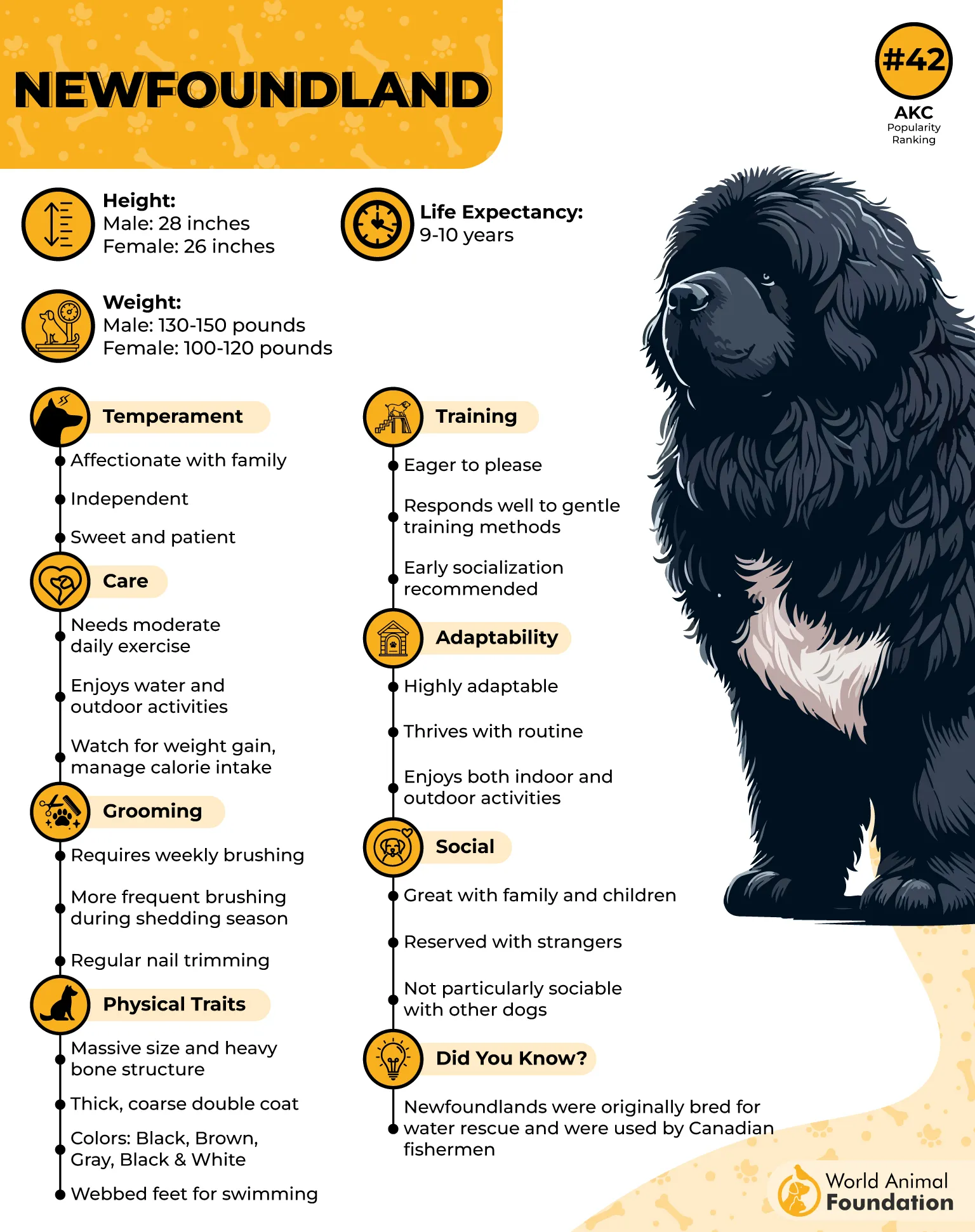
Their thick, water-resistant double coat acts as a natural shield against winter storms. Webbed feet provide traction and stability on snow as well as frozen shorelines. Their powerful build conserves heat, supporting long hours outdoors.
Energy Level & Exercise Needs
• Enjoys moderate, steady activities
• Benefits from winter hikes with gentle inclines
• Responds well to purposeful outdoor tasks

Safety Considerations in Extreme Cold
• Watch for snow accumulation between toes
• Maintain coat to preserve insulation
• Avoid overexertion during icy conditions
Newfoundlands show remarkable strength during frosty activities, especially when carrying gear or navigating snowy forest trails. Their endurance makes them wonderful partners for slow-paced, scenic winter adventures. They bring confidence and steadiness to every outing.
Their friendly, patient temperament creates a comforting presence in family homes. They bond deeply with both children and adults, valuing companionship as much as outdoor fun. Ideal matches include households that appreciate a gentle, cold-ready dog who thrives on meaningful outdoor time.
7. Tibetan Mastiff
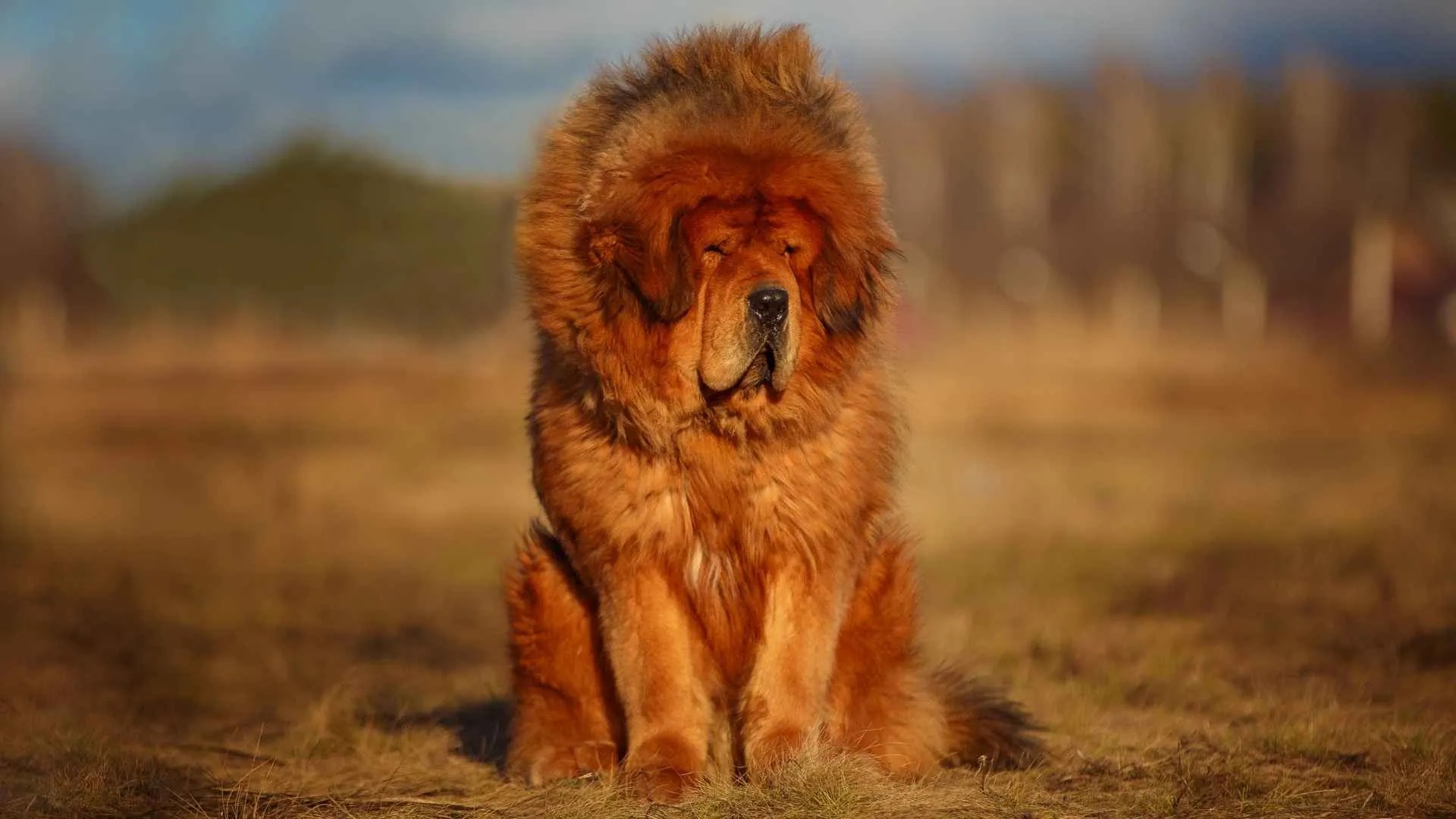
The Tibetan Mastiff’s heritage traces back to the Himalayan plateau, where villages and monasteries depended on them for protection. Cold mountain nights, thin air, and demanding terrain shaped the breed into a hardy guardian with natural weather resilience.
This background gives them a quiet strength that stands out during winter.
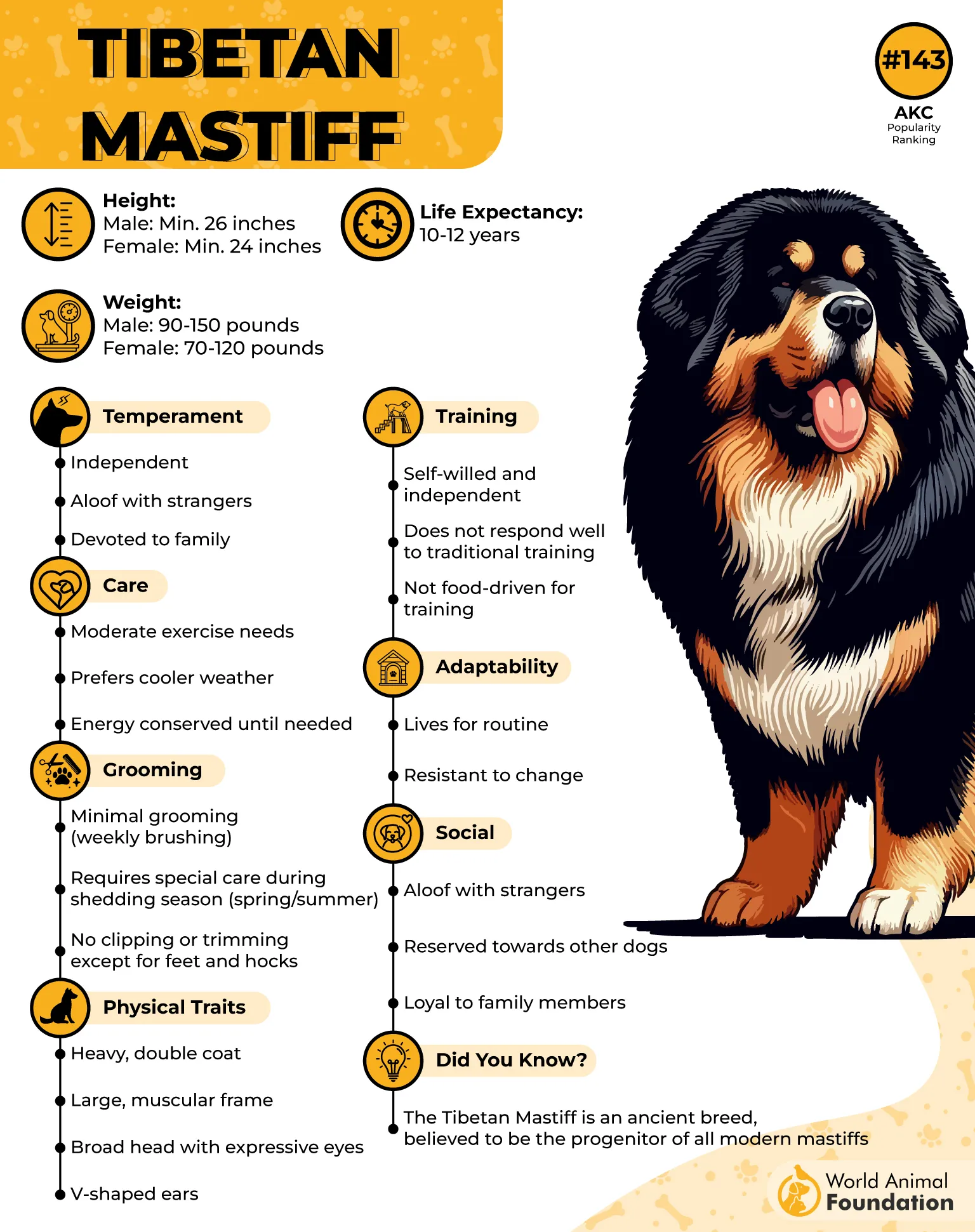
Their thick, woolly coat insulates against bitter temperatures and shields them from strong winds. Broad frames and powerful muscle structure help conserve heat and ensure stability on uneven snowy ground. Their dense mane offers additional warmth, especially at high elevations.
Energy Level & Exercise Needs
• Prefers balanced, moderate movement
• Enjoys winter walks and secure, open spaces
• Benefits from mentally engaging tasks
Safety Considerations in Extreme Cold
• Keep ears checked for frost exposure
• Maintain coat cleanliness for proper insulation
• Provide rest breaks during longer outings
Their outdoor strengths appear most clearly in quiet, snow-covered landscapes where they move with deliberate confidence. They handle cold conditions naturally, making them suitable companions for peaceful winter treks. Their presence brings both warmth and security to frosty environments.
Tibetan Mastiffs tend to be independent, observant, and loyal once trust is formed. They work well with owners who appreciate a thoughtful, calm winter companion. Their best match is an experienced handler who enjoys cold-weather scenery and values a respectful bond.
8. Akita
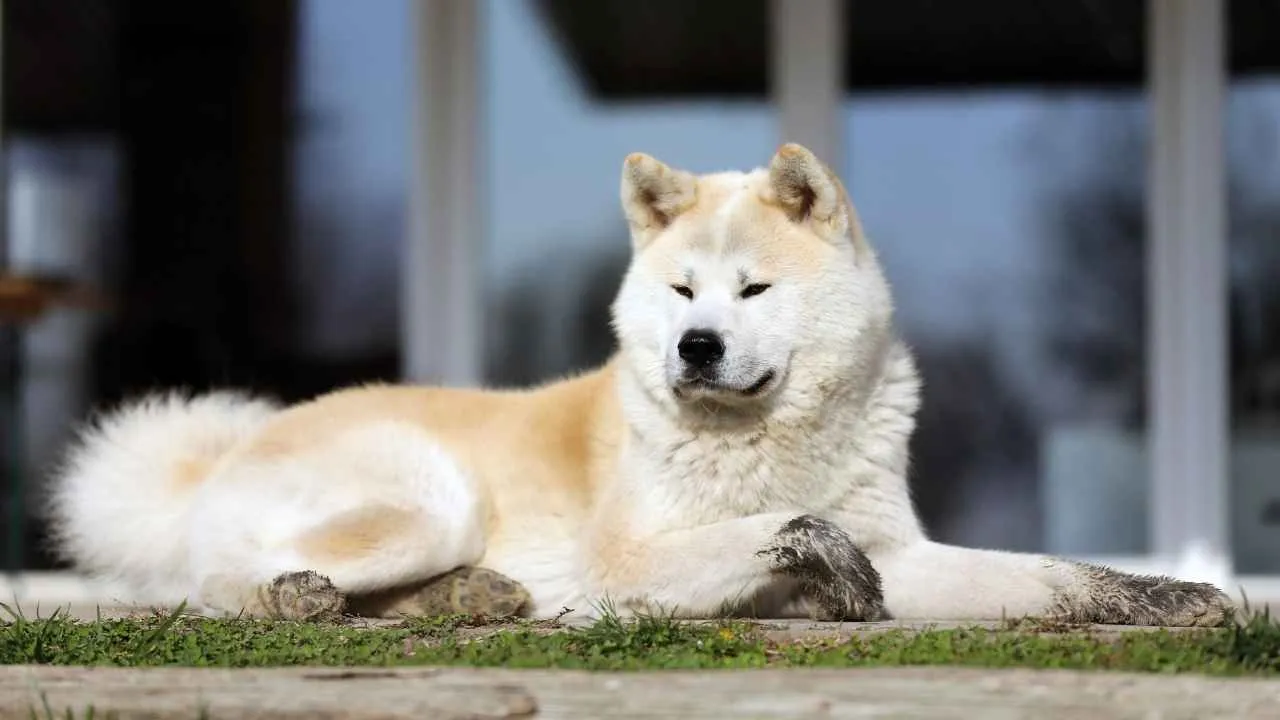
The Akita comes from northern Japan, where mountainous regions demanded a dog capable of braving heavy snow and icy winds. Hunters and villagers relied on them for guarding, tracking, and navigating rugged winter terrain. This heritage built a breed marked by strength, alertness, and resilience.
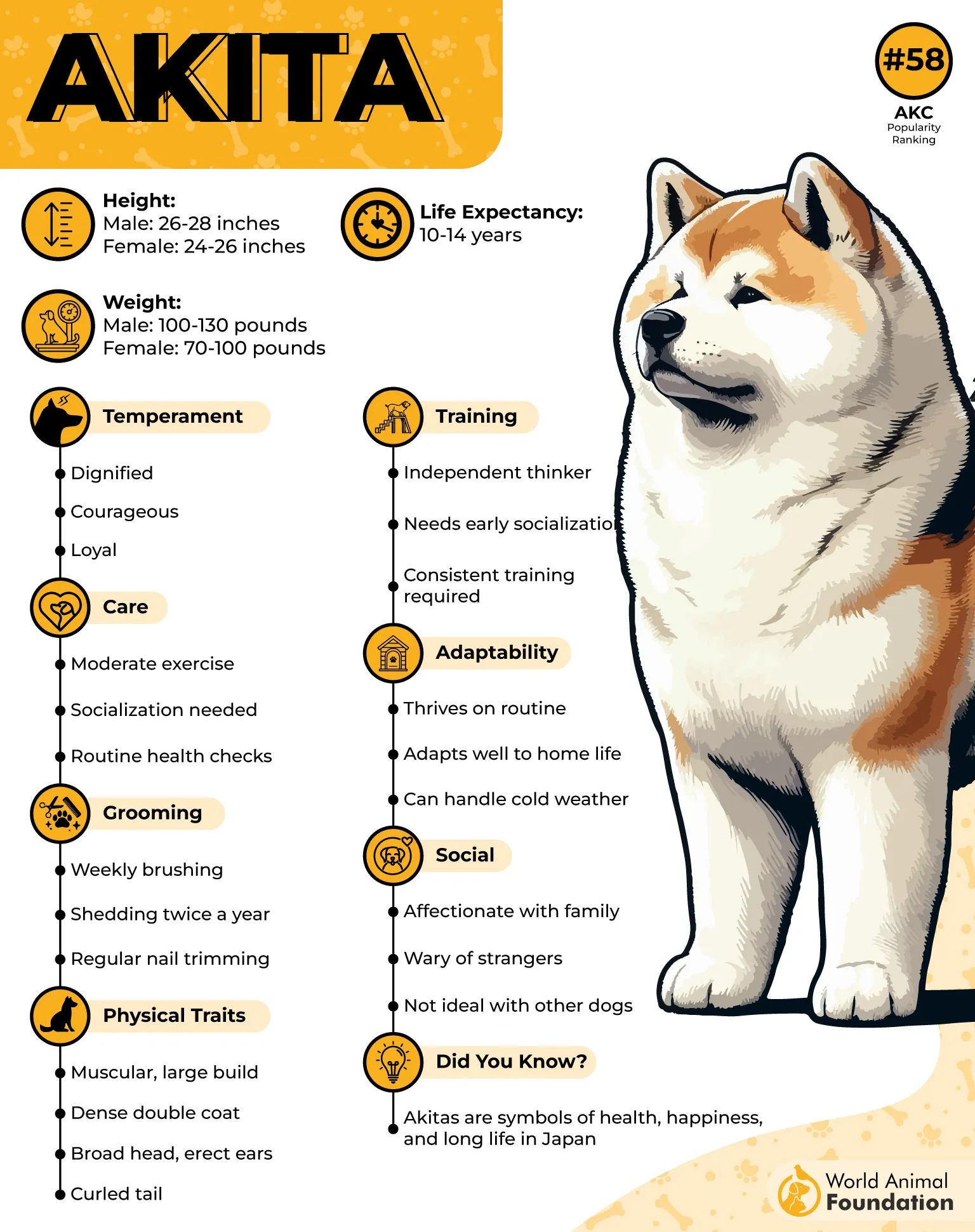
Their dense double coat keeps them warm in freezing temperatures, and their muscular frame supports steady movement through snow. Their paws grip icy surfaces with accuracy, helping them maintain balance during active winter outings.
These natural adaptations make them reliable partners in frosty conditions.
Energy Level & Exercise Needs
• Appreciates structured daily activity
• Enjoys winter hikes and focused outdoor tasks
• Benefits from consistent training sessions
Safety Considerations in Extreme Cold
• Check paws for hardened ice
• Maintain coat brushing for insulation
• Avoid long exposure during heavy wind chill
Akitas shine during winter activities that mix purpose and exploration, such as tracking-style games or controlled hiking routes. Their confidence allows them to navigate new snow without hesitation. They bring a grounded, capable energy to cold-weather adventures.
Their temperament is loyal, discerning, and deeply devoted to their chosen family. They thrive in homes with clear communication and routine. The ideal match is someone who enjoys structured winter outings and appreciates a thoughtful, snow-ready companion.
9. Norwegian Elkhound
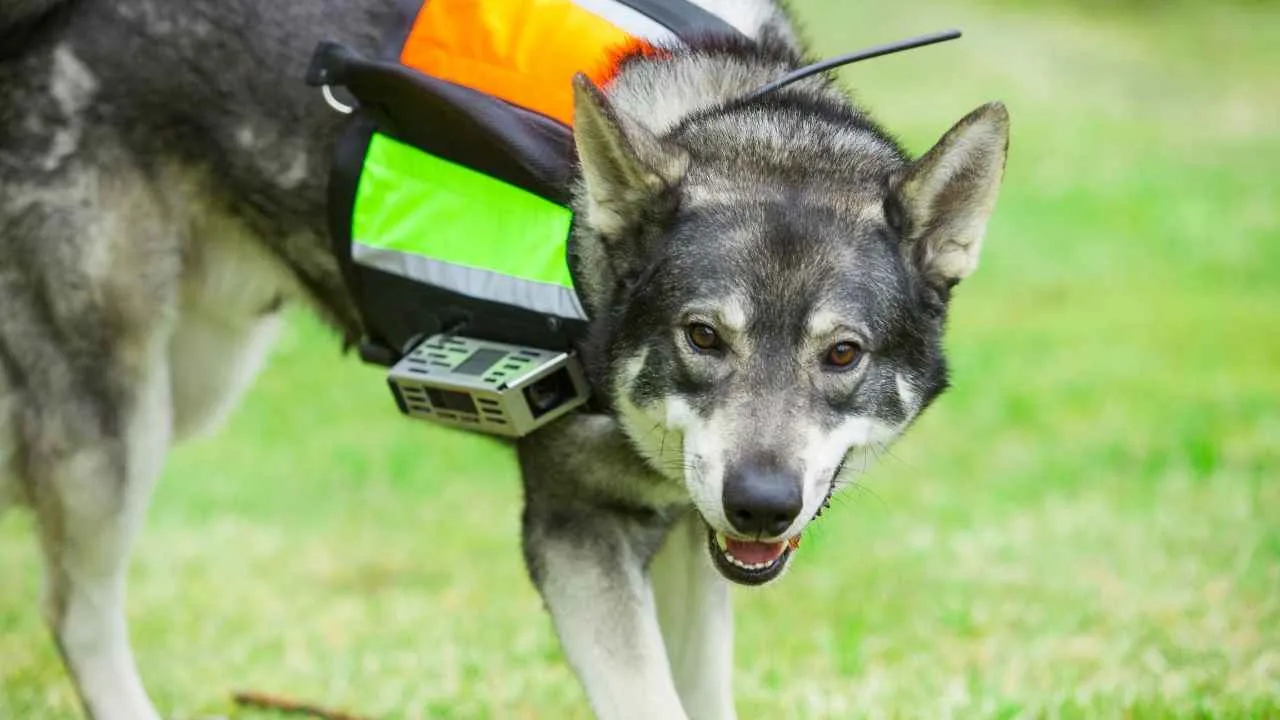
The Norwegian Elkhound carries centuries of Scandinavian history, working as a hunter and guardian in regions known for long, cold winters. Their role required stamina, independence, and quick decision-making in harsh, snowy terrain. This heritage created a dog well-adapted to frosty outdoor exploration.
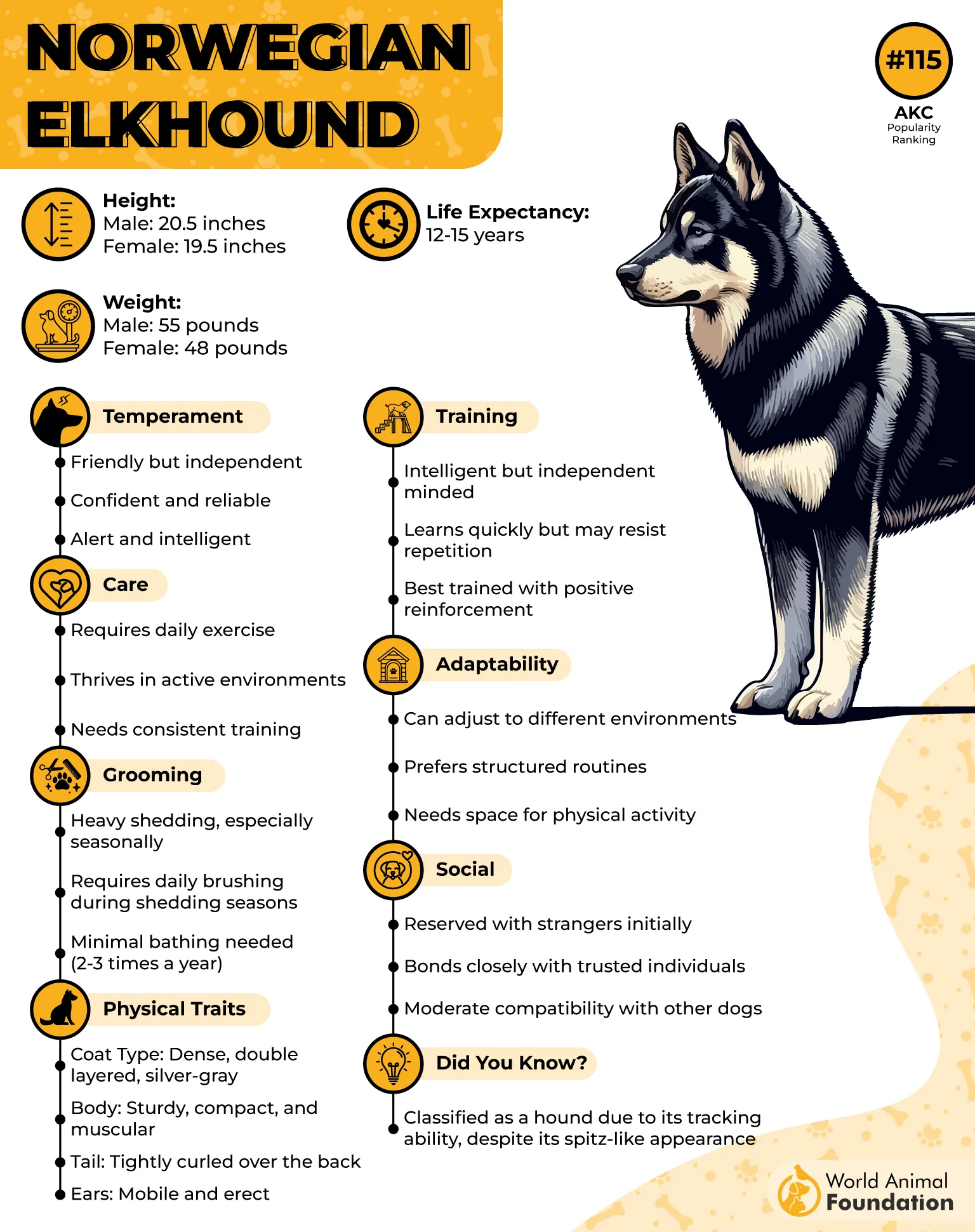
Their thick, weather-resistant coat keeps them insulated during extended time in snow, while their agile build helps them move swiftly across frozen landscapes. Their narrow, strong paws support nimble footing on slippery ground. These traits help them thrive during energetic winter outings.
Energy Level & Exercise Needs
• Highly active and enjoys daily movement
• Great fit for snowy hikes and fast-paced play
• Responds well to mentally challenging winter tasks
Safety Considerations in Extreme Cold
• Monitor for snowballing around legs
• Maintain coat brushing for airflow and warmth
• Offer water breaks during extended play
The Elkhound excels in quick, agile winter activities, making them fun partners for active adventurers. They handle cold climates with ease and display impressive stamina on snowy trails. Their enthusiasm makes every frosty outing lively.
Their temperament is spirited, intelligent, and affectionate with a confident edge. They connect nicely with families who enjoy movement and outdoor time. The best match is someone ready for a winter-loving dog that brings energy and curiosity to every snowy path.
Conclusion
Cold-weather dogs continue to support humans in frigid temps, and even breeds not covered above—such as Chow Chows, Great Pyrenees, and German Spitz types—offer their own surprise strengths in snowy conditions.
Many were originally bred for pulling sleds, herding reindeer, or hauling heavy loads, equipped with thick fur, a heavy coat, or an immense double coat that keeps them well-suited for low temperatures.
From gentle giants to active farm dogs and ancient breed working dogs, these cold-weather dog breeds remain perfect companions for winter-loving families. Ready to find your ideal furry friend? Explore the best dog breeds for your cold-season adventures today.
