




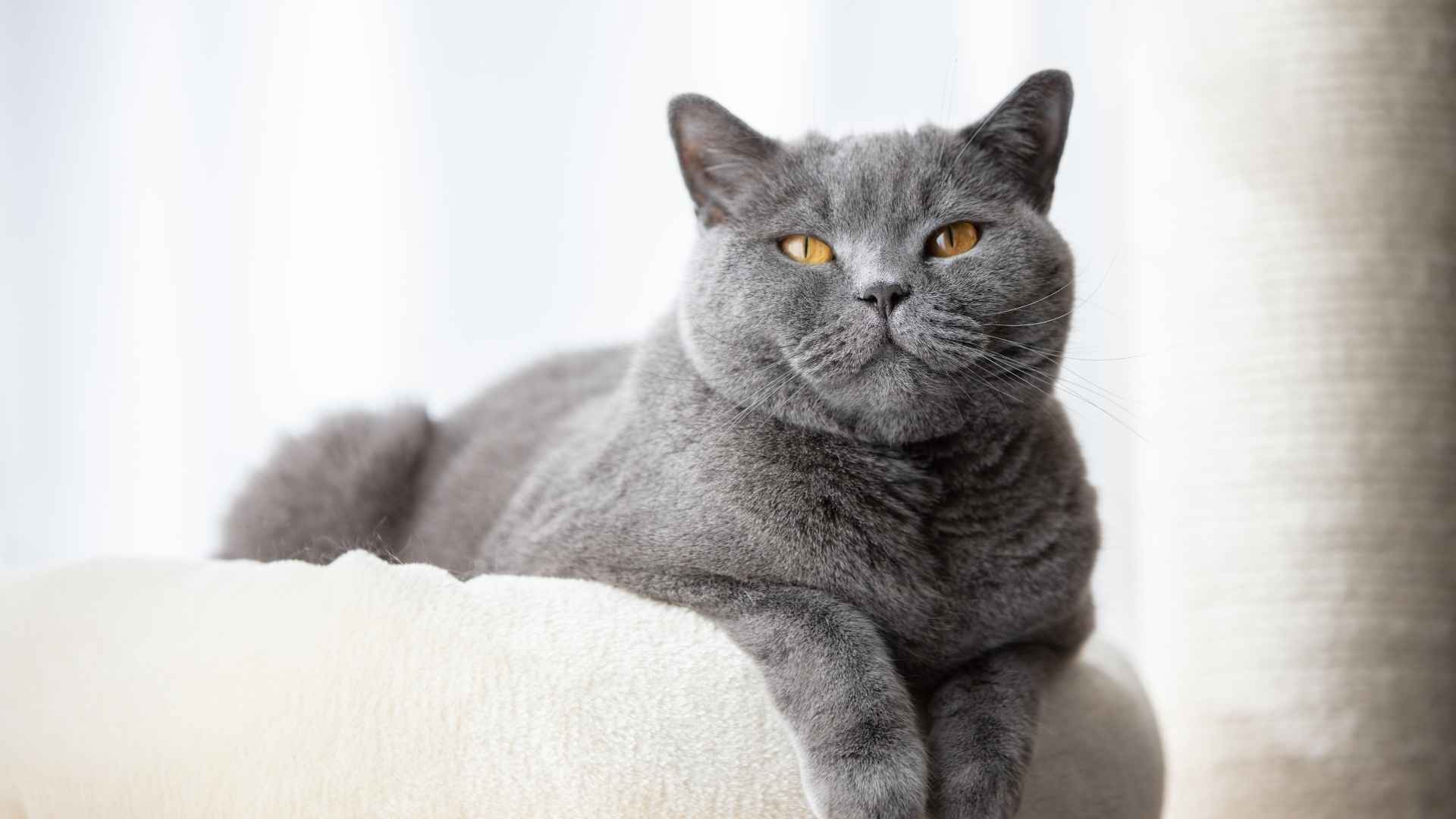
Have you ever found yourself drawn to a grey cat’s beautiful, soft fur? There’s something incredibly elegant about them. Maybe it’s how their plush coats shimmer under the light or the mysterious air they carry.
If you’re a cat lover or just fascinated by the feline world, let’s dive into the different types of grey cats and what makes each one special.
Grey cats are unique in the cat breed world, with various personalities, appearances, and histories. Whether you’re already a proud owner of a gray kitty or just considering bringing one into your family life, this guide will walk you through some of the most beloved and recognizable gray cat breeds.
Types of Grey Cats
1. Egyptian Mau
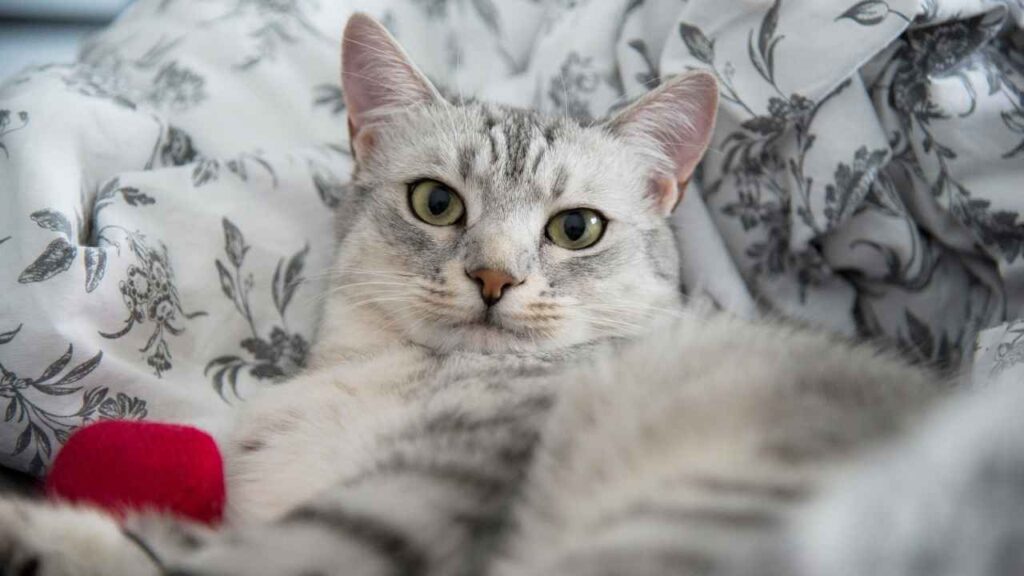
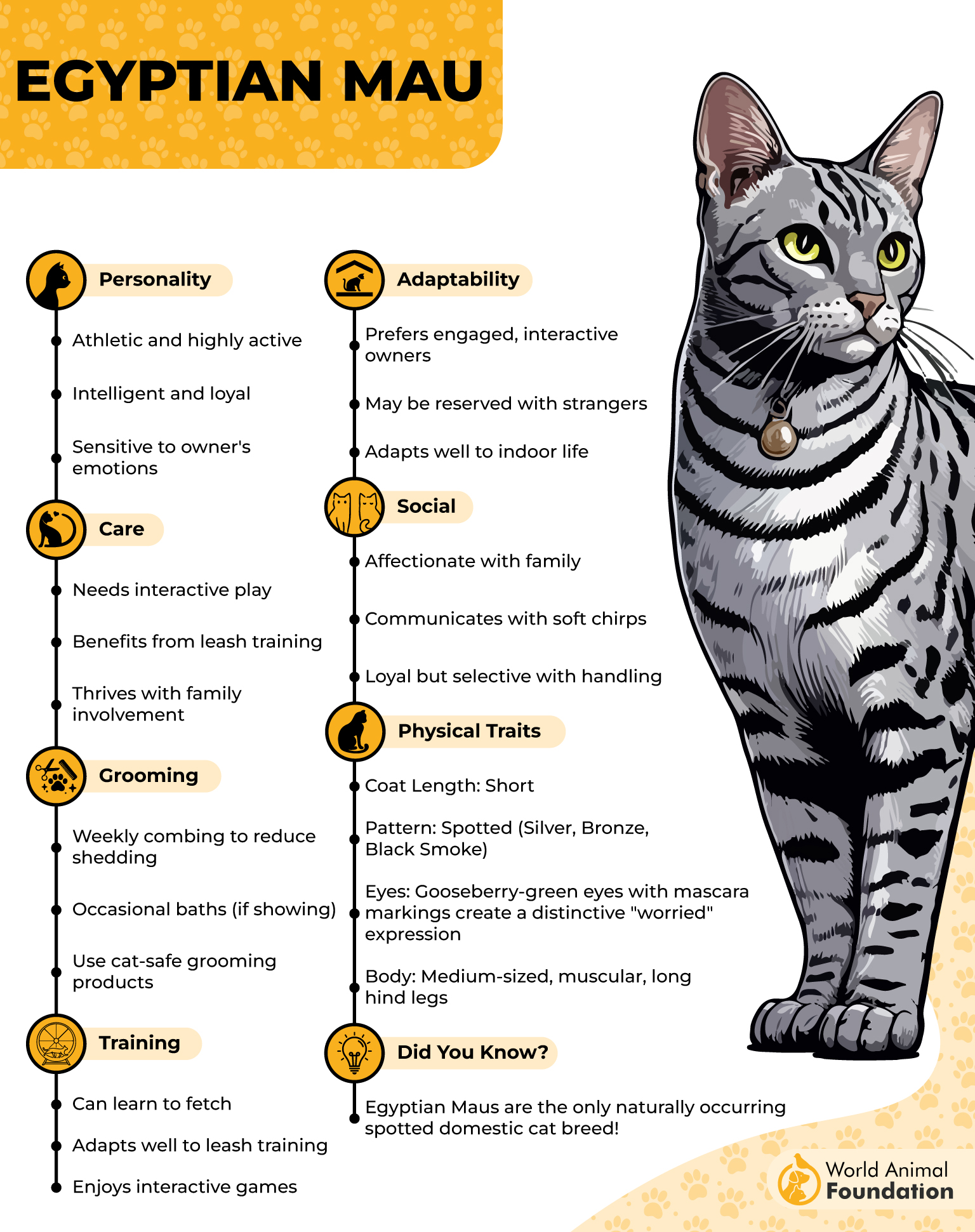
The Egyptian Mau is one of the oldest domesticated cat breeds, believed to have been revered by the ancient Egyptians. These cats have a rich history, often depicted in artwork from ancient tombs, showing them as royal companions. This breed is particularly known for its elegant, spotted coat, which is found in a striking silver-grey hue.
Physically, Egyptian Maus are medium-sized with sleek, muscular builds. As per PetMD, they have large, almond-shaped green eyes that complement their shiny grey coats, making them instantly recognizable. Their spots and marbling give them an exotic, wild look and are known for their graceful movements.
This short-haired cat breed requires minimal grooming, but regular brushing will help keep it looking its best. Their silver-grey fur, speckled with darker spots, can sometimes be challenging to maintain, but it’s all worth it for the shine. Egyptian Maus also tend to have low shedding, making them a manageable choice for those with allergies.
Egyptian Maus are active and highly intelligent cats. They love to engage in play and require plenty of mental stimulation to stay happy. Their curious nature means they enjoy interacting with people and are great for homes where they can spend time with family members.
As for health, Egyptian Maus are generally healthy cats, but like many purebred cats, they can be prone to certain genetic conditions like heart disease and kidney issues. Regular vet check-ups and a balanced diet are essential to staying in shape.
2. Cornish Rex
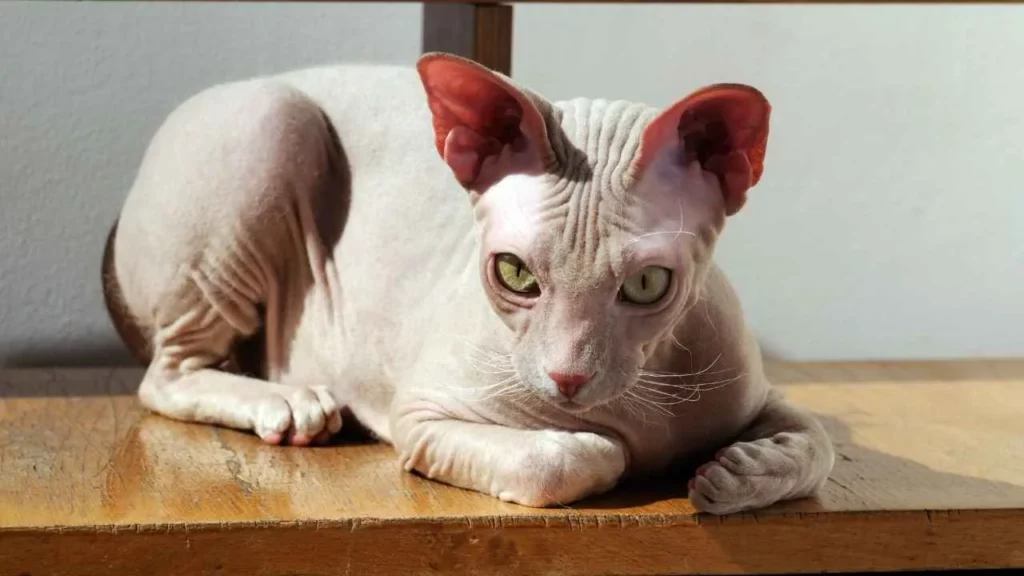
The Cornish Rex is a quirky and distinctive breed that originated in Cornwall, England, in the 1950s. They’re famous for their curly coat, unlike any other breed. While most grey cats have a traditional fur texture, the Cornish Rex has soft, wavy fur unique to this breed.
These cats are small to medium-sized, with long, slender bodies and large, bat-like ears. Their coat comes in various colors, including grey, and is incredibly soft and plush. Their grey fur has a slight sheen, making them eye-catching in any room. The Cornish Rex’s distinctive fur grows in waves, thanks to a genetic mutation.
As for grooming, Cornish Rex cats require minimal maintenance. Their short, curly fur doesn’t mat or tangle, but regular brushing can help keep their coat looking smooth and vibrant. Since they don’t have the typical topcoat that most cats have, they need to be protected from the cold, as their skin is more exposed.
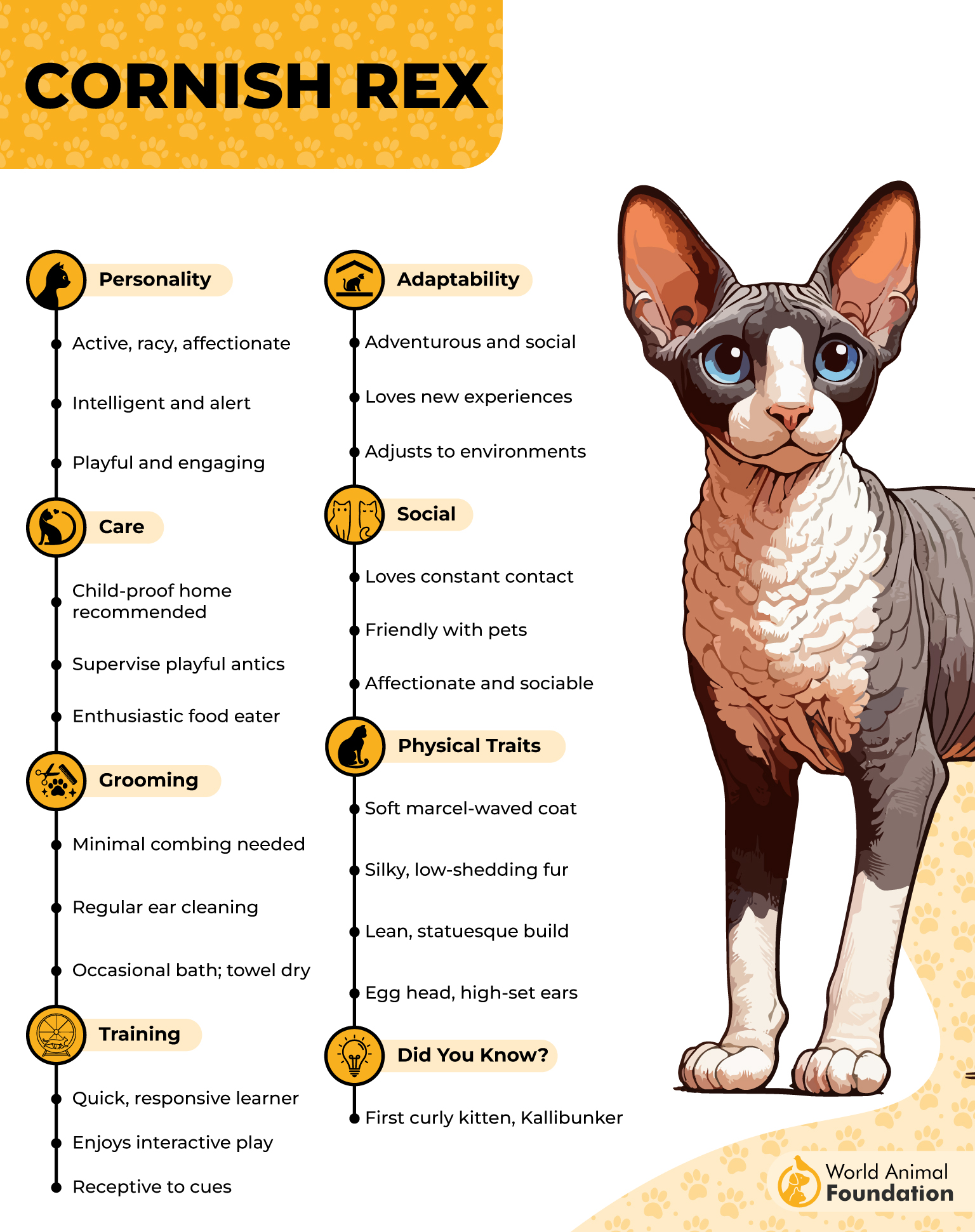
Cornish Rex cats are known for their playful, affectionate personalities. They are very social and love being around their human companions. These cats follow their owners around and will happily curl up on your lap for a cuddle after a fun play session.
Cornish Rex cats are generally healthy, though they can suffer from skin conditions due to their lack of a thick coat. As with any cat breed, regular vet visits and a good diet will ensure your Cornish Rex stays healthy and happy for years.
3. Chartreux
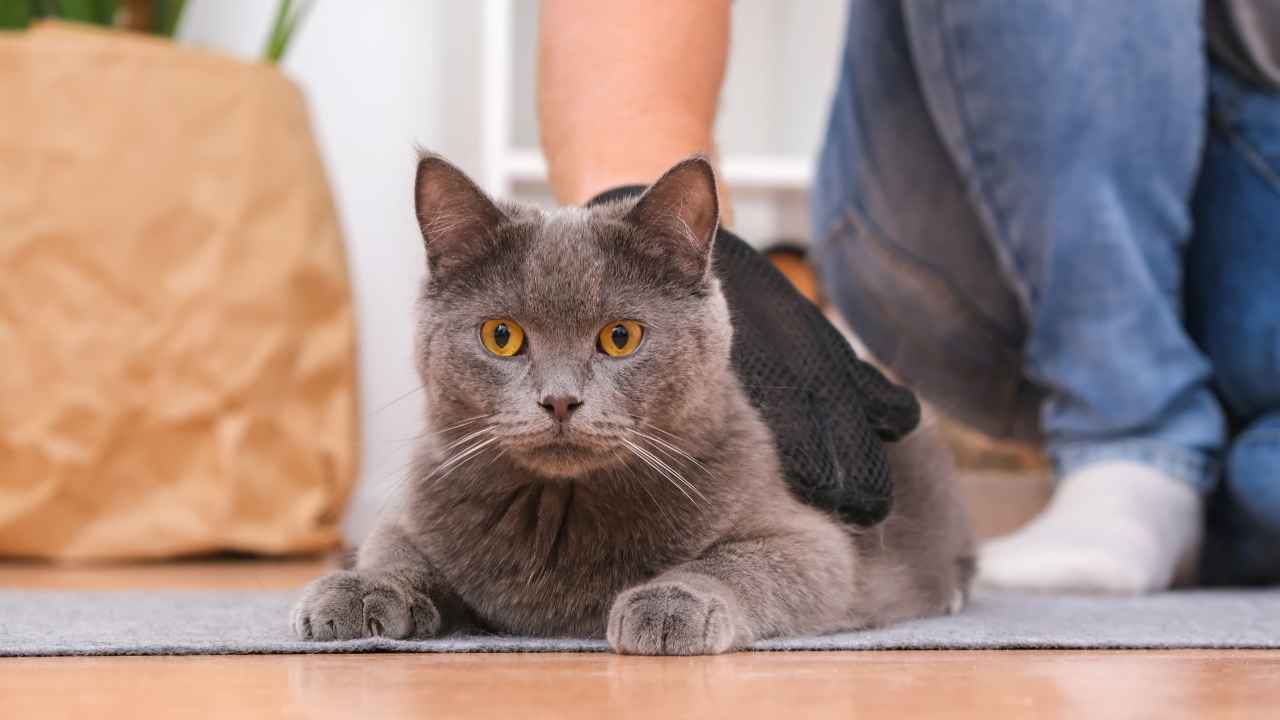
The Chartreux is a rare and ancient French cat breed known for its strong, muscular build and silvery-grey coat. This breed was originally used to hunt rats and other pests in French monasteries, giving them a historical background as working cats. They are believed to have been brought to France by Crusaders returning from the Middle East.
Chartreux cat breeds are medium to large, with sturdy, muscular frames and broad shoulders. Their dense, plush, grey coat gives them a soft, velvety feel. Their grey fur can range from a light silver to a darker blue-grey, often described as having a silvery sheen.
This breed requires regular grooming to keep their coat in top condition. Their thick coat tends to shed, especially during seasonal changes, so brushing them twice a week is recommended. Despite their thick coat, Chartreux cats are relatively low-maintenance in grooming.
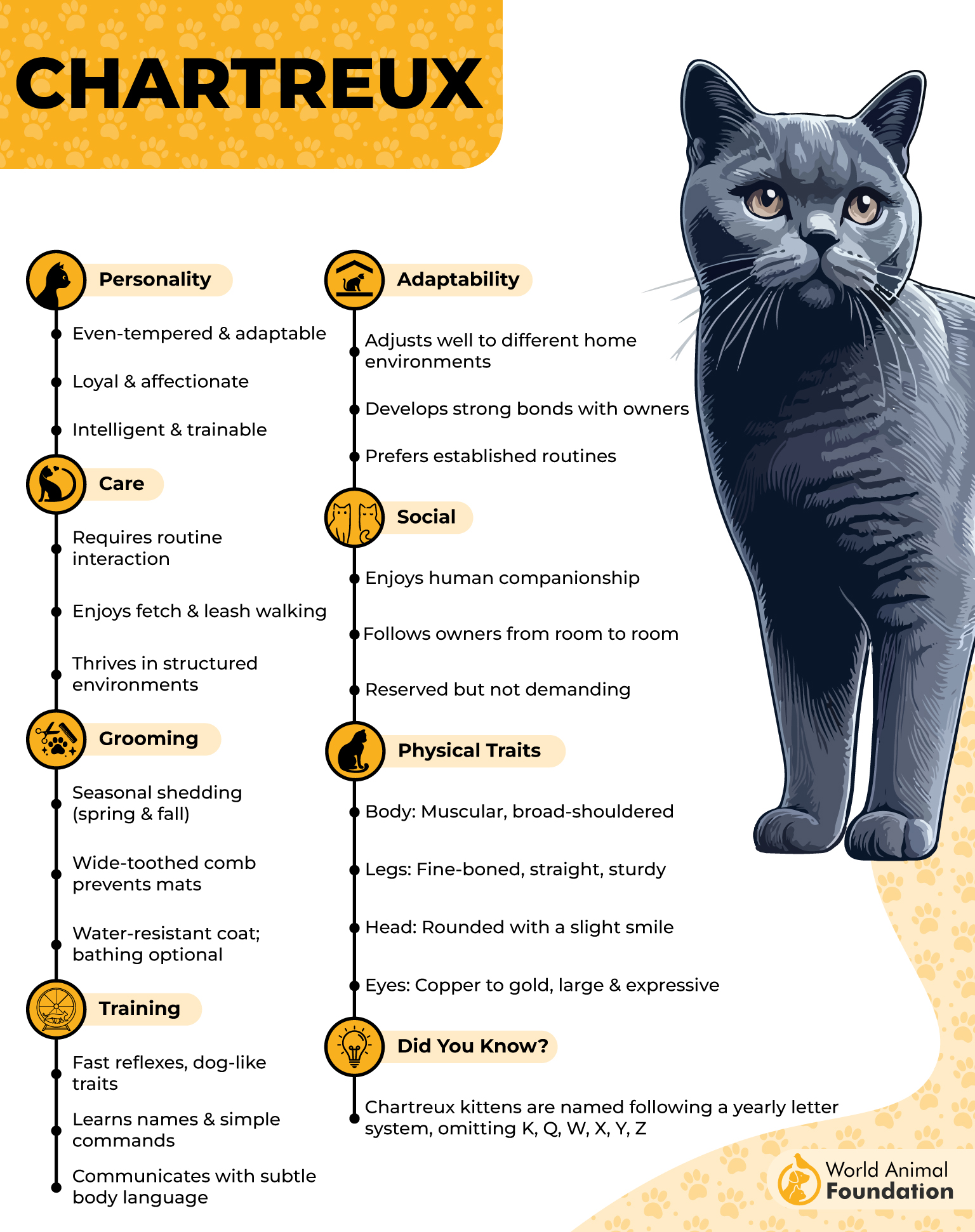
Known for their calm and gentle nature, Chartreux cats are incredibly affectionate with their human companions. They are quiet cats enjoying time with their families but aren’t overly demanding. They’re a perfect breed for those seeking a laid-back and loving companion.
Chartreux cats are generally healthy but can be prone to obesity if overfed. They tend to be strong and sturdy but should be monitored for any signs of weight gain or heart disease. Regular exercise and a balanced diet are essential to keep them healthy and active.
4. Persian

The Persian cat is one of the feline world’s most beloved and iconic breeds. Known for their long, luxurious coats and sweet, affectionate personalities, Persians have been popular among cat lovers for centuries. Their origins trace back to ancient Persia (modern-day Iran), where royalty and noble families prized them.
Persian cats are physically medium to large, with a round face, short muzzle, and large, expressive eyes. Their grey coats come in various shades, including soft blue-grey, one of the breed’s most coveted looks. Their coats are incredibly thick, plush and require regular grooming to maintain.
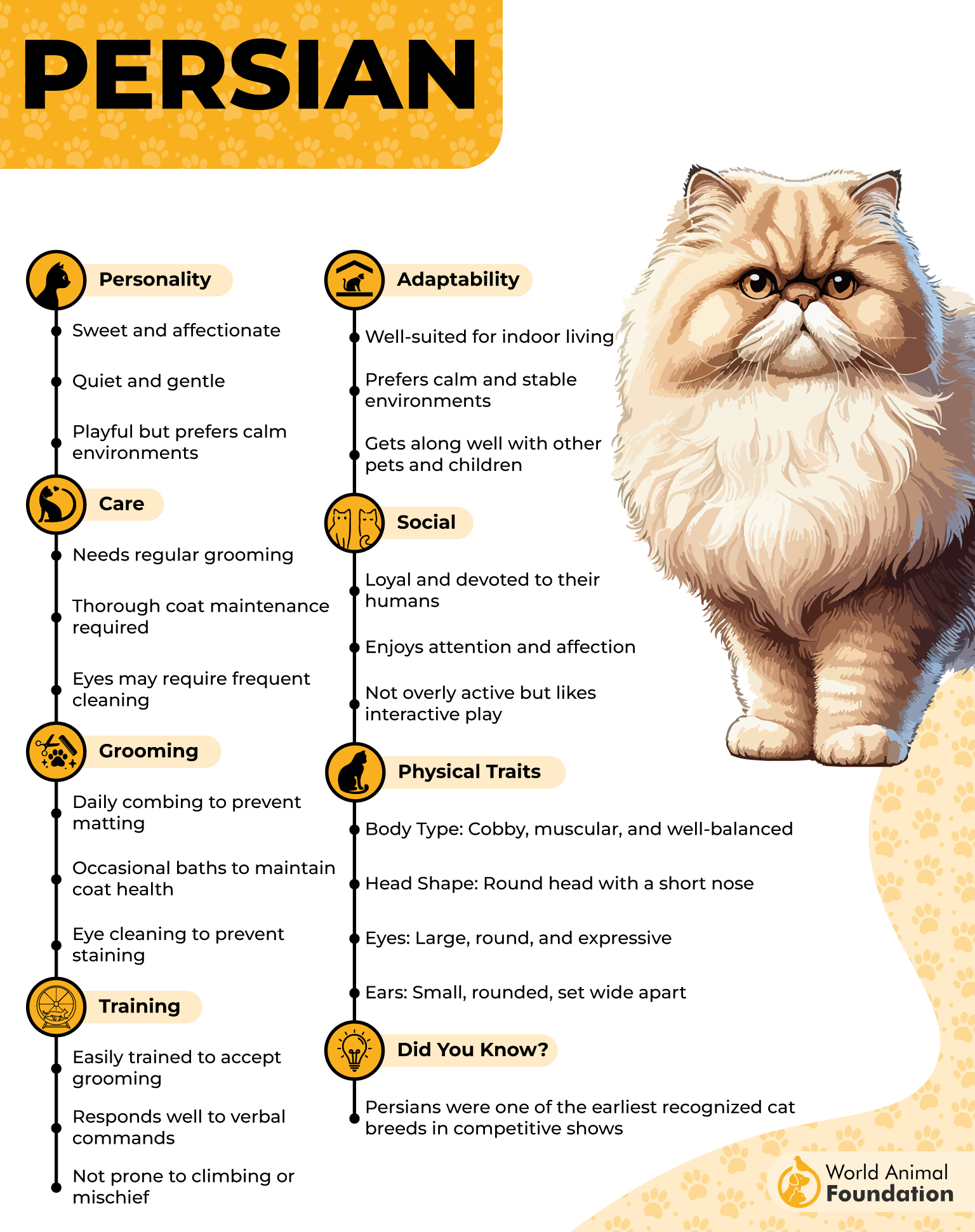
As per Purina, Persian cats need extensive grooming due to their long, dense fur. Daily brushing is recommended to prevent matting, and occasional baths may be necessary to keep their coat looking pristine. Their fur can become tangled quickly, so regular maintenance is essential for their comfort and appearance.
These cats are known for their calm, quiet demeanor. They are affectionate and enjoy cuddling with their human companions but can be a bit more laid-back and reserved than other breeds. Persians are ideal for people who want a more relaxed, loving pet that enjoys companionship without being overly demanding.
While Persian cats are generally healthy, but prone to certain genetic conditions, such as respiratory issues due to their flat faces and eye problems. Regular vet visits are crucial to ensure they stay healthy, and proper grooming can help prevent skin infections.
5. Russian Blue
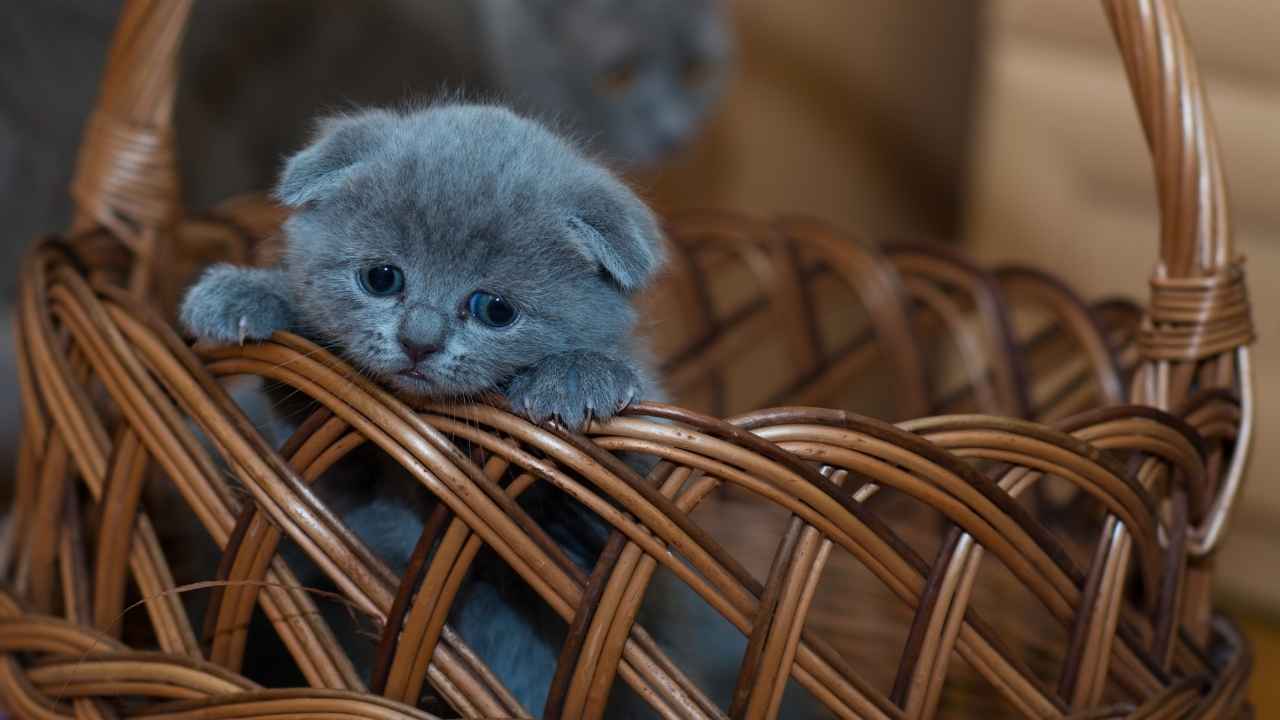
The Russian Blue is one of the most elegant and sought-after grey cat breeds, known for its stunning blue-grey coat and striking green eyes. This breed is believed to have originated in Russia, where they were cherished as royal companions and were often seen in the palaces of Russian tsars. Their beauty and calm demeanor have earned them a place in many homes worldwide.
Russian Blue cats are medium-sized, with a graceful and slender build. Their most notable feature is their thick, dense coat, which gives them a plush feel. Their grey fur, often described as “blue,” has a silvery sheen that catches the light, adding to their majestic appearance. Their eyes are vivid green, creating a striking contrast with their coat.

Grooming a Russian Blue is relatively simple, as its short coat doesn’t shed excessively. Regular brushing can help keep their fur sleek, but they don’t require the intense grooming of long-haired breeds like the Persian. Their coat is dense enough to provide some insulation, so they’re comfortable in most climates.
Russian Blue cats are known for their calm and reserved nature. They are often shy around strangers but are very affectionate with their human companions once they feel comfortable. These cats are highly intelligent and enjoy quiet, peaceful environments where they can bond with their owners.
Although generally healthy, Russian Blue cats can be prone to certain conditions like heart disease or kidney problems. Maintaining regular vet visits and a balanced diet will help ensure your Russian Blue stays happy and healthy for many years.
6. Scottish Fold
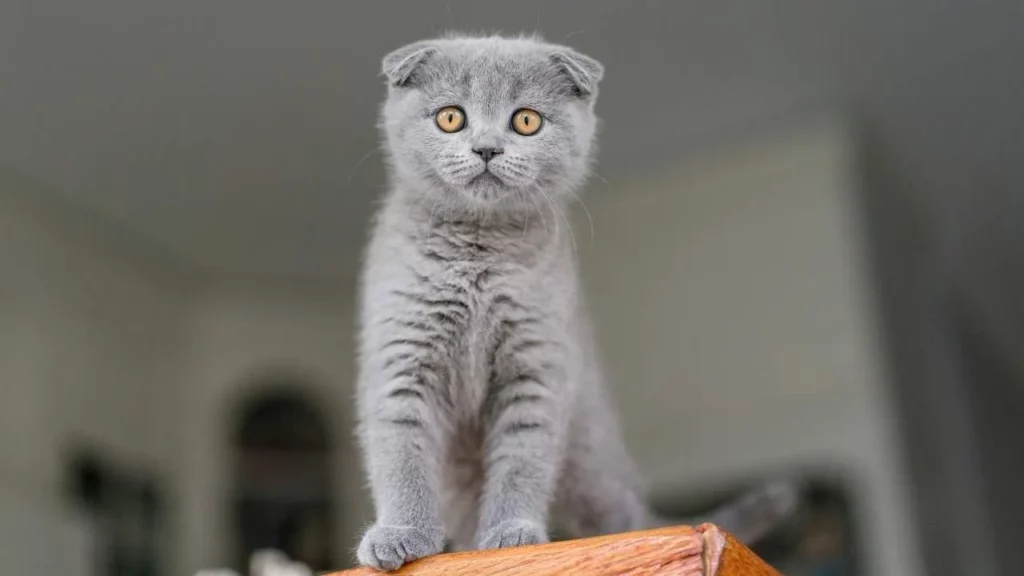
The Scottish Fold is one of the most charming grey cat breeds, thanks to their unique folded ears and round face. This breed originated in Scotland in the 1960s when a barn cat named Susie was born with a genetic mutation that caused her ears to fold forward. Since then, the Scottish Fold has become a popular and beloved breed worldwide.
These cats are medium-sized with a round, stocky build, and a soft, rounded face. Their grey coats come in various shades, including a soft blue-grey. The most notable feature of the Scottish Fold is, of course, their folded ears, which give them a distinctive and endearing appearance.
According to WebMD, Scottish Folds have a short to medium coat, and while they don’t require as much grooming as long-haired breeds, they need brushing once or twice a week. Their fluffy coat can shed, particularly during seasonal changes, so weekly brushing is recommended to prevent matting and keep their coat shiny.
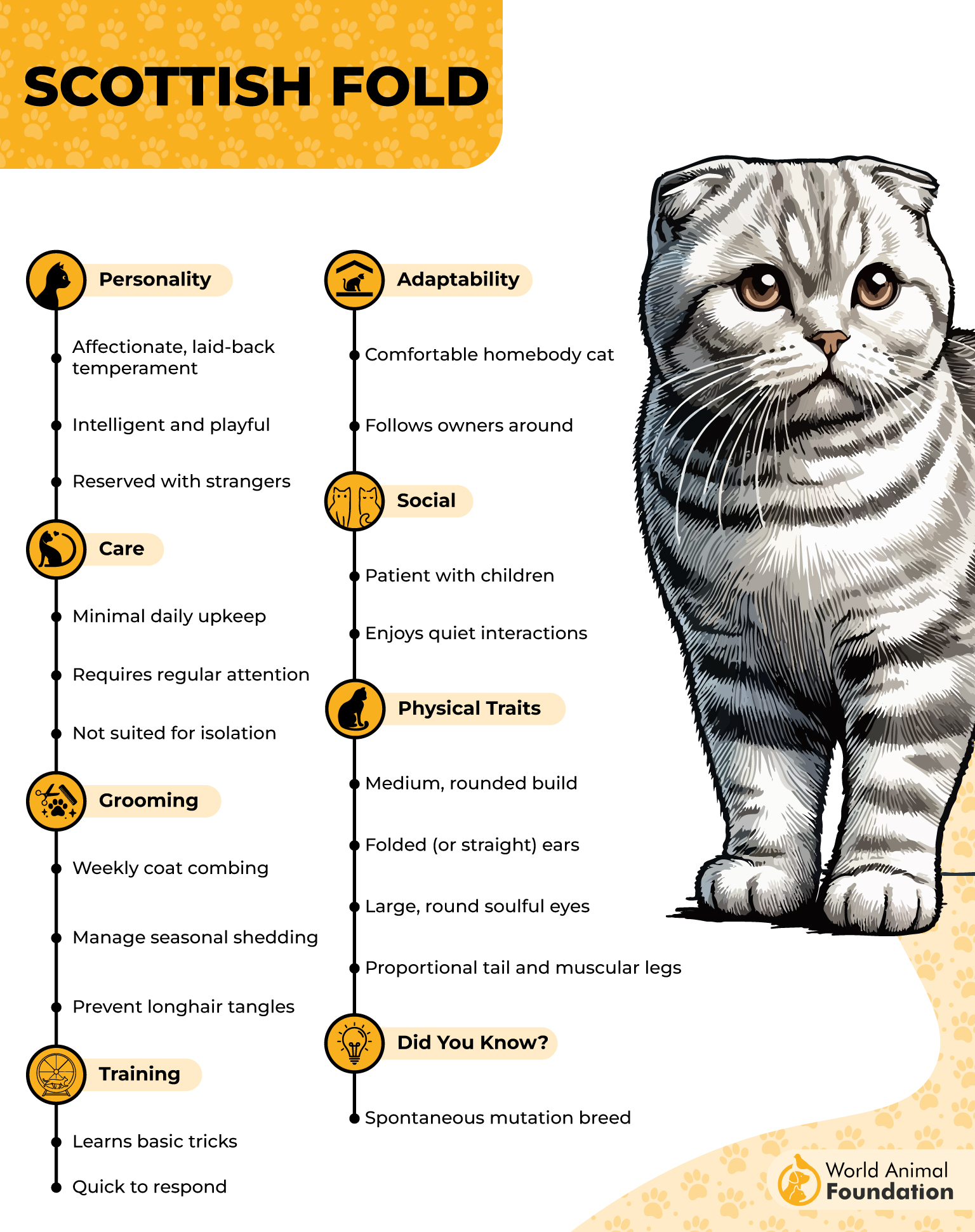
Scottish Folds are affectionate, playful, and sociable cats. They are known for their gentle nature, making them great companions for children and families. With their green eyes, they are often described as “lap cats,” and they love spending time with their human companions.
While Scottish Folds are generally healthy, it’s important to note that their genetic mutation can lead to cartilage problems, especially in their joints. Regular vet check-ups and a healthy lifestyle are essential for ensuring they remain active and comfortable.
7. American Shorthair
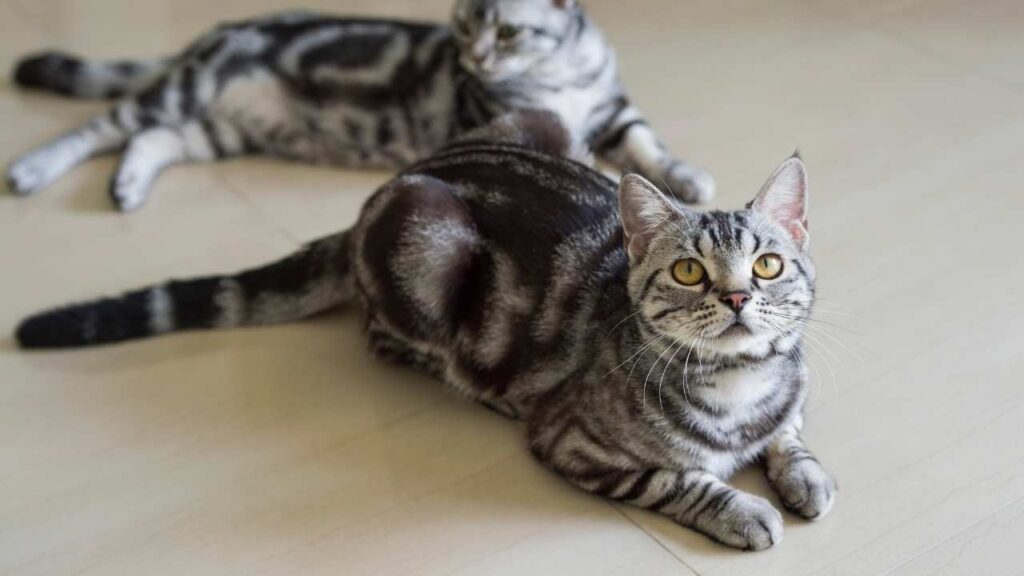
The American Shorthair is one of the most versatile and adaptable cat breeds, known for its easygoing personality and striking appearance. This breed was developed in the United States and is recognized for its sturdy, muscular build and wide variety of coat colors, including grey. They are often used as working cats due to their excellent hunting abilities.
American Shorthairs are medium to large-sized cat breeds with broad, muscular bodies and short, dense coats. Their grey coat is sleek and short, giving them a polished look. Their eyes are typically large and round, complementing their solid frame.
Their coat requires minimal grooming, making them a low-maintenance option for those who want a grey cat without the hassle of extensive brushing. American Shorthairs are playful, intelligent, and easygoing.
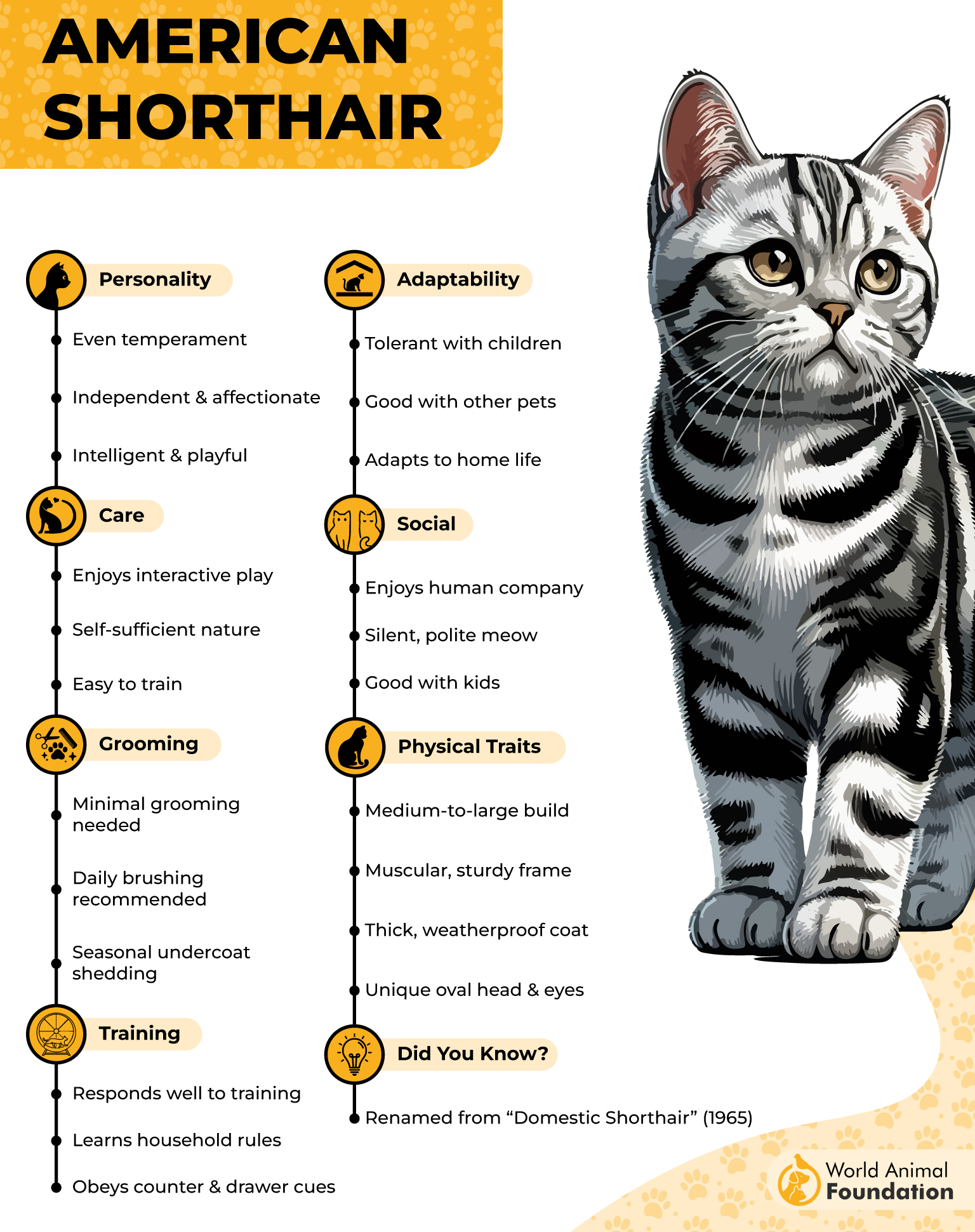
They adapt well to various living situations, making them perfect for families or individuals. They are also independent and enjoy spending time alone but are affectionate and loyal to their owners. Their balanced temperament makes them an ideal pet for many people.
Health-wise, American Shorthairs are generally robust and hardy cats. However, like any breed, they can be prone to certain conditions, such as heart disease or obesity. Regular vet visits and proper nutrition will help ensure they remain healthy for years.
Conclusion
Grey cats are known for their elegance and affectionate nature. The Russian Blue, with its sleek blue-grey coat, is both calm and reserved, making it a favorite among those seeking a domestic cat with a quiet disposition. On the other hand, the Persian is a rare cat breed that boasts a luxurious, fluffy coat and a laid-back demeanor, making it a perfect companion for those who enjoy grooming and a relaxed lifestyle.
For those seeking playful companions in the form of grey cats, the Cornish Rex offers an energetic personality with its unique curly coat. The Scottish Fold, recognized for its folded ears, is equally charming and enjoys being around its family, making it an excellent choice for affectionate homes.
Grey felines come in various personalities and grooming needs, making them an ideal choice for different households. Let us know in the comments which grey cat breed is your favorite!
