




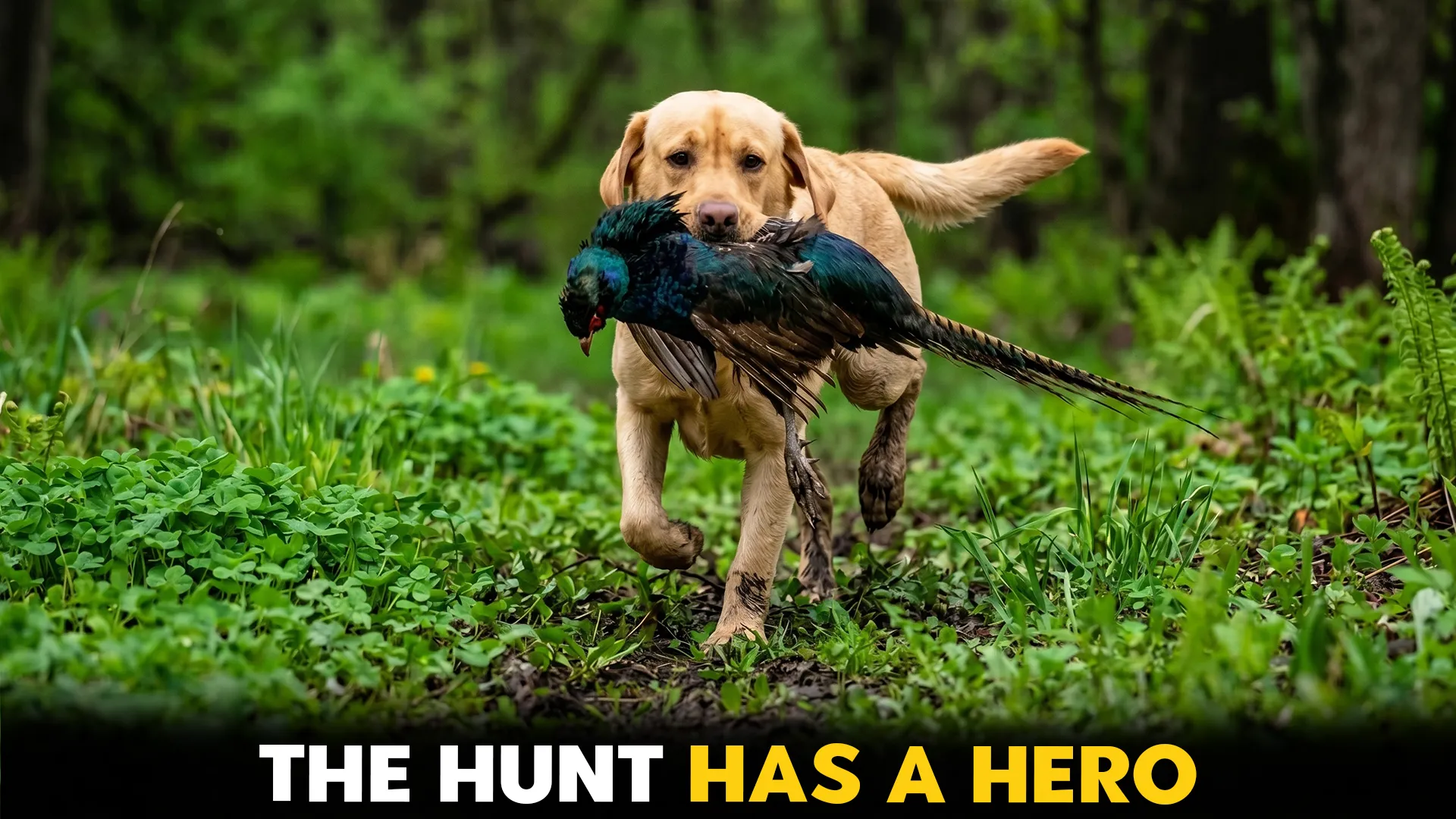
When people think about hunting dogs, they picture a dog frozen mid-step. Nose down. Tail stiff. Full lock-in mode.
That image is not wrong.
But picking the right hunting dog is not just about looks or that one cool photo op in the field. You need to find a breed that fits your hunting style, terrain, game, and life outside of hunting season, too.
Because a great hunting dog is not just a tool, but a partner.
One that wakes up at 4 a.m. as excited as you are, follows scent trails through thick brush without losing focus, and then comes home and crashes on your couch like it owns the place.
We have covered the best dog breeds for hunters, built for tracking and retrieving.
If you are chasing upland birds, waterfowl, or trailing wounded game through dense woods, there is a dog on this list that was LITERALLY born for the job.
Did You Know?
A dog’s nose has up to 300 million olfactory receptors, according to research. Humans… about 6 million. That means your hunting dog is not just “sniffing around.” That is blood tracking, trailing wounded animals, chasing scent trails across long distances… that nose is doing the heavy lifting every single time.
Best Dog Breeds for Hunters: Tracking and Retrieving
1. Labrador Retriever
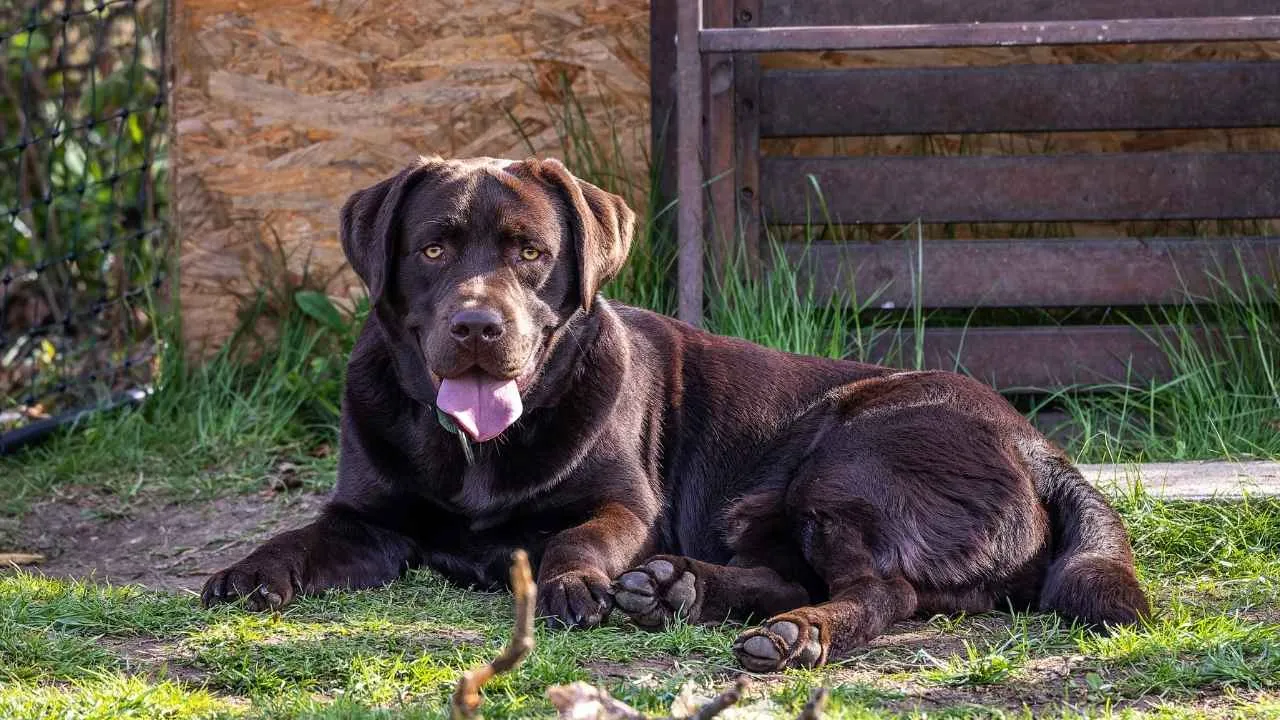
The Labrador Retriever did not become America’s most popular dog by accident.
This breed was born for waterfowl retrieval. The Lab has a water-resistant double coat, a thick otter tail it uses like a rudder, and a nose that just does not quit.
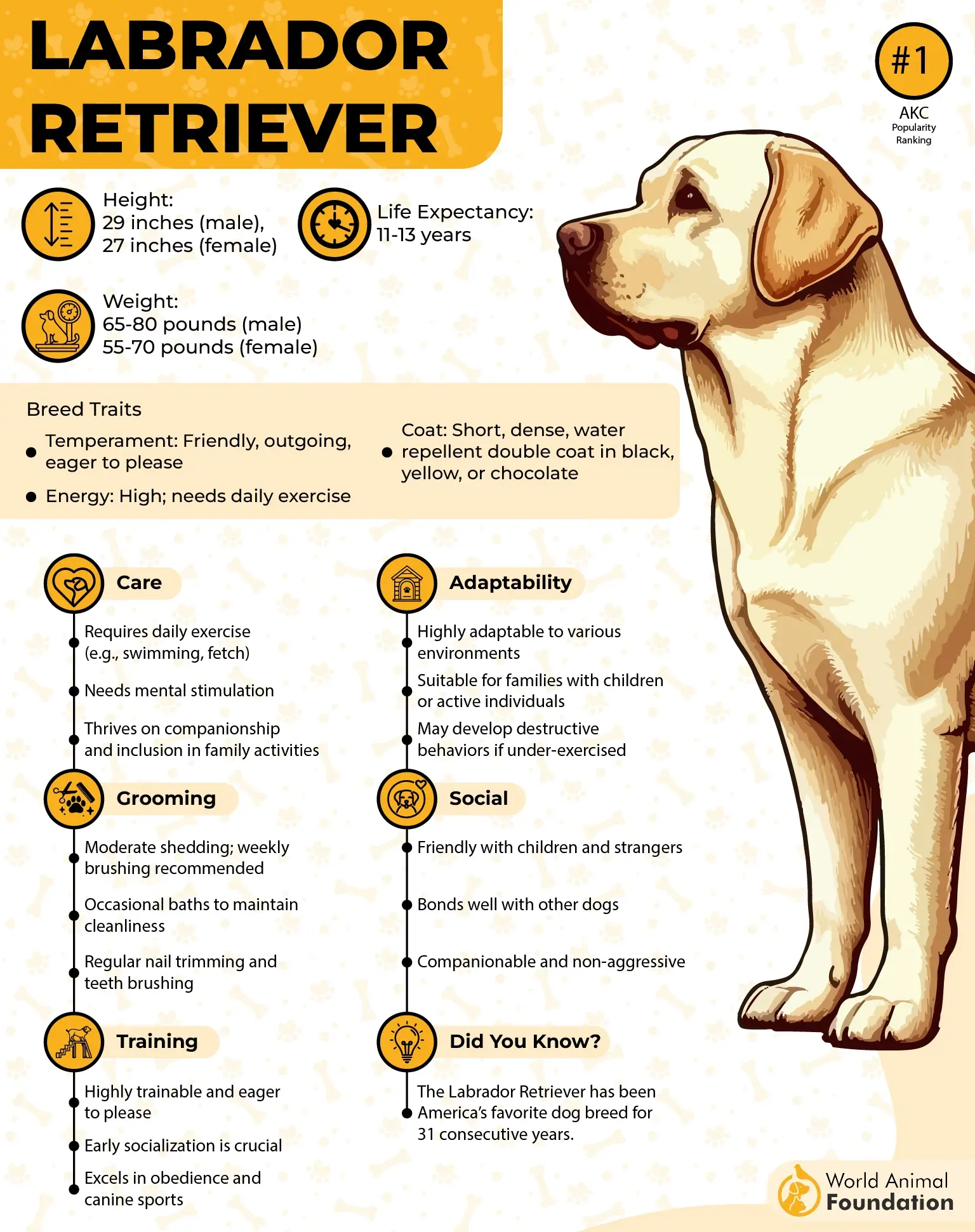
It is one of the most dependable retrievers alive, equally comfortable fetching from icy water or busting through upland cover.
The Lab is also a legit family dog, which makes it a rare double treat (Golden Retriever energy, yes!).
Soft mouth, quick learners, easy to train, good with children, and other pets. What more do you want?
If you are hunting ducks at dawn or need a dog to chase birds through a field, the Labrador Retriever shows up. High-energy, big heart, and always ready to go back in, these tracking dogs are perfect for tracking and retrieving jobs.
2. German Shorthaired Pointer
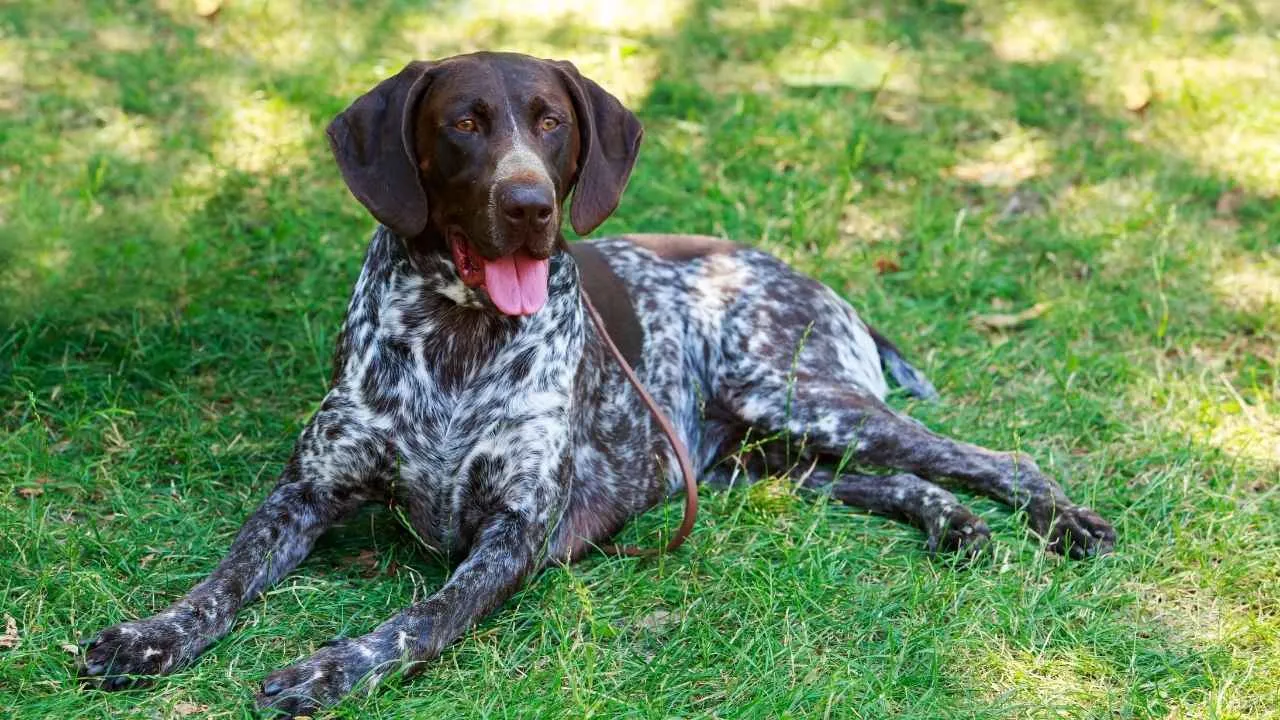
Someone designed a dog specifically to do EVERYTHING!
That is the German Shorthaired Pointer.
Most versatile dog ever.
Point. Flush. Retrieve. Track. It handles upland game, waterfowl, and can even work on big game. Hunters who want one hunting dog who covers all the bases end up here, and they never regret it.
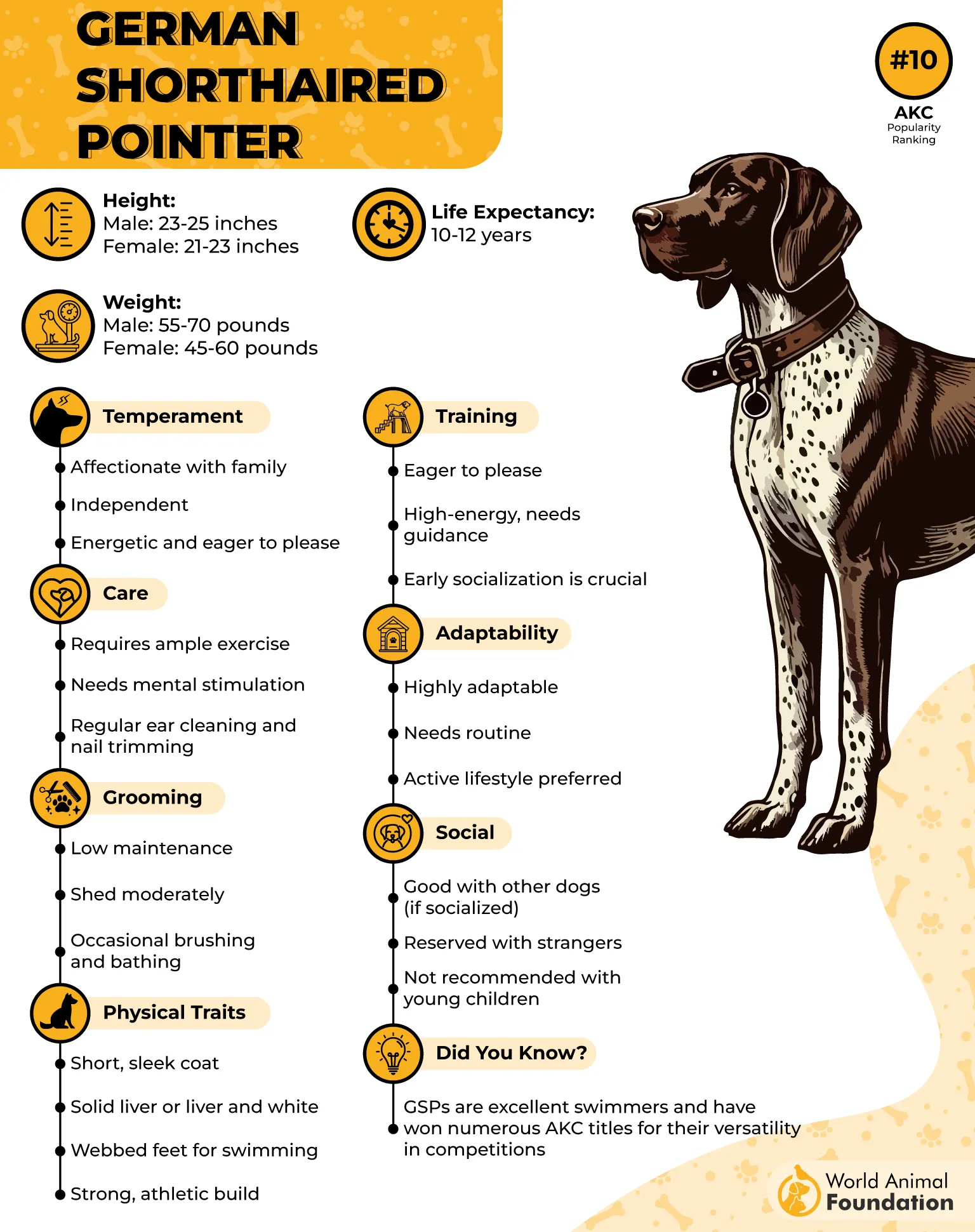
These Pointer dogs have a strong prey drive, serious endurance, and athleticism that makes you tired just watching them move. It is versatile in a way most breeds are not.
Fair warning, though. These are high-energy dogs that need a job, as noted by WebMD. If you are not hunting regularly or giving them proper training and daily exercise, the GSPs will find their own entertainment.
And you probably will not love what it picks.
3. Golden Retriever
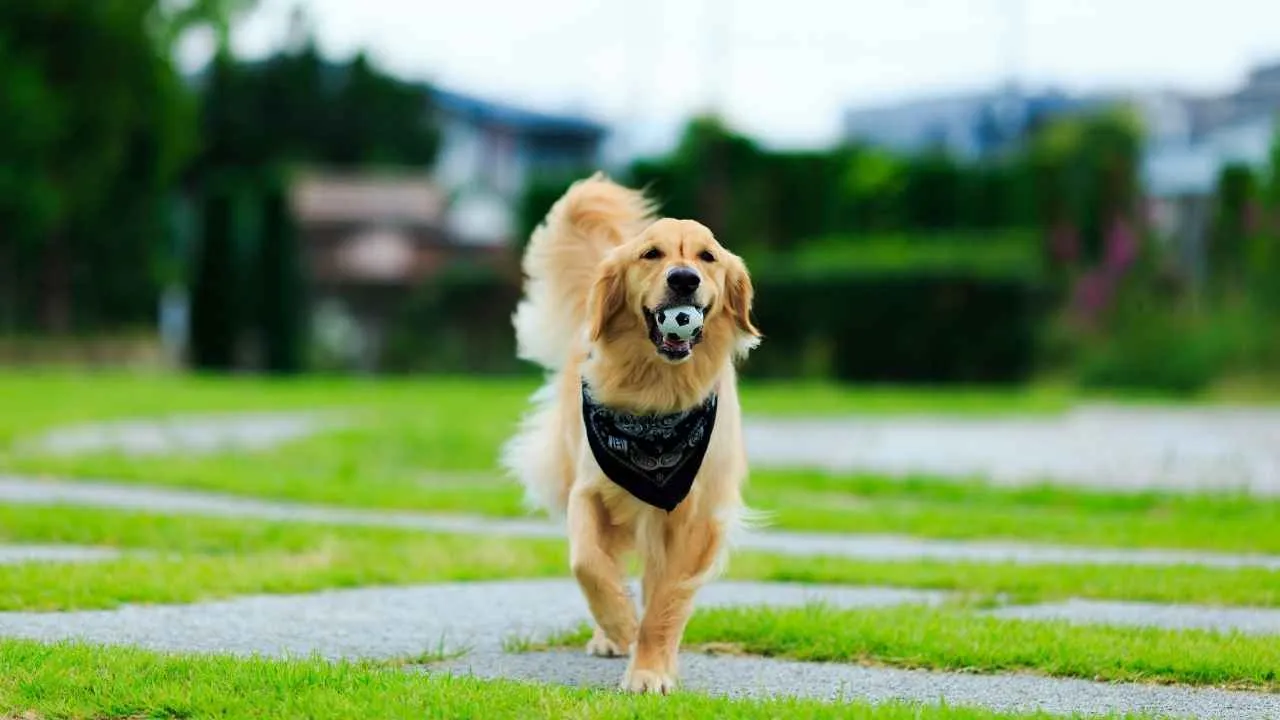
The Golden Retriever gets underestimated in hunting circles.
Big mistake.
Yes, it is the classic family-friendly dog with a BIG, cheeky smile. Yes, it is gentle. Your neighbor has one that lies on the porch all day long.
But a well-bred, well-trained Golden is a serious hunting dog.
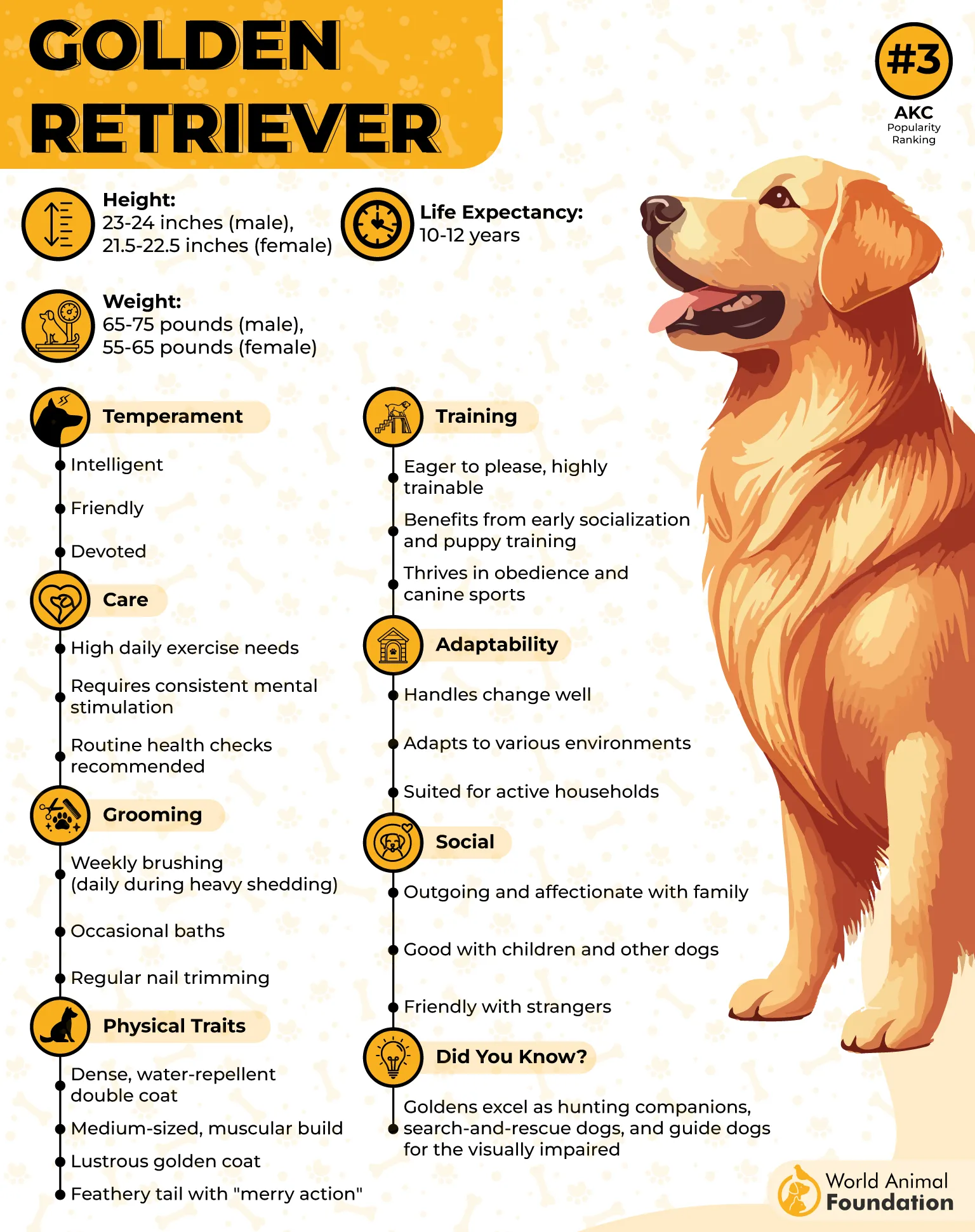
Golden Retrievers were originally developed in Scotland for retrieving wounded game from both land and water. That instinct is still alive.
They are excellent at tracking, have an extremely soft mouth for retrieving birds, and bond deeply with their hunter, Purina notes.
Add in the fact that they are incredible with children, easy to live with, and love the work. The Golden Retriever is one of the most well-rounded hunting dogs on this list.
4. English Springer Spaniel
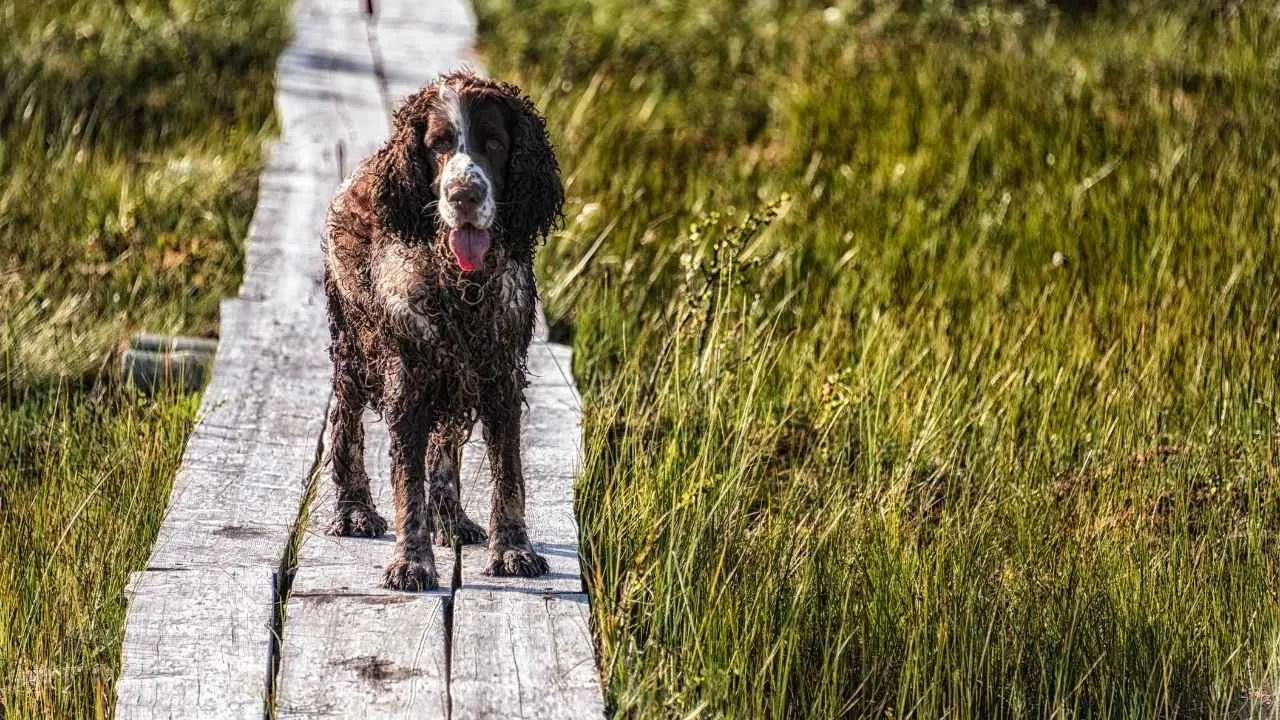
The English Springer Spaniel is a flushing dog with serious hustle.
Its whole job is to dive into cover, flush upland game, and then retrieve it cleanly. And it does that with a contagious enthusiasm. Recovering wounded game is their specialty.
Honestly.
Watch one work a field, and you will immediately understand the phrase”bred for this”.
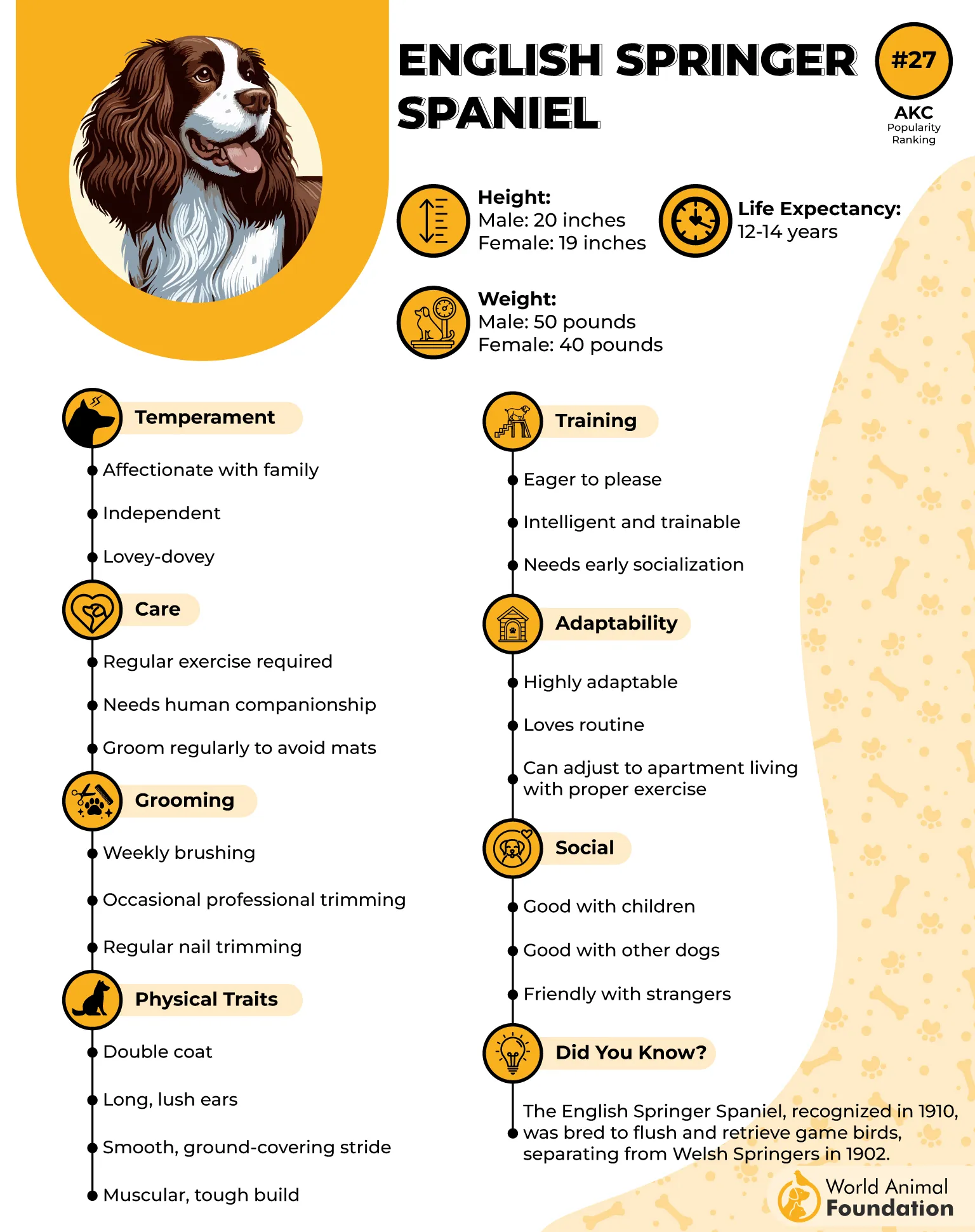
Springers are quick learners with a strong nose and a willingness to work close to the hunter, which makes them great for upland birds in thick cover.
These bird dogs also adapt well as family dogs when hunting season ends.
One thing to know about this Spaniel dog breed…
They need consistent mental stimulation and proper training early. A bored Springer is a mischievous Springer.
Stay on top of it, and you will have one of the best bird dogs around. A good tracking dog that can hunt birds in any season and terrain.
5. Wirehaired Pointing Griffon
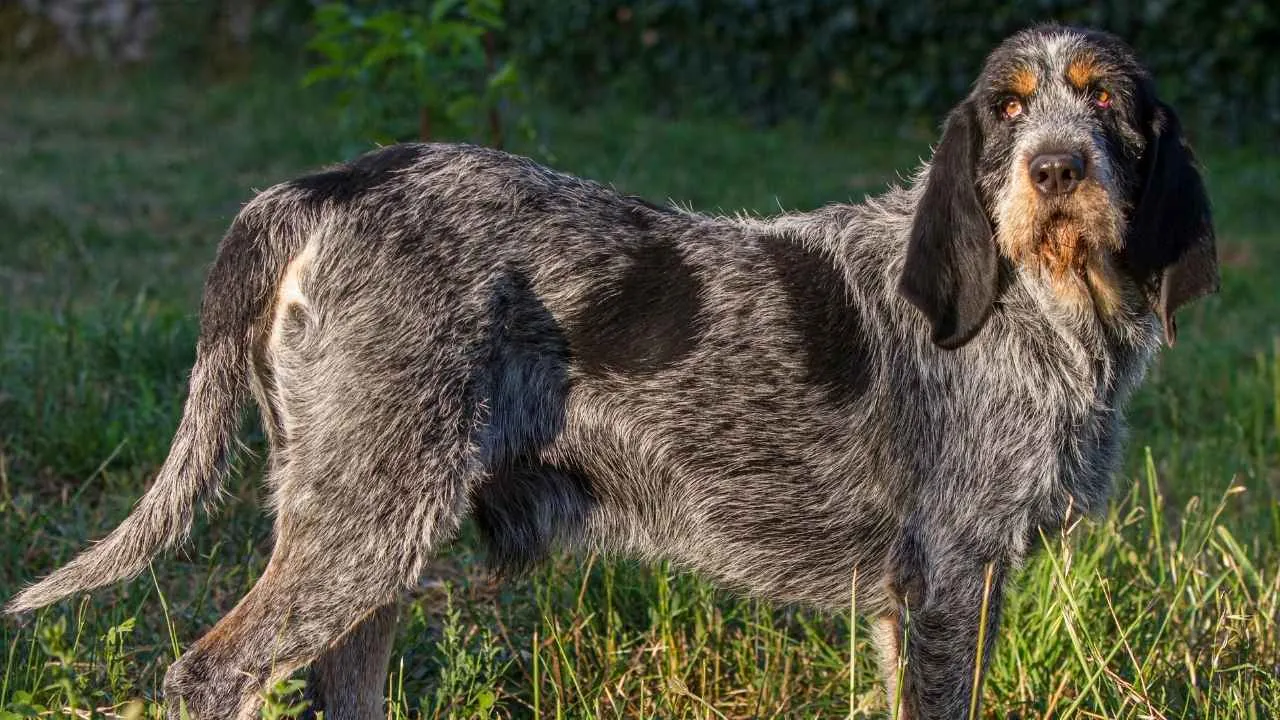
Not enough people talk about the Wirehaired Pointing Griffon, and that is a shame.
According to the American Kennel Club, this breed is called the “supreme gundog,” and it earns that title.
Developed to work in dense cover and rough terrain, the Griffon can point, flush, and retrieve across just about any landscape you throw at it.
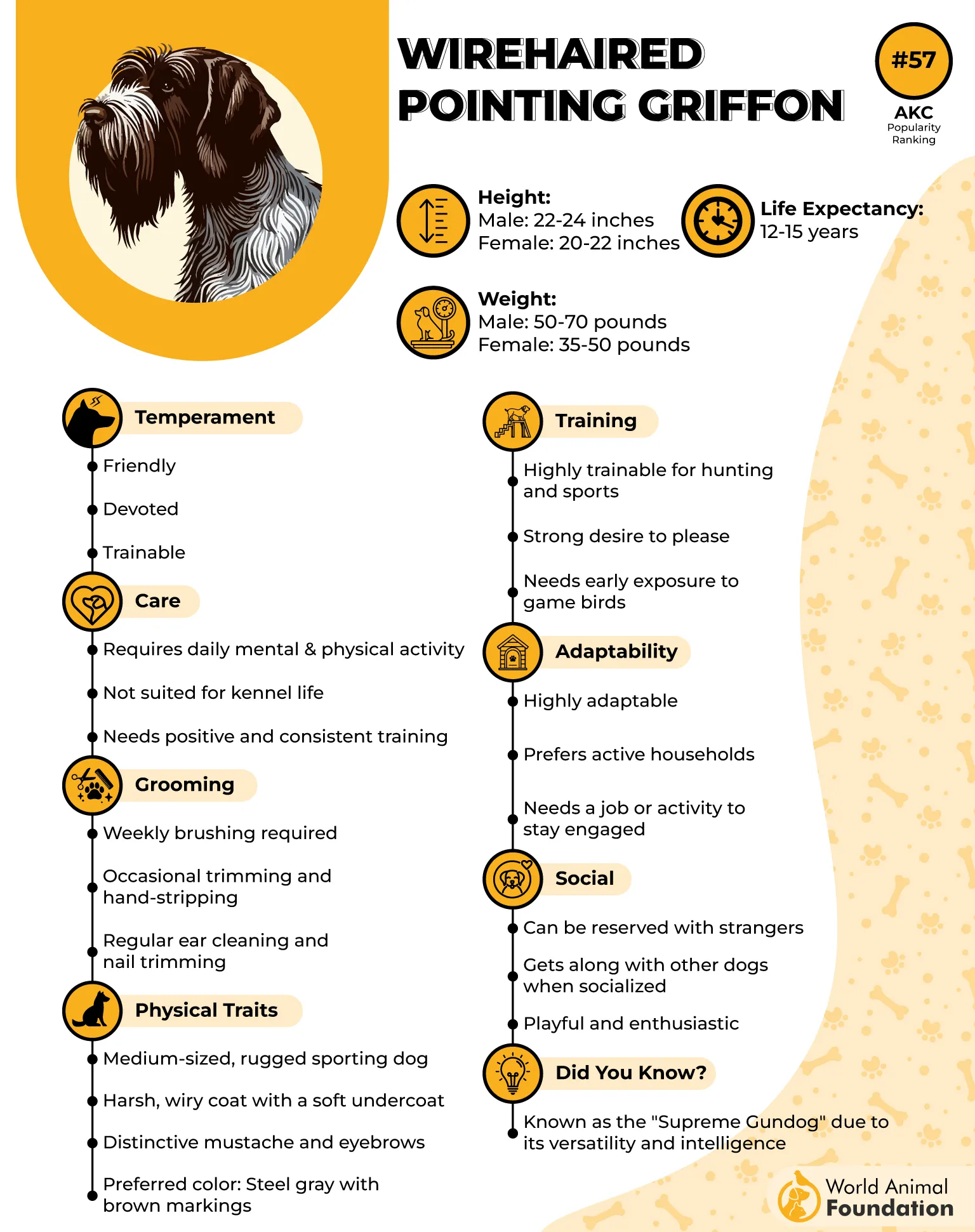
The wiry, weather-resistant coat protects it from brush, cold water, and harsh conditions. It has a strong nose, good endurance, and a loyal temperament without being over the top.
It is closely related to the Deutsch Drahthaar, a serious working dog with a big following in Europe.
If you hunt varied terrain and want to have a versatile breed that does not get nearly enough credit, the Wirehaired Pointing Griffon deserves a long, hard look.
6. Boykin Spaniel
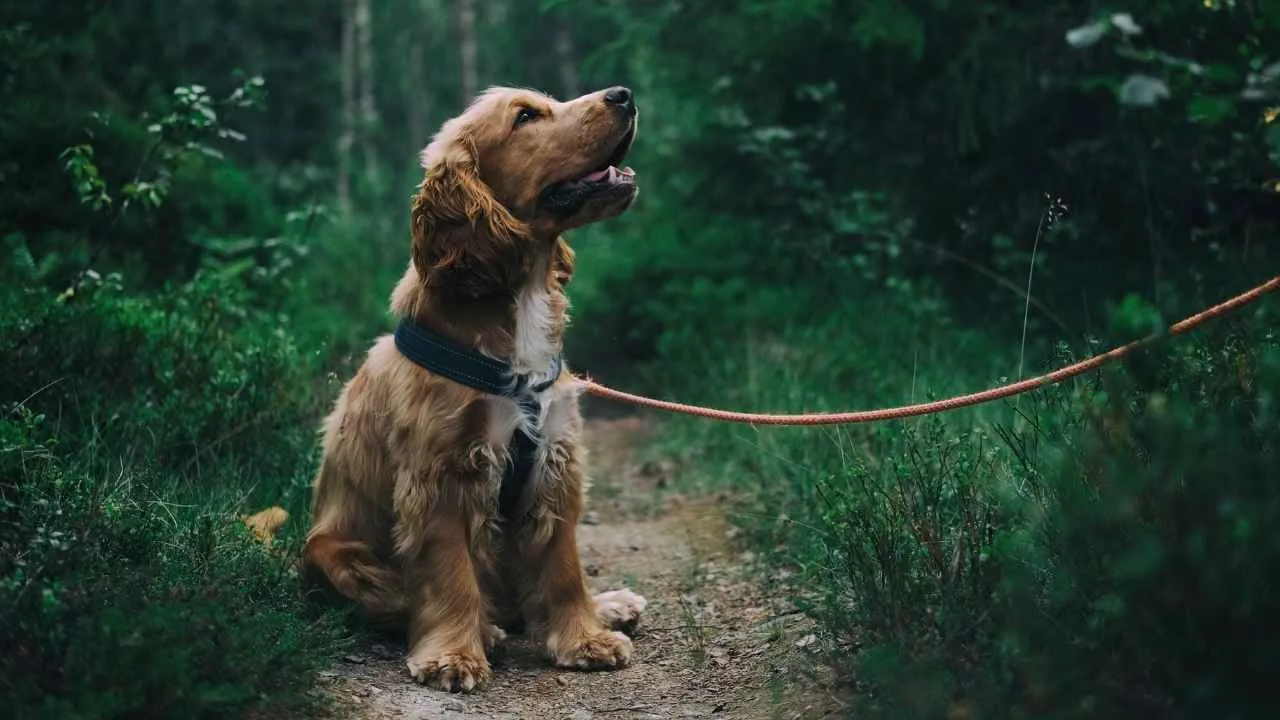
South Carolina’s state dog is a serious hunting breed.
The Boykin Spaniel was developed in South Carolina to hunt wild turkey and waterfowl from small boats. These medium-sized dogs are compact enough to fit in a canoe, and driven enough to work all day.
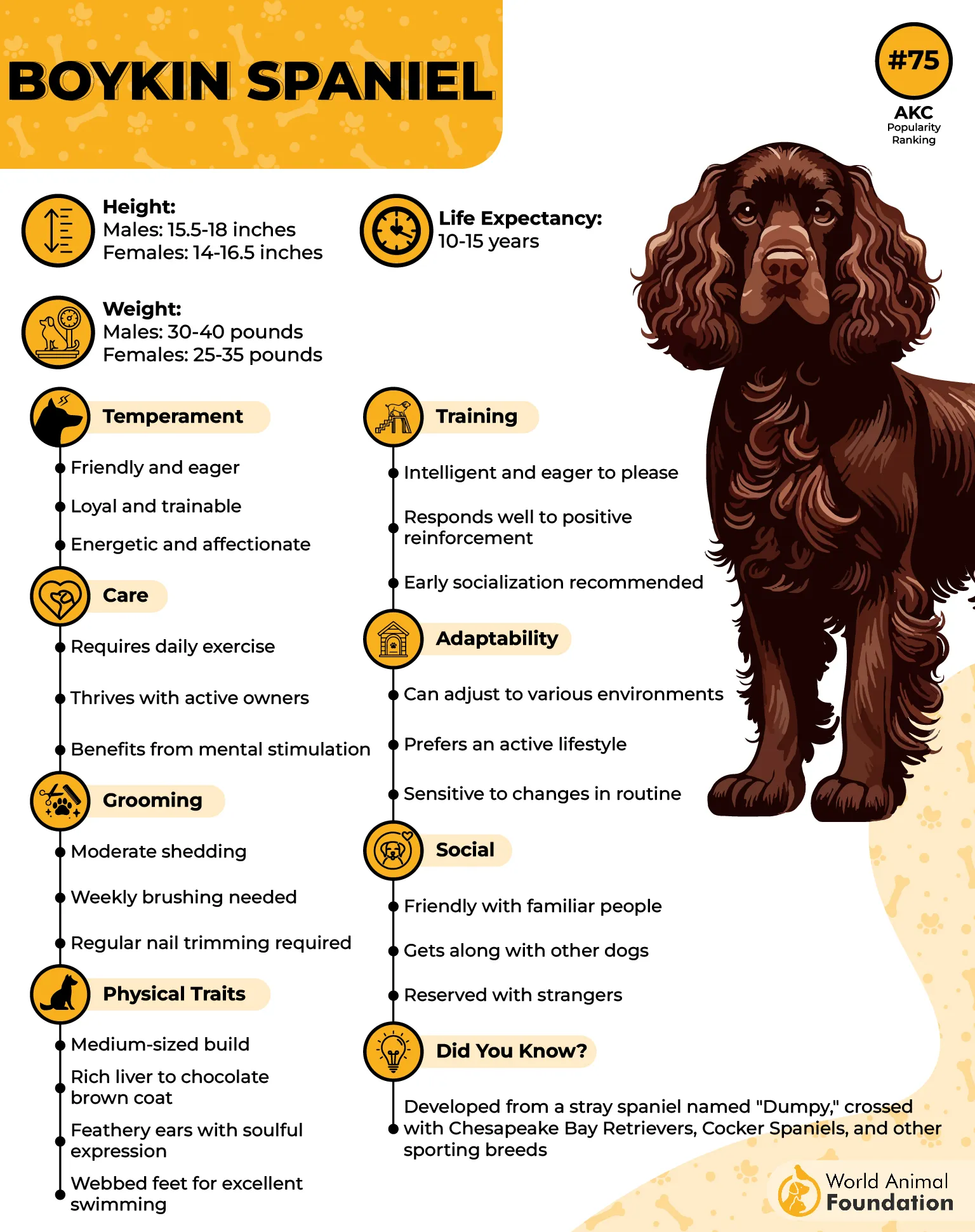
They have a rich brown coat, with white markings on the chest (sometimes), and a personality that is all hustle. Great nose, strong retrieve instinct, loves the water, and bonds tightly with its hunter- that’s pretty much it.
These water dogs are also one of the friendlier options as family dogs off-season. They are warm, affectionate, and good with kids. Honestly, it is a great all-rounder package for anyone hunting small game in the Southeast, especially rabbits, birds, and waterfowl.
7. Chesapeake Bay Retriever
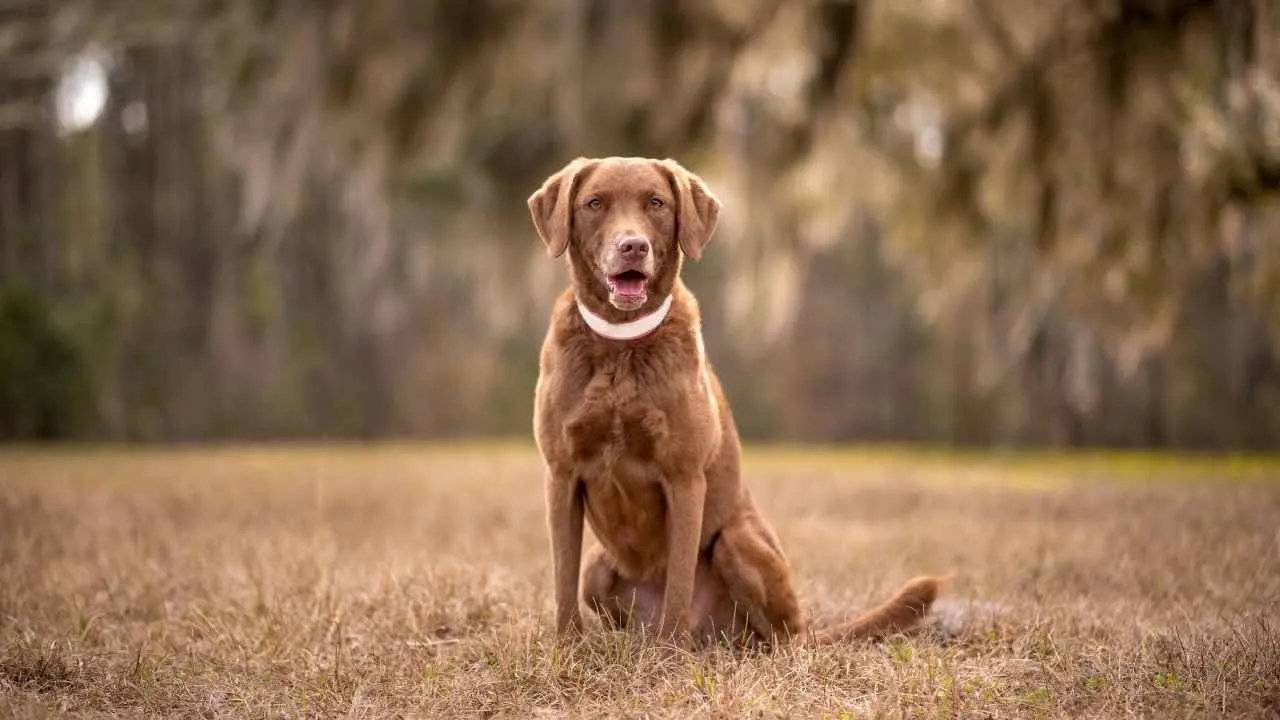
If the Labrador is the dependable team player, the Chesapeake Bay Retriever is the rugged specialist born for brutal conditions.
Cold water, rough waves, icy marshes, the Chessie does NOT care. It was developed along the Chesapeake Bay to retrieve waterfowl in some of the harshest hunting conditions in America, and it has never stopped exactly being that dog.
The Chessie has a distinctive, wavy, oily coat that repels water like a wetsuit. These dogs have a strong prey drive, endurance, and a working instinct to track scents. It can be a little more independent than other retrievers.
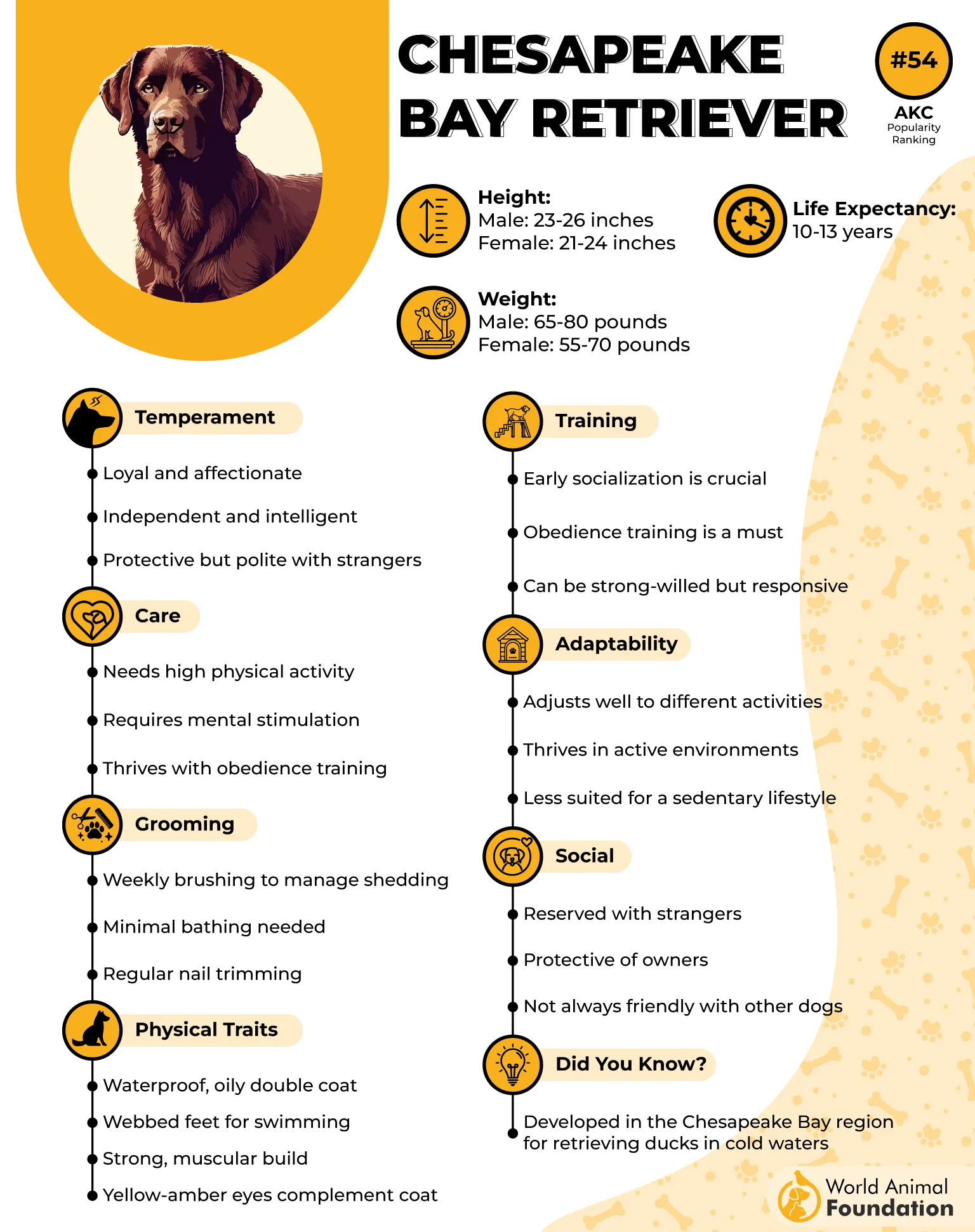
That means early training from puppyhood is super important.
This is not the easiest breed for first-time dog owners. But for experienced hunters who need a dog that will not quit, the Chesapeake Bay Retriever is elite.
8. Brittany
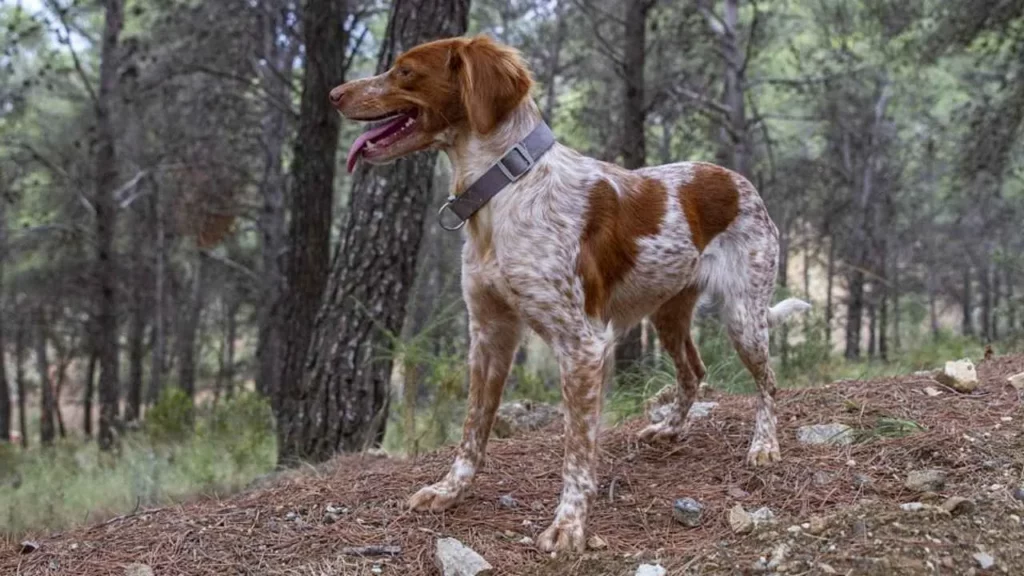
The Brittany is compact, fast, and wired for upland hunting. It is one of those breeds that locks in the moment it hits the field.
Originally from France, the Brittany was developed to hunt birds in dense European cover.
That same instinct translates to American upland hunting in fields, forests, and mixed terrain.
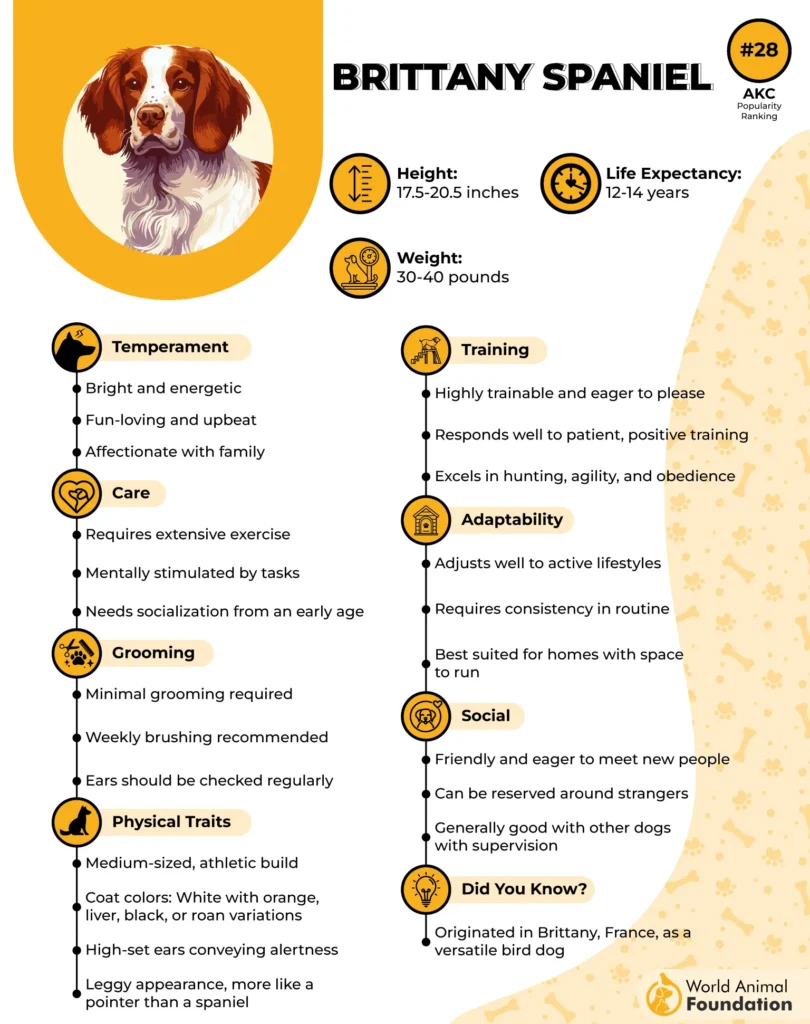
This is a high-energy breed with a strong nose and an eagerness to work close to the hunter.
Good for pheasant, quail, woodcock, and other upland birds.
It also has the endurance to cover long distances without slowing down.
Brittany is a smaller breed, which makes it easier to handle and travel with.
And unlike some of the more intense hunting breeds, it tends to do well as a family dog with exercise and attention.
9. Nova Scotia Duck Tolling Retriever
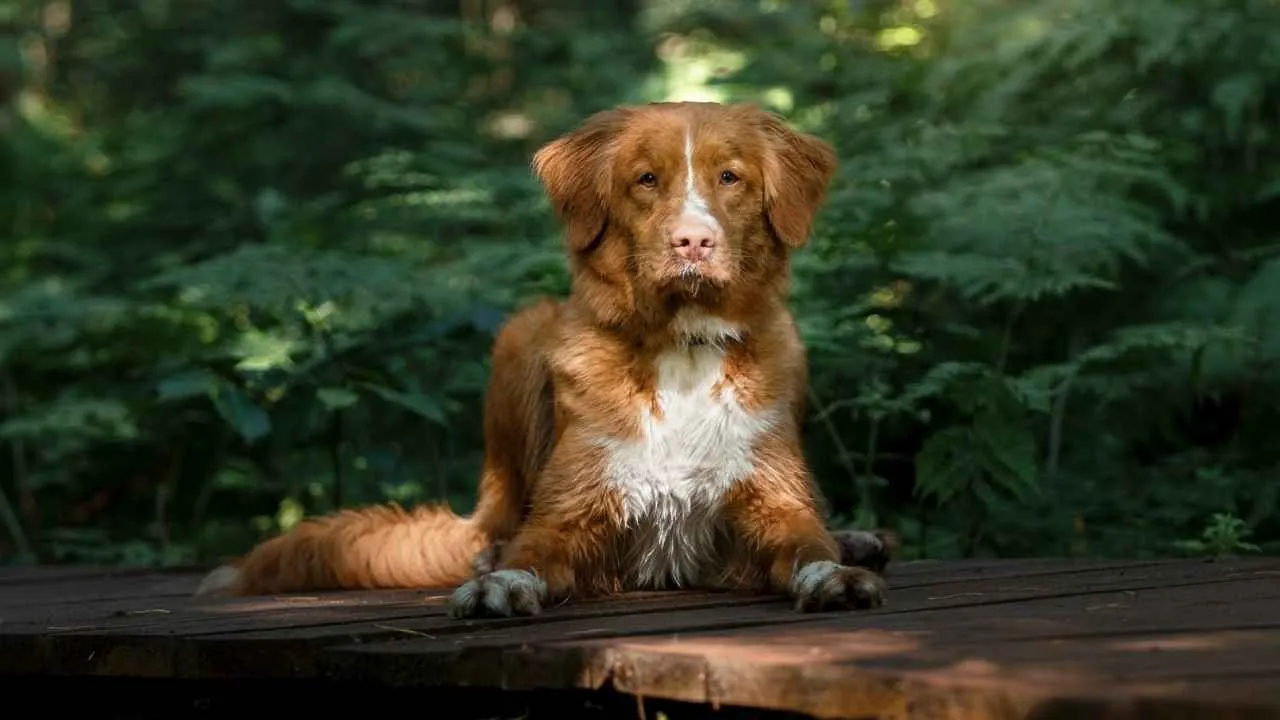
The Nova Scotia Duck Tolling Retriever, or “Toller” if you value your time, is one of the most unique hunting dogs in existence.
The wild part is…
It was developed to toll. That means it plays and splashes near the water’s edge to attract curious ducks within range.
Then, once the hunter fires, it retrieves. It is the only breed in the world developed for that technique, VCA Animal Hospital notes.
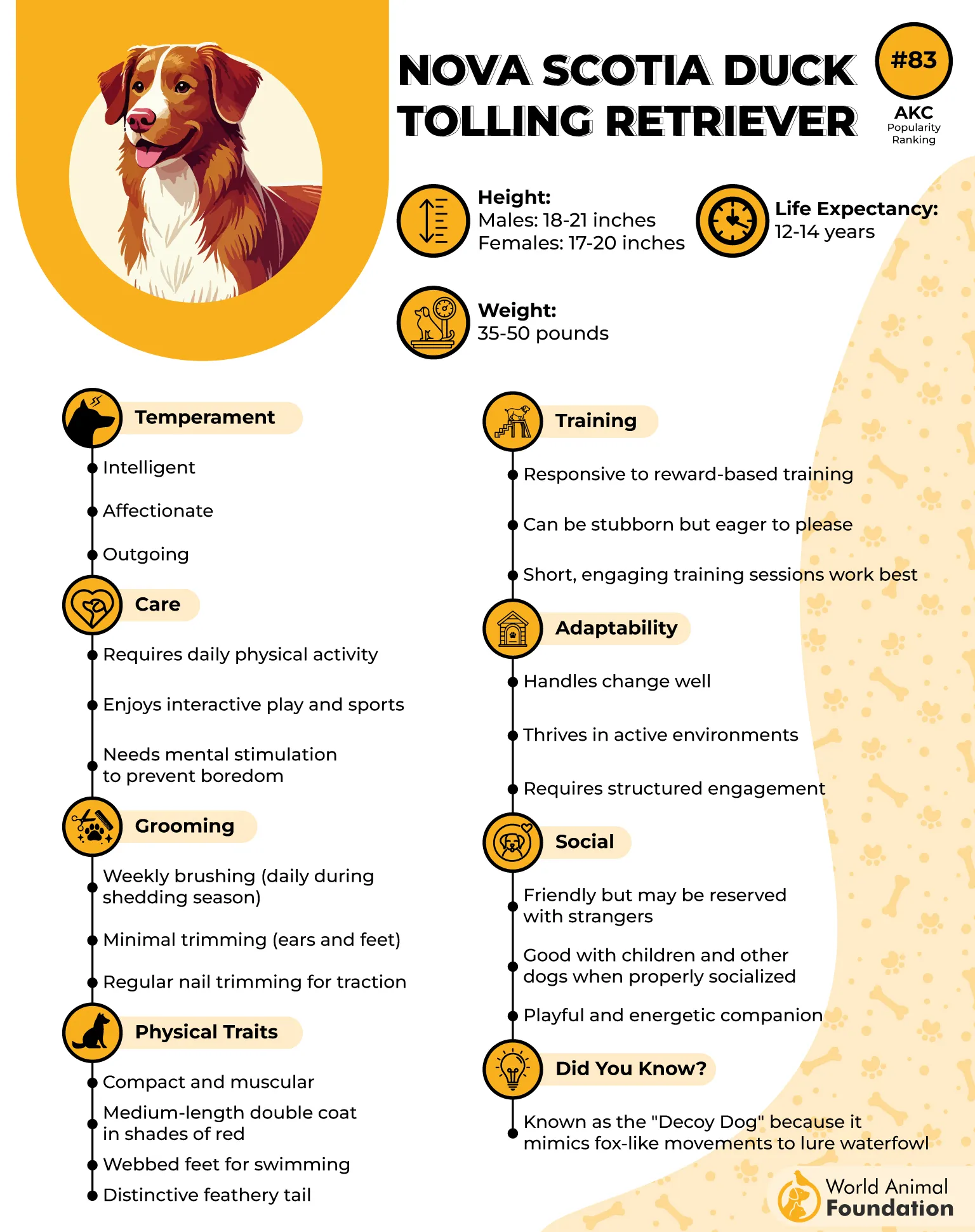
The Toller is medium-sized and athletic. It has a beautiful reddish coat with white markings. It has a strong retrieve instinct, loves water, and has a drive and endurance that serious waterfowl hunters need.
It is also a smart, sensitive breed that responds well to positive training. Push too hard, and it shuts down. Work with it patiently, and you will have a hunting partner that is one of a kind.
Conclusion
Good hunting dogs are not just about prey drive or a strong nose, though both absolutely matter.
The best dog breeds for hunters fit your specific hunting tasks, terrain, target game, and life at home, too. These dogs live with you year-round, not just during the season.
These dogs excel at hunting big game (mountain lions, wild boar), guarding private property, and hunting and retrieving birds and small game (rabbits, deer).
They are made to smell things, search for them, and bring them to the hunter.
Do your research. Find a reputable breeder. Start proper training early. And do NOT skip the basics.
Socialization, obedience, and building a real bond with your puppy before you ever set foot in the field.
The difference between a good hunt and a great one…
Most of the time, it is the dog.
