




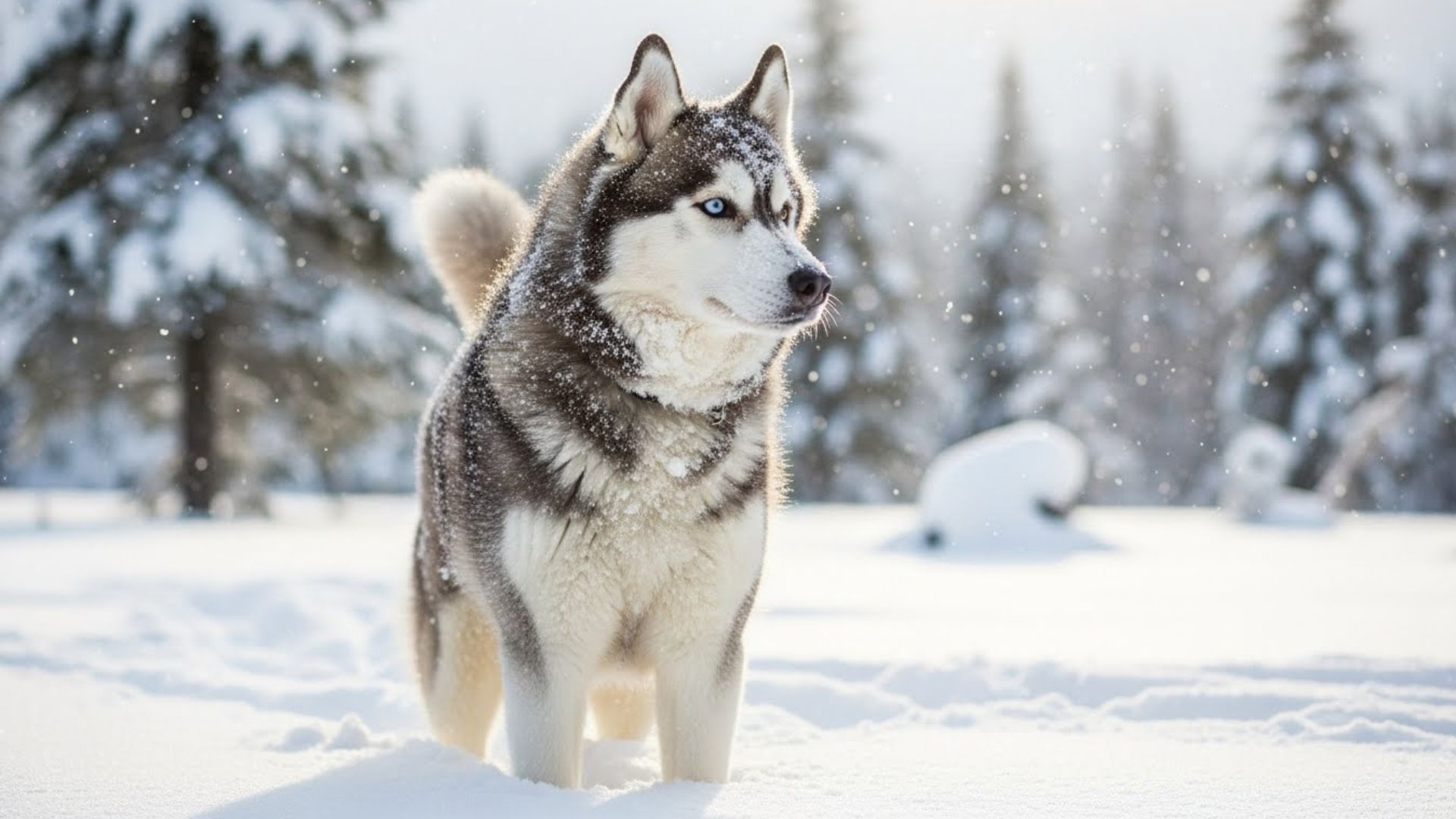
Snowy winters are magical, but only a few dog breeds truly feel at home in the cold. Dogs bred in icy climates have adapted to thrive in subzero temperatures, performing work and play with ease. Research shows that cold-weather dogs have higher endurance and metabolic efficiency, allowing them to stay active even in extreme conditions.
Beyond thick fur or size, many breeds display traits shaped by centuries of life in snow. They can endure long journeys, navigate icy terrain, and remain active for hours. Some were sled dogs, others were mountain guardians, and some were hunters, but all shared an innate love for winter.
This guide explores seven dog breeds that flourish in snow. Each has its own personality, history, and special adaptations, making them perfect companions for cold-weather adventures.
Amazing Dog Breeds That Thrive in the Snow
1. Siberian Husky
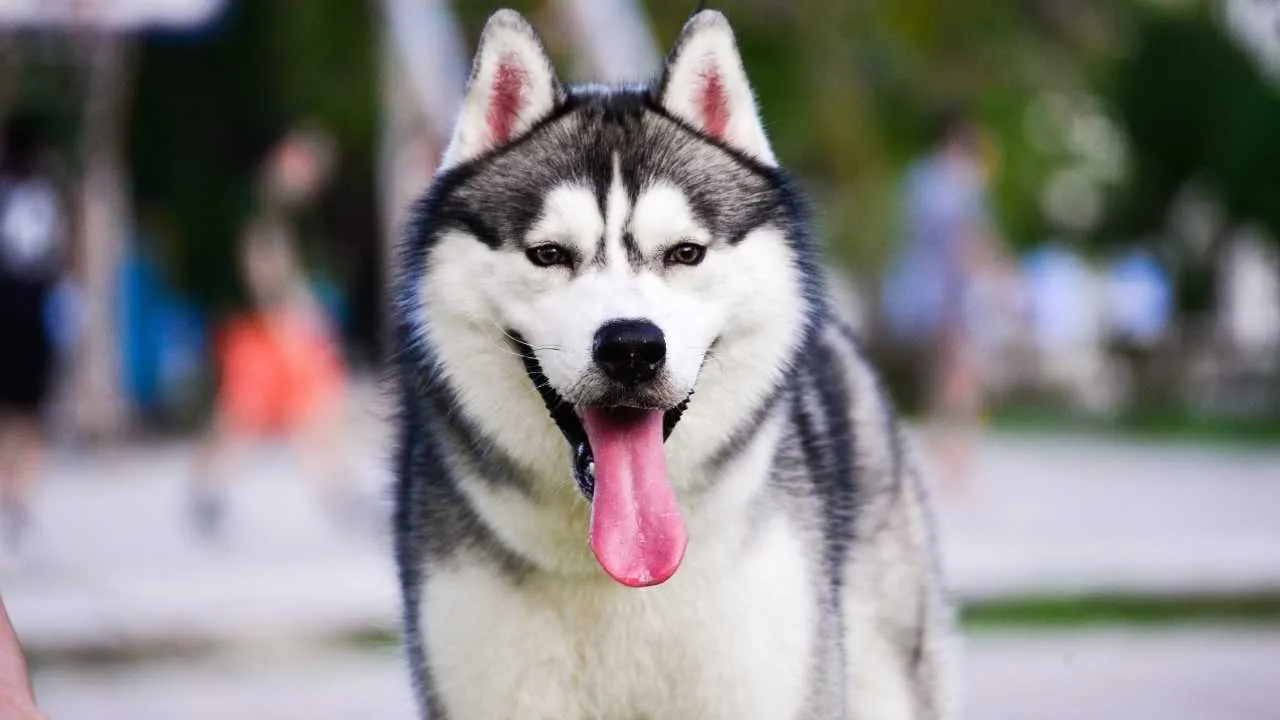
Siberian Huskies are lively, social, and endlessly curious. They were bred by the Chukchi people of Siberia for pulling carts over long distances in subzero temperatures. Known for their striking blue or multi-colored eyes, Huskies are friendly and enjoy being part of a pack. Their energy seems boundless; therefore, they are counted among the toughest & strongest dog breeds.
These dogs are natural endurance runners. Huskies can travel for miles without tiring, and their alert eyes help them detect subtle contrasts in snowy terrain.
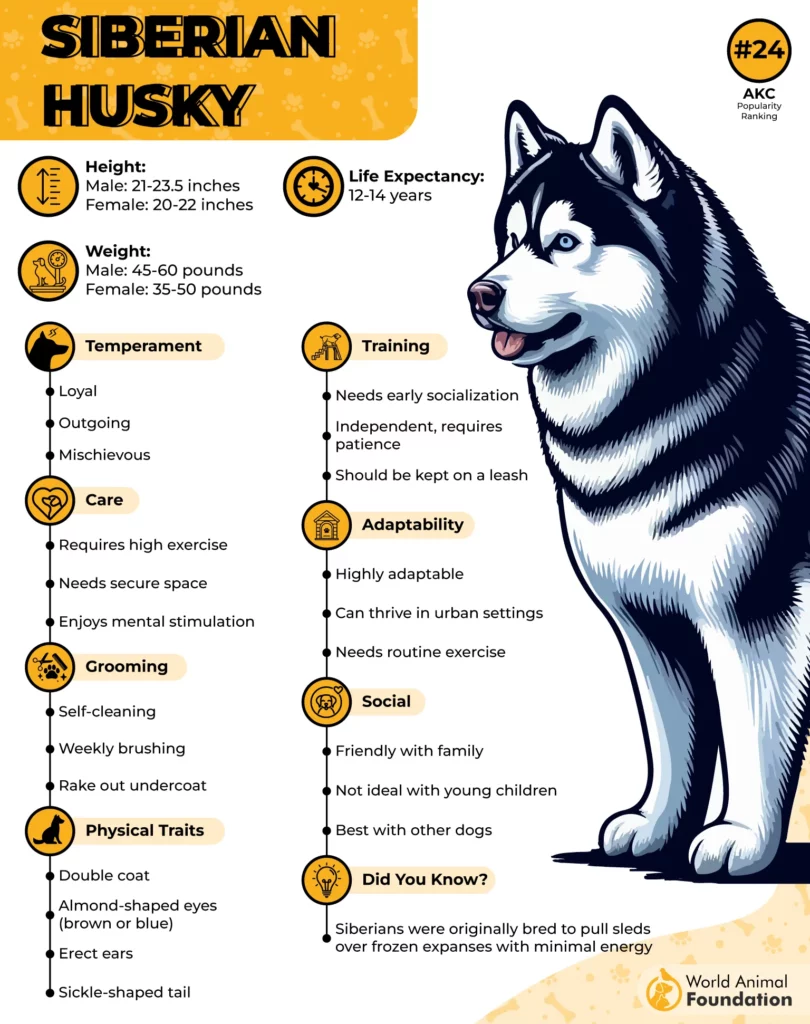
According to Britannica, in 1925, Siberian Huskies raced 674 miles through blizzards to deliver life-saving serum. These furry friends have an innate instinct for teamwork, making them excellent companions for active families.
Why do they thrive in the snow?
A lean, muscular frame allows long-distance travel without fatigue
Thick double coats provide insulation
High energy keeps them active and playful outdoors
2. Alaskan Malamute
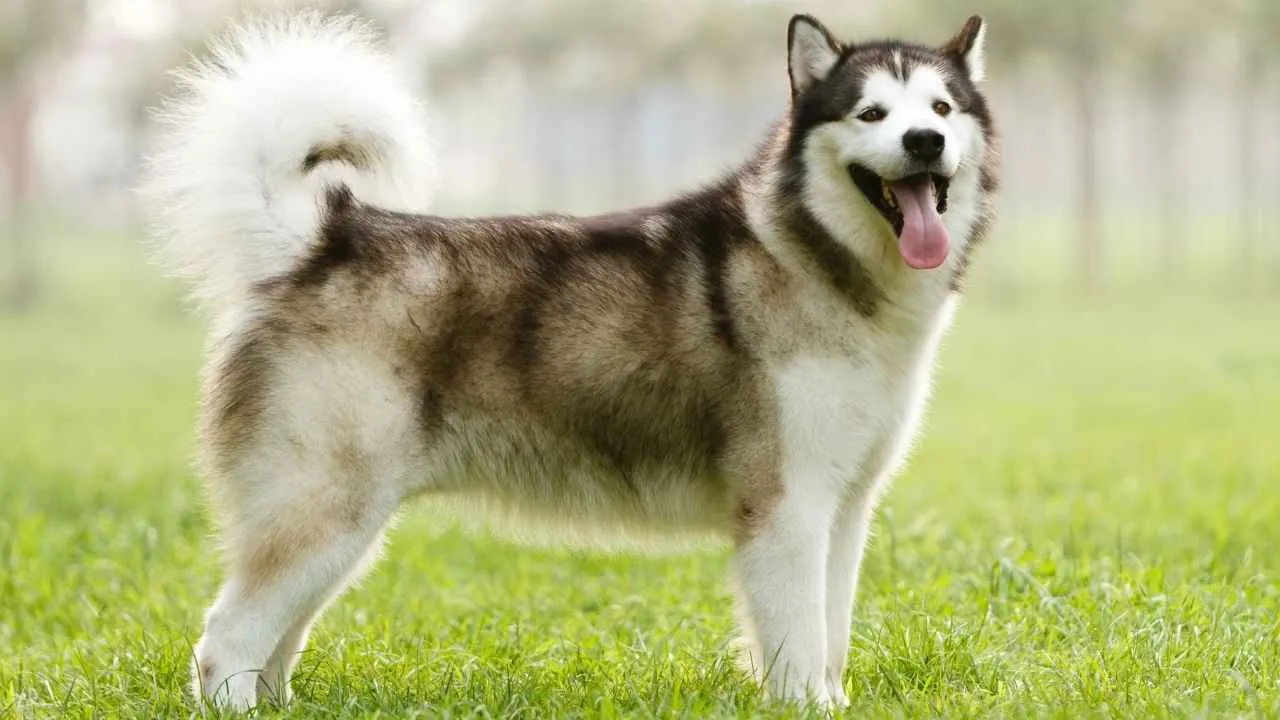
Alaskan Malamutes are strong, patient, and determined. Bred for Arctic freight hauling, they combine power with endurance. Their calm, loyal nature makes them excellent family companions.
Their strength allows them to pull heavy loads through harsh winter conditions. Malamutes enjoy outdoor activities and thrive when given a job to do.
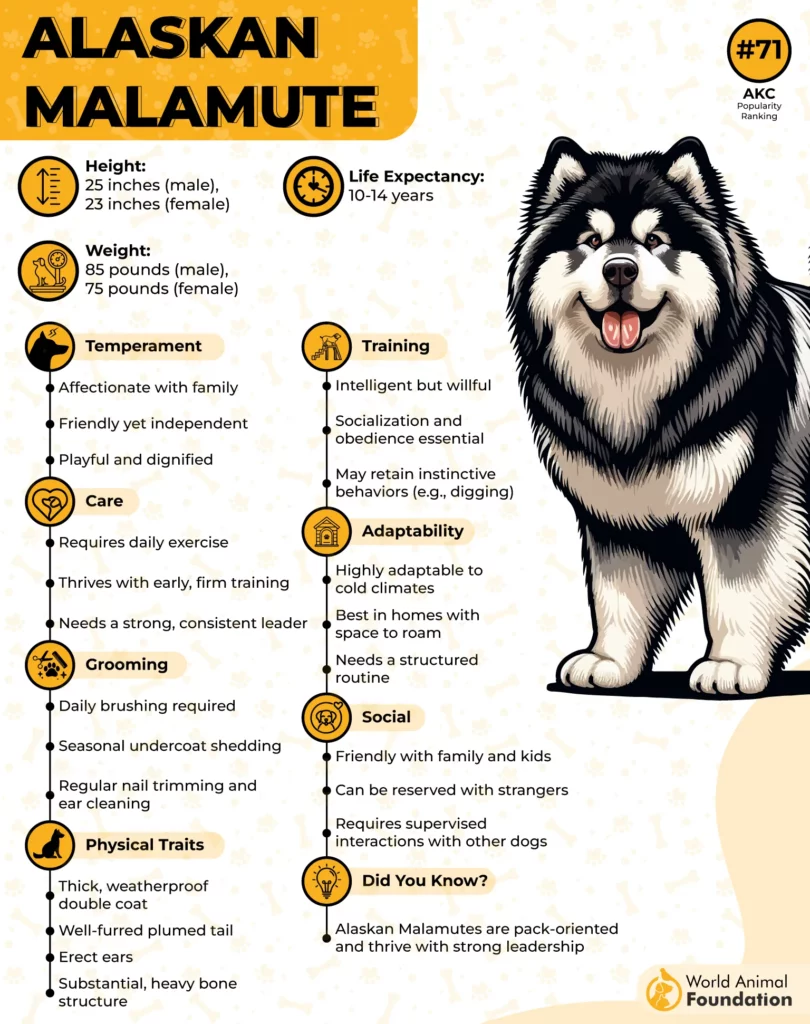
Their broad chests, thick coats, and powerful shoulders make them well-suited for low temperatures and snowy adventures. They instinctively adjust their stride in cold climates, preventing exhaustion and injury. Malamutes are excellent long-distance travelers and can work for hours in the cold, making them an ideal snow dog breed.
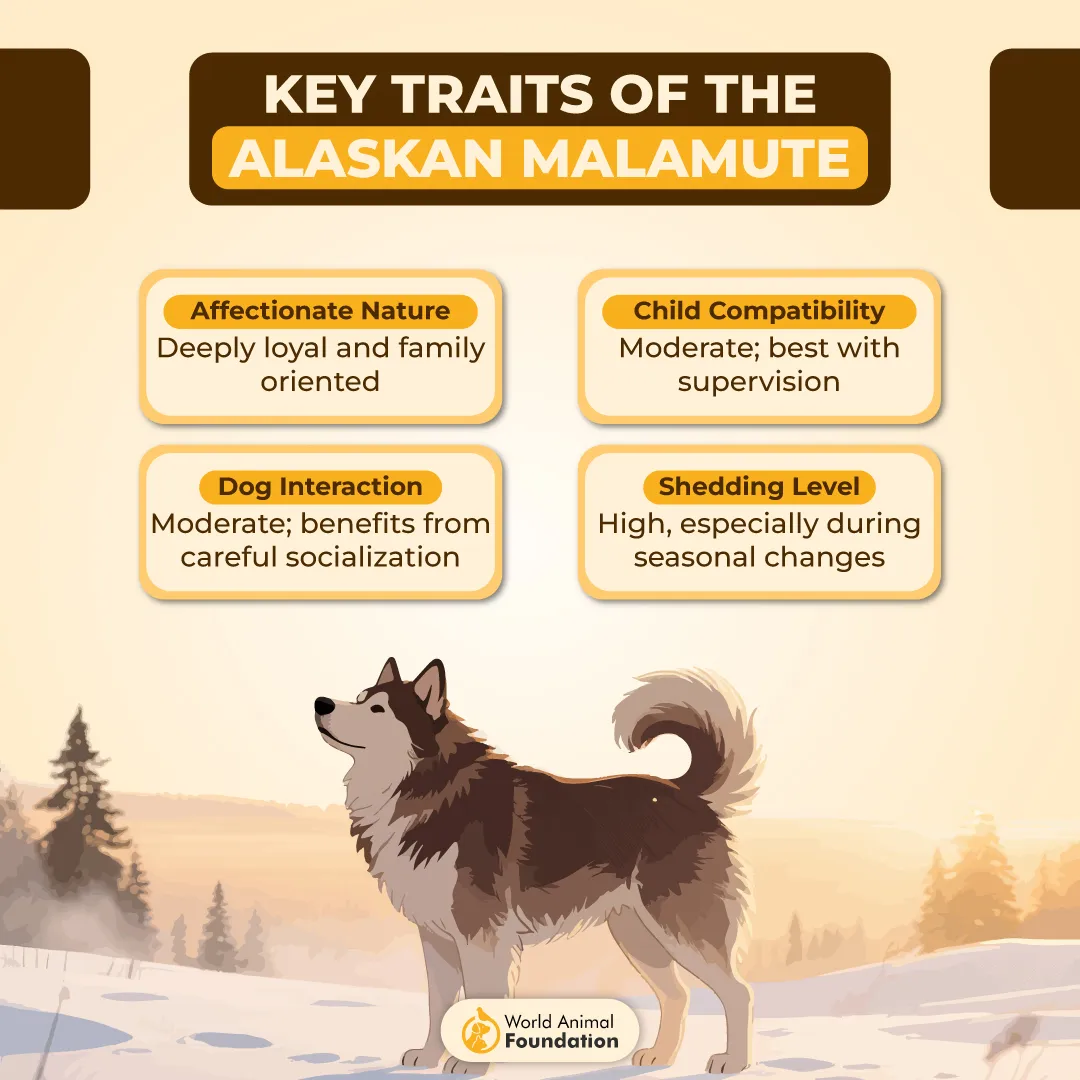
Why do they thrive in the snow?
Powerful muscles let them haul heavy loads efficiently
Overwhelming strength and power
Broad build supports balance and stability in deep snow
3. Saint Bernard
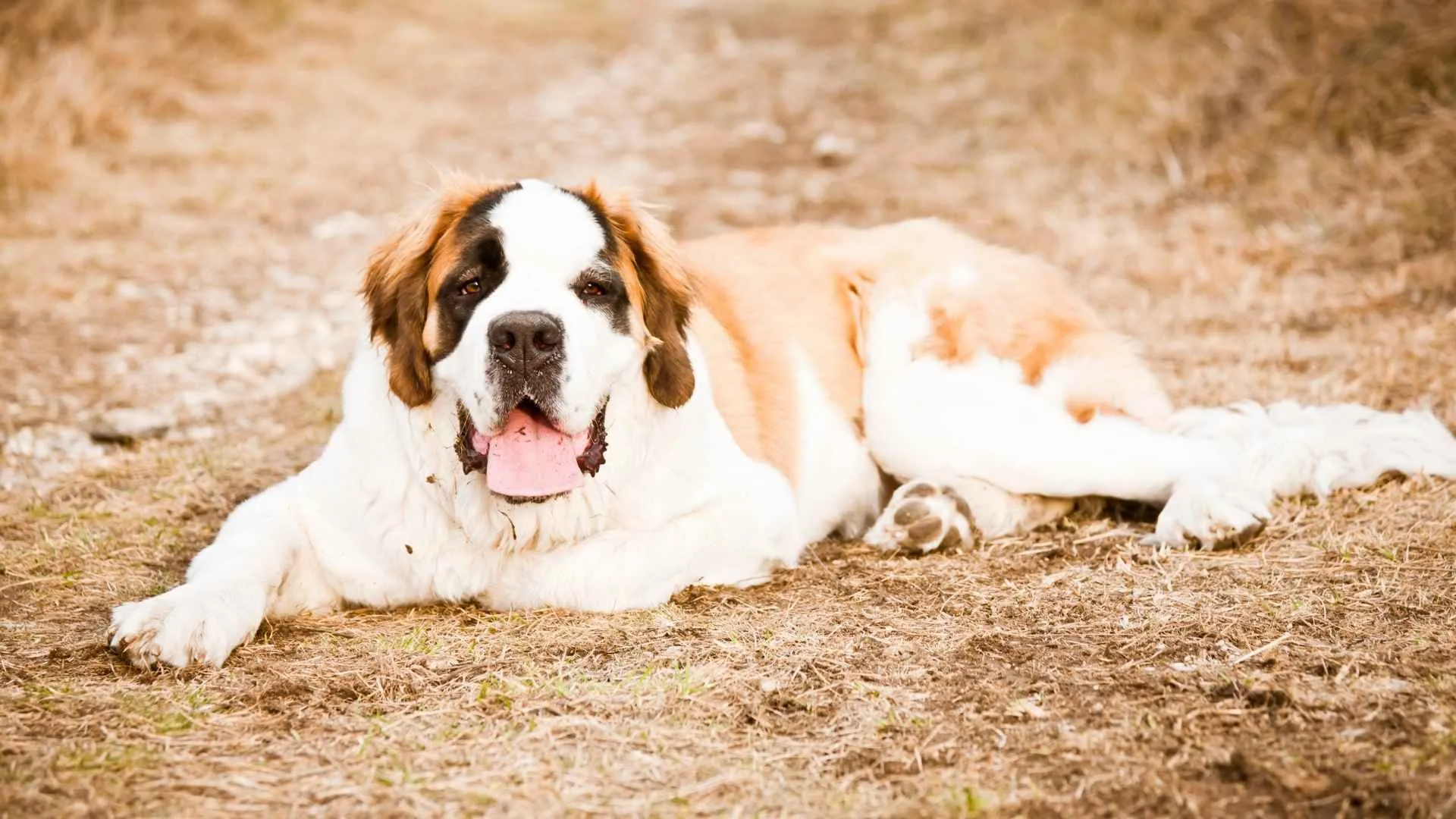
Saint Bernard, a gentle giant breed that originated from the Swiss Alps. They were bred as rescue dogs for travelers trapped in snowstorms.
These calm, intelligent, and affectionate dogs make perfect family companions. Despite their size, they are surprisingly agile and cautious, traits that once helped save countless lives.

Saint Bernards have an extraordinary sense of direction and can sense temperature changes, helping them navigate through deep snow safely. Even today, their combination of strength and intuition makes them great companions in harsh conditions.
Why do they thrive in the snow?
Have a dense double coat that makes them cold-tolerant
Can detect subtle temperature shifts to avoid hazards
Large, steady frame ensures stability in deep snow
4. Great Pyrenees
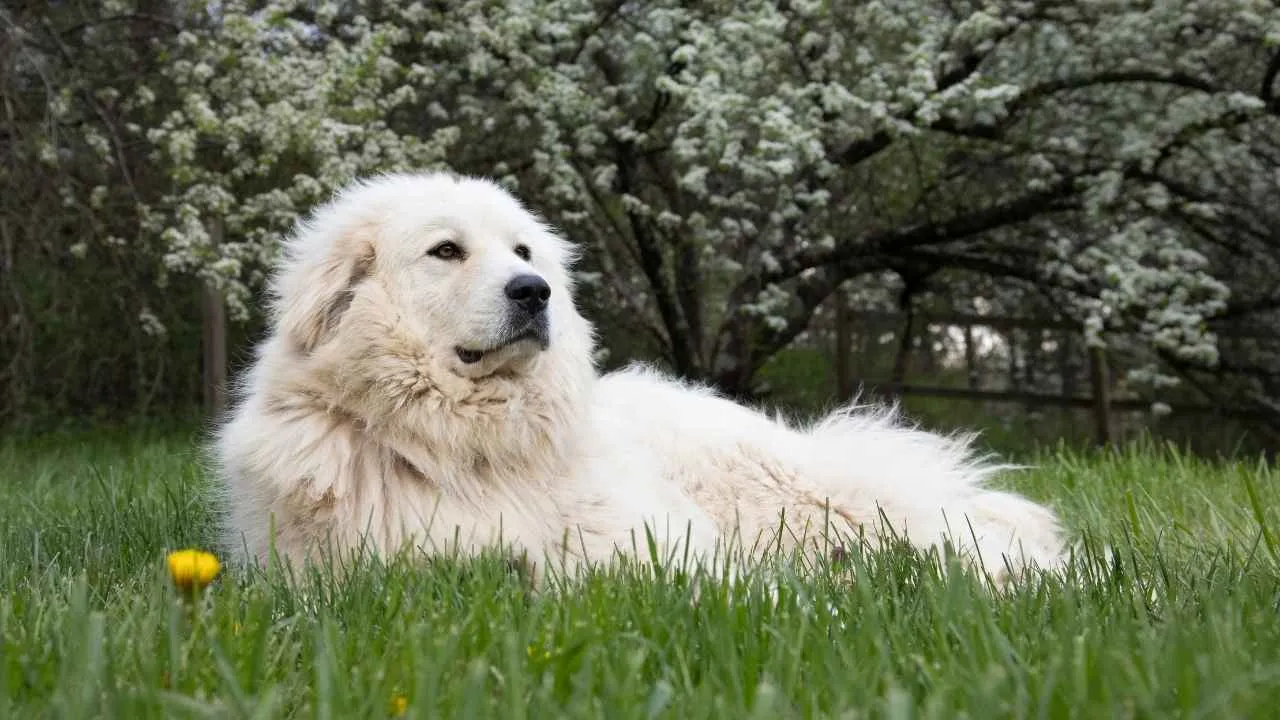
Great Pyrenees are calm, independent, and watchful farm dogs. These pups were originally bred as livestock guardians in snowy mountain regions. They combine strength with intelligence.
Their patient, observant nature allows them to assess threats and respond strategically. You know they were named the Royal Dog of France in the 17th century.
They navigate snow carefully, placing each paw deliberately to avoid overexertion. Their ability to gauge snow depth allows them to patrol large areas efficiently.
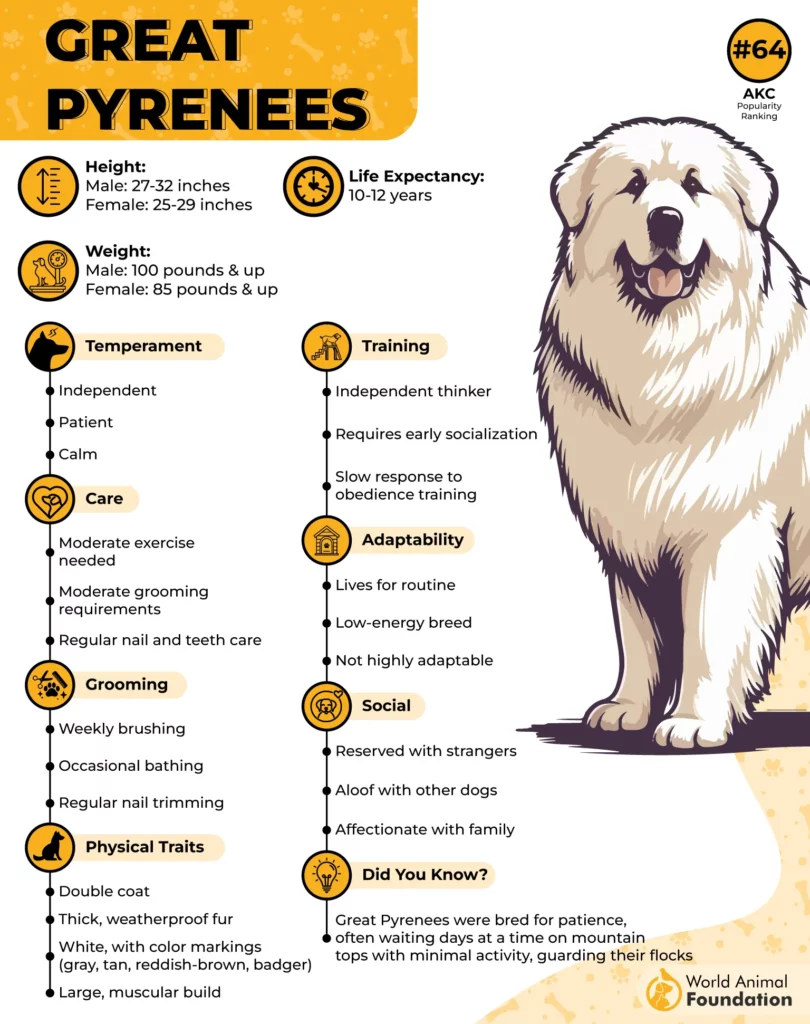
This careful approach to movement, combined with their long, sturdy legs, ensures they can handle even steep or uneven snowy terrain without fatigue.
Why do they thrive in the snow?
Have dewclaws on their hind legs
Can judge snow depth for safer movement
Long legs allow them to tackle uneven or elevated terrain
5. Keeshond
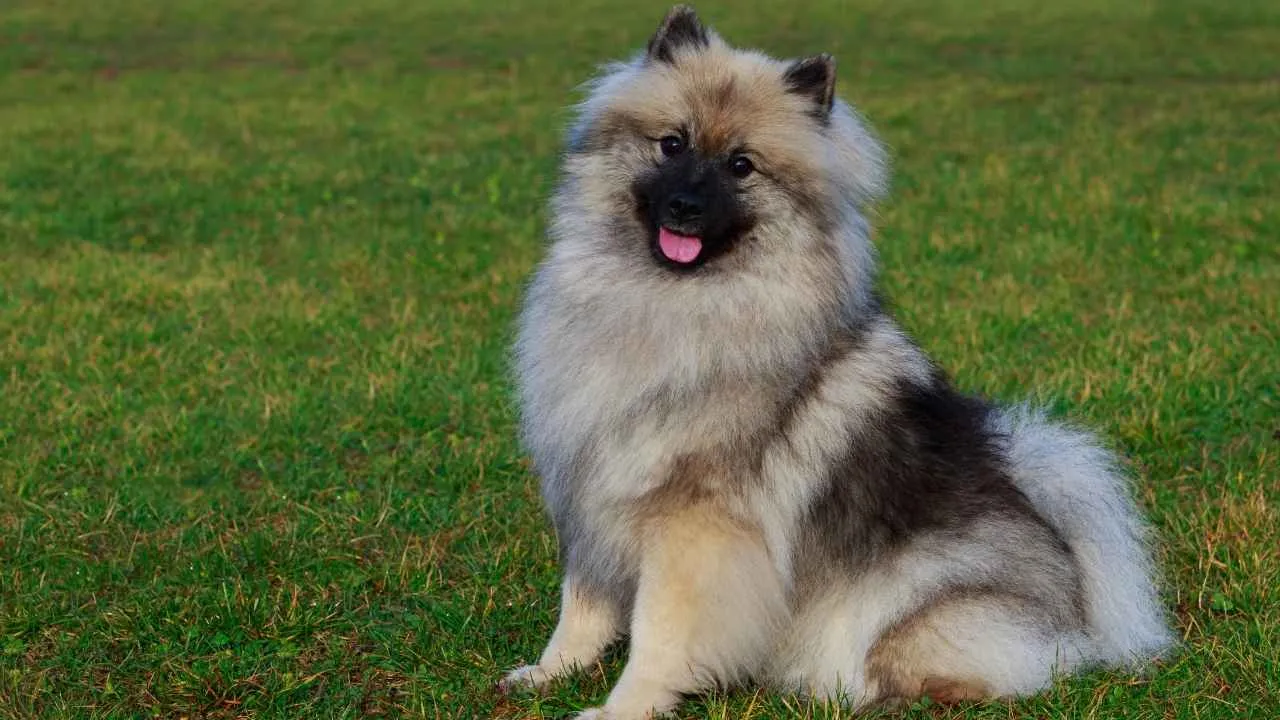
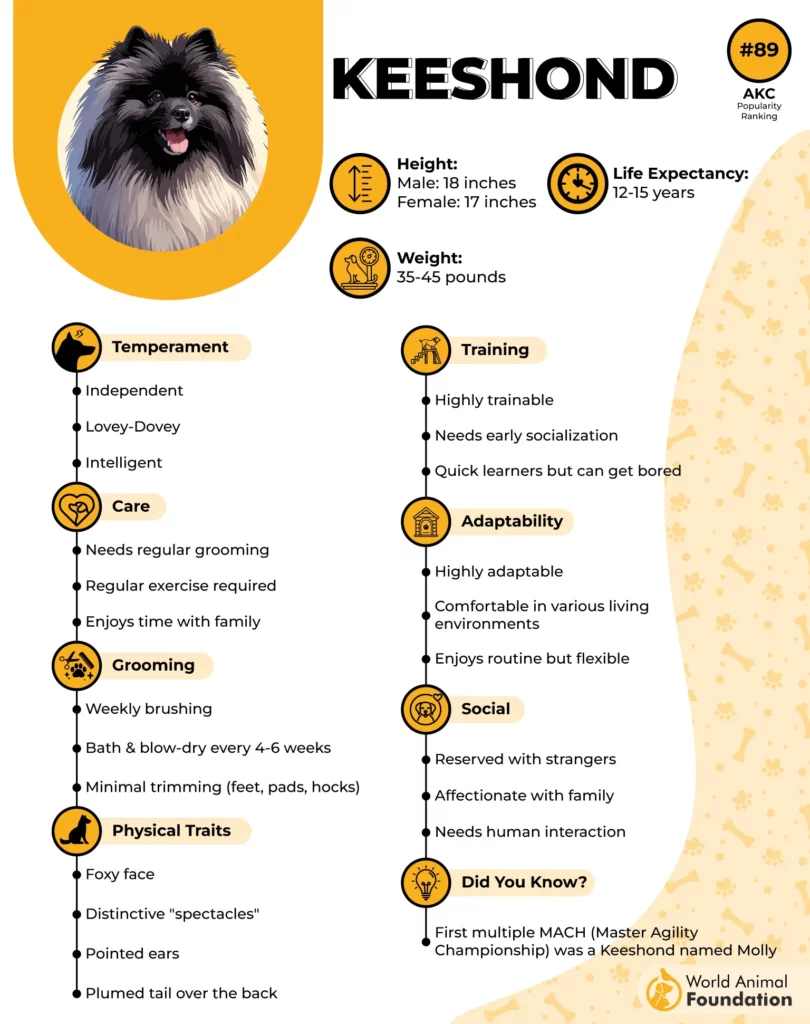
Keeshonds are small, lively, and full of personality. Recognizable by their “spectacle” markings around the eyes, they were bred to guard riverboats in the Netherlands. Friendly, curious, and playful, they form strong bonds with families and love exploring outdoors, even in winter.
They are naturally alert and agile, allowing them to navigate icy patches without slipping. Their attention to surroundings helps them detect hazards in low-visibility snow, and their nimble movements let them play and run safely. These traits make Keeshonds charming yet reliable partners for winter adventures.
Why do they thrive in the snow?
Abundant lion-like ruff around the neck and shoulders
Highly observant of environmental hazards
An alert and energetic nature keeps them active outdoors
6. Akita
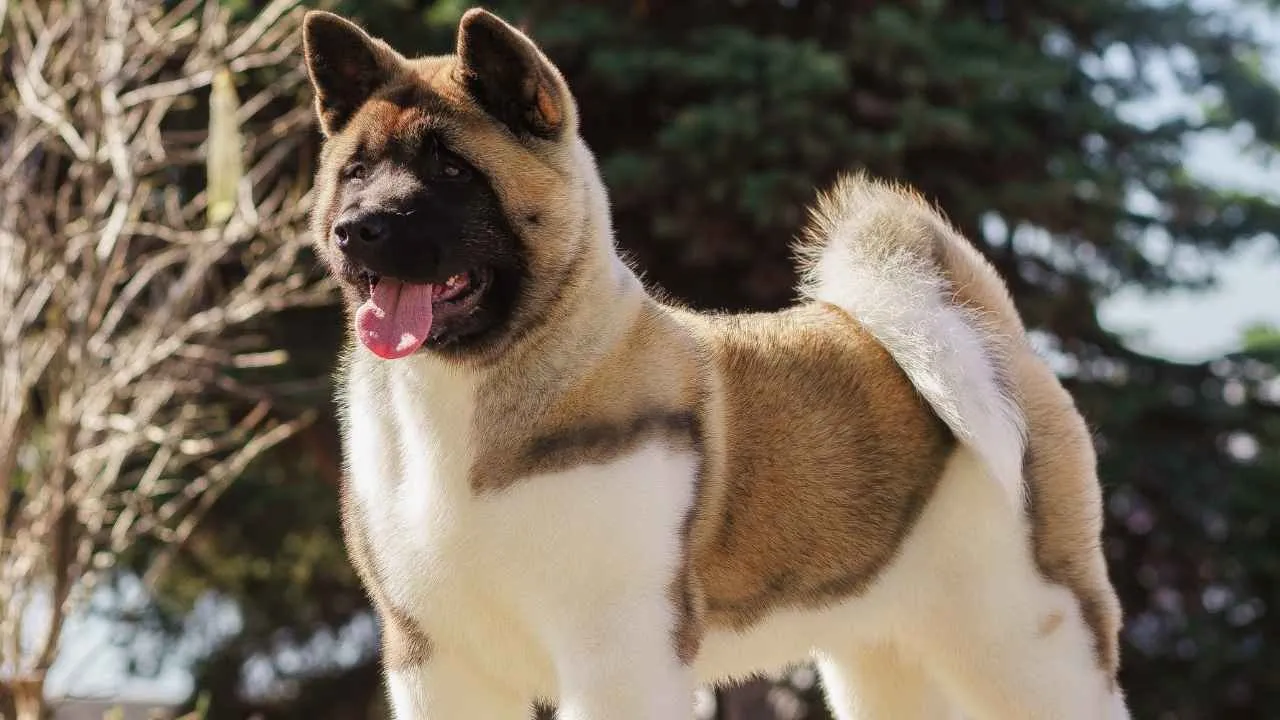
Akita are strong, dignified, and loyal. In Japan, they were bred for hunting and protection. Calm and confident, they are devoted to families yet capable of independent decision-making, which helps them navigate challenging terrain safely.
Their unique, cat-like feet have thick pads that provide extra cushioning. A slight web between the toes helps distribute their weight, giving them better stability in snow.
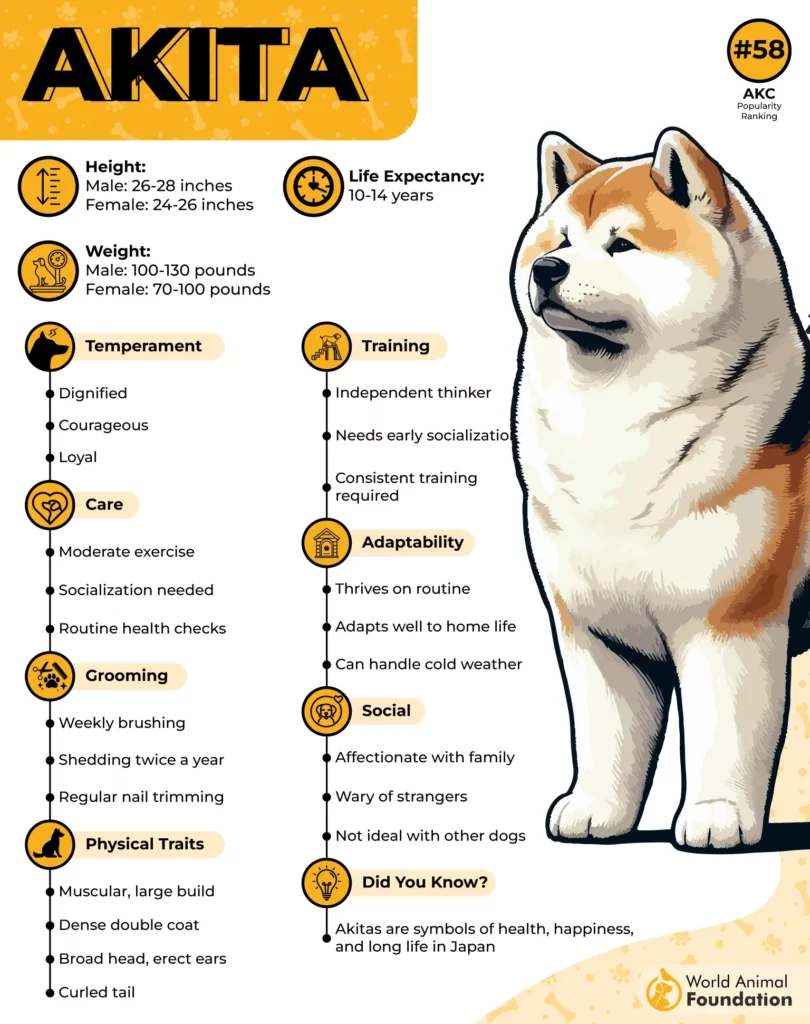
Combined with their cautious, strategic approach, Akitas can traverse snowy landscapes efficiently and safely, even in extreme conditions.
Why do they thrive in the snow?
They have webbed toes, which act like natural snowshoes.
Fur around the neck and shoulders provides extra insulation
Independent decision-making helps them navigate snowy terrain safely
7. Samoyed
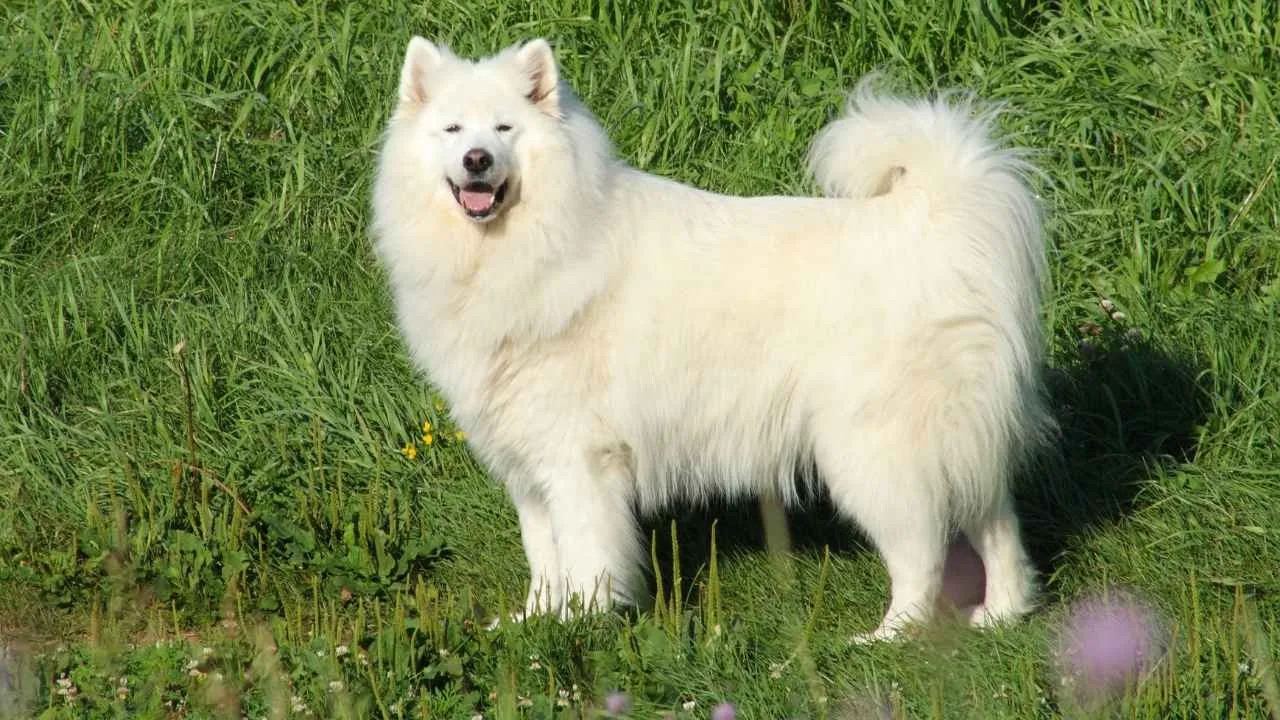
Samoyeds are cheerful, fluffy, and endlessly playful. This ancient breed was bred by Siberian nomads to herd reindeer and pull sleds. They are social, hardworking, and affectionate. The American Kennel Club mentions that the Samoyed possesses a Samoyed smile.
These working dogs are energy-efficient movers. So they can sustain hours of activity or outdoor adventures without tiring.

Whether running, playing, or pulling sleds, their compact, strong bodies make winter tasks easier. Their playful attitude also ensures they remain active, even when the snow is deep, keeping their minds and bodies engaged.
Why do they thrive in the snow?
Energy-efficient movement allows prolonged outdoor activity
Compact build supports sled work and climbing hills
Playful disposition encourages continuous exercise in the snow
Conclusion
Snow-loving breeds are built for cold weather. They can move through snow easily and stay active for hours. Their instincts, strength, and alertness help them handle icy terrain and freezing conditions safely. Many have traits that let them conserve energy while exploring or working outside. They adapt to harsh conditions naturally, whether running, pulling, or guarding. Their playful and hardworking nature keeps them engaged even in deep snow.
Cold climates don’t slow them down; they enjoy the winter just like we enjoy the sun. These dogs show how well some animals are made for snowy adventures, combining endurance, agility, and intelligence. Their dense coats, strong muscles, and instincts allow them to thrive in extreme cold, making them perfect companions for winter activities.
