




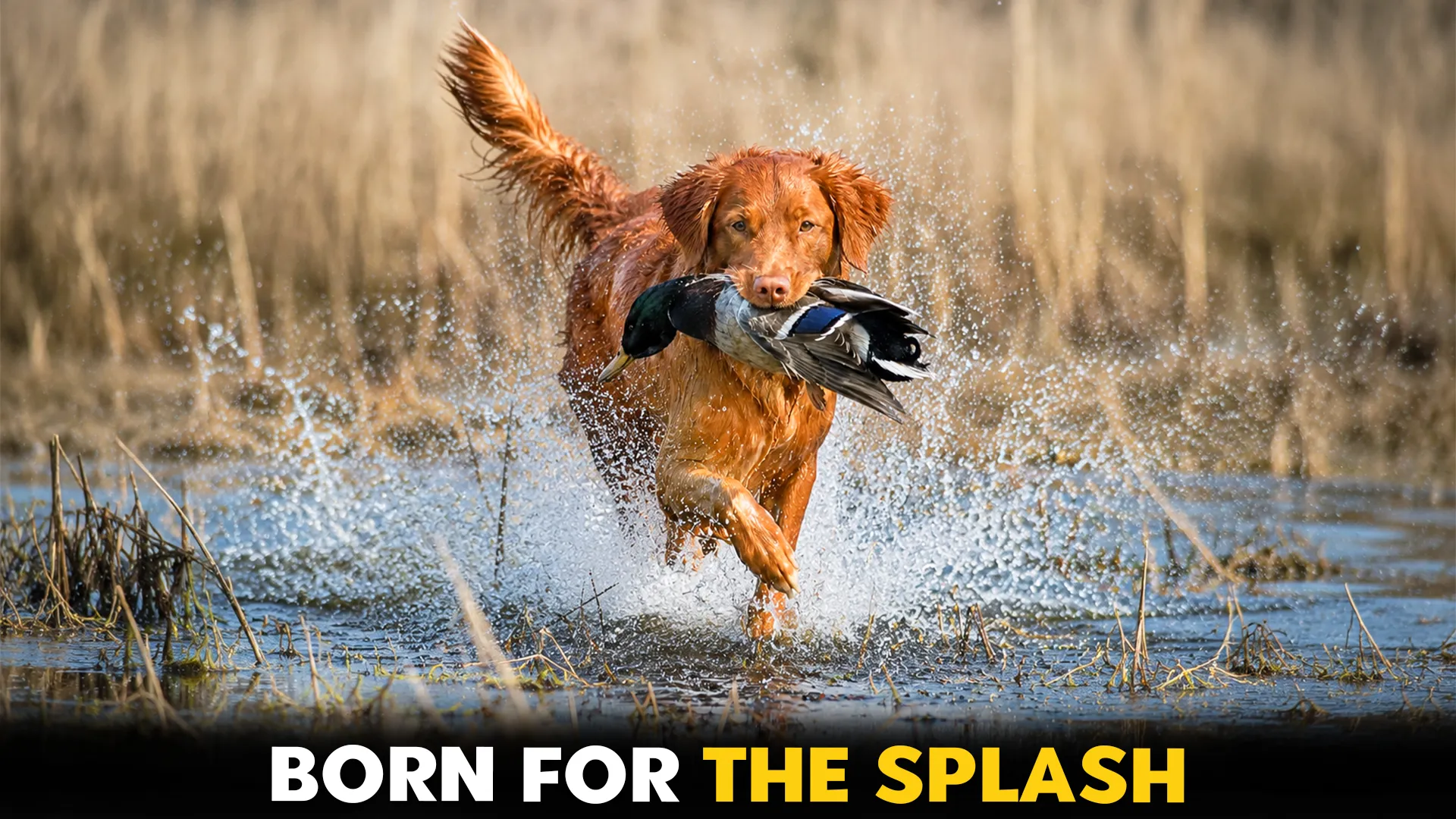
Ever wonder why some dogs dive into freezing water as if they were born for it?
Not trained. Not forced. Built for it. While most dogs hesitate at the edge of a lake, these breeds charge through crashing waves, icy marshes, and dense reeds without a second thought. Why? Because retrieving waterfowl isn’t just a learned skill to them—it’s instinct.
For years, people assumed any “good dog” could fetch a duck. Toss the bird, blow the whistle, and the job was done. But true waterfowl retrievers are in a league of their own. They were specifically bred for the demanding world of duck and goose hunting, where icy water, harsh weather, and long retrieves are all part of the challenge.
The best of these breeds are engineered for the job. They combine powerful swimming ability, weather-resistant coats, sharp intelligence, and relentless endurance with the loyalty hunters depend on in the field. Some can outswim humans, outwork other dogs, and keep retrieving long after exhaustion should have set in.
So, which breeds truly dominate the wetlands, frozen backwaters, and open lakes of the hunting world? Let’s dive into the top 10 dog breeds specializing in waterfowl retrieval.
Top Dog Breeds Specializing in Waterfowl Retrieval
1. Chesapeake Bay Retriever
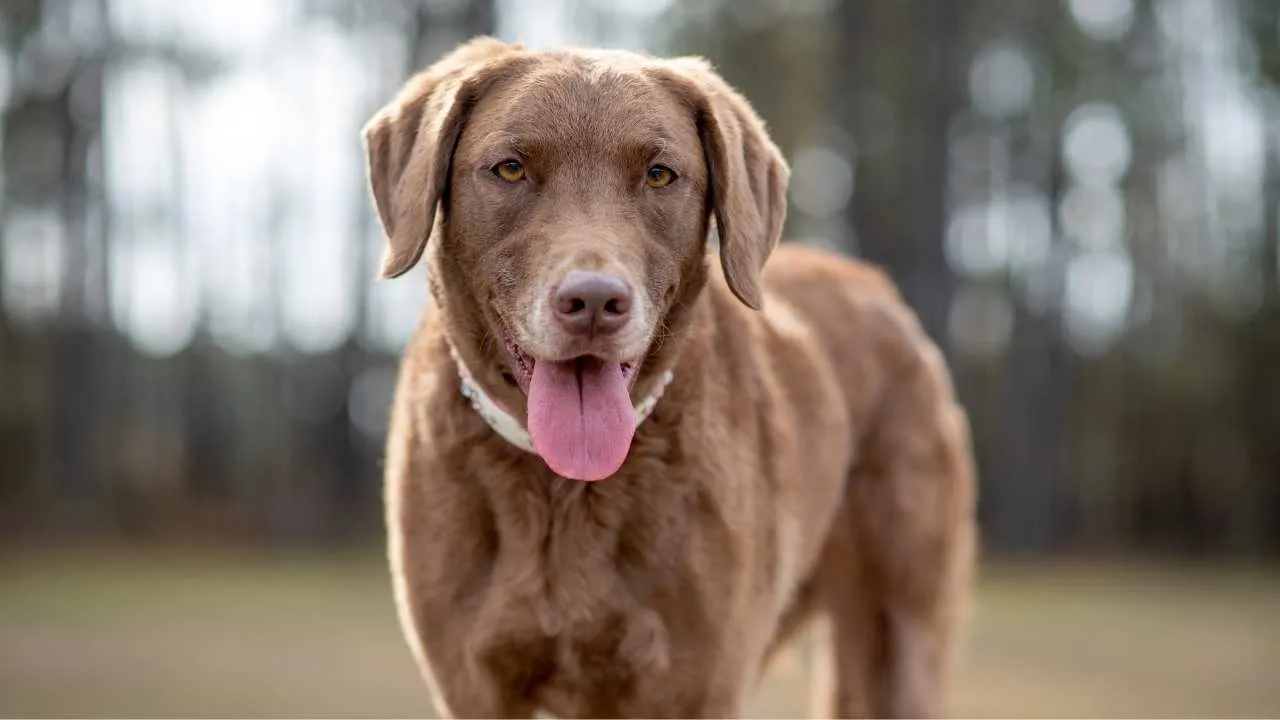
The Chesapeake Bay Retriever breed was built for one job—pulling ducks from freezing water in brutal weather conditions, as noted by PetMD.
Developed along Maryland’s Chesapeake Bay during the 1800s, this rugged retriever became famous among hunters who needed a dog capable of working through icy waves, heavy wind, and long hunting days without slowing down.
Unlike many other retrievers, the Chessie has an oily, dense double coat that naturally repels cold water, helping it stay warm even in near-frozen marshes.
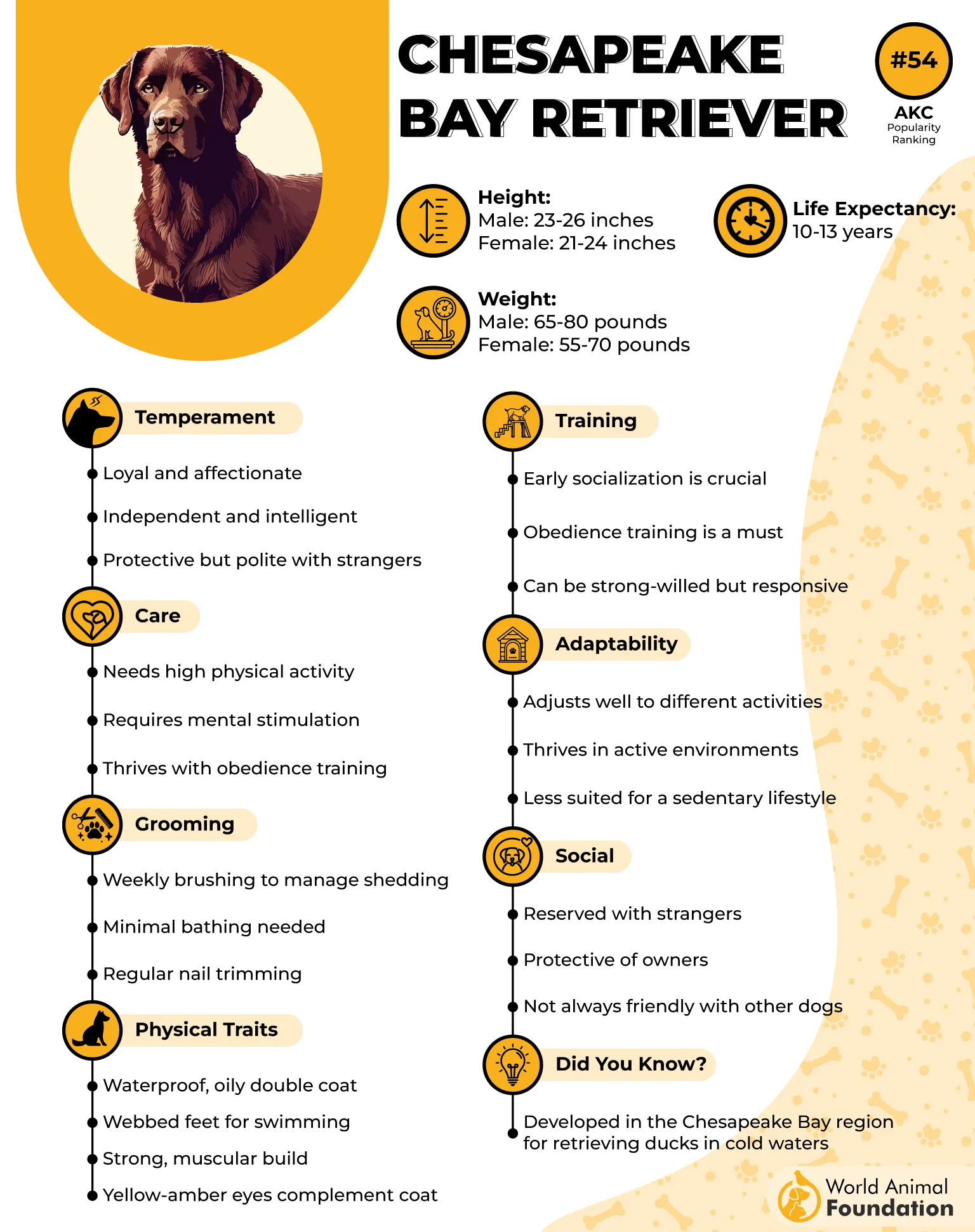
These dogs are powerful swimmers with impressive endurance. Hunters often relied on them to retrieve dozens of waterfowl in a single outing while navigating rough currents and thick reeds.
Their strong build and broad chest give them the strength to break through icy water where lighter dogs struggle.
Chesapeake Bay Retrievers are also known for their intense focus and independent thinking during retrieves, especially when birds fall far from shore.
They thrive when given advanced retrieval drills, scent work, and regular outdoor activity, making them a serious choice for experienced waterfowl hunters.
2. Labrador Retriever
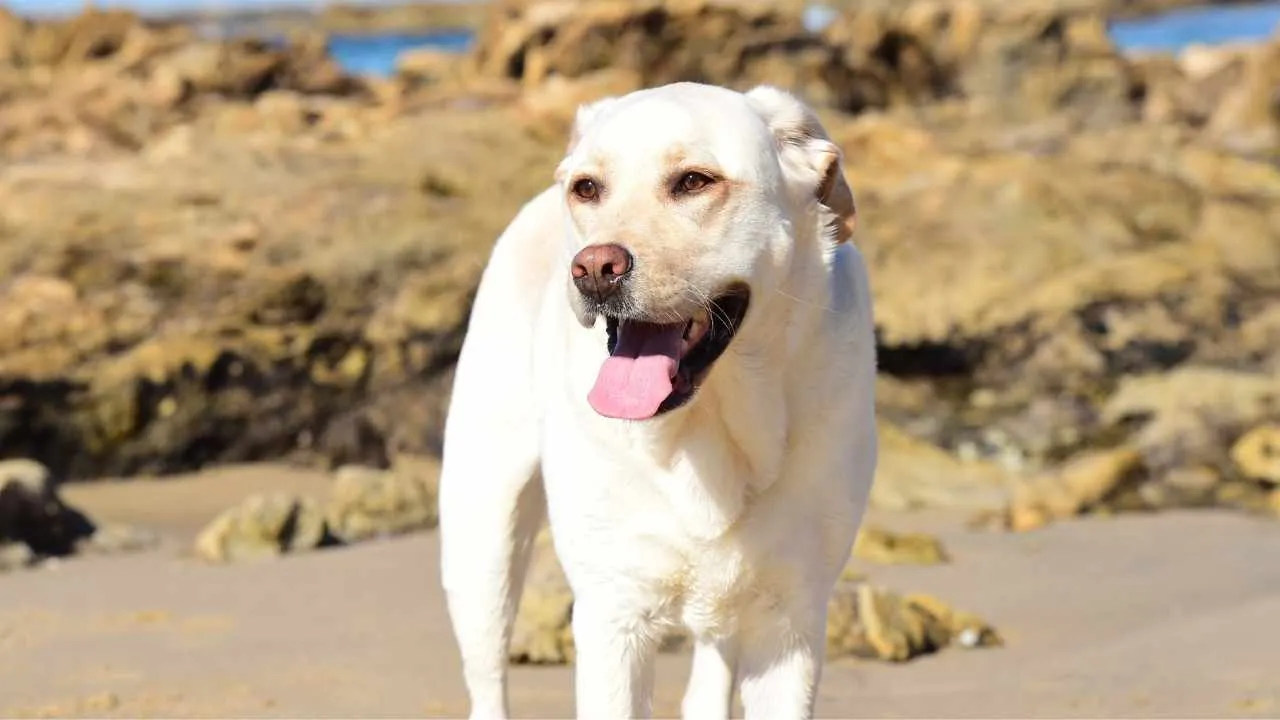
The Labrador Retriever earned its reputation in duck blinds and marshlands long before becoming one of the world’s favorite family dogs.
Bred specifically to retrieve birds for hunters, Labs are known for their ability to work tirelessly in cold water, thick mud, and heavy cover during long waterfowl hunts.
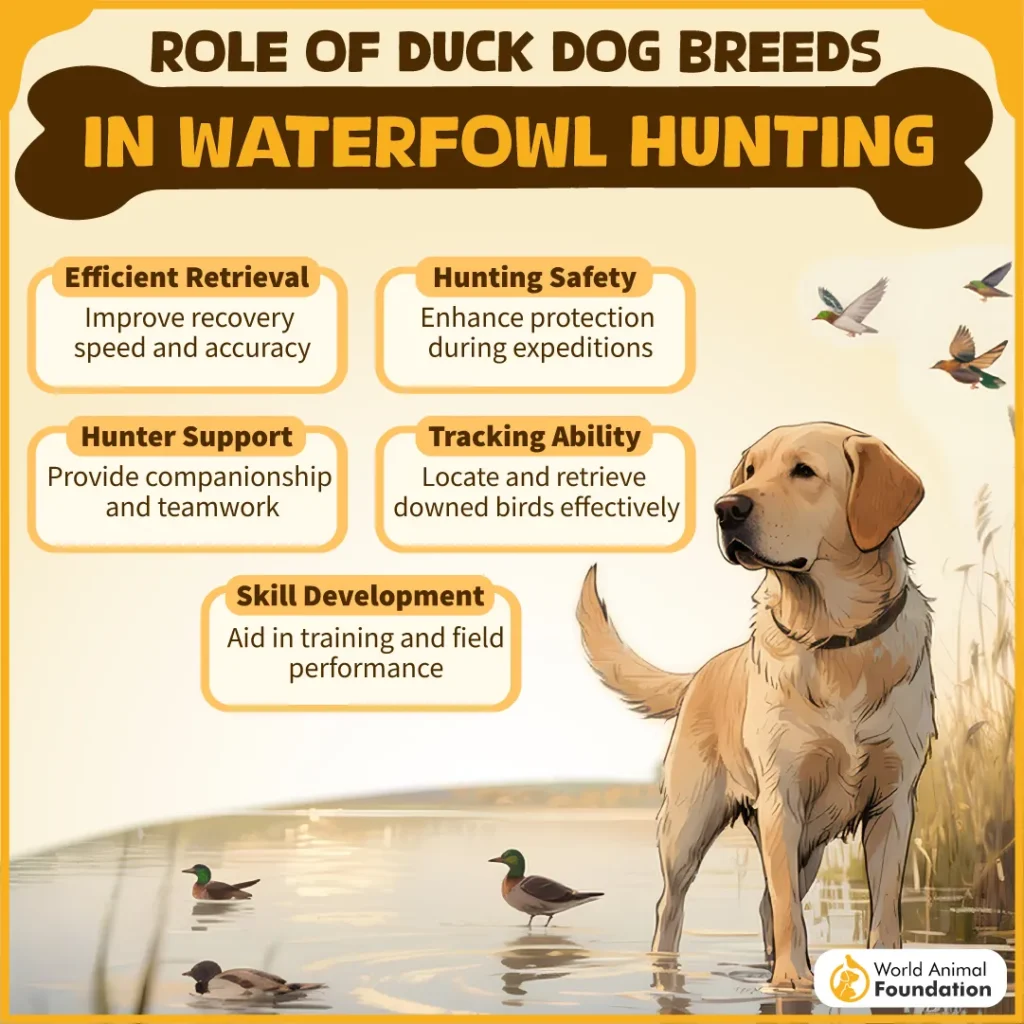
Their short, dense double coat helps keep icy water away from the skin, while their powerful tail acts like a rudder when swimming across lakes and flooded fields.
Hunters value Labradors for their steady temperament and reliable retrieving skills. Whether tracking down a wounded duck hidden in reeds or swimming through rough water after multiple birds, they stay focused and eager to work.
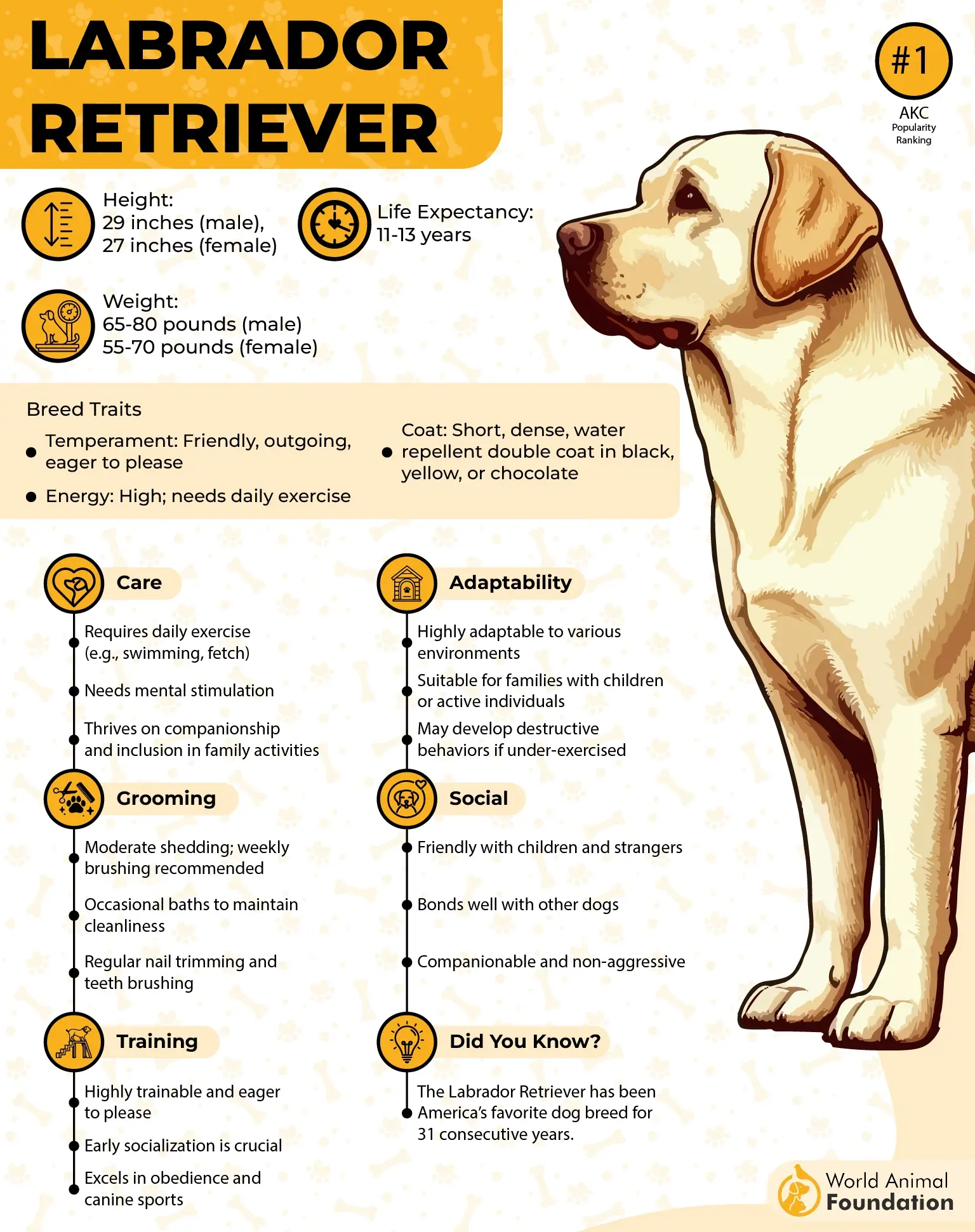
One thing that separates the Labrador from many other retrievers is its famously soft mouth, allowing it to carry birds carefully without damaging feathers or meat.
Labs are also quick learners that respond well to whistle commands and hand signals, making them dependable partners during fast-paced hunting trips where accuracy and teamwork matter most.
3. Nova Scotia Duck Tolling Retriever
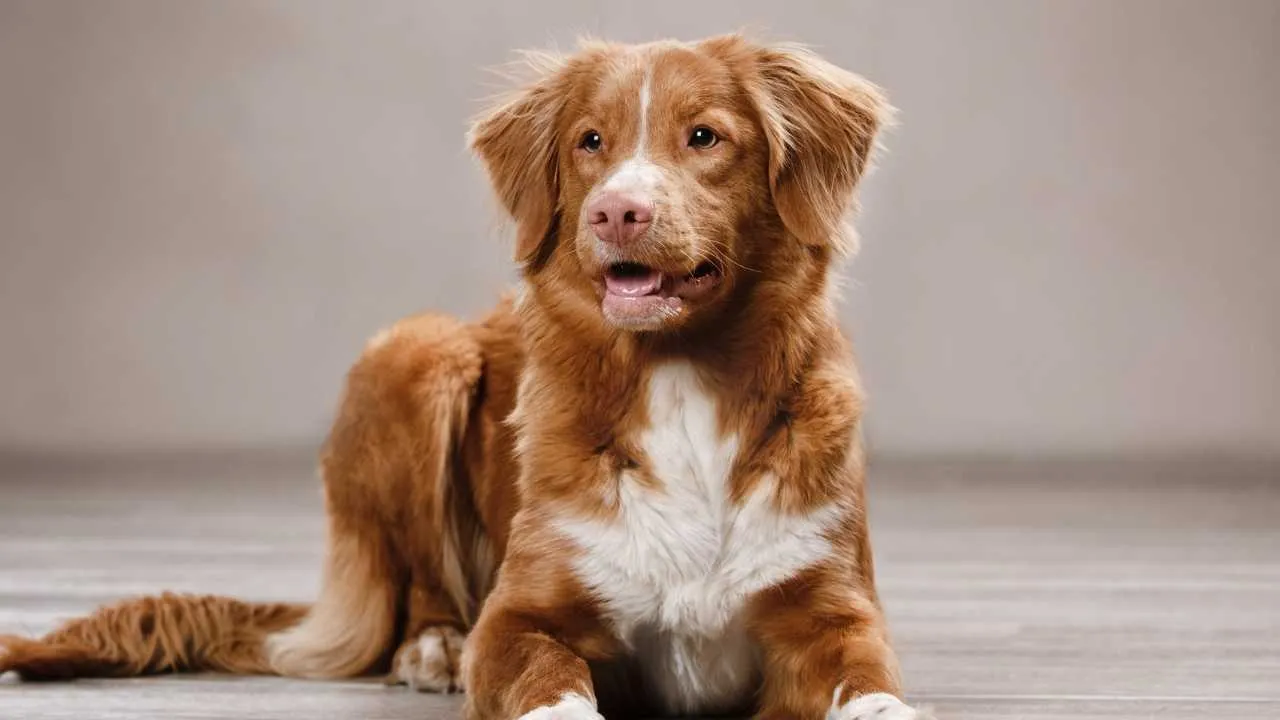
The Nova Scotia Duck Tolling Retriever is unique for its ability to lure ducks closer to the hunter’s blind through playful movements, making it an effective hunting companion.
Originally bred in Canada, these quick and agile dogs worked along shorelines, where their playful movements would attract curious ducks closer to hunters.
This unusual hunting method, known as “tolling,” is something no other retriever breed performs quite the same way.
Tollers are strong swimmers with webbed feet and a weather-resistant double coat that helps them handle cold lakes and rough coastal conditions.
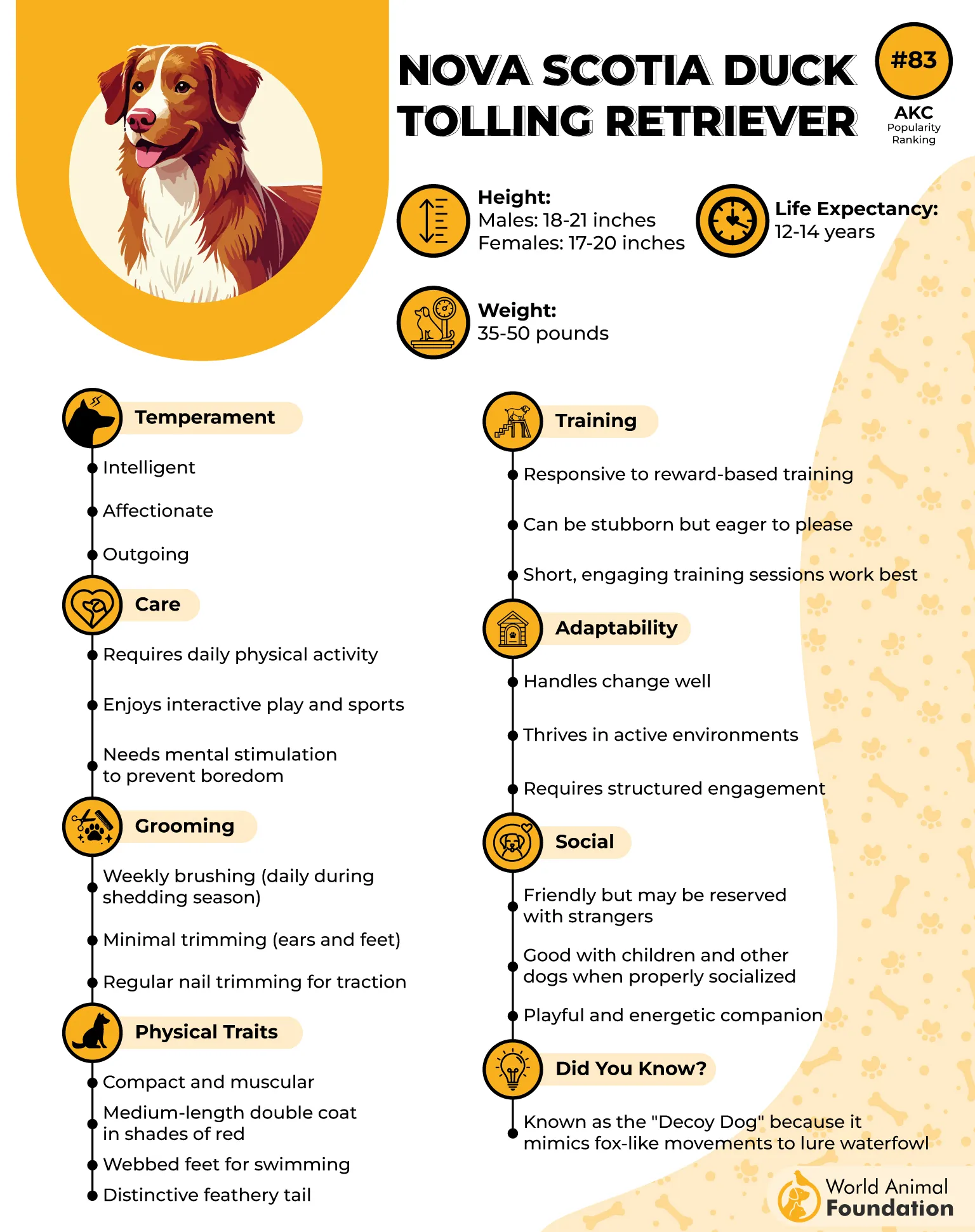
Hunters appreciate their speed during retrieves, especially when birds land in marshes, rocky shorelines, or icy water. Their sharp focus and eagerness to work make them highly responsive to whistle commands and advanced retrieval training.
With their striking red coat and endless stamina, Tollers thrive during long hunting trips that involve constant movement and repeated retrieves.
They are happiest when given demanding outdoor tasks, whether it’s chasing down fallen ducks, hiking through wetlands, or practicing retrieving drills for hours without losing enthusiasm.
4. Golden Retriever
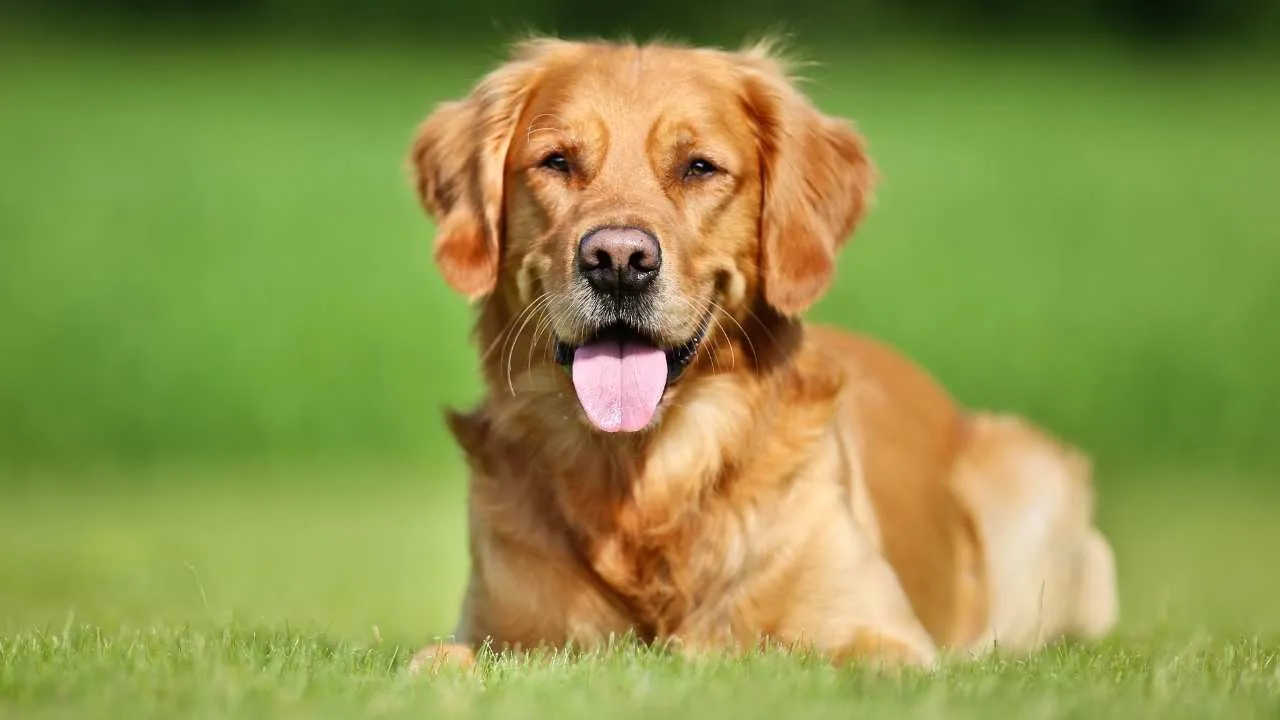
The Golden Retriever was originally developed in the Scottish Highlands to retrieve ducks and game birds from wet, uneven terrain, as mentioned by the AKC.
Behind the breed’s friendly appearance is a hardworking gundog built for long hours in marshes, rivers, and lakes during waterfowl hunts.
Their muscular frame, strong swimming ability, and thick water-resistant coat allow them to move comfortably through cold water while carrying downed birds back to hunters with care.
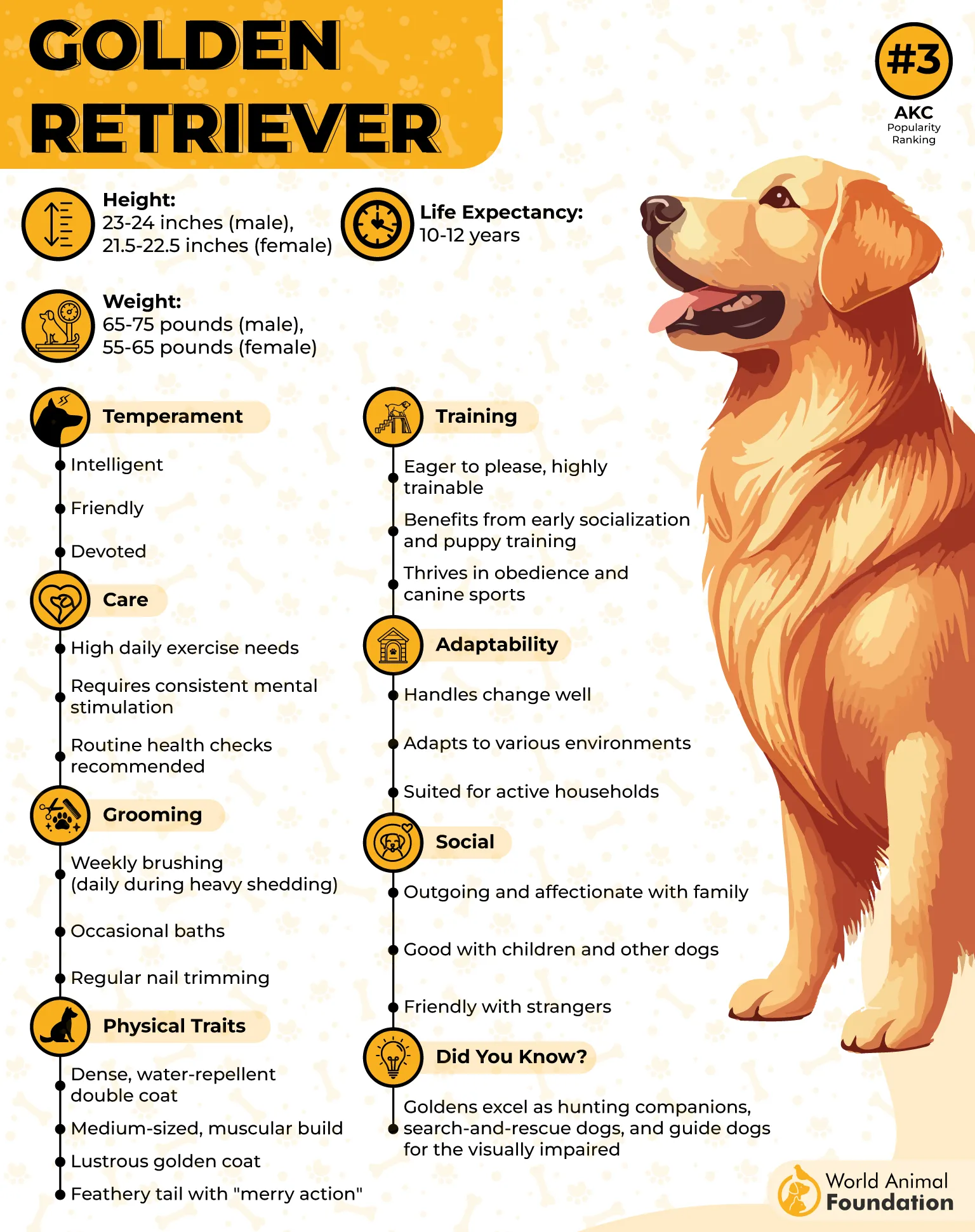
Golden Retrievers became especially valued for their calm handling of upland game hunting. They are known for carrying waterfowl gently in their mouths without damaging feathers, even after difficult retrieves through dense reeds or muddy shorelines.
Hunters also rely on their patience and steady focus inside duck blinds, where remaining quiet and controlled is essential.
One thing that makes the Golden Retriever stand out is its famous “merry action” tail movement, often seen while swimming back proudly with a retrieved bird.
Their eagerness to follow commands and willingness to work closely with handlers made them dependable hunting breed companions across Scotland before becoming beloved dogs worldwide.
5. American Water Spaniel
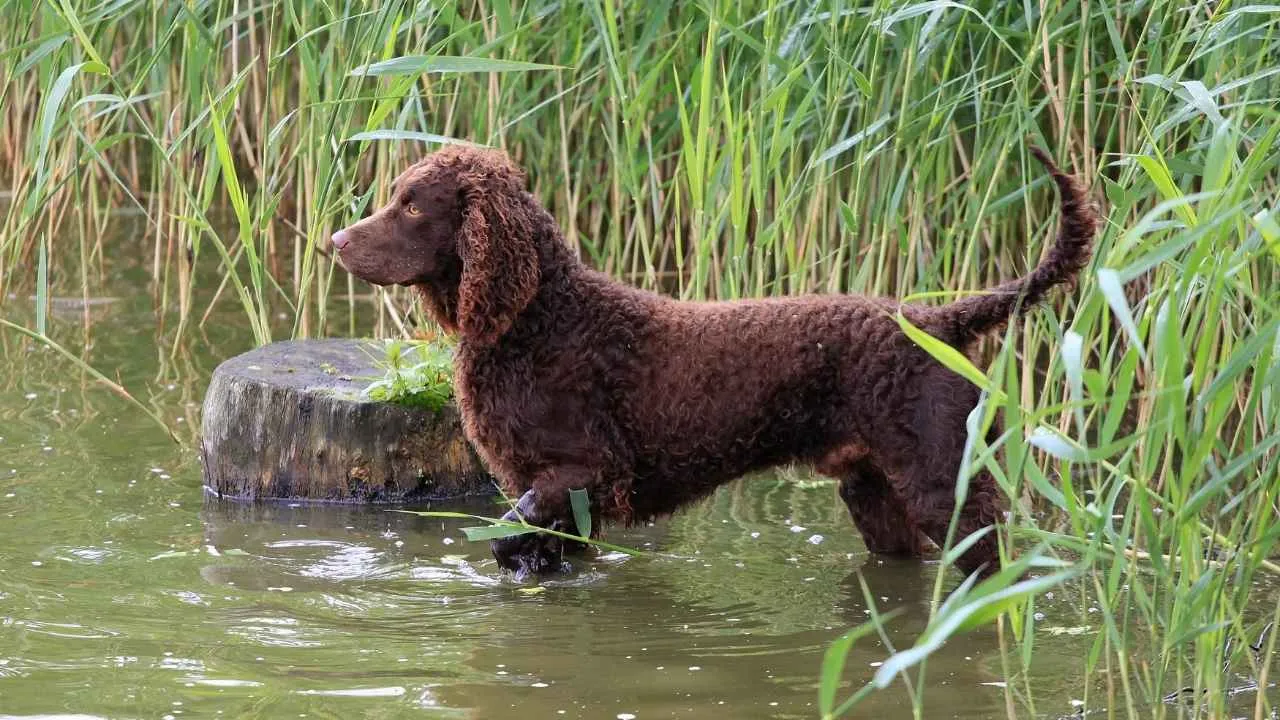
The American Water Spaniel was developed in the wetlands of Wisconsin during the 1800s, where hunters needed a compact dog capable of retrieving ducks from rivers, marshes, and small lakes.
Unlike larger retrievers, this breed was specifically sized to fit inside canoes and small hunting boats, allowing hunters to reach narrow waterways and hidden waterfowl spots that bigger dogs could not easily access.
Its dense, curly waterproof coat protects it while swimming through cold water and thick vegetation.
The American Water Spaniel is known for working close to hunters, quickly retrieving birds from muddy banks, cattail marshes, and heavy brush without losing focus.
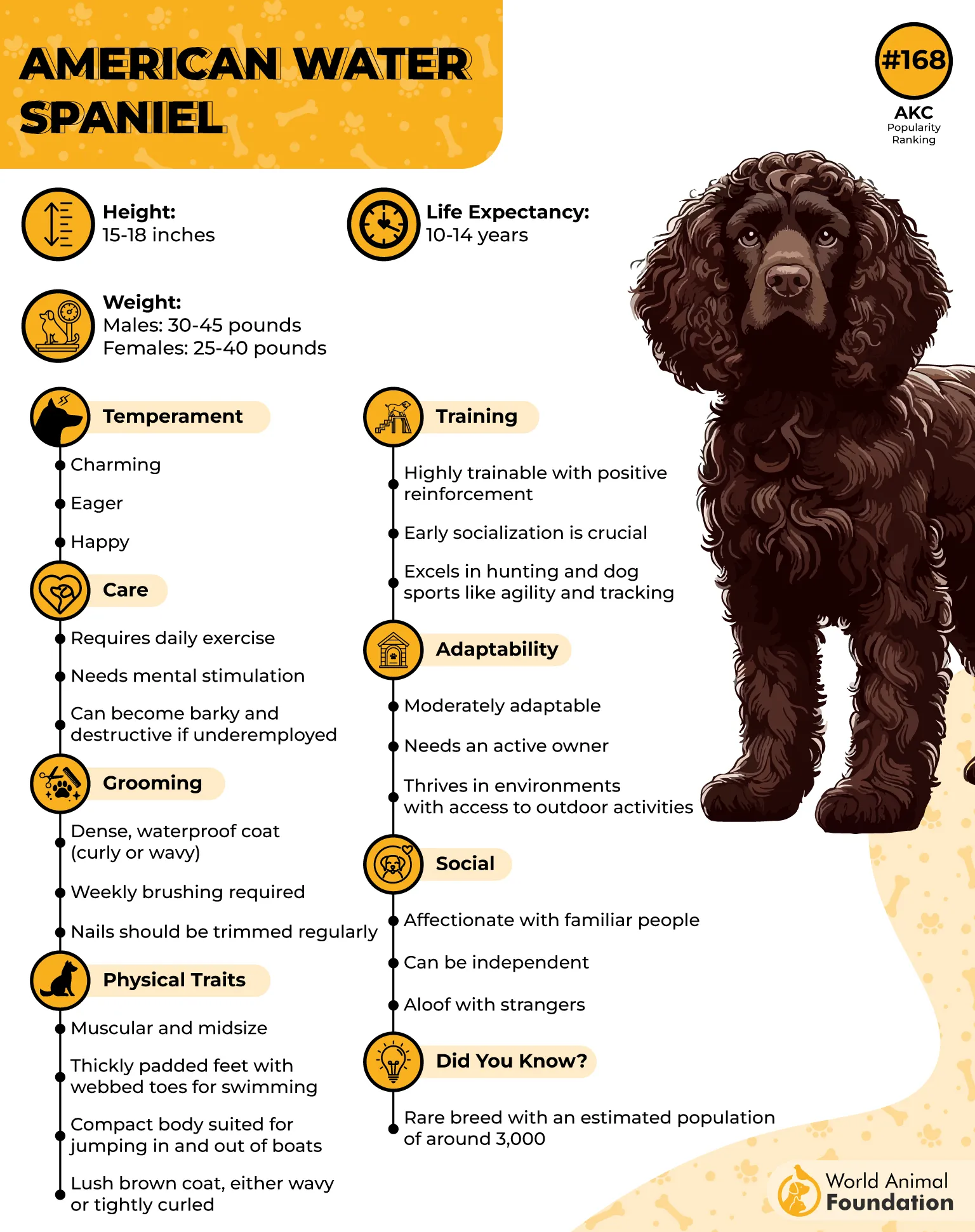
Their strong scenting ability also helps them locate downed waterfowl hidden deep in reeds after difficult shots.
These duck dogs are energetic workers who thrive when given active outdoor tasks and proper training. Hunters appreciate their versatility because they can flush birds from cover and retrieve them efficiently afterward.
Despite their hardworking nature, these versatile breeds also form close bonds with families and remain alert enough to serve as reliable watchdogs at home.
6. Flat-Coated Retriever
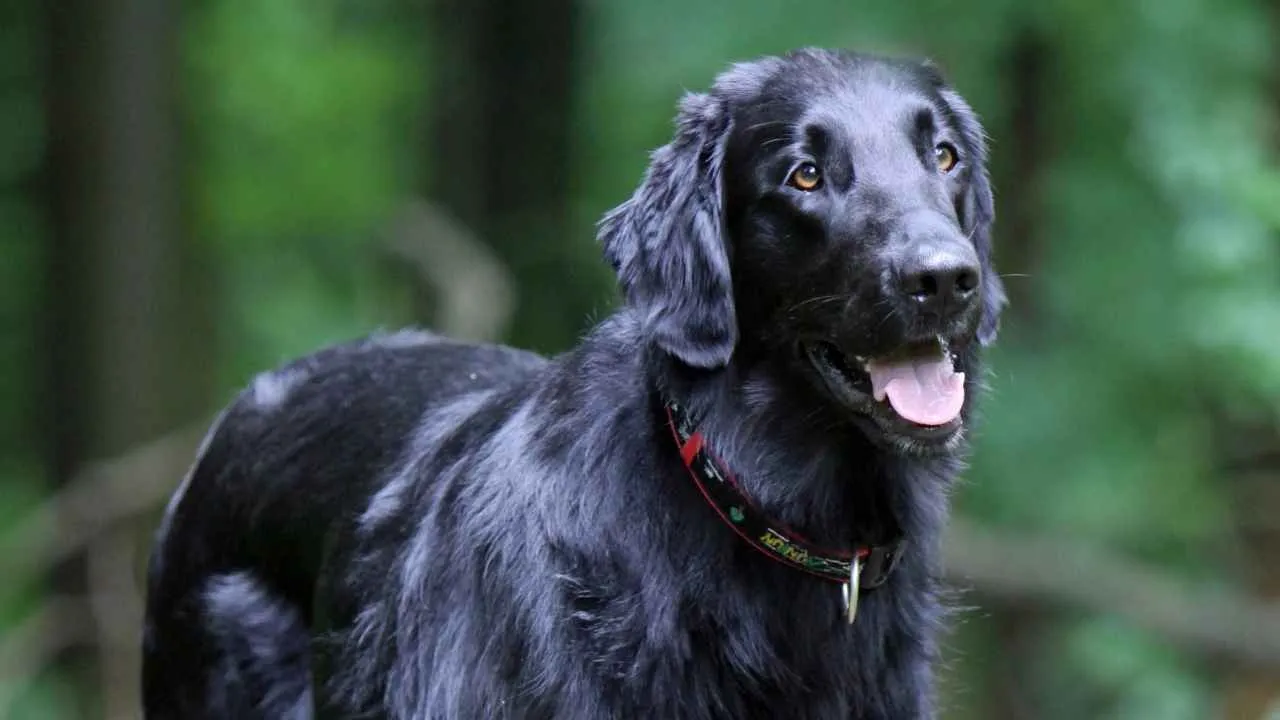
The Flat-Coated Retriever was developed in England as a hardworking gun dog built for retrieving waterfowl from lakes, rivers, and marshy hunting grounds.
Known for their stamina and enthusiasm, these retrievers excel during long hunting days where multiple retrieves are required in cold water and thick cover.
Their sleek black or liver-colored coat lies flat against the body, helping them move smoothly through water without heavy resistance.
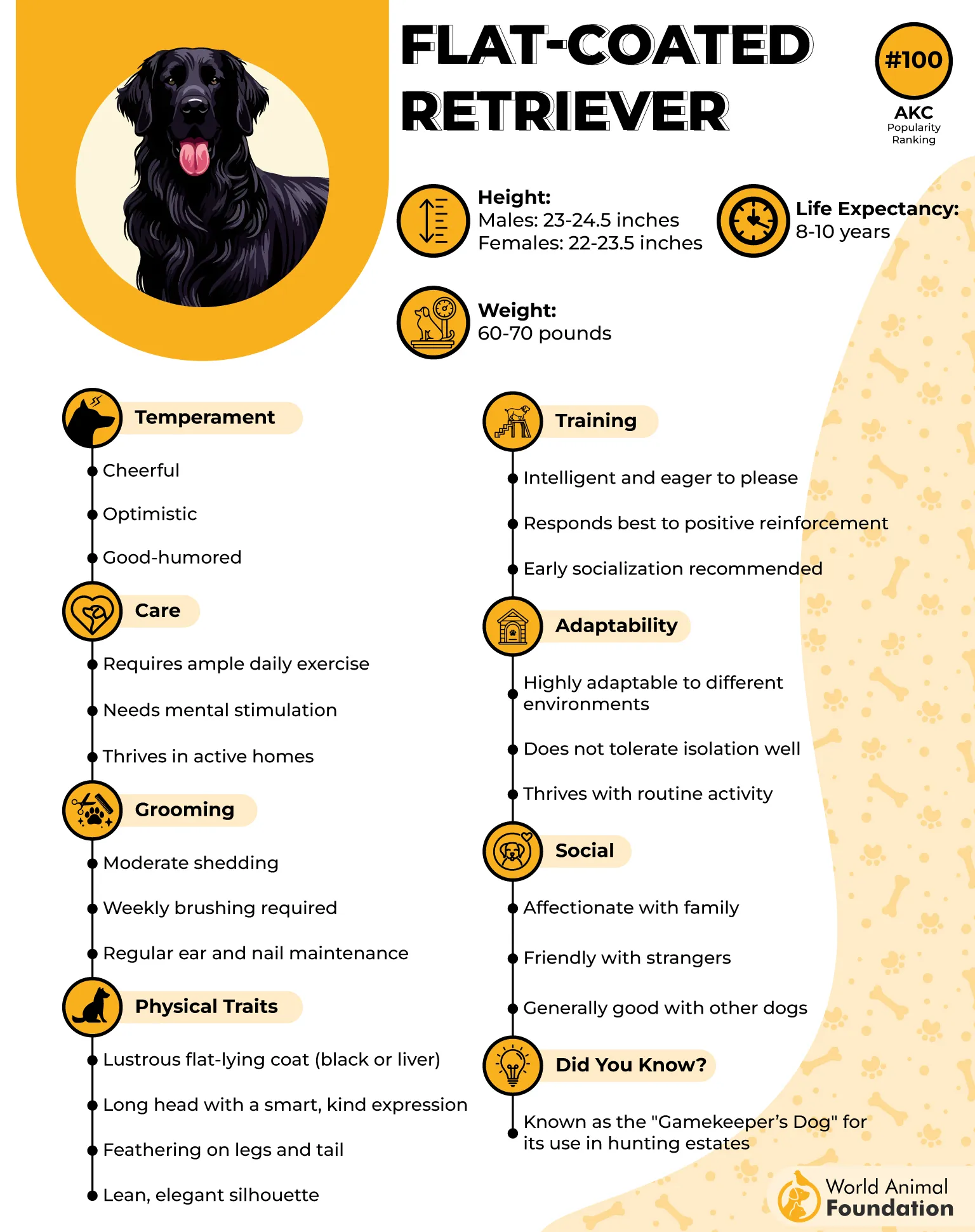
Hunters value Flat-Coats for their excellent marking ability. They can carefully watch where ducks or geese fall, then swim directly to the spot with remarkable accuracy.
Their gentle mouth grip allows them to carry birds back without damaging them, even after difficult retrieves through reeds or muddy shorelines. The breed’s long, refined head gives it a unique appearance among retrievers and is instantly recognizable in the field.
Unlike many hunting dogs that become serious and reserved with age, Flat-Coated Retrievers often keep their playful personality for life. That endless energy and eagerness to work make them especially suited for active hunters who spend hours outdoors near water.
7. Standard Poodle
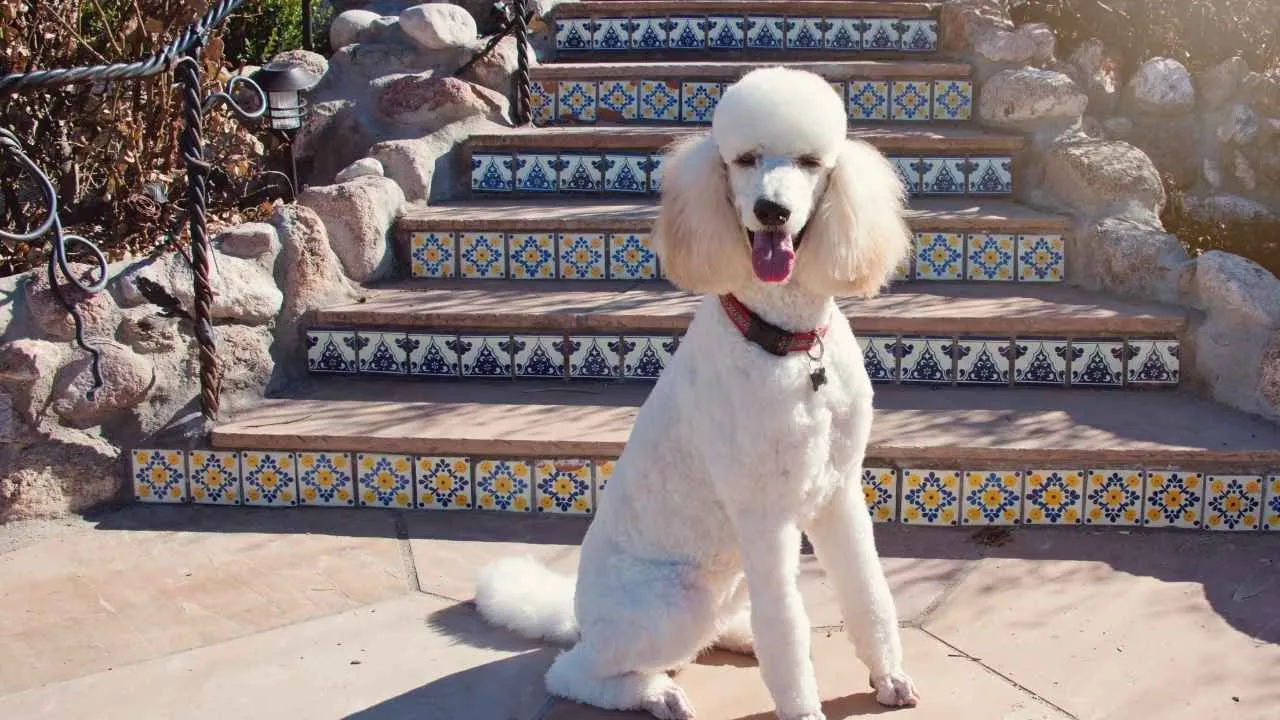
The Standard Poodle may be known today for its elegant appearance, but this breed originally earned respect as a skilled waterfowl retriever in Germany. In fact, the name “Poodle” comes from the German word pudeln, meaning “to splash in water.”
Long before dog shows and fancy grooming styles, Standard Poodles worked alongside hunters, retrieving ducks from lakes and marshes with speed and precision.
Their athletic build and strong swimming ability make them highly capable in water retrieval work. The breed’s tightly curled coat helps protect the body from cold water while reducing heavy shedding.
Hunters also appreciated how quickly Poodles could learn complex retrieval commands, hand signals, and directional cues during fast-moving hunts.
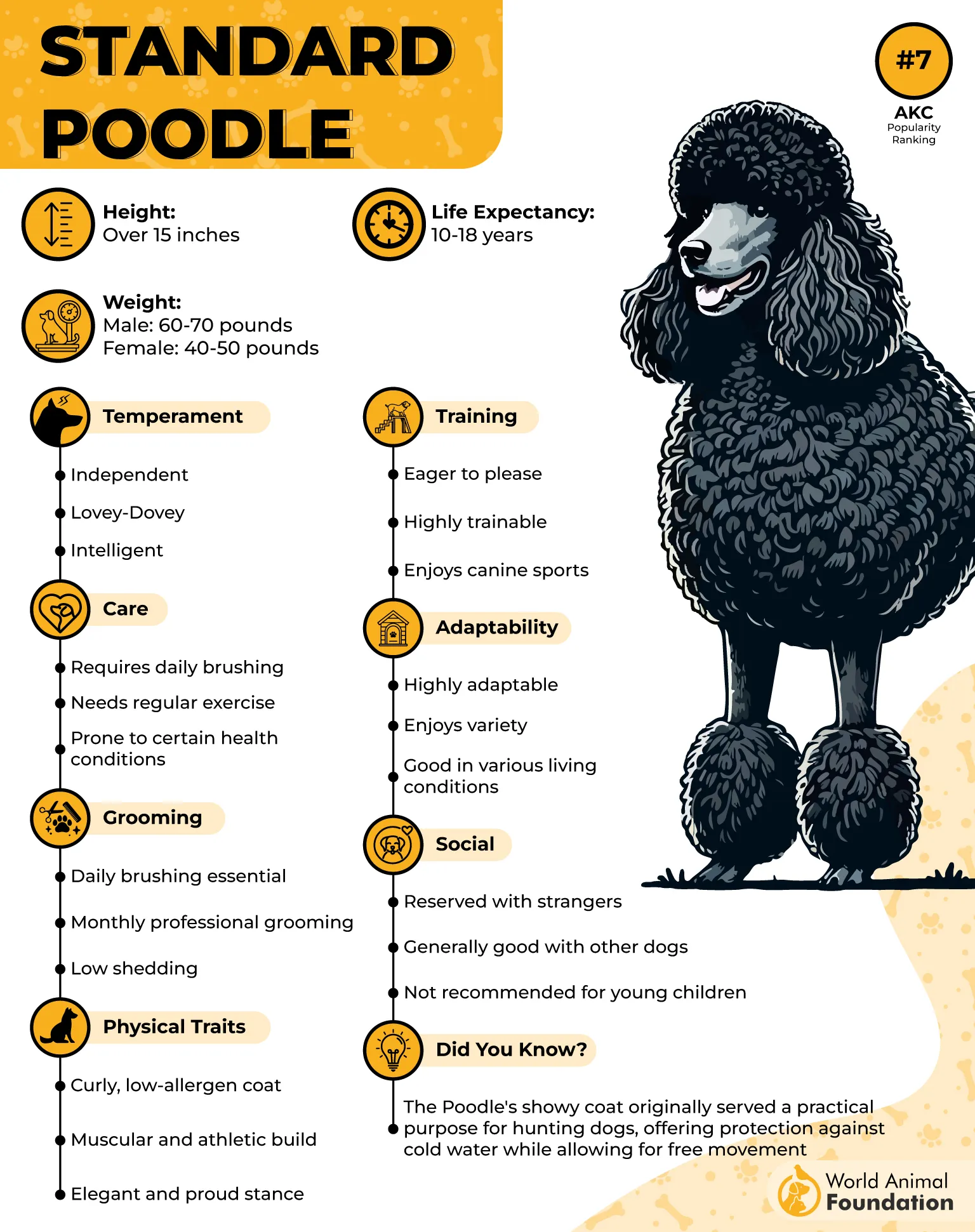
Their intelligence made them especially useful when birds landed in difficult spots surrounded by reeds or muddy shorelines.
One thing that separates the Standard Poodle from other retrievers is its famous clipped coat pattern, which originally served a practical purpose by protecting vital joints and organs while allowing easier movement in water.
Even today, they remain energetic working dogs that thrive on swimming, training, and outdoor activity.
8. Boykin Spaniel
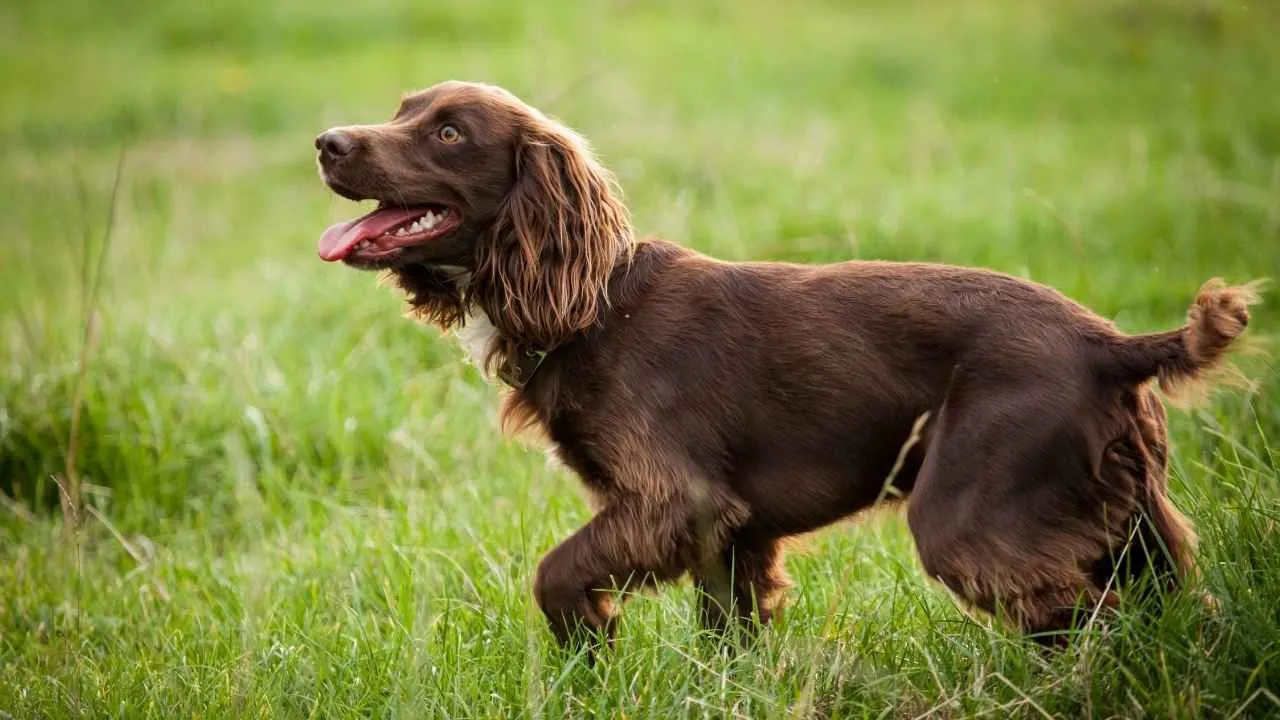
The Boykin Spaniel was developed in South Carolina for hunters who needed a compact but hardworking retriever capable of handling swampy waterfowl terrain, as mentioned by WebMD.
Its story began with a small stray dog named Dumpy, whose natural hunting instincts impressed local sportsmen so much that he became the foundation of the breed.
Over time, Boykin Spaniels became trusted companions for duck hunters navigating the Wateree River Swamp.
Unlike larger retrievers that crowded small hunting boats, Boykins were bred to fit comfortably inside canoes and narrow wooden boats loaded with gear and game. Their medium size allowed hunters to travel through tight waterways without sacrificing retrieving ability.
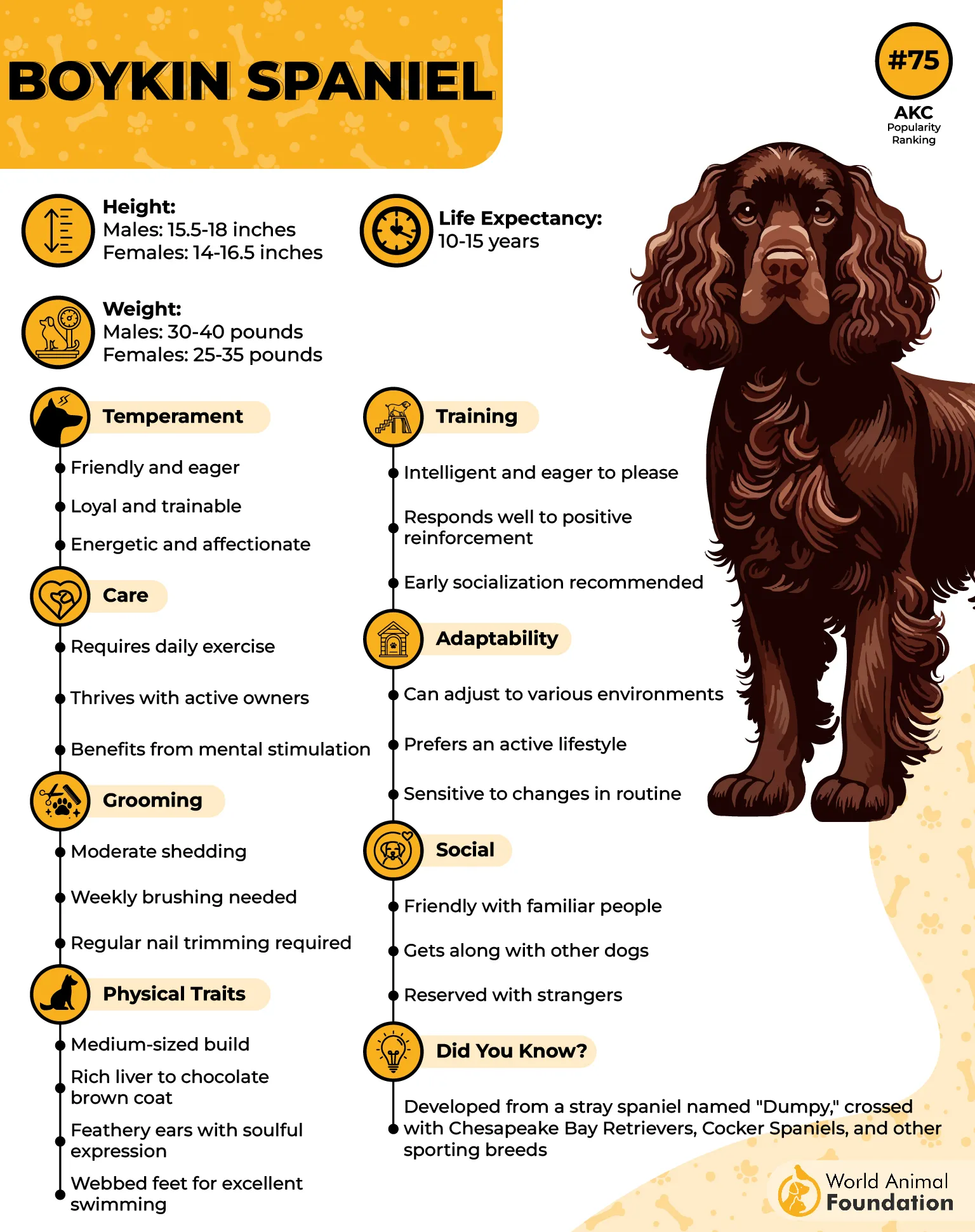
These hunting dogs are excellent swimmers with strong stamina and enough agility to push through muddy banks, flooded timber, and thick reeds while retrieving ducks and wild turkeys.
Hunters also appreciate their calm behavior during hunts. Boykin Spaniels are known for staying quiet and steady inside boats until it’s time to work.
Their rich brown coat, often called “little brown dog” coloring, became closely tied to the swamp hunting traditions of the American South.
9. Curly- Coated Retriever
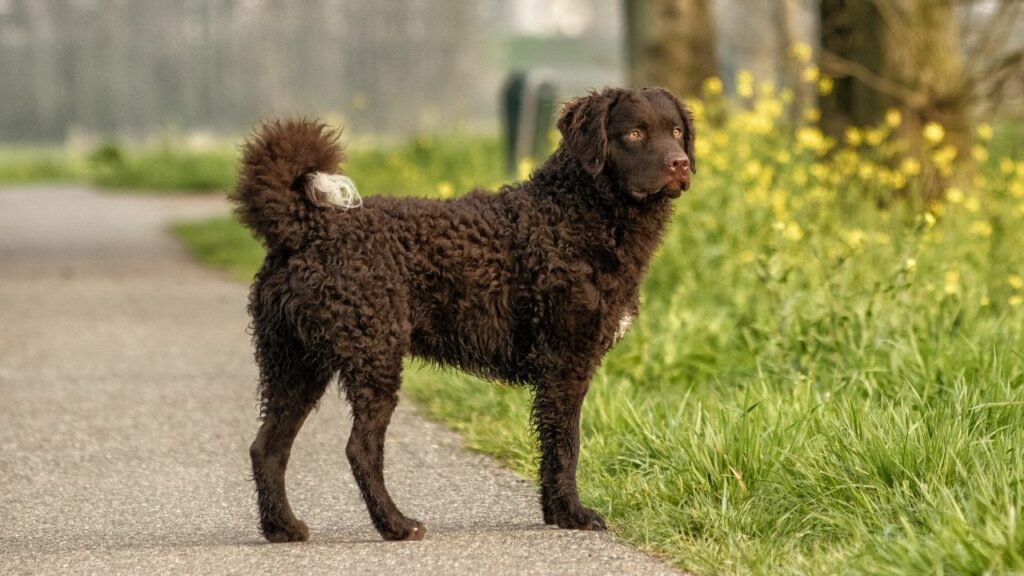
The Curly-Coated Retriever is one of the oldest retriever types, developed in Europe during the late 1700s when hunters began relying on rifles for wing-shooting across wetlands and open fields.
Some historians believe poodle influence may have been introduced in the 1800s to refine its tight, water-resistant curls.
Built as a versatile gun dog, it is capable of hunting waterfowl as well as game from harsh, tangled terrain where many other breeds struggle.
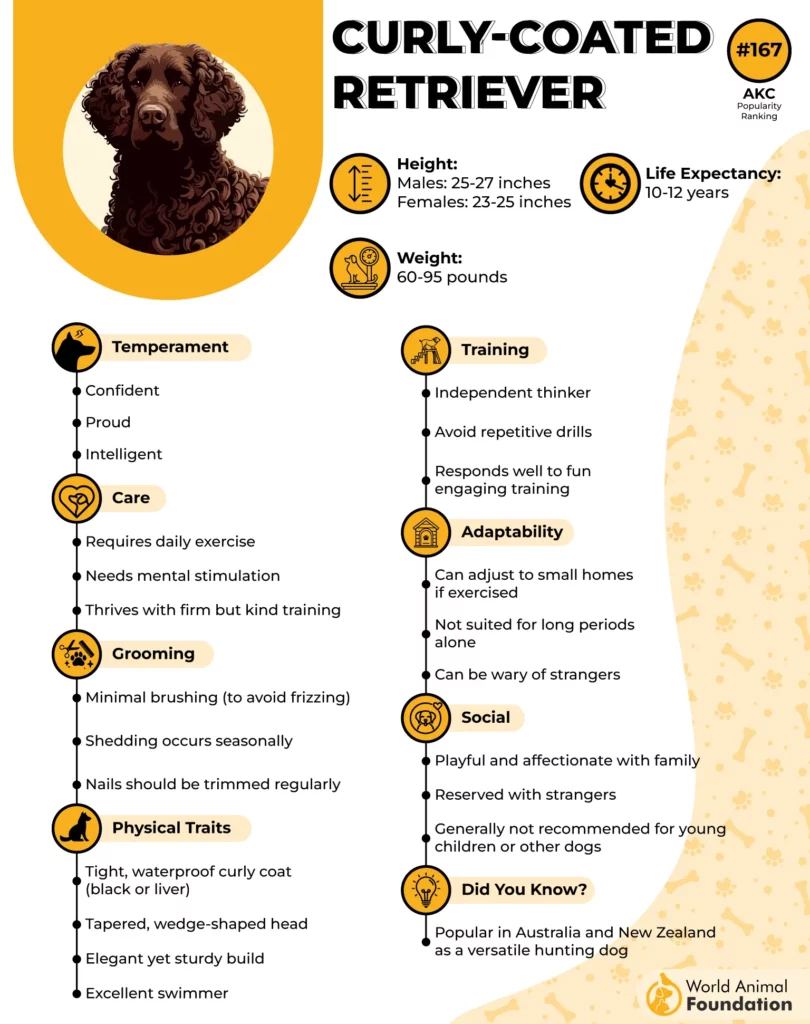
Known for endurance, it can keep working through long hunts without losing focus or drive. The breed first appeared in competitive dog shows in Birmingham in 1860, gaining attention for its unusual coat and athletic build.
By 1889, it had been exported to New Zealand and Australia, where it became valued for field work in demanding landscapes.
Its dense coat forms tight, crisp curls that cover the entire body, including the tail and face, helping repel water and protect against cold conditions.
Calm yet determined, this hunting partner works with steady independence in the field during demanding water hunts.
10. Pudelpointer
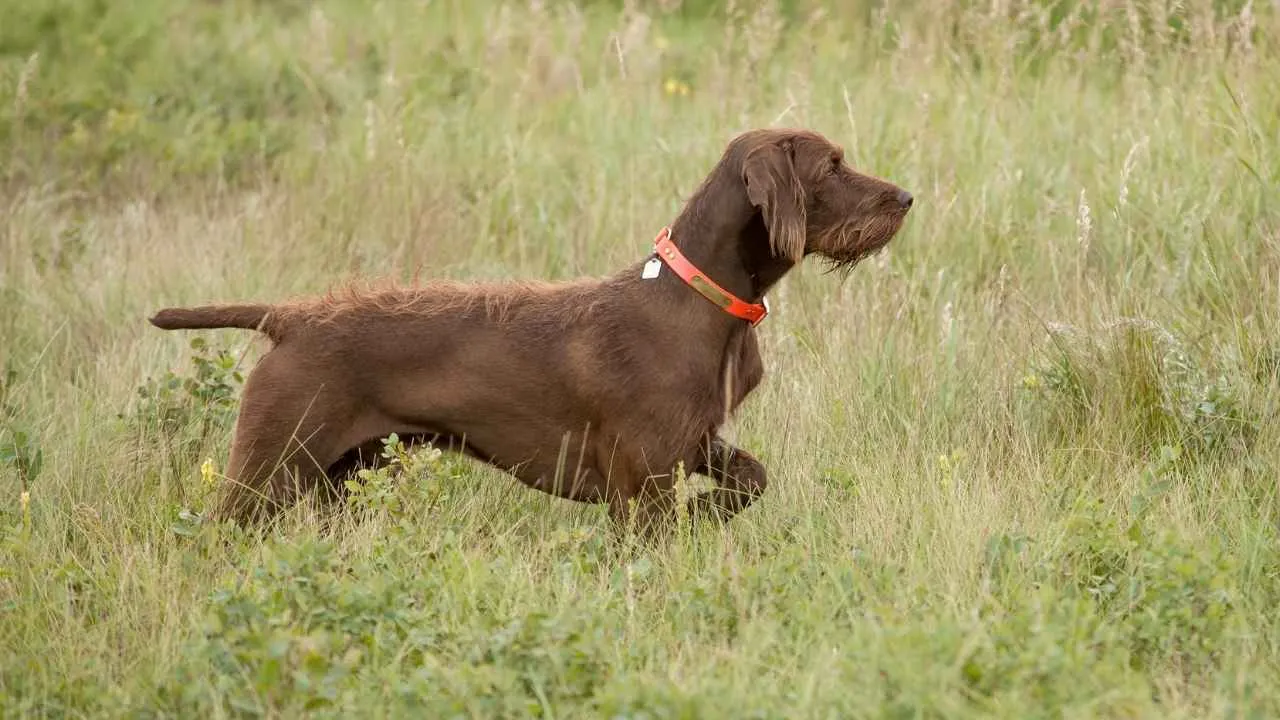
The Pudelpointer was developed in Germany in the late 1800s by combining the intelligence of the Poodle with the sharp hunting ability of the Pointer.
The goal was a single versatile gun dog that could track, flush, and retrieve birds both on land and in water, making it especially useful for waterfowl hunting across rivers, marshes, and open fields.
Hunters valued it for its steady focus and willingness to work closely with handlers during long outdoor expeditions.
This breed is known for handling tough hunting conditions where retrieves often involve cold water, dense reeds, and long distances.
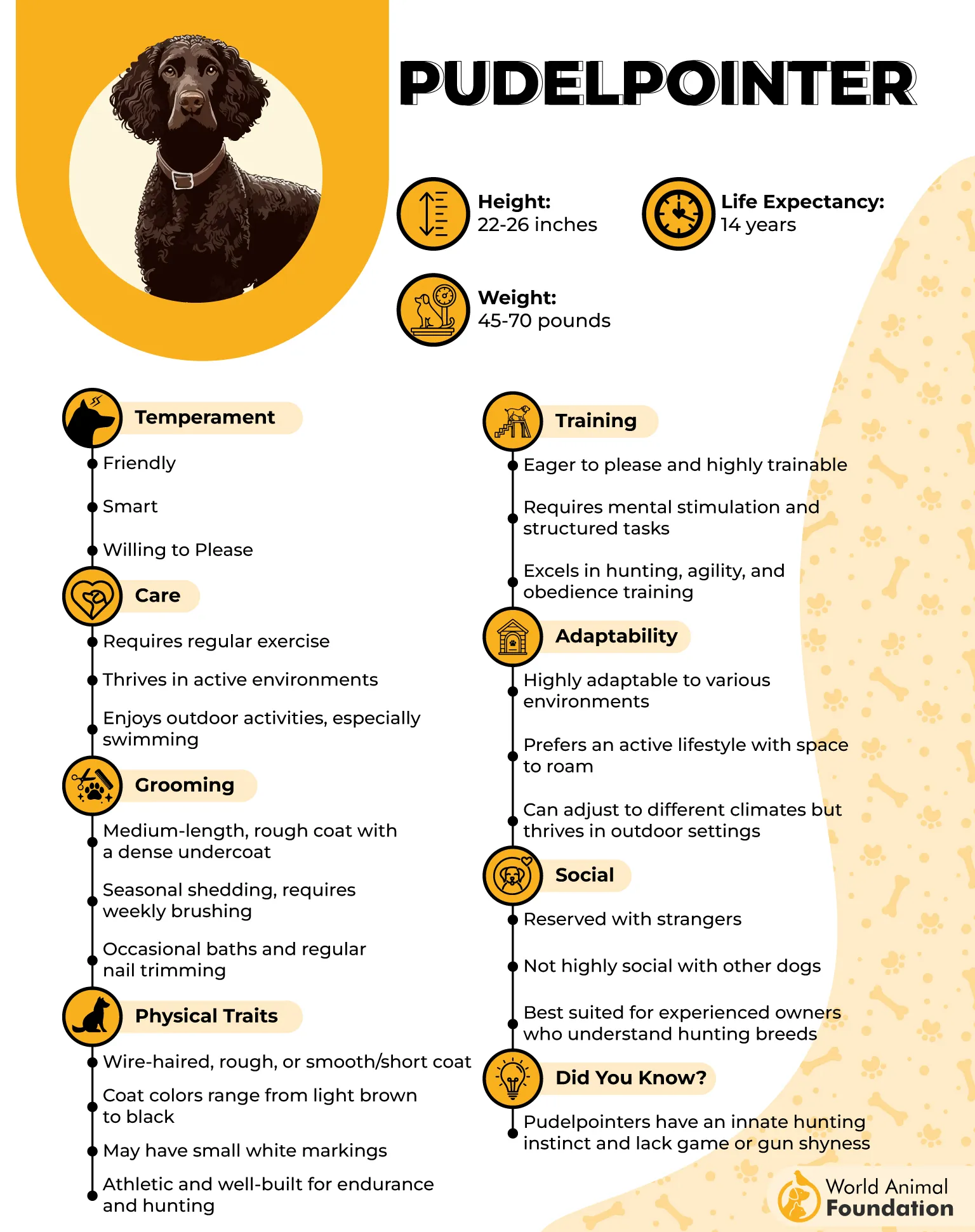
It can mark fallen ducks accurately and swim out with controlled speed, even in choppy conditions. Its rough, dense coat helps it stay protected from wet vegetation and cold temperatures during extended fieldwork.
One practical advantage seen in this breed is its lower tendency toward ear moisture buildup compared with many water-loving dogs, though regular drying after swims is still important during hunting season.
In the field, the Pudelpointer is steady, efficient, and built for demanding waterfowl work without unnecessary distraction.
Conclusion
Waterfowl retrieval is a demanding field where instinct, stamina, and precision matter far more than appearance.
Across wetlands, icy lakes, and dense marshes, these dogs are built to work in harsh conditions where endurance and focus are constantly tested.
Their ability to track, swim, and gently recover game reflects centuries of selective breeding for purpose-driven performance.
Beyond hunting, they also show intelligence, adaptability, and strong bonds with handlers. Together, they represent the perfect balance of working drive and cooperation, making them trusted partners in some of the toughest outdoor environments.
