




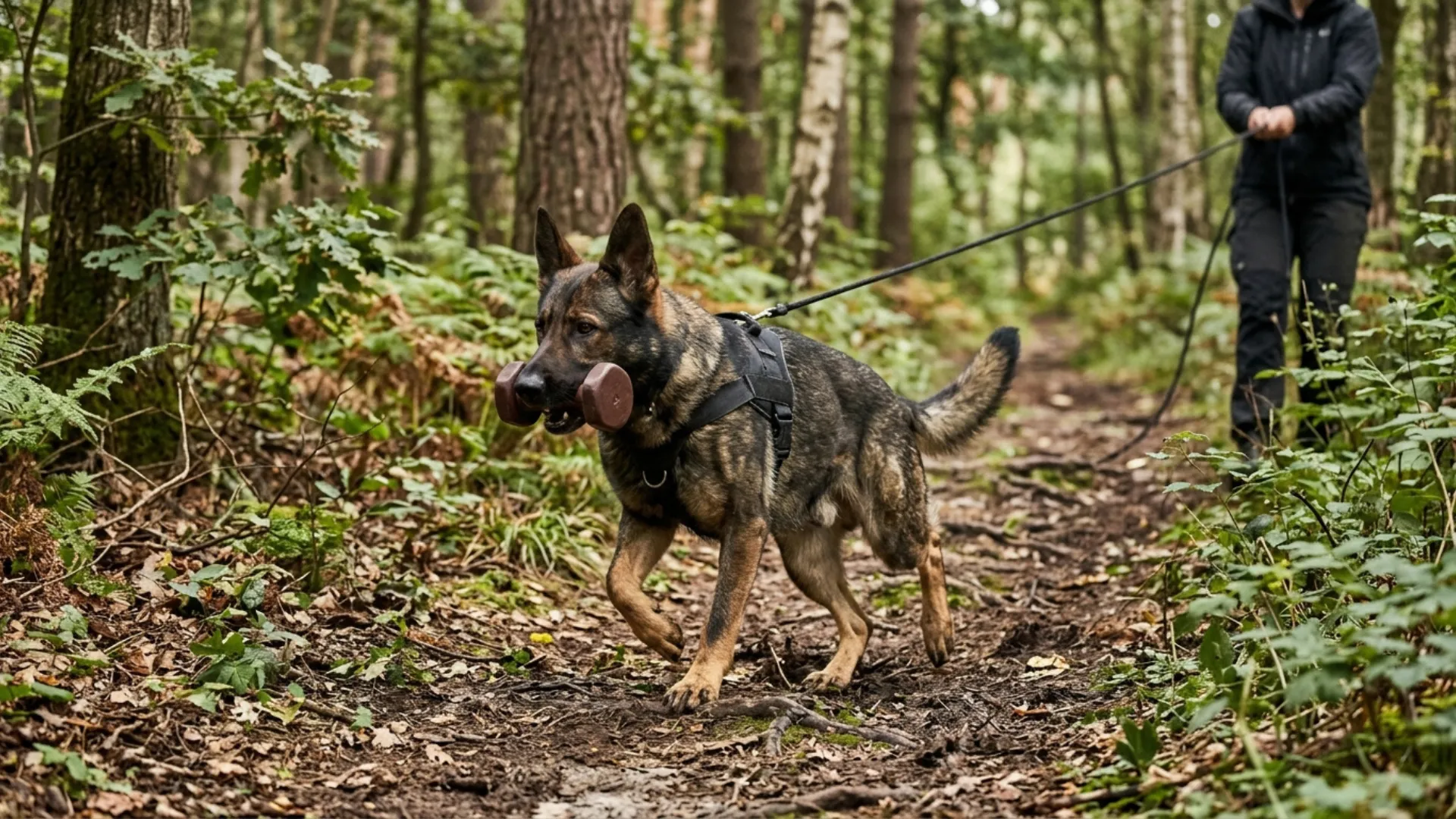
Ever seen a dog follow a scent that’s hours… even days old… and still come back with the answer?
Not guesswork. Not luck. Precision.
We’re talking about elite tracking and retrieval dogs… the kind that don’t just search… they solve the environment. And here’s the twist…
Most people think it’s just about training. Discipline. Repetition. But the truth? Genetics. Instinct. Built-in systems that feel almost unreal when you watch them work. Because while one dog sees a field… another sees a map of invisible trails.
MYTH: Any smart dog can become a top tracker.
REALITY: Only a few breeds are engineered for it at the highest level.
Like the relentless nose of the Bloodhound… the sharp intelligence of the German Shepherd… or the unstoppable drive of the Labrador Retriever…
Each one built for a different kind of mission… but all sharing one thing: obsession with the trail. And once you understand what separates “good” from “elite”… you’ll never look at working dogs the same way again…
Let’s get into it.
Top Dog Breeds for Advanced Tracking and Retrieval
1. Belgian Malinois
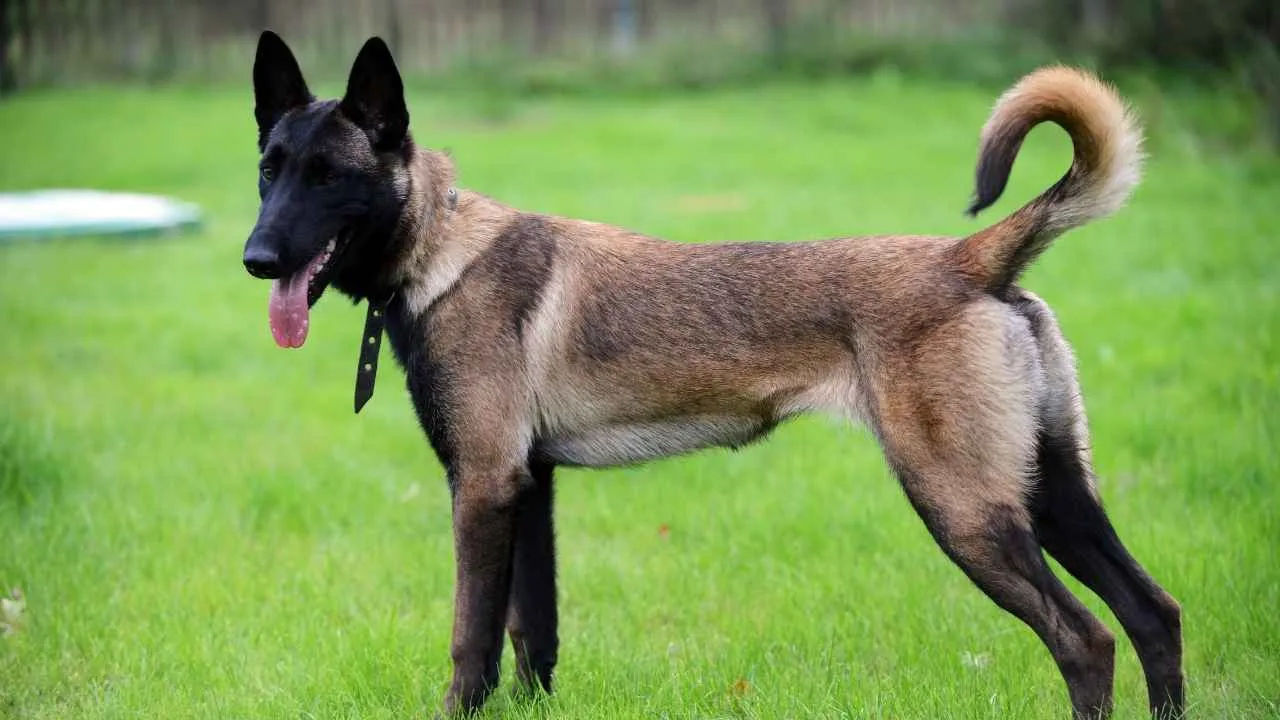
The Belgian Malinois is a sharp, high-drive working dog built for demanding tracking and retrieval work where focus must stay locked in from start to finish, as noted by the AKC.
Agile and efficient in movement, it covers ground with purpose rather than wasted motion, which makes it especially effective in long scent trails across varied terrain.
In tracking tasks, it quickly picks up human scent and follows it even when the trail is broken or mixed with strong distractions like crowds, vehicles, or wildlife.
Its strongest advantage is the intense partnership it forms with one handler, responding with precision to subtle cues during search and retrieval operations.
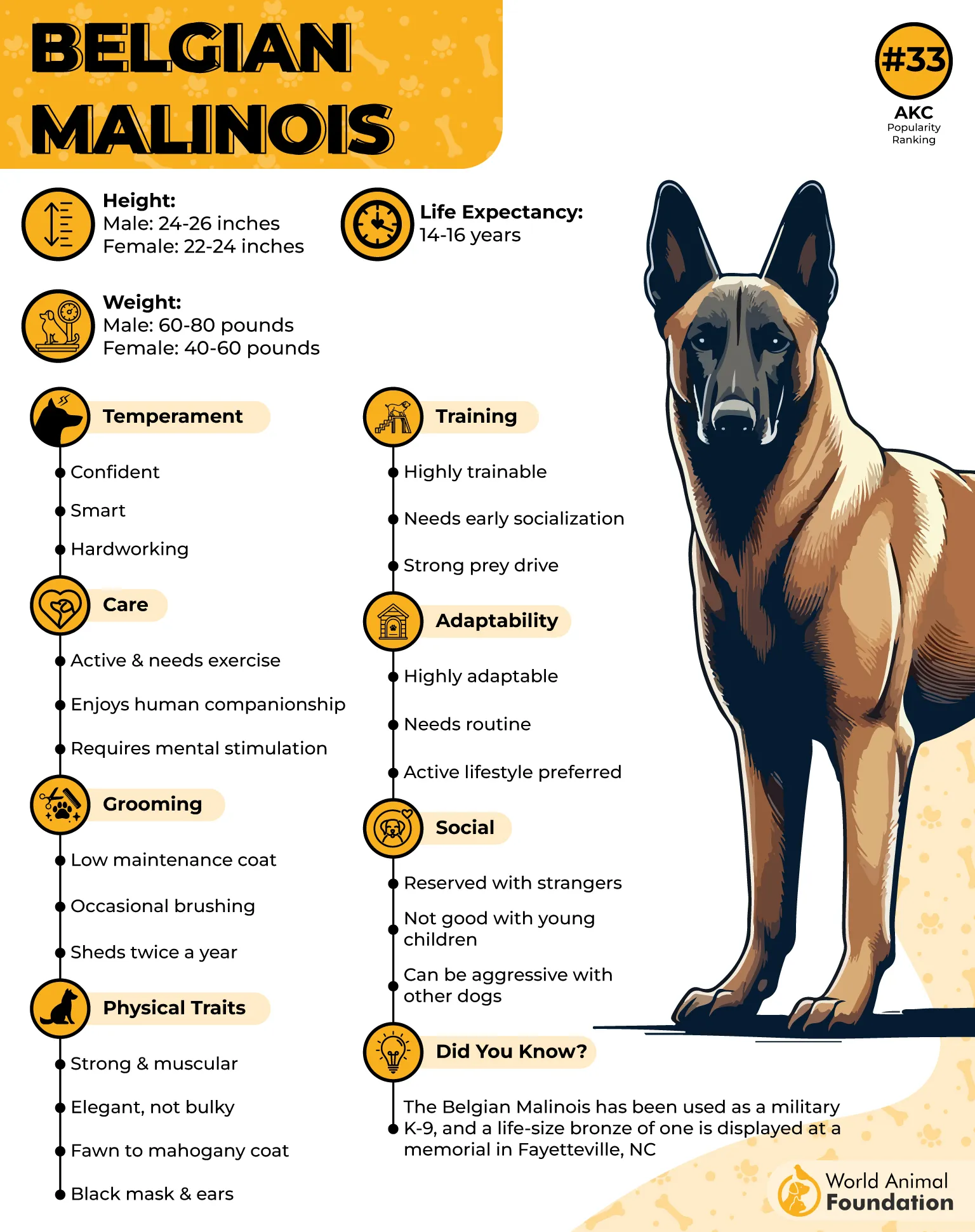
This is why Belgian Malinois is widely used in police and military tracking units, especially for locating missing persons or detecting movement through complex environments.
The breed’s coat is short, fawn to mahogany with a dark mask, but its real focus is its alert, always-engaged mindset—constantly tracking scent, sound, and motion. It is known for an explosive switch from calm tracking to rapid pursuit when a target is confirmed.
Without structured work and regular scent-based challenges, its energy becomes difficult to manage, making consistent training essential for stability and control in everyday life.
2. German Shepherd
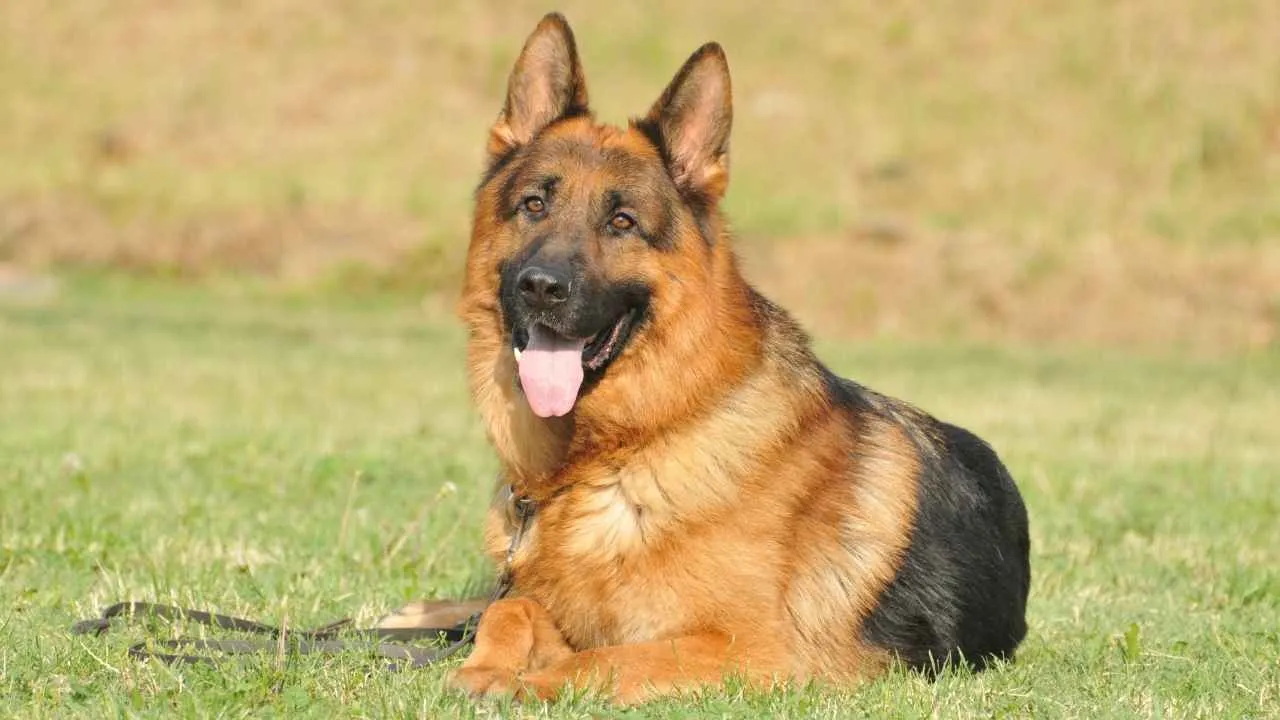
The German Shepherd is one of the most trusted working dog breeds for tracking and retrieval roles, known for combining sharp intelligence with steady control under pressure.
It moves with a smooth, ground-covering trot that allows it to sustain long searches without losing rhythm, especially during extended scent tracking in open fields, urban zones, or disaster sites.
In real tracking operations, it is often used to follow human scent through complex environments where trails are interrupted by traffic, weather, or time delays, yet it still maintains direction with remarkable consistency.
What makes it especially valuable is its ability to shift between roles—careful trailing, rapid response, and controlled retrieval—without losing focus on its handler’s guidance.
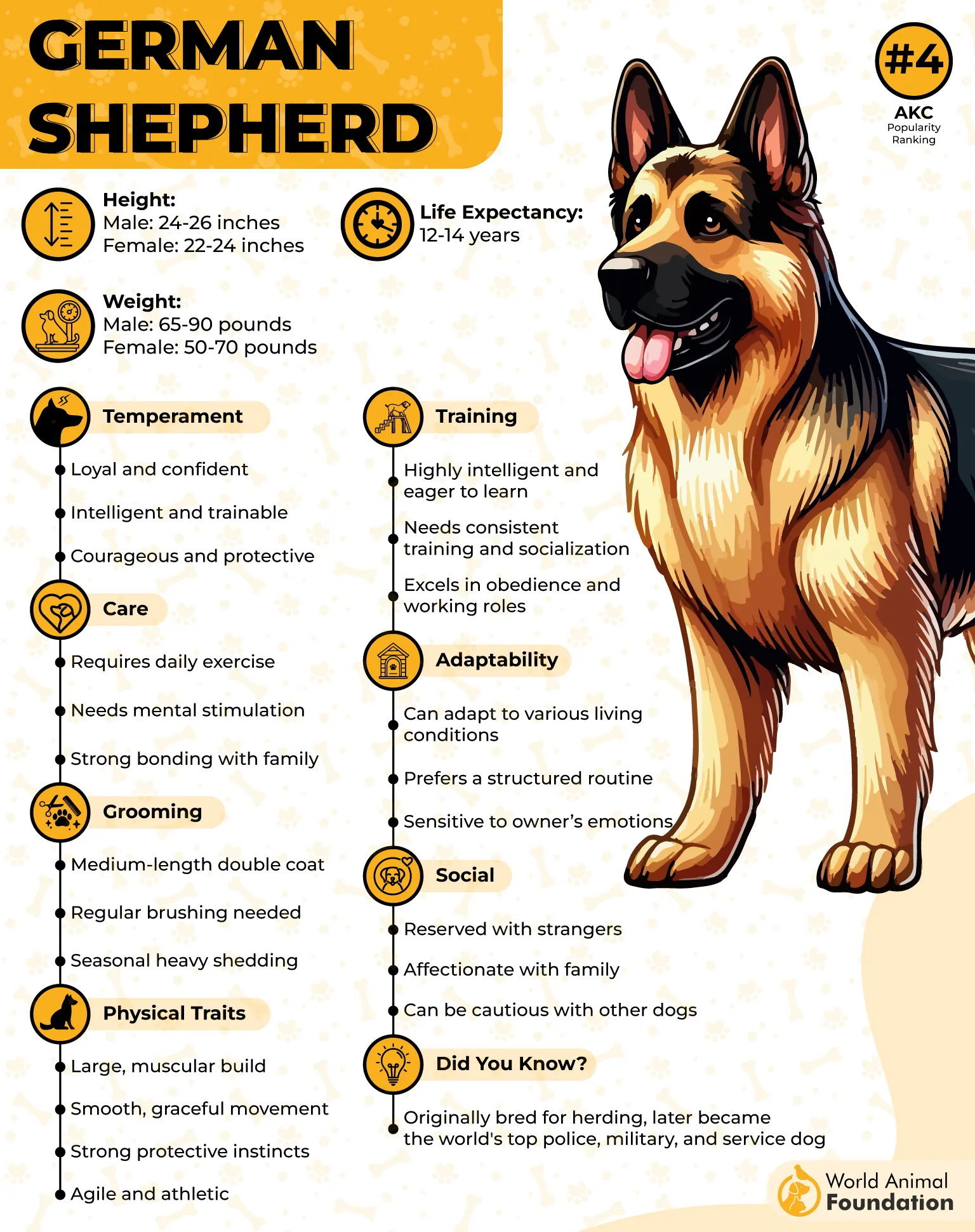
This close handler connection is key in search missions where coordination can decide outcomes. Its coat is dense and weather-resistant, supporting work in harsh conditions.
What truly sets this highly intelligent breed apart is its naturally balanced posture in motion, allowing long-distance tracking with minimal physical strain over time.
Frequently deployed in search-and-rescue and law enforcement units, it is relied upon for locating missing individuals and retrieving items in challenging terrain.
Early structured training is essential, as its intelligence requires direction to stay fully engaged and mission-ready.
3. American English Coonhound
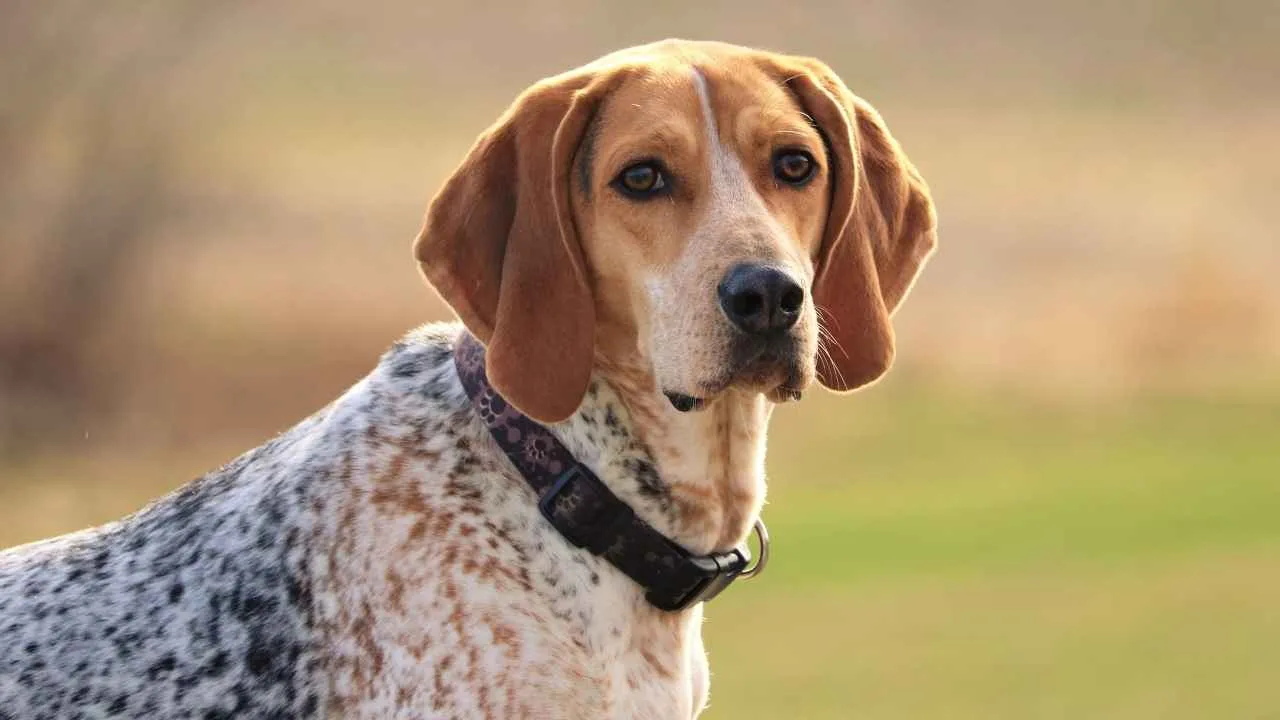
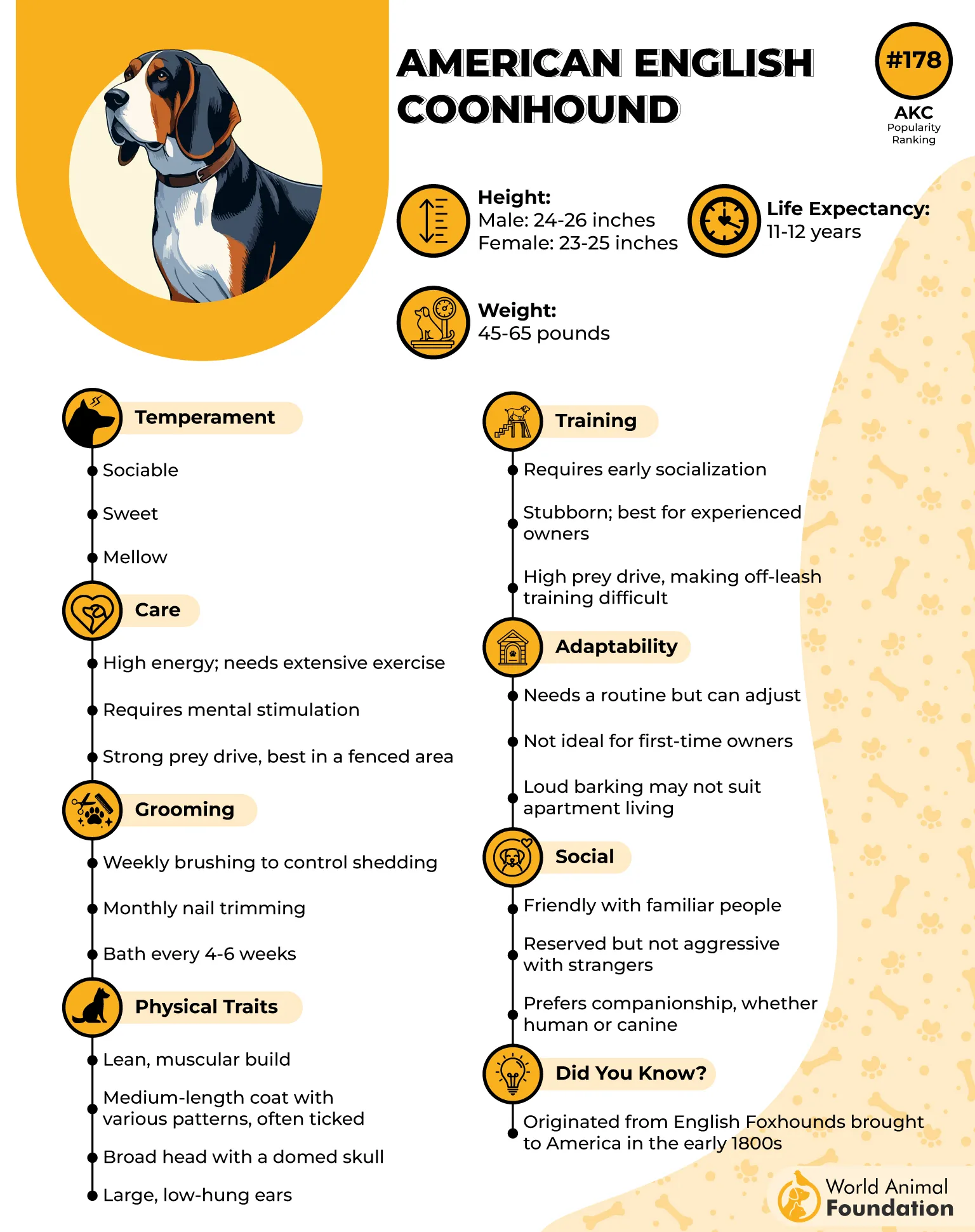
The American English Coonhound is a fast, tireless scent tracker built for long nights of pursuit, especially in dense woods where trails twist, break, and disappear.
It was developed for hunting raccoons, and that background shows in its ability to stay locked onto a scent for hours without losing intensity.
In tracking wounded game and retrieval work, this breed excels in covering large areas quickly, using a powerful nose to pick up faint ground scent and follow it across uneven terrain.
Its body is built for endurance, allowing it to move steadily from dusk until dawn without slowing its drive.
In field use, it is often chosen for wide-area searches where speed and persistence matter more than cautious step-by-step tracking.
It works best when given space and purpose, responding strongly to scent direction while maintaining independence on the trail.
The breed’s long, soft ears help channel scent toward the nose, improving detection while moving through brush and forest cover. Known for its loud, ringing voice while tracking, it communicates its progress clearly over long distances.
While calm and friendly when resting, it becomes intensely focused once a trail is found, making it especially suited for experienced handlers in demanding scent-driven retrieval tasks.
4. Plott Hound
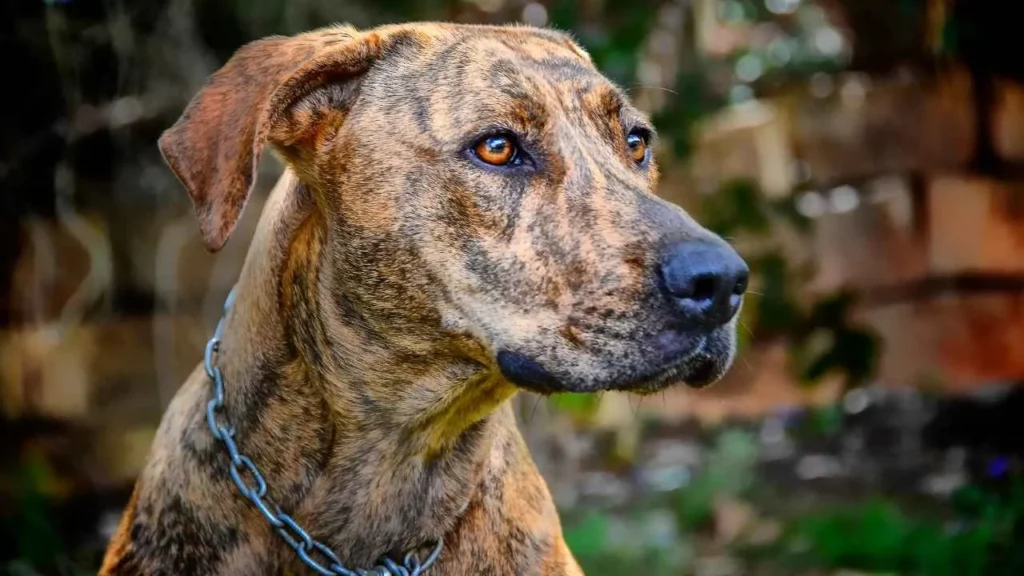
The Plott Hound is a powerful scent-driven tracking dog developed in the mountains of North Carolina, bred specifically for pursuing large game like wild boar and later adapted for demanding search and retrieval work.
In the field, it moves with determination and steady momentum, following scent trails through thick brush, rocky slopes, and uneven terrain where many other dogs lose direction.
Its tracking style is bold and committed, often pushing forward even when the scent becomes faint or disrupted, which makes it valuable in wide-area searches and recovery tasks.
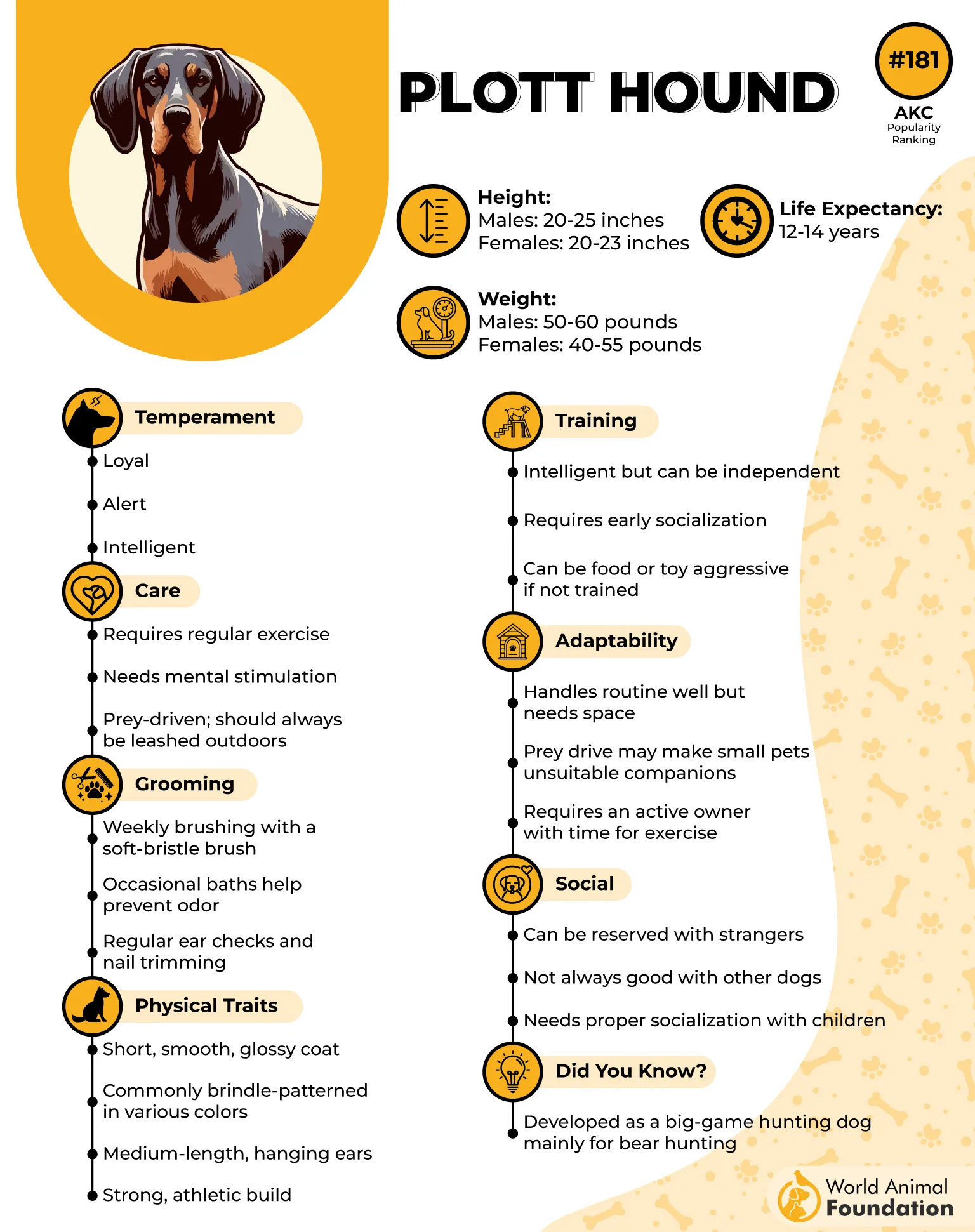
This breed is known for strong independence on the trail while still staying responsive to experienced handling, especially during long-distance tracking assignments.
Its short, dense coat often shows brindle striping, helping it blend into forested environments during work. A notable physical quirk is its unusually deep chest paired with a compact, muscular frame, giving it strong lung capacity for sustained pursuit over long hours.
In practical use, it is often seen in search scenarios requiring endurance-based tracking rather than quick bursts.
While it can be affectionate with familiar people, it performs best when given structured tasks, regular field work, and clear direction, as idle environments do not match its natural working drive.
5. Black and Tan Coonhound
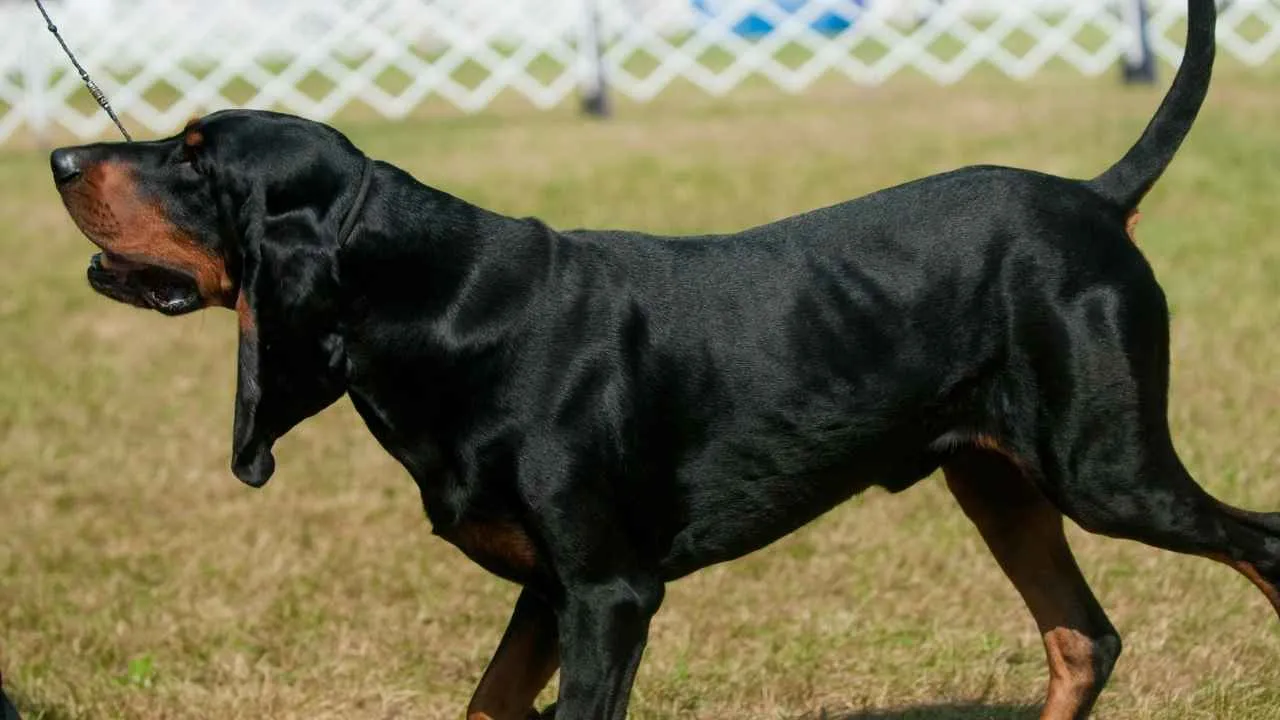
The Black and Tan Coonhound is a steady, scent-focused tracking dog known for working long trails with patience rather than speed bursts, making it especially useful in advanced retrieval and search situations, as mentioned by Purina.
In practical tracking work, it follows ground scent with a deliberate, methodical style, often staying committed to a trail even when conditions become difficult or confusing.
This breed is frequently used in search tasks that require endurance over long distances, where the ability to stay on scent for extended periods is more important than rapid pursuit.
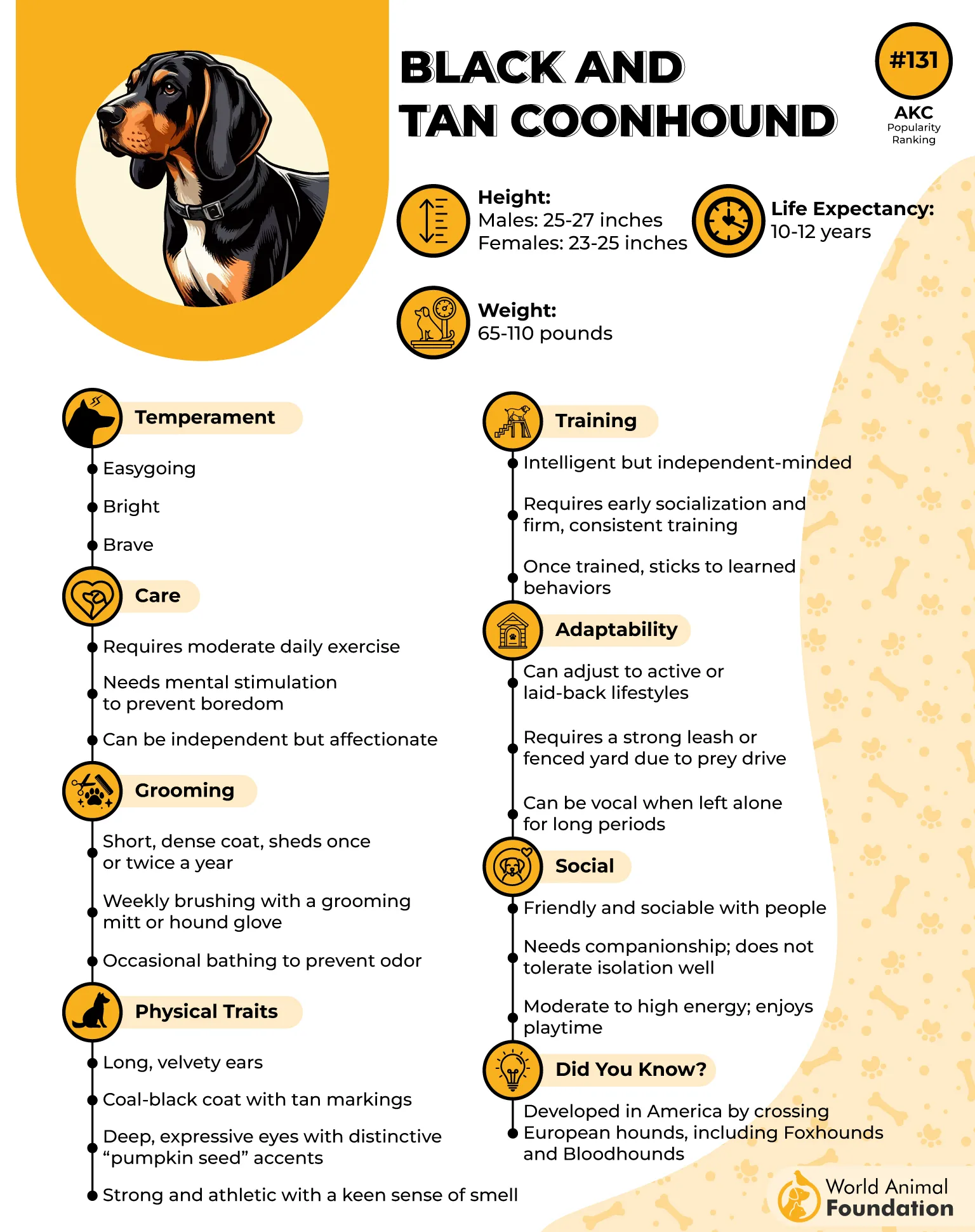
It also adapts well to structured working roles when paired with a calm, consistent handler who builds trust over time. Known for its even temperament, it can switch between relaxed companionship and focused tracking when given a clear task.
One unusual physical detail is its long, narrow ear shape that drapes close to the ground, naturally helping to sweep and guide scent particles toward the nose while it moves.
In working scenarios, it is valued for persistence rather than speed, often continuing a track long after other dogs have lost interest.
With proper guidance, it becomes a dependable partner in tracking-based search and recovery tasks that require patience, accuracy, and long-duration focus.
6. Treeing Walker Coonhound
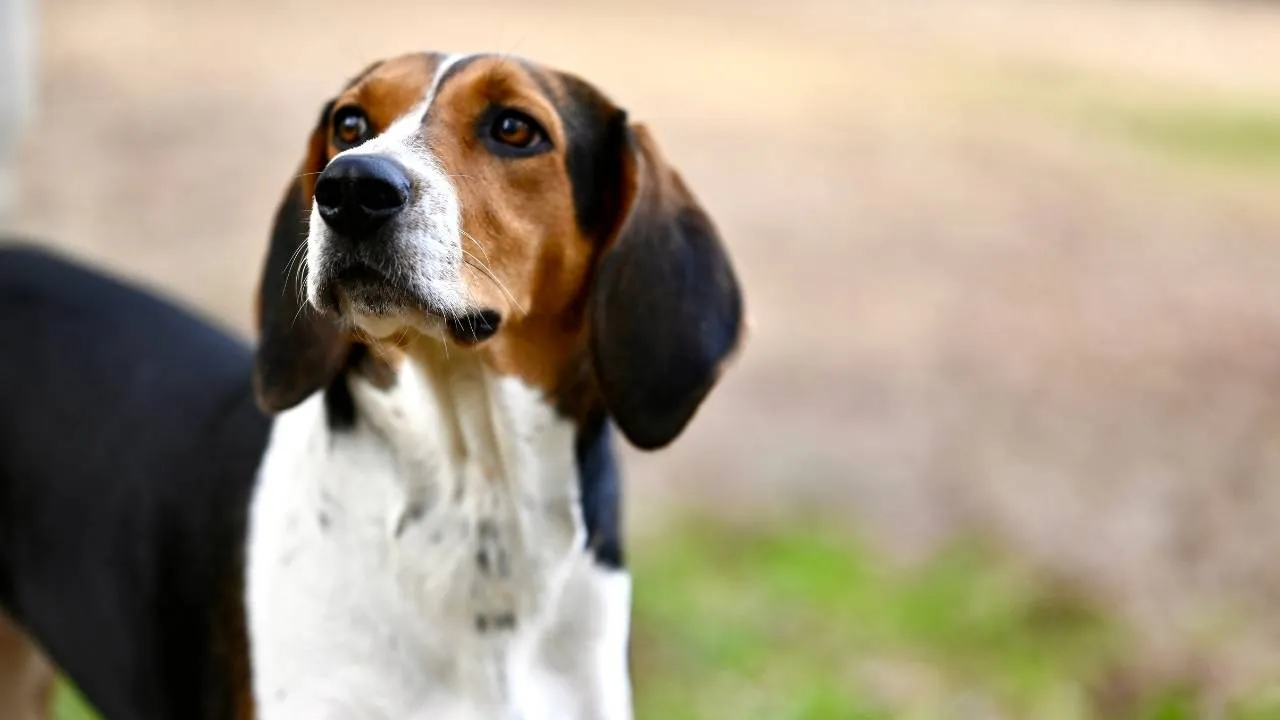
The Treeing Walker Coonhound is a fast, scent-driven tracking dog built for covering large areas quickly while staying locked onto a single trail, making it highly effective in advanced tracking and retrieval work.
In field operations, it moves with long, efficient strides that allow it to scan wide ground in a short time, often picking up faint scent lines left hours earlier and following them with remarkable persistence.
This breed is especially valued in search scenarios where speed and endurance must work together, such as locating missing individuals across forests, fields, or broken terrain.
Once it identifies a track, it tends to stay committed, working the line with focus until the source is reached or confirmed lost.
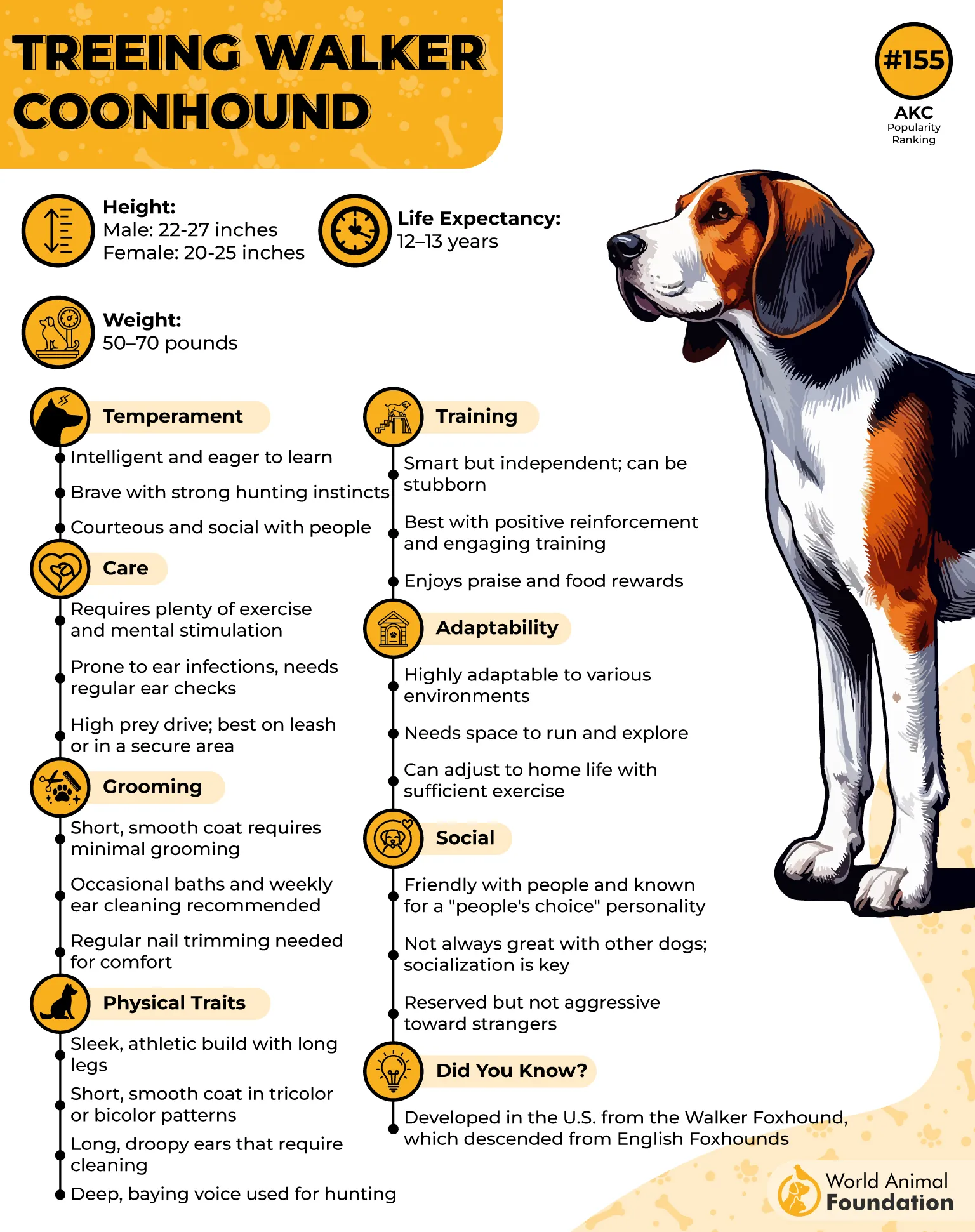
It responds best to handlers who use encouragement and structured guidance rather than force, as it is naturally independent but highly cooperative when trust is built.
A unique physical detail is its exceptionally long, spring-loaded hind movement, which gives it a ground-covering stride that conserves energy during extended pursuits.
In practical use, it is often chosen for long-distance search work where both rapid coverage and sustained scent concentration are required. Its combination of drive, intelligence, and stamina makes it a dependable partner in demanding tracking and retrieval tasks.
7. Airedale Terrier
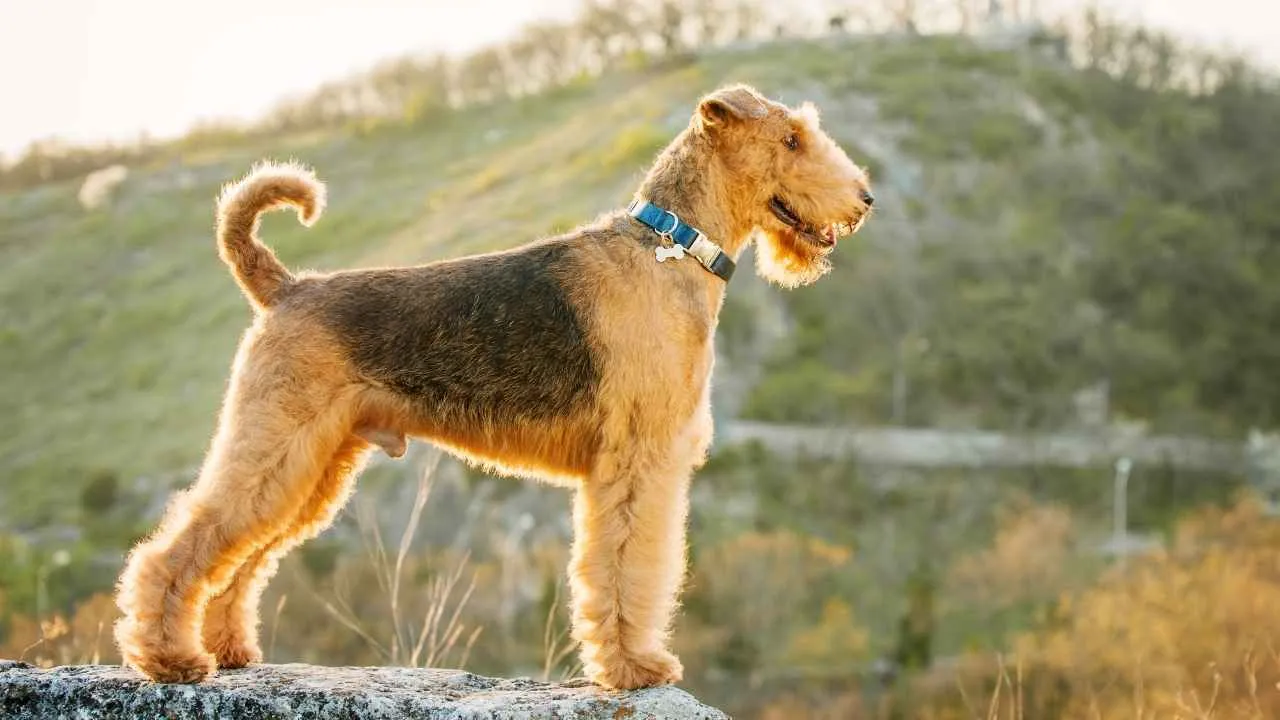
The Airedale Terrier, the largest of the terrier group, is a bold and intelligent working dog with a long history of using its nose and courage in demanding field tasks, including tracking and retrieval roles.
Originally bred in northern England along river valleys, it was once used for hunting otter and water-based game, which shaped its strong problem-solving ability in scent work.
In tracking situations, it shows a confident, investigative style, often working independently to locate and follow scent trails through water edges, brush, and uneven ground.
It is also known for its versatility in switching between tracking, searching, and retrieving tasks without losing focus, especially when guided by consistent handling.
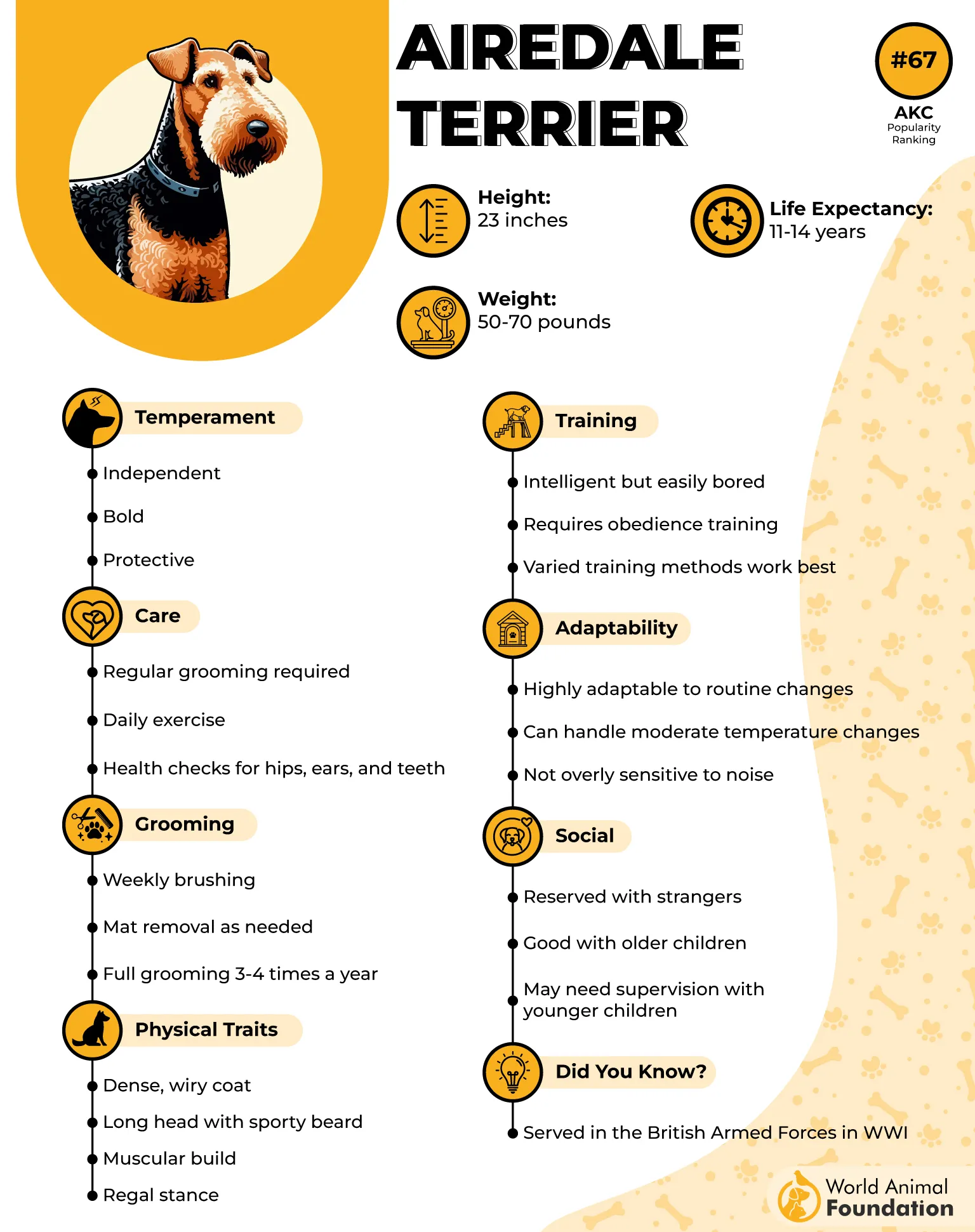
Its dense, wiry coat protects it in harsh weather, making it reliable in outdoor search conditions. A rare physical behavior is its naturally upright, alert head carriage during movement, which improves visual scanning while it simultaneously works scent trails.
In practical use, it has historically been employed in military and police roles, including message carrying and patrol duties, reflecting its adaptability under pressure.
With proper structure and engagement, it becomes a good tracking dog and a determined and highly capable partner in advanced tracking and retrieval work requiring both intelligence and endurance.
8. German Shorthaired Pointer
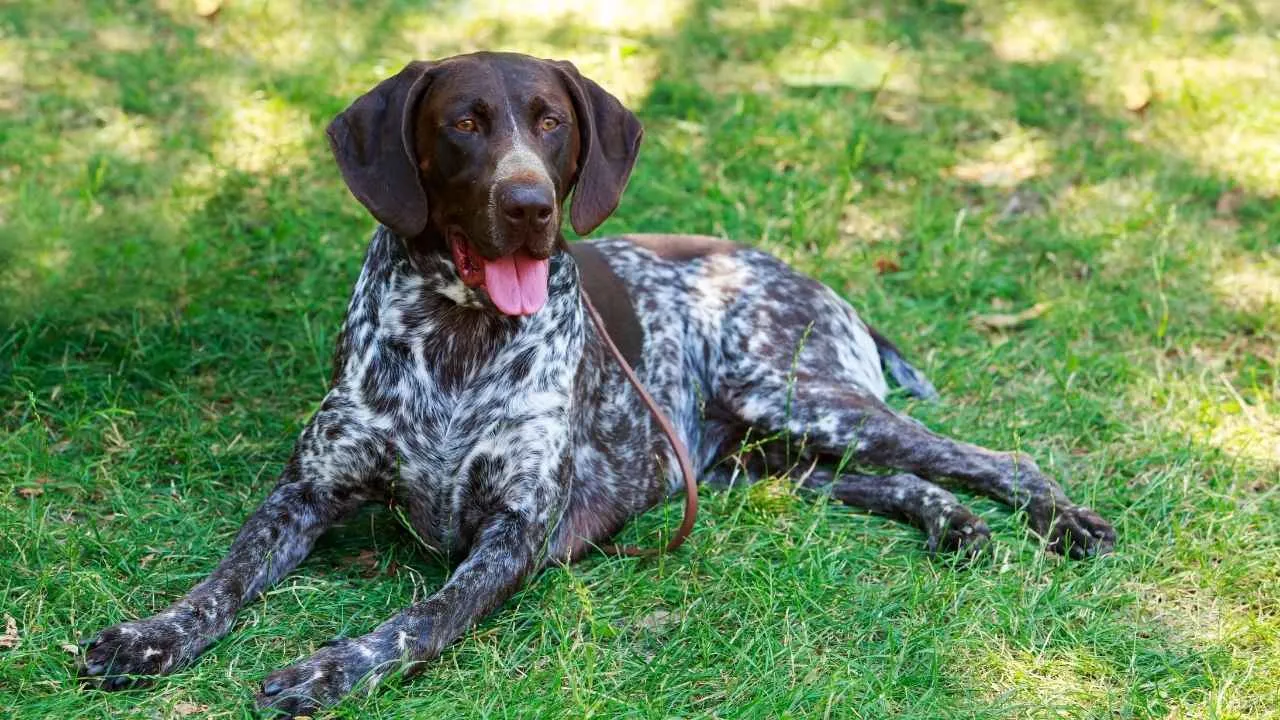
German Shorthaired Pointers are known for their versatility, excelling at tracking, pointing, and retrieving, with high energy levels that make them ideal for covering vast hunting areas.
In tracking operations, it works with sharp focus and forward momentum, quickly identifying scent trails and following them across open land, wetlands, and dense cover with equal confidence.
Its natural style is active and investigative, often using both air-scenting and ground tracking to stay connected to a target even when conditions shift.
This adaptability makes it especially useful to hunt birds or in retrieval scenarios where items or individuals may be located across varied terrain. It responds best to structured guidance and consistent engagement, as it is naturally driven and always ready to move.
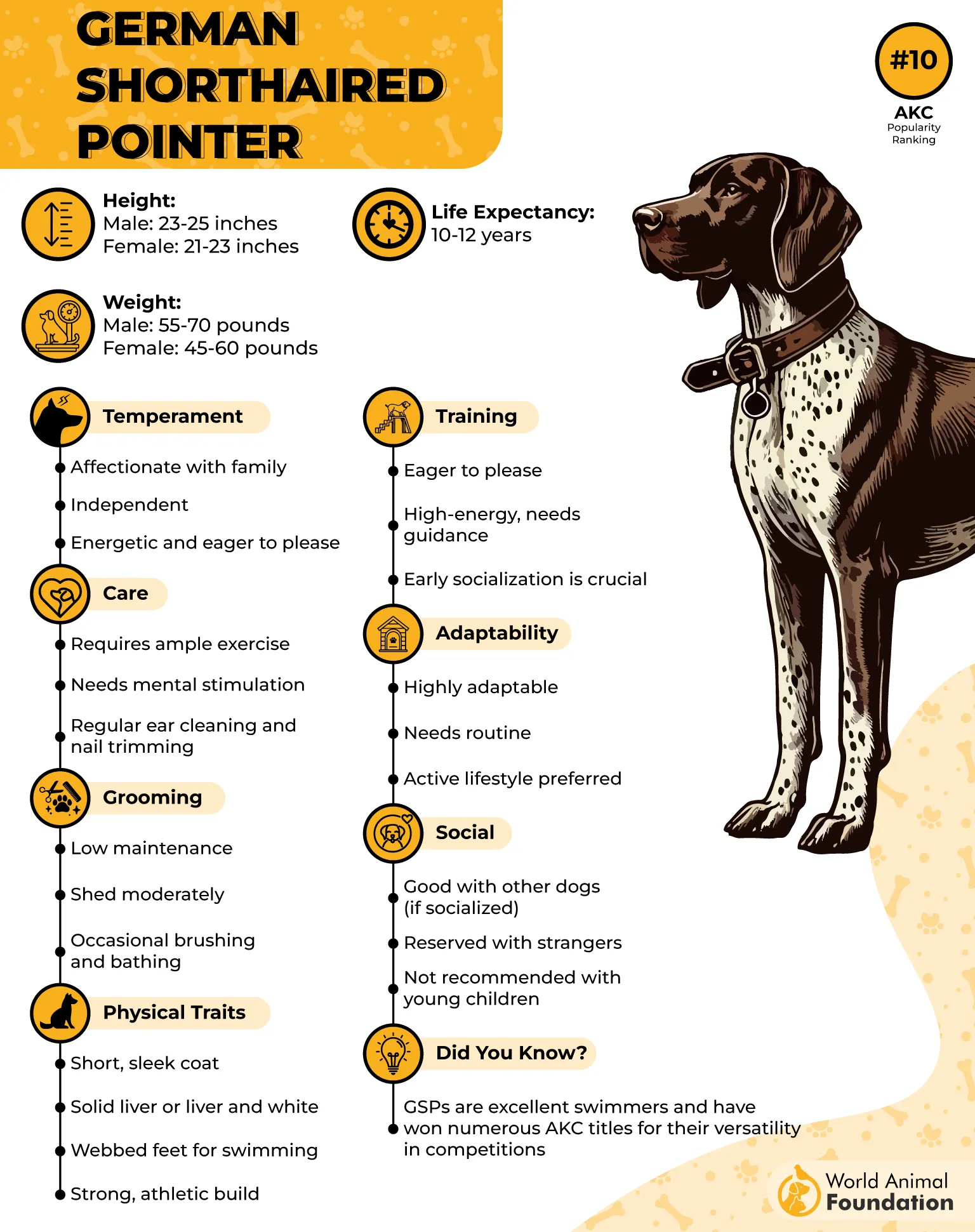
In practical use, it is frequently selected for search assignments that require both speed and precision, especially when time-sensitive coverage of large areas is needed.
A notable physical behavior is its characteristic pointing posture, where it freezes with one front paw lifted and body aligned toward the scent source, allowing handlers to instantly read direction during complex search work.
Its short, weather-resistant coat supports long outdoor missions, and its strong partnership with handlers makes it highly effective in coordinated tracking and retrieval tasks requiring stamina, intelligence, and quick decision-making.
9. English Springer Spaniel
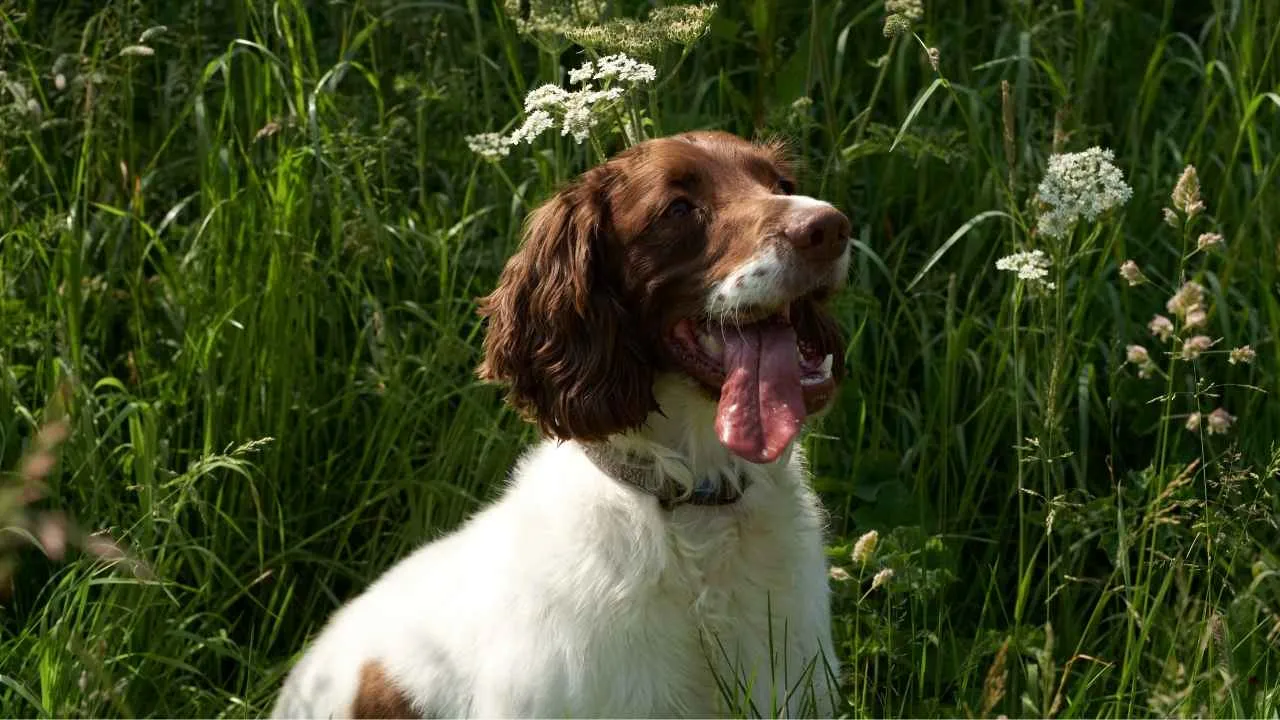
The English Springer Spaniel is a highly capable tracking and retrieval dog developed from traditional land spaniels used to flush and recover game across wide countryside terrain, as noted by Omlet UK.
In modern scent work, it excels in close-range tracking, moving through thick undergrowth and tangled vegetation where scent pools and shifts unpredictably.
Its natural working style is energetic and investigative, often weaving through dense cover with quick bursts of direction changes while staying tightly connected to the scent trail.
This makes it especially effective in search and retrieval tasks that require locating hidden or partially obscured targets in challenging environments.
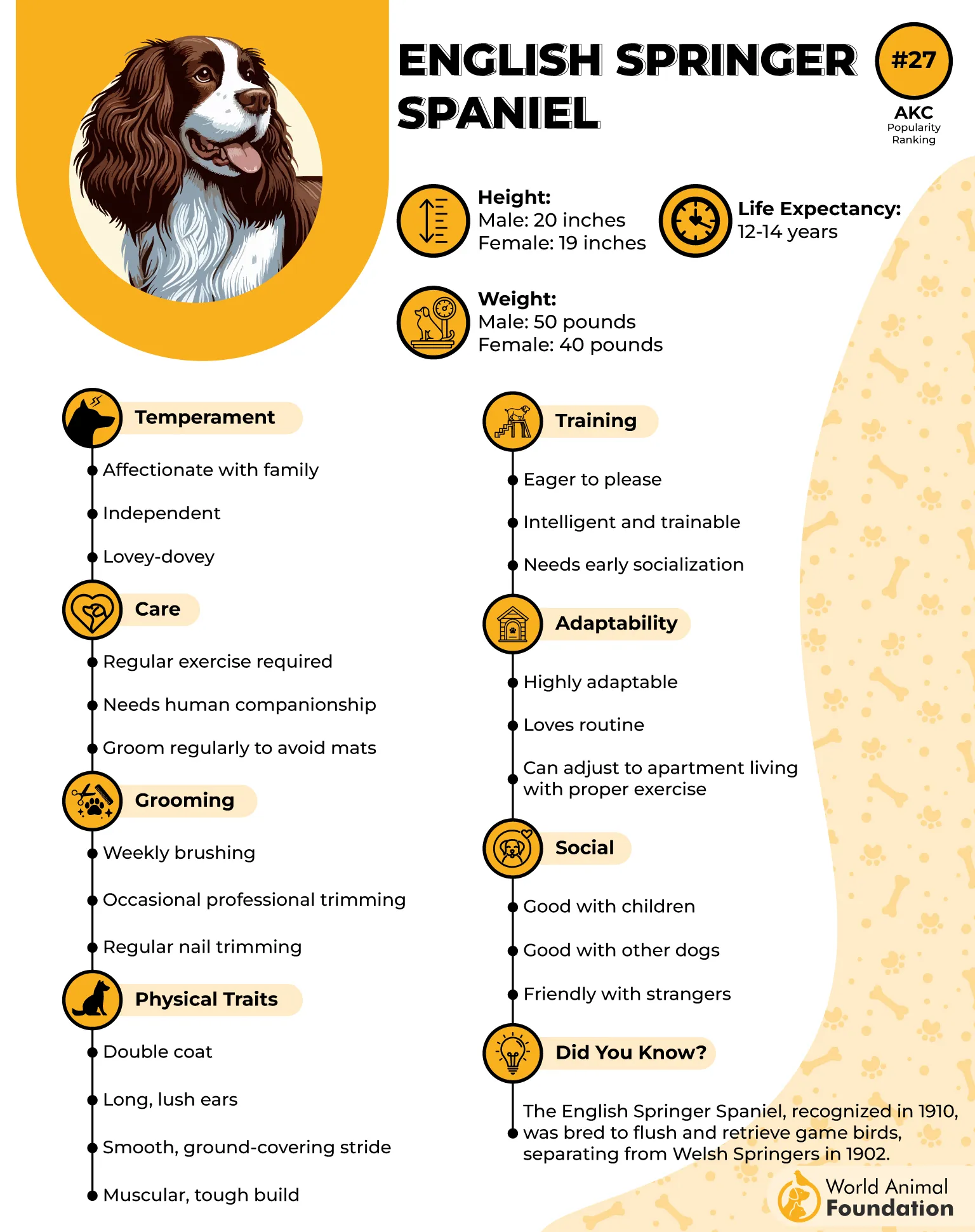
It also responds strongly to human cooperation, maintaining close handler contact during structured searches and controlled recoveries.
In practical field use, it is often chosen for customs and detection-style tracking where precision and persistence are more important than long-distance speed.
A unique working behavior is its characteristic “quartering” pattern, where it systematically sweeps left and right in front of the handler to maximize scent coverage in a grid-like motion. This approach allows it to efficiently locate scent sources in cluttered terrain.
With its strong drive, intelligence, and eagerness to work closely with people, it remains a dependable partner in advanced tracking and retrieval scenarios.
10. Labrador Retriever
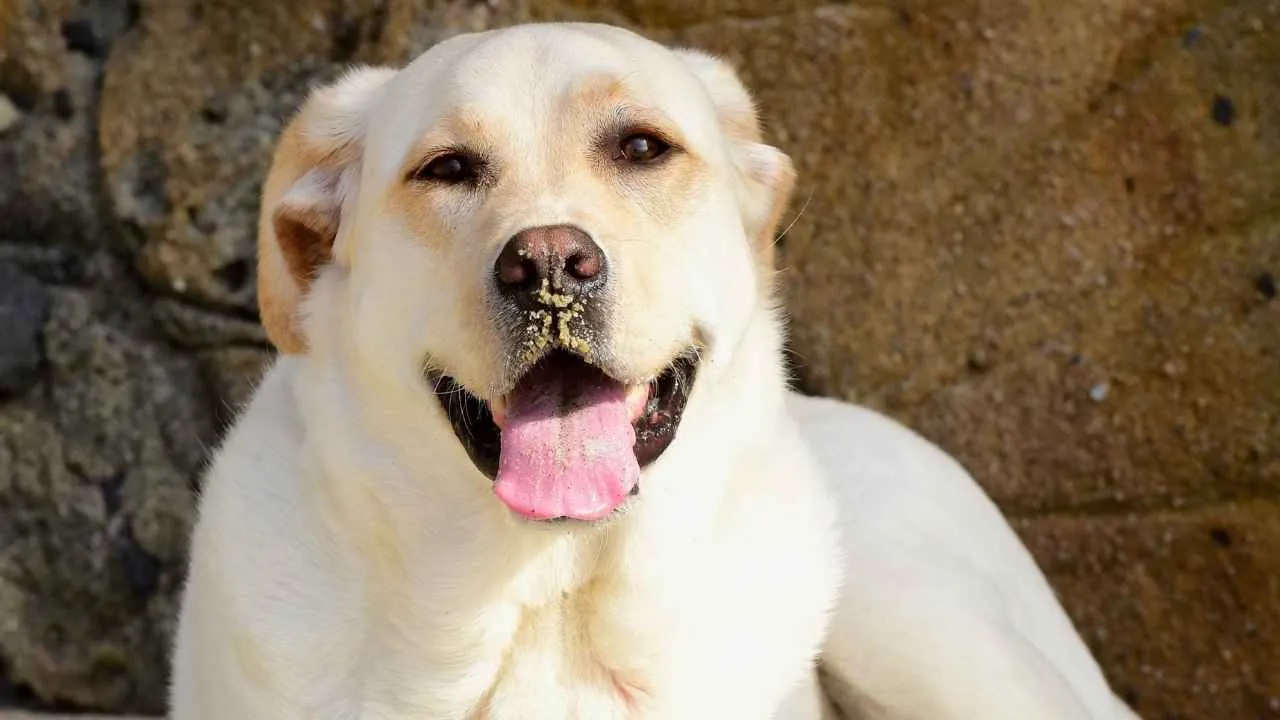
The Labrador Retriever is highly versatile, excelling in retrieving waterfowl and tracking land game, thanks to their strong work ethic and eagerness to please.
In modern scent-based operations, it shows strong capability in both land tracking and water retrieval, often used in search missions that involve lakes, rivers, or wet terrain where scent behavior changes quickly.
It follows trails with a steady, methodical approach, using a strong sense of smell to locate objects or people even after long delays or disrupted conditions.
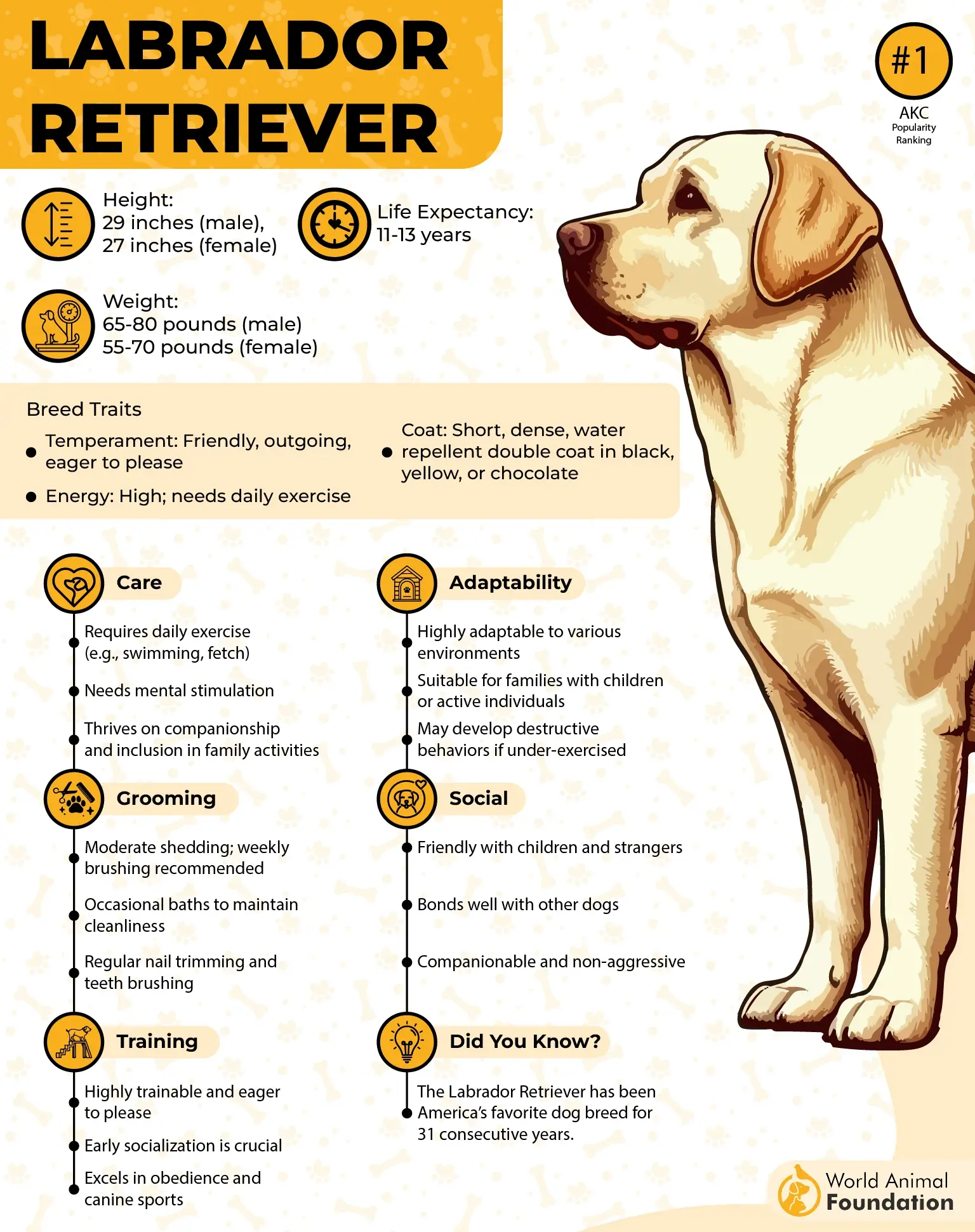
This breed is widely trusted in service roles such as detection, search-and-rescue, and assistance work because it remains focused under pressure while staying responsive to human direction.
Its working style is cooperative and stable, making it effective in team-based search environments where coordination is essential.
A unique physical ability is its naturally structured, water-resistant double coat combined with an otter-like tail that acts as a powerful rudder, giving it exceptional control and propulsion while swimming during retrieval tasks.
In practical use, it is often deployed for water recovery operations and wide-area scent searches due to its balance of endurance, intelligence, and strong retrieval instinct.
Conclusion
Tracking and retrieval work is far more than obedience or basic training…it’s precision built on instinct, endurance, and focus under pressure.
The strongest working dogs combine scent accuracy with stamina, problem-solving, and a deep willingness to cooperate with humans in complex environments.
From dense forests to open fields and water crossings, their abilities turn chaos into a readable trail. What sets them apart is not just skill, but consistency when conditions change.
With the right guidance, these dogs become reliable partners in missions where timing, clarity, and persistence can make all the difference.
