




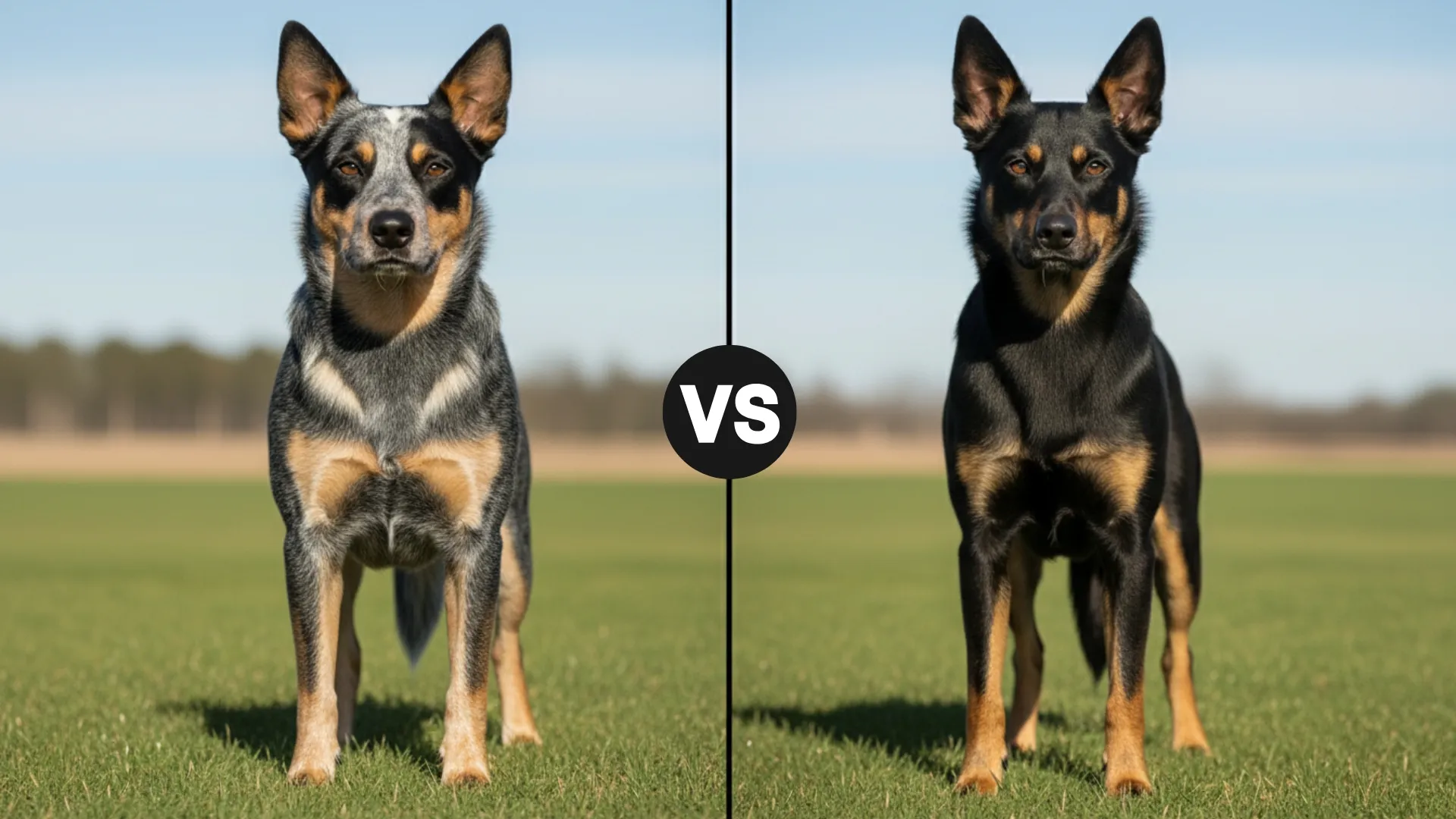
Australia has produced two iconic herding breeds, the Australian Cattle Dog and the Australian Kelpie, both celebrated for endurance, intelligence, and an unmatched work ethic.
Though they share a pastoral heritage, each breed brings a distinct style to livestock management and companionship.
The Australian Cattle Dog is compact, muscular, and intensely driven, bred to control cattle with strategic nipping and tireless persistence across rugged terrain.
In contrast, the Australian Kelpie is lighter, highly agile, and designed for continuous movement while managing sheep over vast Australian landscapes.
Both breeds are exceptionally intelligent, but the Cattle Dog often relies on assertive control, whereas the Kelpie excels in independent decision making and wide-ranging field work.
Together, they represent Australia’s working-dog excellence, thriving when given purpose, training, and physical challenge in demanding environments.
They are loyal companions but require experienced handling, consistent activity, and mental stimulation to prevent boredom and unwanted behaviors in domestic settings.
Both remain deeply valued for their versatility, resilience, and unwavering dedication to working closely with humans on rural Australian farms.
Australian Cattle Dog vs Australian Kelpie: Breeds Comparison
Origins & Breed Classification
The Australian Cattle Dog and Australian Kelpie both emerged from Australia’s demanding pastoral history, yet their origins and classifications reflect different development paths.
The Australian Cattle Dog, also known as the Red or Blue Heeler, was developed in the 19th century in Australia by crossing herding dogs with the native Dingo to create a resilient, heat-tolerant cattle worker.
It is classified as a herding breed built for endurance and control of livestock over rough terrain.
In contrast, the Australian Kelpie traces its ancestry to Scottish Collie-type working dogs imported to Australia, where they were selectively bred for sheep herding in vast open stations, as noted by Hills Pets.
The breed is classified as a highly agile herding dog, valued for independent working ability and stamina.
While both breeds were shaped by Australia’s harsh environment and livestock industry, the Cattle Dog emphasizes strength and control, whereas the Kelpie reflects speed, adaptability, and sustained movement across large grazing lands.
Both remain highly valued working breeds across Australian farms for their intelligence, resilience, and dedication in modern times.
Size & Physical Build
The Australian Cattle Dog is a compact yet powerfully built herding breed, typically standing between 17 and 20 inches at the shoulder.
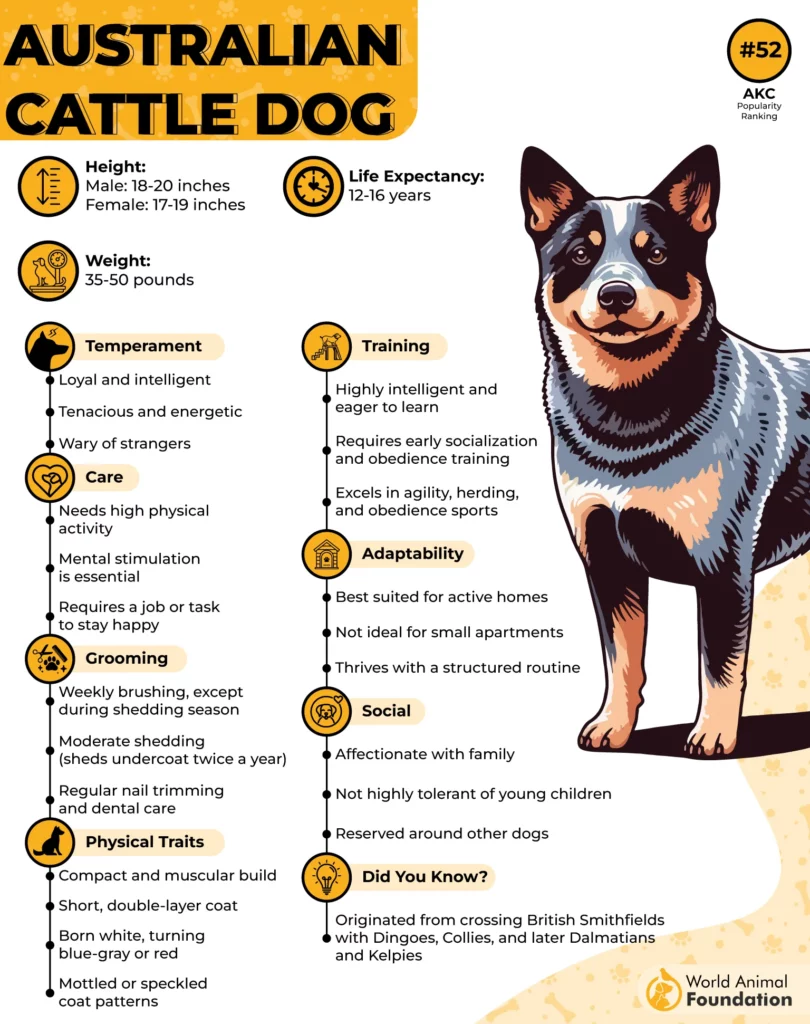
Its frame is sturdy, deep-chested, and strongly muscled, designed for strength, sudden bursts of speed, and long hours of demanding physical work.
This breed carries a dense double coat that appears in blue-gray or red variations, often enhanced with mottling or speckled patterns, giving it a distinctive, rugged look suited for outdoor life.
In contrast, the Australian Kelpie is slightly larger in frame length but lighter in structure, with a medium-sized, lean, and athletic body built for endurance rather than brute force.
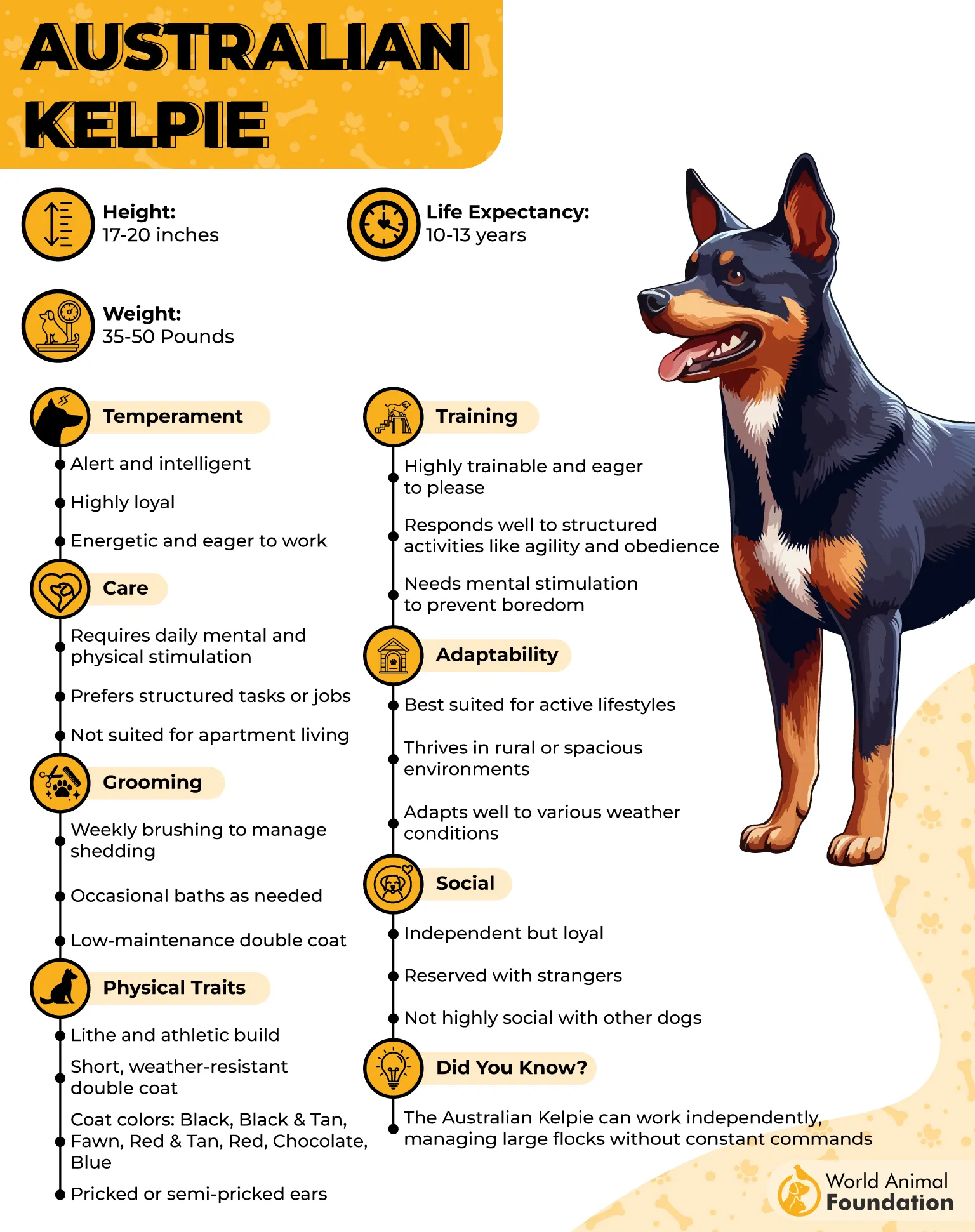
Kelpies have a more rectangular outline, flexible movement, and a naturally efficient gait that allows them to cover vast distances with minimal fatigue.
Their short, weather-resistant coat can vary widely in color, reflecting their working-dog heritage rather than strict aesthetic standards.
While the Cattle Dog is muscular and force-driven for close livestock control, the Kelpie is agile and streamlined, excelling in continuous movement and wide-ranging herding tasks across open Australian landscapes with remarkable stamina and precision.
Grooming & Maintenance
The Australian Cattle Dog is built for rugged outdoor work, and its grooming needs reflect its practical, low-maintenance nature, as mentioned by the AKC.
It has a short, dense double coat that lies close to the body and offers strong protection against harsh weather conditions.
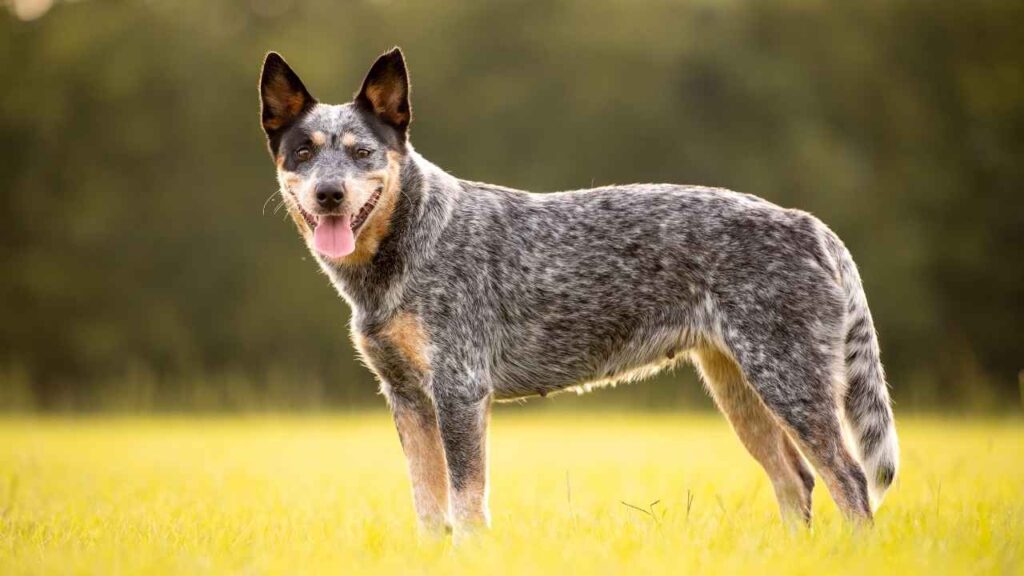
One of its notable traits is that the coat produces little to no doggy odor, making upkeep relatively simple. In general, weekly brushing is enough to remove loose hairs and keep the coat healthy, with occasional bathing only when necessary.
However, during seasonal shedding periods, the Australian Cattle Dog sheds its undercoat heavily and requires more frequent brushing every few days to manage loose fur and maintain skin health. Regular nail trimming is also essential for overall comfort and mobility.
In comparison, the Australian Kelpies also have a weather-resistant double coat, consisting of a short, dense underlayer and a straight, firm outer coat that repels dirt and rain.
Grooming is similarly uncomplicated, typically requiring weekly brushing or combing to remove dead hair and maintain coat condition. Occasional baths help keep the Kelpie clean, but excessive grooming is unnecessary.
Overall, both breeds are relatively low-maintenance, but the Cattle Dog demands more intensive grooming during shedding seasons.
Temperament & Personality
The Australian Cattle Dog is an intensely loyal, highly alert, and courageous working breed known for its strong sense of duty and protective instincts toward its family.
Bred for demanding livestock control, it is intelligent, watchful, and often reserved with strangers, making it an effective watchdog without being overly vocal.
This breed can display dominant behaviors and strong herding instincts, which may extend to children or other animals if not properly guided through training and socialization.
In contrast, the Australian Kelpie is energetic, eager, and highly intelligent, with a strong desire to work and please. It is generally more social and adaptable, forming close bonds with families while thriving in active environments.
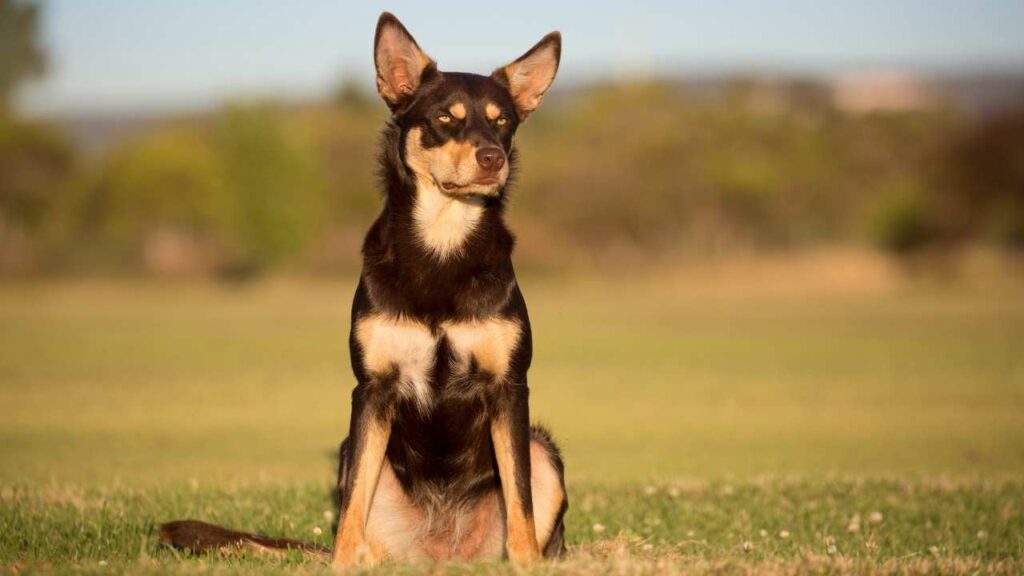
Kelpies are highly trainable and require continuous mental and physical stimulation to prevent restlessness.
While both breeds are devoted and hardworking, the Cattle Dog is more protective and assertive, whereas the Kelpie is more flexible, sociable, and driven by constant activity and engagement with tasks and movement in daily life in Australian working farm environments overall today.
Trainability & Intelligence
The Australian Cattle Dog is widely regarded as one of the most intelligent and driven working breeds, but its sharp mind comes with a need for structured guidance from an early age.
Early socialization and consistent obedience training are essential to channel its intense energy and strong herding instincts in a positive direction.
This breed thrives when given a “job,” whether in traditional herding roles or modern dog sports such as agility, obedience trials, and rally activities.
Without adequate mental and physical stimulation, the Australian Cattle Dog can quickly become bored, which may lead to destructive or stubborn behavior. Its intelligence makes training rewarding, but it requires patience, consistency, and engagement from the owner.
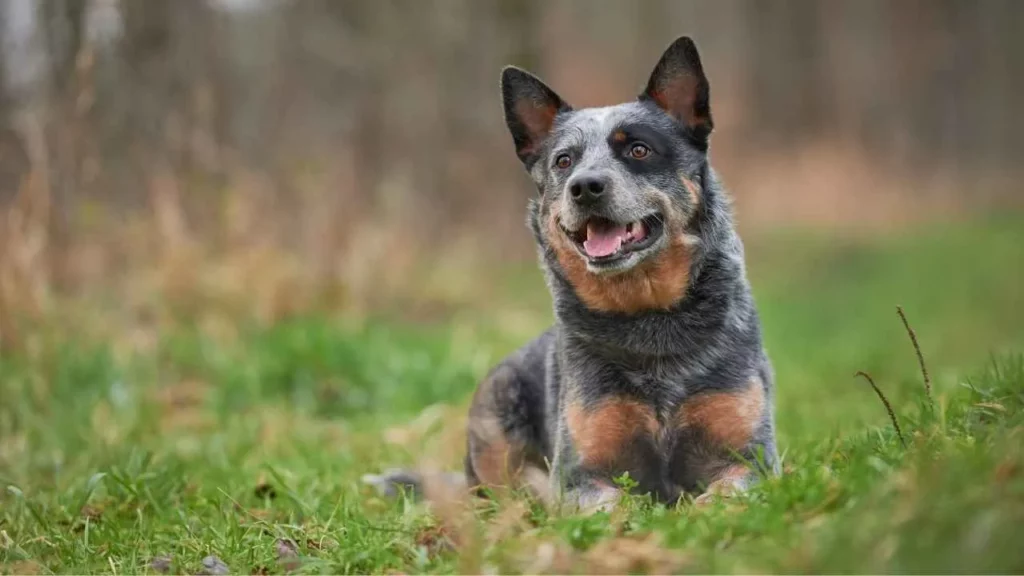
Similarly, the Australian Kelpie is exceptionally intelligent, quick to learn, and highly responsive to training. Bred to work independently across vast Australian landscapes, it excels when given tasks that challenge both mind and body.
Kelpies are eager to please and highly adaptable, making them successful in advanced obedience and herding work.
Both breeds form strong bonds through training, but they demand committed owners who can match their energy, provide structure, and maintain continuous mental stimulation throughout their lives.
Energy Levels & Activity Need
The Australian Cattle Dog is an exceptionally high-energy working breed that requires far more than casual walks or occasional yard play to stay balanced and healthy.
Bred for long hours of demanding cattle work, it thrives only when given consistent physical and mental engagement.
In active farm environments, this need is naturally met through herding duties, but in companion homes, it must be replaced with structured exercise such as daily running, long walks, and participation in dog sports like agility or obedience.
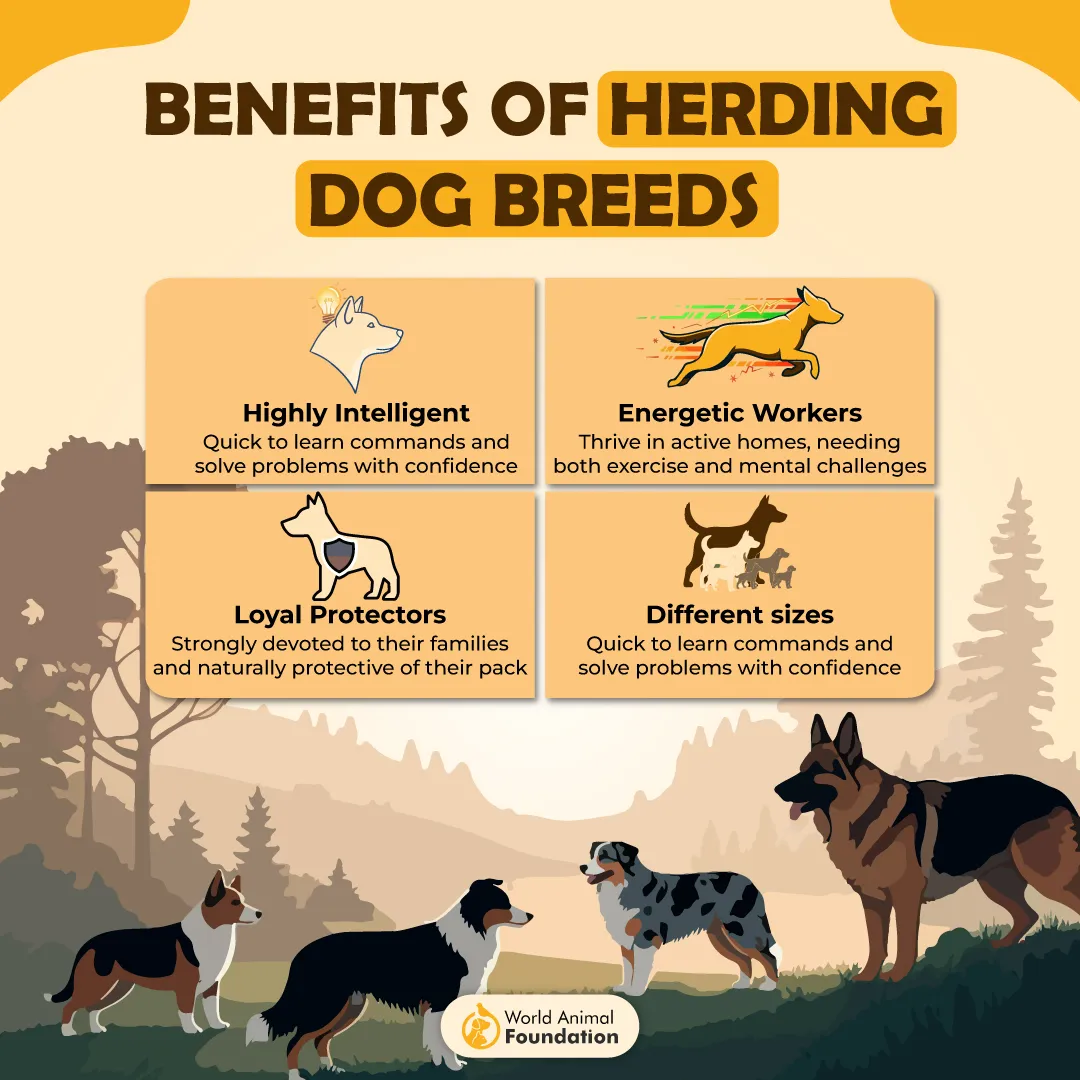
Without sufficient activity, the breed can quickly become restless and develop unwanted behaviors due to boredom and excess energy.
The Australian Kelpie is equally energetic, with stamina built for continuous movement across vast rural landscapes. It requires daily intensive exercise, often including jogging, extended workouts, and mentally stimulating training sessions.
While highly driven and task-oriented, the Kelpie can also switch off after adequate exercise, relaxing calmly with its family.
However, it is not suited to sedentary or apartment living, as its instinct to move and work remains strong. Both breeds demand active owners who can consistently meet their high energy needs through structured activity and purposeful engagement every single day.
Health & Lifespan
The Australian Cattle Dog typically lives 12 to 16 years, with notable longevity, such as Bluey, the Guinness World Record holder who lived 29 years and five months.
Despite its toughness, the breed can be prone to hip dysplasia, where abnormal hip joint development leads to arthritis and mobility issues.
Maintaining a proper diet, controlled growth in puppies, and healthy body weight help reduce risk and support joint health. Regular veterinary care supports long-term well-being.
The Australian Kelpie generally has a life expectancy of 10 to 13 years and is a hardy, resilient breed, though it may face genetic health issues, as mentioned by PetMD.
These include hip dysplasia, luxating patella, progressive retinal atrophy (PRA), and cerebellar abiotrophy (CA), a neurological disorder, whose symptoms often appear between 6 weeks and 6 months of age and worsen.
Responsible breeding, early screening, and maintaining a lean body condition help prevent and manage. With proper care, Kelpies remain active working dogs suited to demanding environments.
Living Environment & Working Style
The Australian Cattle Dog is a powerful, high-energy herding breed that thrives in active environments where it is given consistent purpose and structured work.
Bred to control cattle over long distances, it excels on farms but can also adapt to companion homes only when provided daily physical exercise, running, or dog sports that challenge both mind and body.
Without meaningful tasks, it may become restless and destructive due to its strong working instincts.
In contrast, the Australian Kelpie is a lighter, tireless, and highly agile herding dog developed for continuous work across vast Australian landscapes.
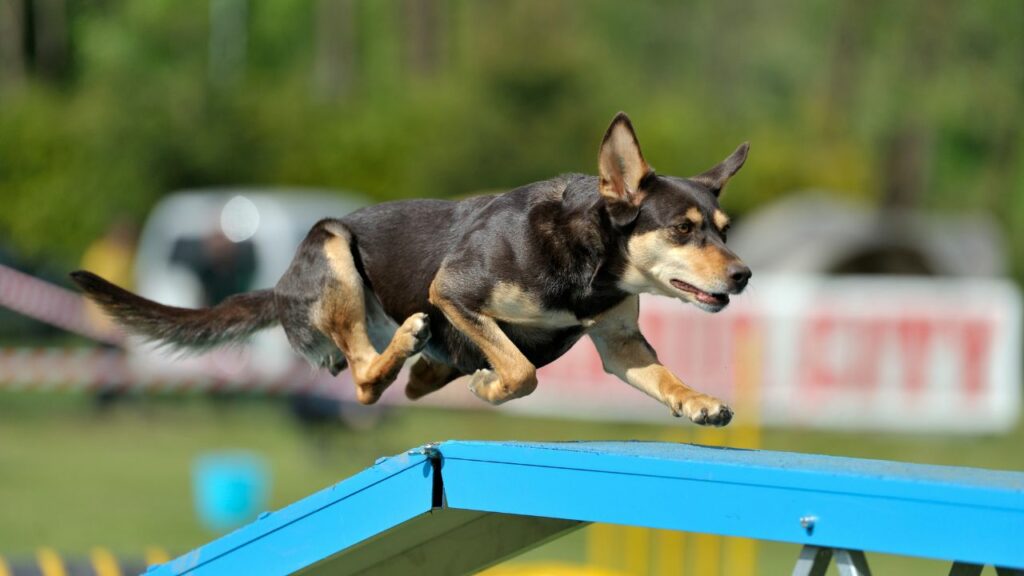
It performs exceptionally well in open rural settings, efficiently managing livestock with minimal guidance due to its independent thinking and natural herding ability.
Kelpies require large spaces, regular mental stimulation, and demanding physical activity to stay balanced.
While both breeds are deeply rooted in working life, the Cattle Dog focuses on close control and endurance in tougher terrain, whereas the Kelpie specializes in wide-ranging, sustained movement in open environments. Both require dedicated, experienced active owners.
Suitability For Owners
The Australian Cattle Dog is best suited for highly active, experienced owners who can match its intense work drive and provide a lifestyle filled with structure and purpose, as noted by Purina.
Ideally, this breed thrives in rural or farm environments where it can participate in herding livestock throughout the day.
When traditional work is not available, owners must substitute with long-distance walks, running routines, or demanding dog sports such as agility and obedience to keep the dog physically and mentally satisfied.
Without sufficient stimulation, the breed may become restless and difficult to manage due to its strong instincts and high energy levels.
The Australian Kelpie also requires an equally committed and active owner, but one who can integrate the dog into varied daily activities like hiking, running, swimming, or structured training sessions.
This intelligent breed needs constant mental engagement alongside physical exercise to prevent boredom-related behaviors such as excessive barking, herding instincts toward children or animals, or separation anxiety.
Positive reinforcement training and consistent routines are essential for managing its sharp mind and strong desire to work. Both breeds are best suited for hands-on owners who embrace an active, task-oriented lifestyle and can provide daily challenges.
Conclusion
The Australian Cattle Dog and Australian Kelpie are two outstanding herding breeds shaped by Australia’s demanding livestock culture, yet each offers a unique balance of strength, intelligence, and working style.
The Cattle Dog stands out for its muscular build, protective nature, and close-control herding ability, while the Kelpie excels in agility, endurance, and independent decision-making over vast landscapes.
Both are highly intelligent, energetic, and deeply loyal, but require experienced, active owners who can meet their physical and mental needs. With proper training and engagement, both breeds become exceptional working partners and devoted companions.
